
November
05
/ 2026
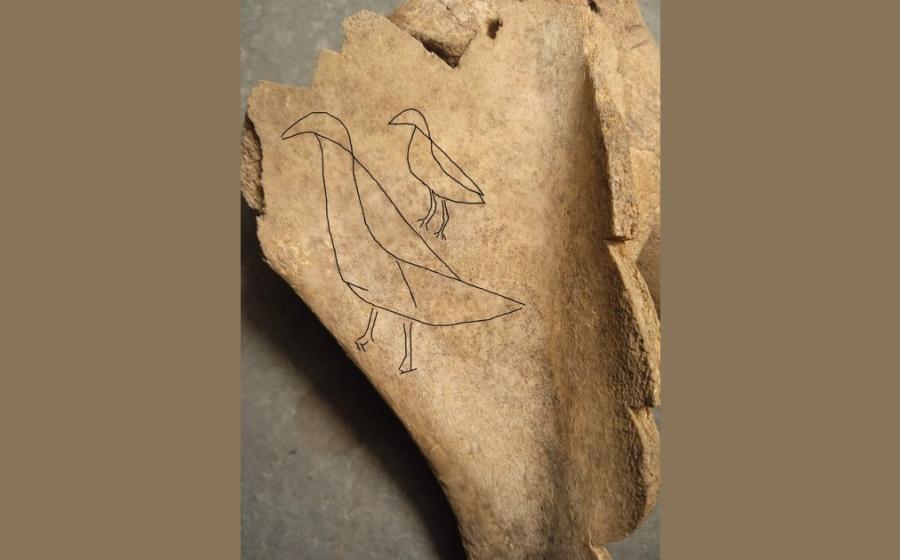
Someone in a small Greek town on the Black Sea finished a meal of mutton about 2,500 years ago and kept one of the bones. It was a shoulder blade from a sheep two to two and a half years old. Using a sharp tool, this person cut a row of teeth into its broad edge, gave its raised spine a wavy outline, and scratched two birds onto its outer face, both turned to the left, with folded wings and lines for their feathers. On October 23, 2026, the Institute for the History of Material Culture of the Russian Academy of Sciences (IIMK RAS) announced a study of the bone by Sergei Solovyov and Alexey Kasparov, scholars of the State