MartiniF

Profile picture for user MartiniF
Marianne
Fisher

Marianne Fisher is a historian, mythographer, and author with a background in Ancient History from Macquarie University, Australia. Raised in a family deeply engaged with history and cultural studies, her work focuses on ancient mythologies, symbolic systems, and funerary traditions across the Mediterranean and Near Eastern worlds.

Her research centres on comparative mythology, ritual practice, and the transmission of sacred narratives across time. Marianne’s work is characterised by a strong interest in how power, belief, and memory are encoded through myth and material culture.

She is the author of multiple works exploring myth and long-range historical structures, including contributions to the Time Maps series, a project initiated by Dr R. Keith Fisher in 1996. Since 2008, Marianne has continued this work, presenting world history through a non-Eurocentric, interdisciplinary lens that integrates archaeology, anthropology, and biological evolution.

Connect with Marianne online through:

Amazon: www.amazon.com/author/martinifisher

Website: https://dominatempora.com/

 

Member for

10 years 8 months

View Recent Blogs

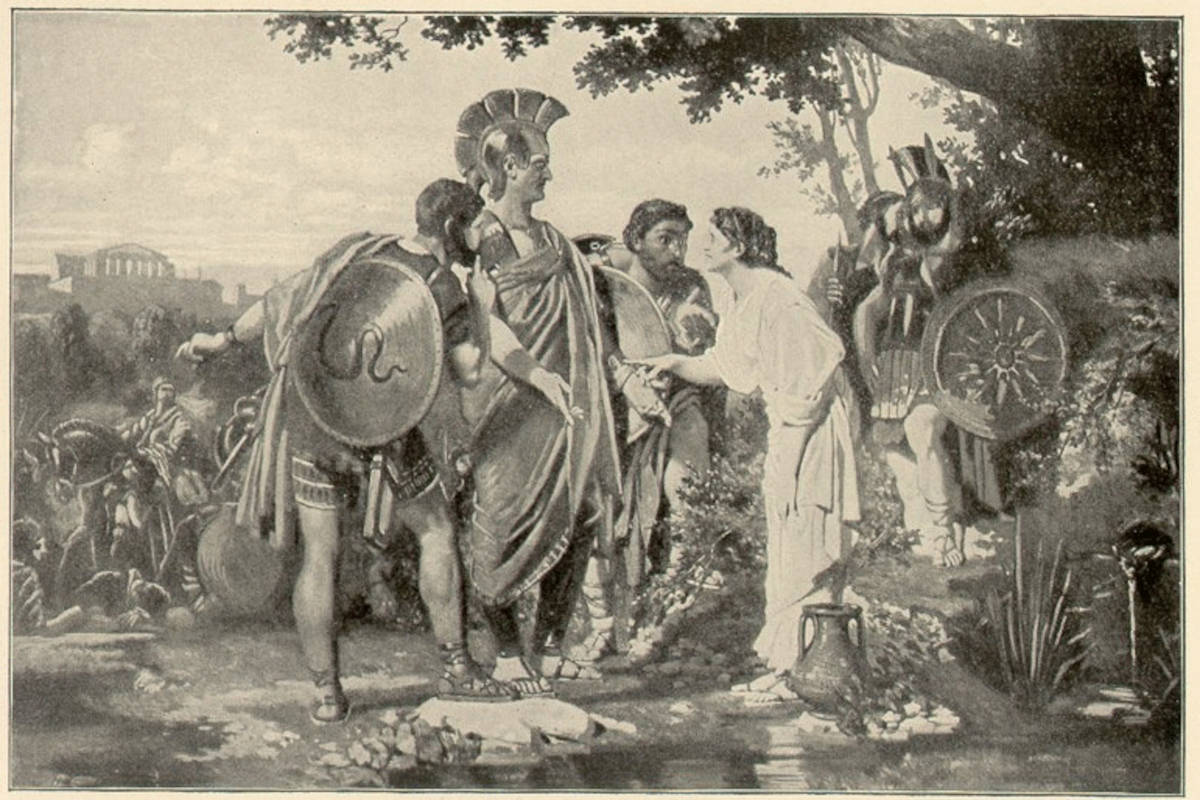
Tarpeia and Hersilia, two women featured in the early tales of Rome, had diametrically opposed stories and very different life outcomes.

In ancient Roman folklore, Tarpeia has become a symbol of avarice and betrayal, with her name used as a warning against putting personal ambition ahead of loyalty to Rome. In contrast, Hersilia emerges as a symbol of reconciliation and unification, mediating between Romans and Sabines to establish peace and togetherness amid strife.

Tarpeia and Hersilia, two women featured in the early tales of Rome, had diametrically opposed stories and very different life outcomes. In ancient Roman folklore, Tarpeia has become a symbol of avarice and betrayal, with her name used as a warning against putting personal ambition ahead of loyalty to Rome. In contrast, Hersilia emerges as a symbol of reconciliation and unification, mediating between Romans and Sabines to establish peace and togetherness amid strife. These women represent two completely different paths for women in early Roman history: one representing a cautionary tale of betrayal, and the other standing as a model of concord and civic virtue. The Sabine Women and the Founding of Rome The heroic Romulus, founder of Rome, is
When the mad Roman Emperor Caligula was assassinated in 41 AD, his uncle Claudius ran to one of the palace's apartments and hid behind a curtain. Claudius was soon discovered by the praetorian guards and escorted to their camp, where he was introduced to the troops who proclaimed him emperor. Despite being the youngest son of Nero Drusus (brother of Emperor Tiberius) and Antonia the younger (daughter of Mark Antony and Emperor Augustus’ sister Octavia), Claudius was never a front-runner to be the Roman Emperor. Deemed an embarrassment at court due to his poor health and alarming lack of social skills, it was only when Caligula came to power that he was eventually offered a consulship as a colleague to
During the Severan Dynasty, women from the Julian family of Emesa (modern-day Homs) in Syria, who were married to the Severan men, exerted enormous and often crucial influence over Roman government policies and events. Thus, Cassius Dio informs us that Julia Domna, Emperor Septimius Severus' wife, not only wielded immense power during her husband's tenure, but also actively and publicly oversaw the day-to-day operations of the Roman Empire throughout the reign of her slightly unbalanced son, Caracalla. How To Empress: First Imperial Women Of Rome Sex and the Roman Empire: Scandalous Literature about Empresses Euphemia and Theodora Caracalla, an emperor who received mixed evaluations, ruled for only five years. During this time, he murdered his co-ruler, his brother Geta, and

During the Severan Dynasty, women from the Julian family of Emesa (modern-day Homs) in Syria, who were married to the Severan men, exerted enormous and often crucial influence over Roman government policies and events. Thus, Cassius Dio informs us that Julia Domna, Emperor Septimius Severus' wife, not only wielded immense power during her husband's tenure, but also actively and publicly oversaw the day-to-day operations of the Roman Empire throughout the reign of her slightly unbalanced son, Caracalla.

Theatrics and excesses seem to run in the family of Nero, the emperor of Rome – that is, according to ancient authors such as Tacitus and Suetonius. Nero’s grandfather, Lucius Domitius Ahenobarbus, once staged a gladiatorial contest with such savagery that Emperor Augustus was forced to release an edict to restrain his excesses. Nero's father, Gnaeus Domitius Ahenobarbus, murdered a boy, deceived bankers, and was charged with treason and incest. Seemingly preparing the public for the next generation of the Ahenobarbus family, Nero’s father allegedly stated shortly after Nero's birth that any son born of Agrippina (Nero’s mother) and himself would be an abomination and a public nuisance. The Love Affair of the Roman Emperor Hadrian and the Handsome Antinous

Theatrics and excesses seem to run in the family of Nero, the emperor of Rome – that is, according to ancient authors such as Tacitus and Suetonius. Nero’s grandfather, Lucius Domitius Ahenobarbus, once staged a gladiatorial contest with such savagery that Emperor Augustus was forced to release an edict to restrain his excesses. Nero's father, Gnaeus Domitius Ahenobarbus, murdered a boy, deceived bankers, and was charged with treason and incest.

In 40 BC, Mark Antony married Octavia, sister of Octavian (later known as Emperor Augustus). It was a political marriage approved by the Roman Senate to strengthen the alliance between Octavian and Antony during the Second Triumvirate. Octavia travelled with her husband to many different provinces and lived with him in his mansion in Athens between 40 and 36 BC. Their youngest daughter Antonia, known to historians as Antonia Minor to distinguish her from her older sister Antonia Major, were born in 36 BC. Antonia never knew her father. Antonia's mother moved her and her brothers from Athens to Rome as soon as she was born because Antony abandoned them to be with Cleopatra, a love story that began a

In 40 BC, Mark Antony married Octavia, sister of Octavian (later known as Emperor Augustus). It was a political marriage approved by the Roman Senate to strengthen the alliance between Octavian and Antony during the Second Triumvirate. Octavia travelled with her husband to many different provinces and lived with him in his mansion in Athens between 40 and 36 BC. Their youngest daughter Antonia, known to historians as Antonia Minor to distinguish her from her older sister Antonia Major, were born in 36 BC.