Thomas O. Mills

Profile picture for user Thomas O. Mills
Thomas
Mills

Thomas O. Mills had the opportunity to manage the Hopi Cultural Center at Second Mesa, Arizona for four years when it first opened in the early 70’s.

He has a deep respect for the Hopi People and believes their Creation Story can be proven.

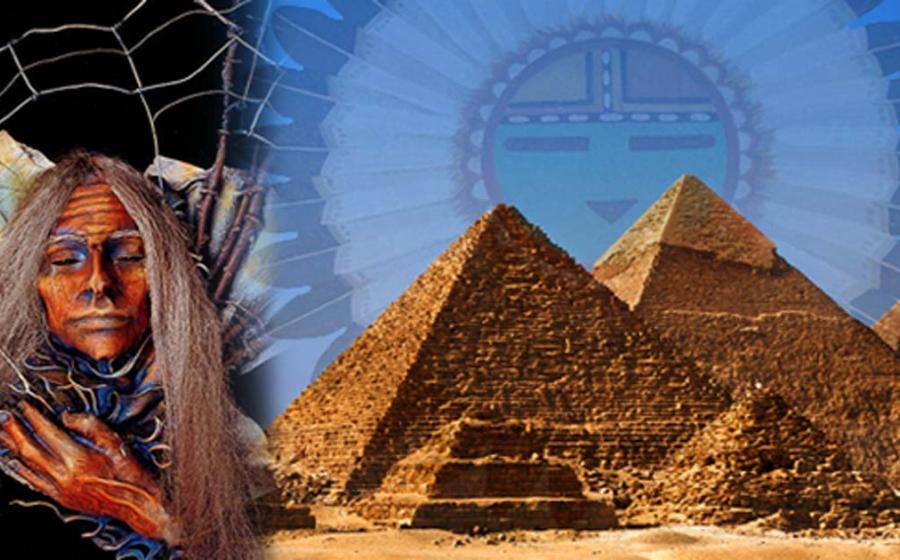
In his first book, The Book of Truth, A New Perspective On The Hopi Creation Story, he traces the Hopi story back to Egypt and puts new light on the murals, temples, and pyramids from that point of view, a view that rings true today.  If correct, his theory pinpoints the location of many new underground chambers and the tomb of Spider-women, the Hall of Records.  

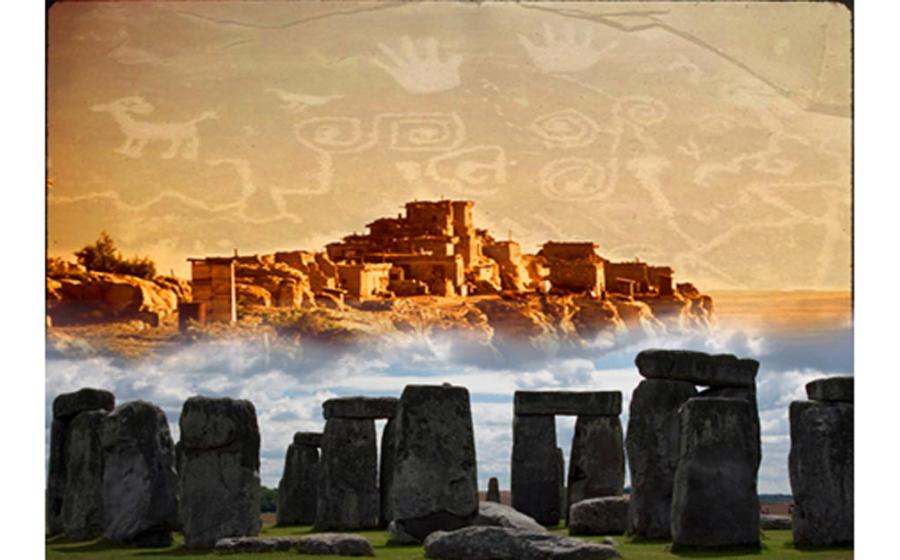
In his second book, Stonehenge, If This Was East, Mills uses his knowledge of the Hopi Ceremonial Cycles to find ancient east at a number of unexplained ancient sites around the world.  He then uses this knowledge to find north and compares north to Charles Hapgood’s four North Pole locations in the past 100,000 years with amazing results—thus dating the sites and proving the Hopi Creation Story.  

“Who would have thought that we would live to see the day when our polar ice caps would melt; that earthquakes would affect earth’s rotation, that Islands would sink beneath the sea’s, and that we would fight wars with unmanned drones? Only the Hopi.”   

Tom now lives in North Carolina with his wife after retiring from the railroad.  He has two children and two grandchildren in the area.  He has many Hopi friends and visits them as often as he can.

Author Thomas O. Mills and Hopi friend Neil David. (© Thomas O. Mills
Member for

10 years 2 months

View Recent Blogs

[Editorial by Thomas O Mills, Hopi Cultural Center in Second Mesa, Arizona, USA ] I am sometimes asked, “How can we help the Hopi People?” Having lived with the Hopi for a number of years, I can assure you that they do not need our help. They have been trying to help us, all of mankind, from the beginning of time. [[{"type":"media","view_mode":"media_large","fid":"40514","attributes":{"alt":"","class":"media-image","height":"399","typeof":"foaf:Image","width":"610"}}]] A petroglyph in Mesa Verde National Park. The boxy spiral shape likely represents the sipapu, the place where the Hopi believe they emerged from the earth. ( Public Domain ) As a former manager for the Hopi Cultural Center in Second Mesa, Arizona, USA, I have always been amazed at how eager a true Hopi is willing to
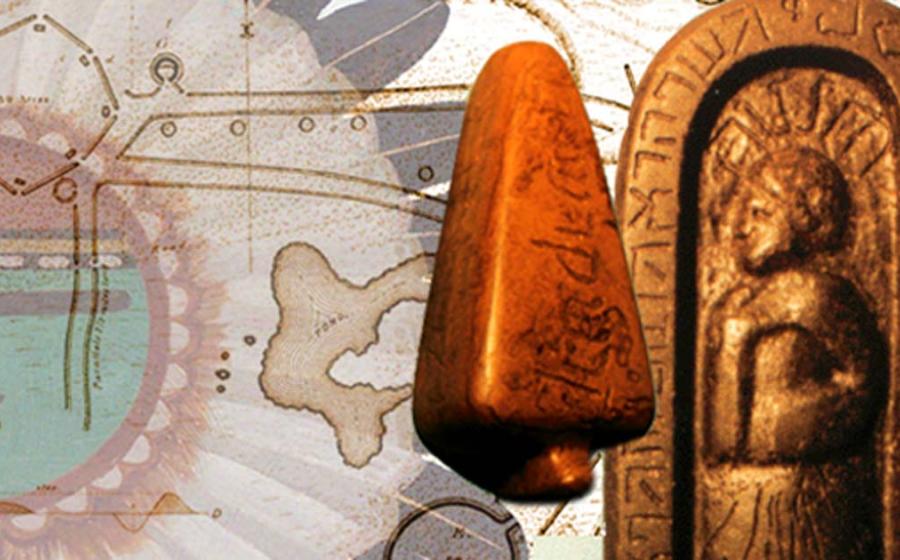
For 157 years, archaeologists, religious scholars, anthropologist, politicians, scientists, and historians—everyone except Native Americans—have tried to prove that the two stones and one small cup David Wyrick found in a burial mound in Ohio, were forgeries. If the stones were authentic, then our theories about the peopling of the world and manifest destiny were all wrong. So, there was, and still is, a lot at stake. Finding the Keystone Wyrick was a printer/surveyor by trade living in Newark, Ohio, USA in the mid-1800s. Whenever time provided, he and his son would travel the mile or so southwest of town to the ancient mounds and dig in the burial grounds for native artifacts. One June day they came across a wedge-shaped
The builders of the pyramid complex in Egypt had a very good astronomer. We call him Senenmut (the Mother’s Brother, or the Uncle). Today, our astronomers are so good that they build computer programs that plot Earth’s location in space calculating the planet’s movement while looking into the future and going back into the past. We can tell exactly what the sky and constellations looked like at any given point in time. I think Senenmut could do the same thing. [[{"type":"media","view_mode":"media_large","fid":"29172","attributes":{"alt":"Statue of Senenmut","class":"media-image","height":"595","style":"width: 610px; height: 595px;","typeof":"foaf:Image","width":"610"}}]] Statue of Senenmut ( CC BY-SA 2.0 ) As Above So Below Egyptologist believe the 18th dynasty government official Senenmut died in disgrace. The tomb he built (TT No. 353, going down 60 meters
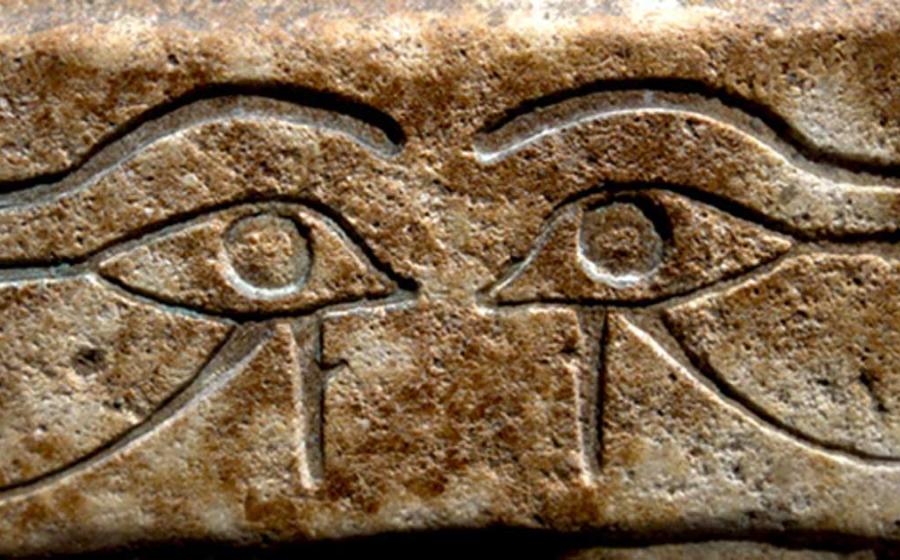
There has to be something missing in our explanation of the murals of Egypt. Why are there so many symbols— snakes, birds with human heads, feathers, buzzards, life symbols, monkeys, scarabs, balances, a young man, two twins, and masked individuals— that only a select few can understand? [[{"type":"media","view_mode":"media_large","fid":"28478","attributes":{"alt":"","class":"media-image","height":"516","typeof":"foaf:Image","width":"610"}}]] Whoever created the murals must have been trying to communicate with all of us in a simple fashion or a universal language, something that we could all understand. So, where’s the missing link? The Missing Links The Hopi Creation Story talks about many of the items displayed in the murals: The snake could represent our boundaries, wobble, and path. A snake at a right angle would then represent the end of a
The Egyptians did not build the pyramids. No one living in the area can tell you; who built them, why they were built, when they were built, how they were built or why the pyramids at the complex were arranged in the particular order that they are arranged in. I imagine long ago, the first person to use his small copper chisel and wooden mallet to dislodge the glue (a glue as strong as a spiders web) securing the casing stones and slide the first stone down the side of the pyramid, was greeted with cheers from his friends waiting at the bottom of the pyramid. They then may have used logs, camels, and perhaps the Nile to transport the
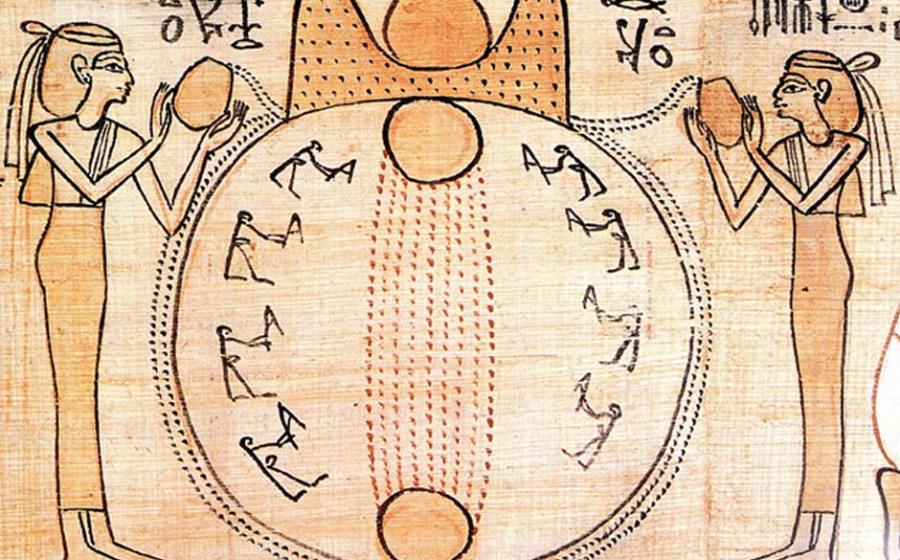
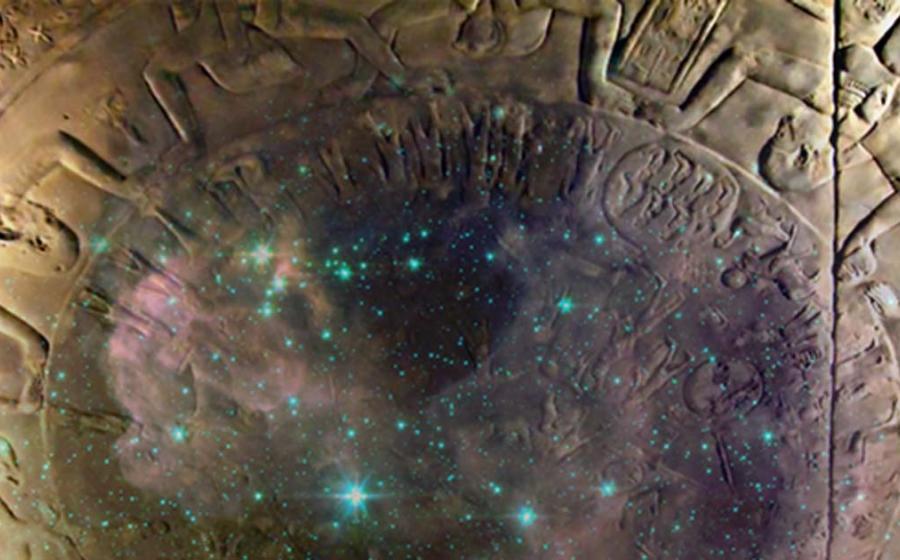
The thread of the constellations was very important to the builders of the pyramid complex. They went to great lengths to create them; carve them into solid stone and place them in the roof of the zodiac ceiling of Dendera, in the hope that we would understand their meaning today. [[{"type":"media","view_mode":"media_large","fid":"27270","attributes":{"alt":"Zodiac ceiling in the Temple of Dendera. ","class":"media-image","height":"615","style":"width: 610px; height: 615px;","typeof":"foaf:Image","width":"610"}}]] Zodiac ceiling in the Temple of Dendera. (Courtesy author) In Peter Tompkins, Secrets of the Great Pyramid, Chapter XII, he explains how the Grand Gallery might have been used to chart the constellations when the Great Pyramid was first built and the gallery was open to the night sky. [[{"type":"media","view_mode":"media_large","fid":"27271","attributes":{"alt":"Denderah zodiac with original colors (reconstructed) [left], and with 48
The constellation of Orion is not wearing a belt. Instead, I think the middle star represents his navel. Medical scientists are just now finding out all the powers of the navel, the umbilical cord, the path of life, death, and re-birth, from mother to child. [[{"type":"media","view_mode":"media_original","fid":"26747","attributes":{"alt":"An illustrated depiction of the Orion constellation, with the stars of ‘Orion’s Belt’ near his middle. Could this represent a navel rather than a belt? ","class":"media-image","height":"700","style":"width: 487px; height: 700px;","typeof":"foaf:Image","width":"487"}}]] An illustrated depiction of the Orion constellation, with the stars of ‘Orion’s Belt’ near his middle. Could this represent a navel rather than a belt? ( Public Domain ) The Dance The Hopi wait each year for the constellation of Orion to appear through their Kiva
The Hopi were watching the sun rise and set at specific points on the horizon from fixed locations in their villages long before the Spaniards arrived in 1540. Many of their most important ceremonies were based on the sun’s location; the equinox, the summer and winter solstice, and the halfway points between the two. [[{"type":"media","view_mode":"media_large","fid":"25965","attributes":{"alt":"Hopi pueblo in Arizona, 1879.","class":"media-image","height":"469","style":"width: 610px; height: 469px;","typeof":"foaf:Image","width":"610"}}]] Hopi pueblo in Arizona, 1879. ( Public Domain ) The Spaniards found them early in the morning, looking east, waiting for the sun to rise and praying the earth would stay on its delicate balance and not roll over. The Spanish called them Moqui or people with running noses. The Hopi called themselves the Peaceful People or the