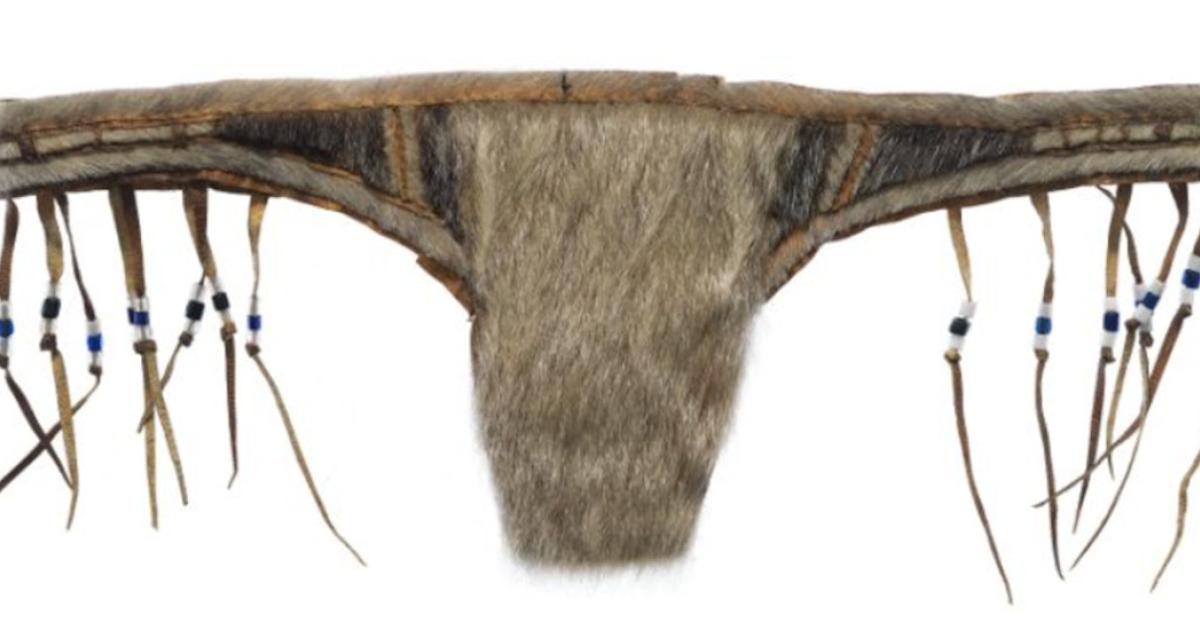

A small strip of seal fur in Copenhagen narrates far bigger story concerning life in East Greenland. The garment is called naatsit, a kind of beaded fur underwear worn by women, sometimes shown off once inside a cozy house, but hidden under the thick outer garments when outside. As Atlas Obscura explains, this item belongs to the 19th century and is labeled Ld.132.4 in the National Museum of Denmark. The fringe, beads, and perfect stitching of the item cause many problems in differentiating between two concepts of clothing as “functional” and “good-looking.” This piece seems to combine the two.
A Garment from Ammassalik
Atlas Obscura claims that Captain C. Ryder obtained this particular naatsit from the Ammassalik area during an expedition in 1892. The artifact was constructed from strips of seal pelt stitched and ties with sinews from either reindeer or whale and decorated with glass beads on its edge. The area is now associated with Tasiilaq, and Trap Greenland's local history dates the establishment of Tasiilaq to have occurred only in 1894, two years after Ryder's expedition.
- When it Came to Ancient Undergarments Less Was Often More
- From Loincloths to Lingerie: 10 Unique Styles of Clothing from Ancient History
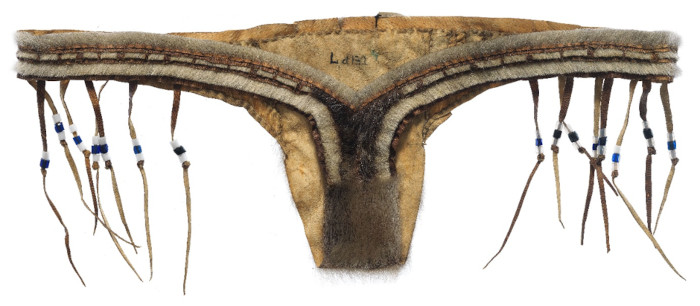
The rear of the naatsit, reminiscent of modern thongs. (Roberto Fortuna/ National Museum of Denmark/ CC BY NC)
The National Museum’s Skin Clothing Online collection connects the Arctic clothing to a bigger context of craft and survival. The example from the nineteenth century explained by Atlas Obscura shows a waistband and narrow front and back designed to be worn under the sealskin trousers outdoors. However, once indoors, the clothing worn depended on the temperature. Hence, the object’s striking beadwork makes sense as something that would be a visible detail, not just a secret decoration.
- The mummies of Qilakitsoq and the Inuit baby that captured hearts around the world
- Stone Age Clothing: Function Over Fashion
Warmth, Sweat and the Right Skin
Peter Toft, a clothing expert at the museum, informed Atlas Obscura that when they were in heated homes, the naatsit “was the only thing worn even when having guests or visiting the houses of other families.” He also said that Danish missionaries were shocked by the attire, and tried to persuade the Iniut to wear longer linen underwear of European origin, but their efforts were not successful. Seal fur does not keep in as much heat as caribou fur, which was an important factor to consider since in cold weather, the body sweat could freeze once returning to the cold temperatures. Getting the insulation just right was essential!
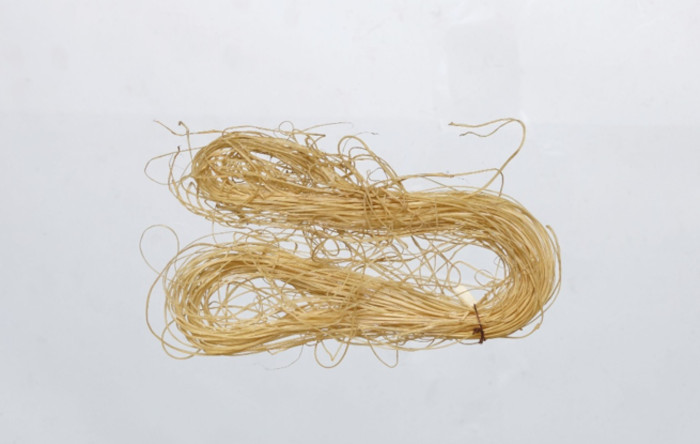
Ivalu, or tendon thread, made by Inuit in northern Greenland between 1900 and 1928; it is not thread from this naatsit. (Martin Appelt / CC BY-SA 4.0)
The displayed thread is from another place and period, but it helps make the technique tangible. Sewing skin with animal sinew demanded knowledge of both the material and the fit of a garment. Ancient Origins has explored Stone Age clothing and the broader beginnings of fashion; the naatsit shows how workmanship and adornment could meet everyday needs. Its beads, in particular, deserve attention alongside its weather-wise construction.
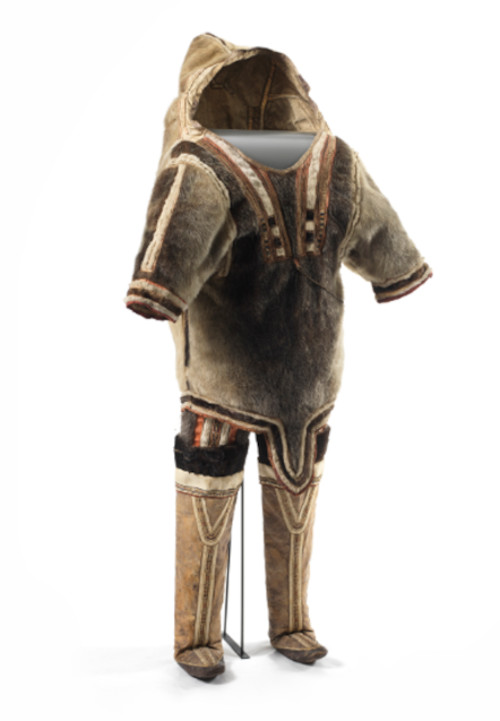
A West Greenland woman’s sealskin outfit collected in 1918; a comparison, not the East Greenland naatsit. (National Museum of Denmark / Roberto Fortuna, CC BY-SA 2.0)
More Than an Arctic Curiosity
European observers often viewed styles of clothing that were strange to them in light of their own ideas of decency. However, in his account of missionaries and their use of underwear, Toft get readers to think about how the description of this piece of clothing was determined by other people's expectations. Research by the University of Sydney also sees clothing as something that protects the body but makes a social statement at the same time. That wider perspective makes the naatsit underwear more revealing as evidence of culture than as an amusing museum oddity.
Clothing can also survive to document lives that written records barely describe. The Qilakitsoq mummies, from another part of Greenland and an earlier century, were found with dozens of garments, many of sealskin. Other Arctic inventions, such as Inuit snow goggles, show the same attention to local conditions without implying that every community dressed alike. Ryder’s collected naatsit is one individual object within that much larger record.
Top image: Front view of a naatsit - seal fur underwear. Source: Roberto Fortuna/ CC BY NC
By Gary Manners
References
Morton, E. 21 April 2015. Object of Intrigue: 19th-Century Greenlandic Seal Fur G-String. Available at: https://www.atlasobscura.com/articles/object-of-intrigue-19th-century-greenlandic-seal-fur-g-string
National Museum of Denmark. n.d. Skin Clothing Online. Available at: https://skinddragter.natmus.dk/?Language=0
Trap Greenland. n.d. Tasiilaq. Available at: https://trap.gl/en/kommunerne-og-byerne/kommuneqarfik-sermersooq/tasiilaq/
University of Sydney. 29 June 2024. The beginnings of fashion: why do we wear clothes? Available at: https://www.sydney.edu.au/news-opinion/news/2024/06/29/the-beginnings-of-fashion.html