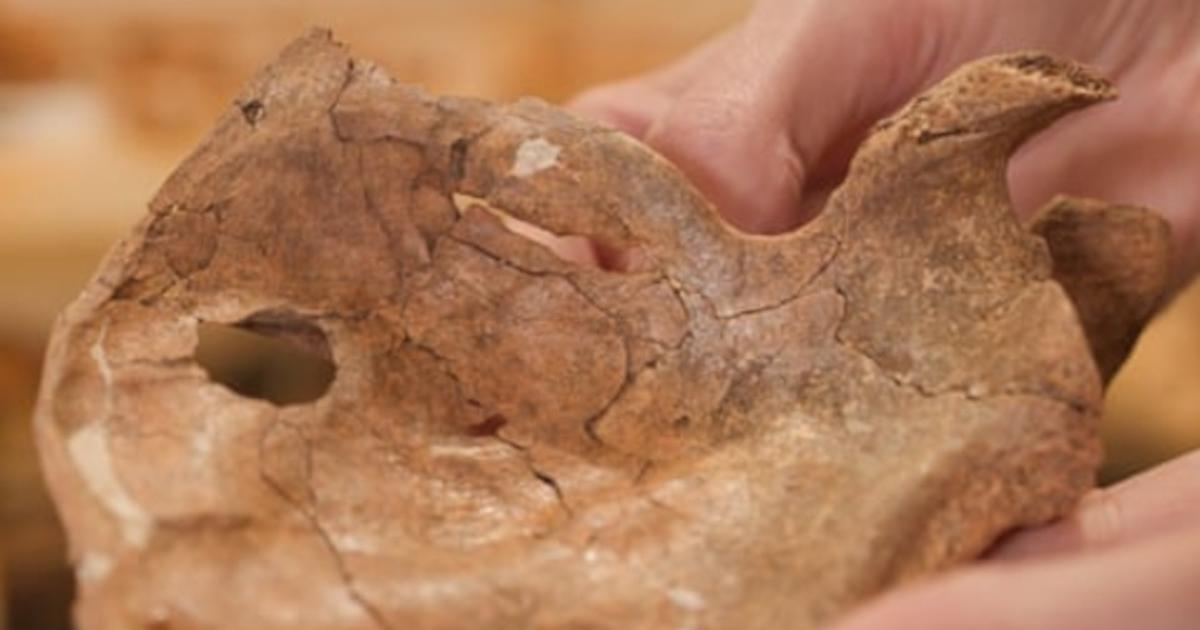

A fatal wound in a famous cave
As The Guardian reported, researchers identified the injury on a left shoulder blade belonging to an adult who may have been about 45 years old. The hole measures roughly 1.5 centimeters across, with three fractures radiating from it. In a new Scientific Reports study, the researchers say its shape is consistent with a wooden spear entering from the front and passing through the chest.
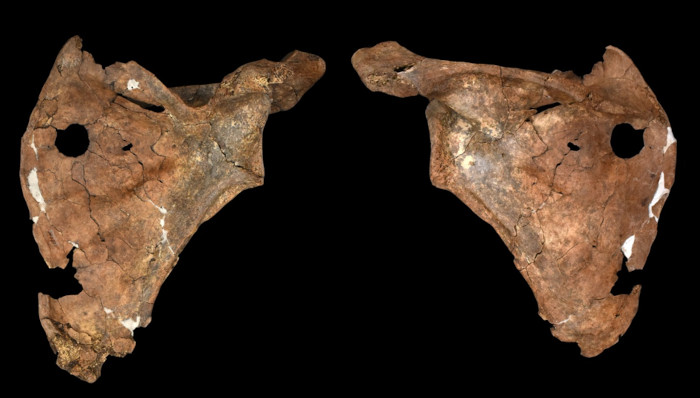
The ventral (left) and dorsal (right) views of the Shanidar A scapula with the hole through it. Ventral is the front of the scapula, the side that faces the ribs (chest). Dorsal is the back of the scapula. (Dr. Emma Pomeroy/Nature Scientific Reports)
The likely path would have carried the weapon through a lung and possibly major blood vessels, making the wound rapidly fatal. “I don’t think that’s something you do accidentally,” University of Cambridge biological anthropologist Emma Pomeroy noted, though the evidence cannot distinguish hunting from deliberate violence records The Guardian. The case adds a darker possibility to the story of a cave where Neanderthals repeatedly returned to place their dead.
- Bees, Not Neanderthal Florists, Dropped Pollen in Iraq's Shanidar Cave
- Did The Neanderthals of Shanidar Cave Really Bury their Dead?
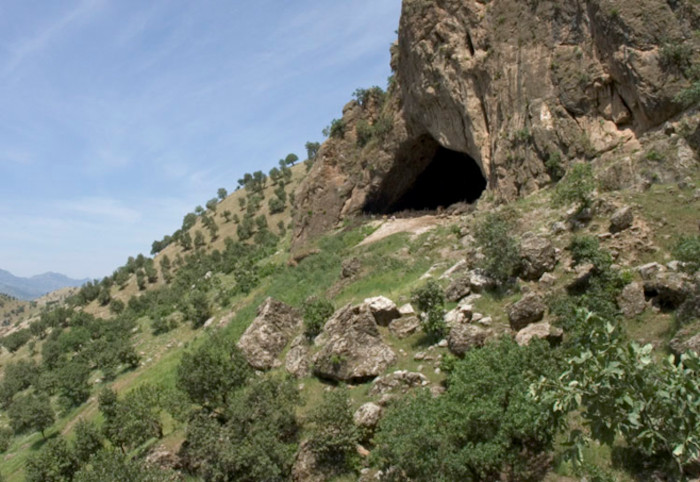
Exterior of Shanidar Cave in Iraqi Kurdistan. (JosephV/CC BY-SA 3.0)
The evidence beneath the sediment
The remains were recovered from under nearly eight meters of rock and sediment, close to a huge boulder near the cave entrance. The new study raises the minimum number of individuals in this burial cluster to five, suggesting that bodies were deposited in the same small depression over years or decades. As the University of Cambridge’s account of Shanidar Z explains, the cave’s repeated use has long prompted debate over whether Neanderthals practiced intentional mortuary behavior.
The injured individual also carried an older facial injury. A split lower incisor and rotated neighboring teeth indicate a severe blow survived long enough for hardened plaque to accumulate, possibly for at least a year. Before the final injury, the Neanderthal may have depended on others for care, much like the disabled individual discussed in Neanderthals Took Care of Deaf and Disabled Buddy Until Old Age.
- New Evidence Ends the Neanderthal Burial Debate
- Neanderthals Had Tradition: Animal Skulls Deposited For ...
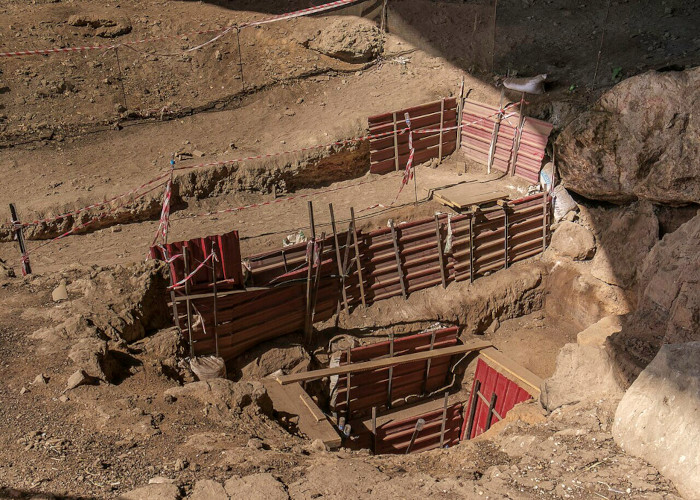
Archaeological excavations inside Shanidar Cave. (Hardscarf / CC BY-SA 4.0)
Spear technology and a prehistoric murder mystery
Wood rarely survives in archaeological deposits, but wooden spears from Schöningen in Germany date to about 200,000 years ago, while the pointed Clacton spear from England is more than 400,000 years old. A separate study of Shanidar 3 found a rib puncture most consistent with a low-mass projectile, although a thrusting spear or knife could not be ruled out. The new injury is different because its radiating fractures point to a more forceful blow.
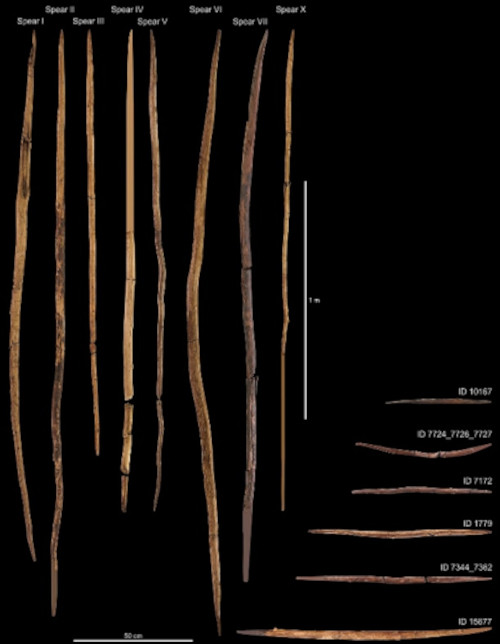
Wooden spears and pointed sticks from Schöningen, Germany. (Matthias Vogel / CC BY 4.0)
The researchers are careful not to call the case a murder. “Conceivably it was a hunting accident,” co-author Chris Hunt said. “We can’t, however, rule out that purposeful interpersonal violence was involved.” For now, the hole is rare evidence of lethal trauma and wooden technology, while the cave’s wider story - burial, care, conflict and memory - remains open to interpretation.
Top image: Left scapula of Neanderthal from Shanidar Cave, with hole visible. Source: University of Cambridge
By Gary Manners
References
Cambridge, U. n.d. Shanidar Z: what did Neanderthals do with their dead? Available at: https://www.cam.ac.uk/stories/shanidarz
Churchill, S. E. 2009. Shanidar 3 Neandertal rib puncture wound and paleolithic weaponry. Available at: https://pubmed.ncbi.nlm.nih.gov/19615713/
Pomeroy, E. 2026. Evidence for funerary behaviour and lethal trauma in a new Neanderthal individual from Shanidar Cave. Available at: https://www.nature.com/articles/s41598-026-69193-z
Sample, I. 2026. Neanderthal remains may be earliest human ancestor find killed by spear. Available at: https://www.theguardian.com/science/2026/oct/15/neanderthal-remains-human-ancestor-killed-by-spear-iraq-kurdistan-cave-earliest-find