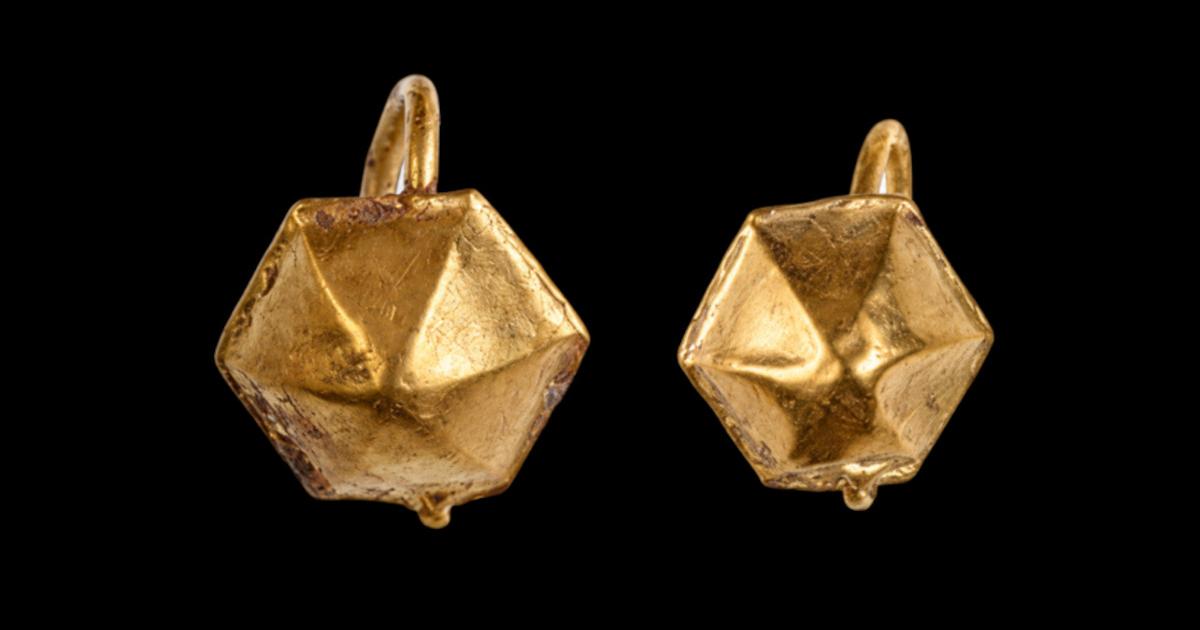

The earrings are strikingly well preserved, but they do not by themselves identify the child or prove that the family belonged to the city’s elite. Other Roman jewelry finds from Bulgaria show how personal ornaments could also reflect wider fashions across the empire. (The broader evidence for Roman childhood is equally varied, as discussed in earlier Ancient Origins articles Archaeologists reveal contents of 1,600-year-old Roman child coffin and Roman Baby Burial Challenges “Unceremonious Disposal” Dogma).
- Rare Medallion of Emperor Caracalla Among Valuable Finds from Nova Varbovka
- 1,800-Year-Old Golden Protective Jewelry Adorned Roman Girl
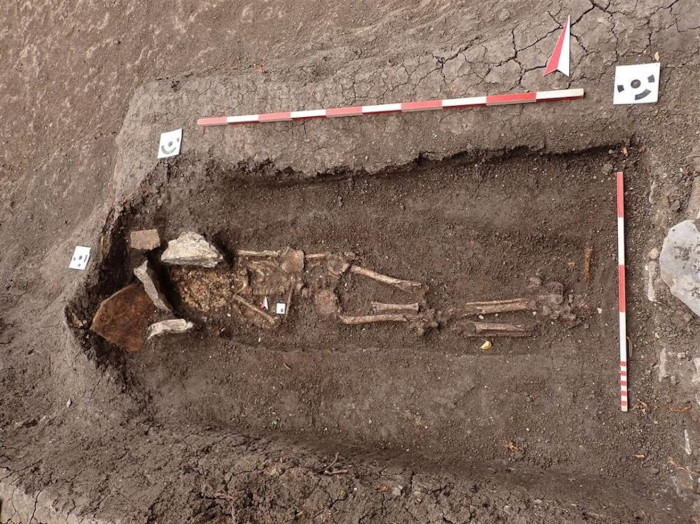
Roman-era burial recorded at the Stara Zagora excavation. (Regional History Museum – Stara Zagora)
A coin that fixes the date
The coin is an antoninianus of Aurelian, minted at Serdica (modern Sofia) in AD 274 or 275. Because an object cannot have been placed in a grave before it existed, the coin gives the burial a firm earliest possible date, although it cannot establish the exact day or year of interment. Aurelian ruled from AD 270 to 275, during the Crisis of the Third Century, and is remembered for reasserting imperial control over territories that had broken away from Rome. Its funerary meaning remains uncertain: coins sometimes appear in ancient burials in connection with Charon’s obol, but archaeologists caution against assuming that every coin had the same ritual purpose.
- Earring Unearthed In Bulgaria Matches Those In Multiple Mummy Portraits
- Roman Baby Burial Challenges “Unceremonious Disposal” Dogma
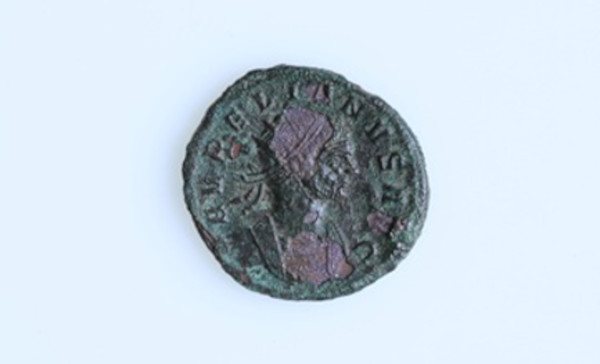
The Aurelian antoninianus recovered from the child’s grave. (Regional History Museum – Stara Zagora)
Life and death outside Augusta Traiana
The cemetery lay beyond the southwestern walls of Augusta Traiana, the Roman city beneath modern Stara Zagora. Archaeologists identified several burial forms, including pits covered with roof tiles, bricks or stone slabs, as well as simpler uncovered graves. Only four of the 135 burials involved cremation; the rest were inhumations, suggesting that the necropolis preserves changing or coexisting customs over several centuries. The city’s surviving forum and streets help place the find within a substantial urban centre rather than an isolated rural settlement.
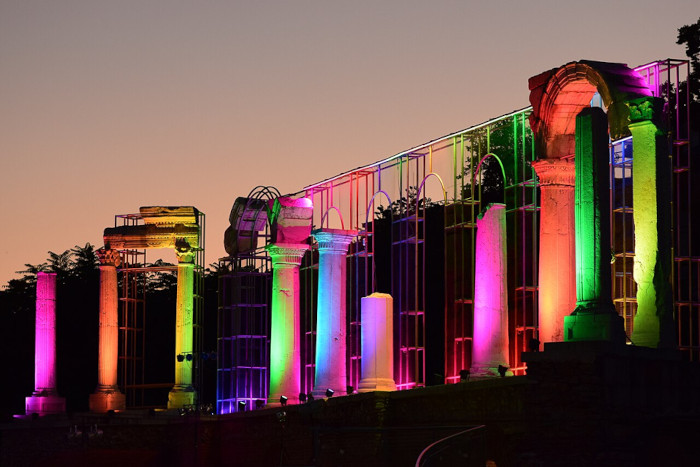
The Roman forum of Augusta Traiana, modern Stara Zagora. (LZ1ALT/CC BY-SA 4.0)
A small grave with a larger story
The child’s name, age and cause of death are not known, and the excavation report offers no evidence that the coin was specifically a payment for the underworld. What can be said is more grounded: a family chose to place valuable-looking personal ornaments and a newly minted imperial coin beside the child. That gesture echoes other Roman burials in which jewelry served as adornment, protection or a marker of family care, including the golden protective jewelry found with a Roman girl in Jerusalem. Alongside the rest of the necropolis, this Roman child burial gives archaeologists another fragment of everyday life in Augusta Traiana.
Top image: Two polyhedral gold earrings from the 1,750-year-old child’s grave. Source: Regional History Museum – Stara Zagora
By Gary Manners
References
Buyukyildirim, O. 16 October 2026. Gold Earrings and Roman Emperor’s Coin Found in 1,750-Year-Old Child’s Grave in Bulgaria. Available at: https://arkeonews.net/gold-earrings-and-roman-emperors-coin-found-in-1750-year-old-childs-grave-in-bulgaria/
Dudeva, P. 14 October 2026. Necropolis Consisting of 135 Graves Discovered During Archaeological Research in Stara Zagora. Available at: https://www.bta.bg/bg/news/lik/1224445-nekropol-sastoyasht-ot-135-grobni-saorazheniya-e-otkrit-pri-spasitelni-arheologicheski
Regional History Museum – Stara Zagora, 2026. NEW DISCOVERIES DURING RESCUE ARCHAEOLOGICAL INVESTIGATIONS OF RHM-STARA ZAGORA. Available at: NEW DISCOVERIES DURING RESCUE ARCHAEOLOGICAL INVESTIGATIONS OF RHM-STARA ZAGORA | Regional History Museum - Stara Zagora