
A windswept ridge in interior Alaska has produced an unusually detailed picture of life nearly 14,000 years ago. At Shég’ Xdaltth’í’, a new University of Kansas report describes more than 80,000 archaeological specimens, including animal bones, bone tools, hearths and distinctive stone points. The evidence suggests this was a recurring base camp where people processed food, made tools and organized daily life, rather than simply a brief stop during migration. It also offers a rare material link between Ice Age communities on opposite sides of the Bering Land Bridge.
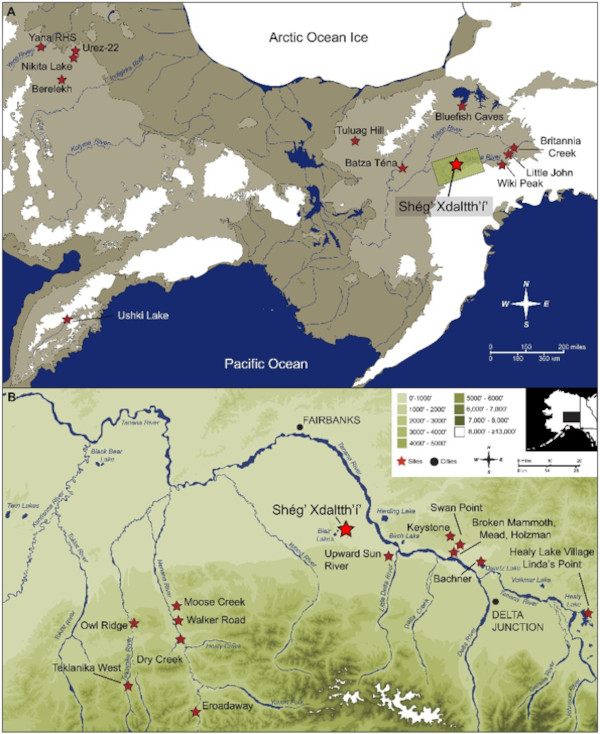
Location of Shég’ Xdaltth’í’ and other early archaeological sites in Beringia. (Graf et al./ Science Advances)
A camp above the Tanana River
The site, whose Alaska Native Athabascan name means “they were there,” lies about 55 kilometers south-southeast of Fairbanks on a bluff above the Tanana River. The peer-reviewed Science Advances study identifies three archaeological components dated to about 13,800, 13,000 and 12,700 years ago, with the oldest layer preserving the richest evidence. Researchers describe a dwelling area, an earth oven and clusters of artifacts that point to repeated activity rather than a single visit.
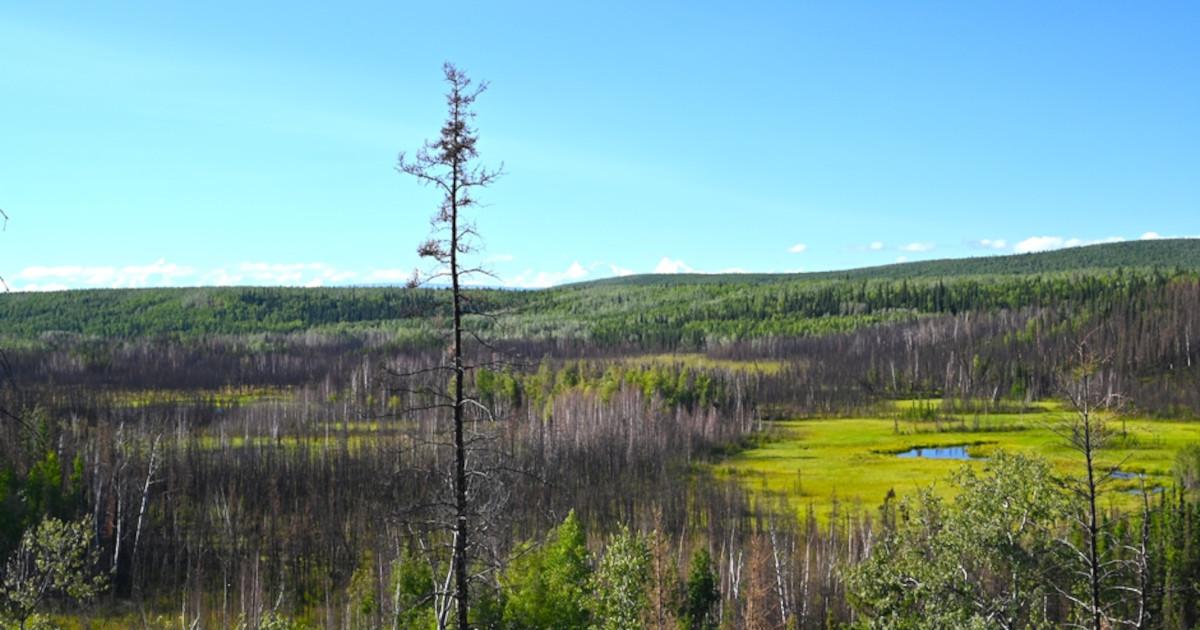
During the Late Pleistocene, the modern spruce forest had not yet formed around the ridge. The setting was shrub tundra, part of a northern landscape shaped by wind, open ground and herds of large animals. The National Park Service explains that falling sea levels exposed Beringia as a broad plain between Asia and North America, supporting plants, herbivores and the people who followed them.
- Did first Americans make a 10,000-Year Pit Stop on Beringian Land Bridge?
- By Land or Sea? The Heated Debate on the Peopling of the Americas Continues
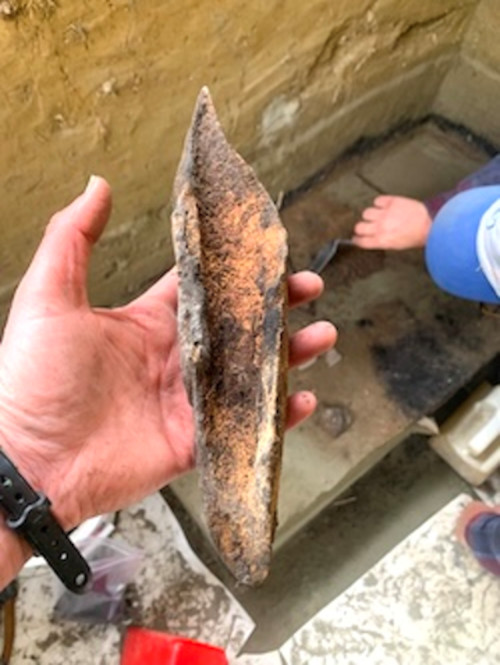
Steppe bison bone recovered at Shég’ Xdaltth’í’ during excavation. (Kelly Graf / University of Kansas)
Bones, ovens and a link across Beringia
The faunal remains indicate that the camp’s occupants hunted mammoth, bison and horse, alongside caribou, which remains important to Alaska Native communities. A large stone anvil was found beside smashed bison bones, quartz and quartzite hammerstones, and an earth oven. Graf told KU News that this arrangement suggests people broke bones to obtain marrow and probably rendered grease, turning a kill into stored calories and useful materials.
Bird bones had been shaped into needles, while the team identified a rare diamond-shaped hafted biface. Similar points occur at roughly contemporary sites in what was western Beringia, in present-day Russia. The pattern does not prove a single migration route, but it indicates that people, ideas or finished tools moved across the region. It complements the island-hopping hypothesis discussed by Ancient Origins, which argues that changing shorelines may have created several pathways.
- It Looks Like America’s First People Were Island Hoppers
- Researchers Confirmed Early Americans Survived by Hunting Earth’s Largest Animals
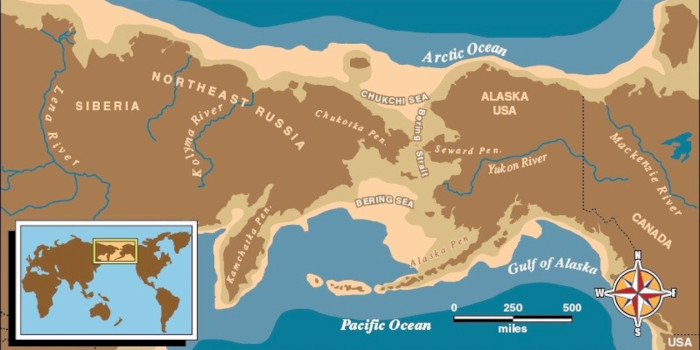
Beringia stretched between the Lena River in Russia and the Mackenzie River in Canada during the Ice Age. (National Park Service/U.S. government image)
A more human picture of the first Americans
The researchers call Shég’ Xdaltth’í’ the earliest known Nenana Complex occupation east of the former land bridge. Its dated layers show how quickly people settled into the Tanana basin, while the artifacts connect eastern Alaska with communities farther west. The result adds detail to a story once reduced to a simple crossing from Siberia, supporting a more complicated picture of movement, residence and adaptation.
Recent Ancient Origins reporting on megafauna hunting describes how large herbivores could provide food, fat, hides, bone and ivory. At Shég’ Xdaltth’í’, the story is unusually intimate: an oven, an anvil, broken bones and needles preserve practical decisions made at one northern camp. As Kelly Graf told KU News, “The past informs us on how humans have adapted and responded to life’s exigencies.”
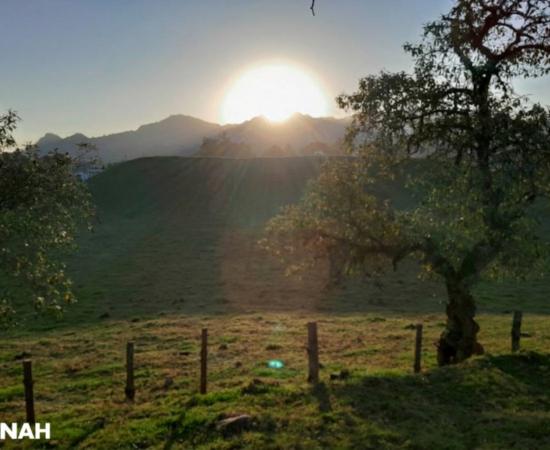
Top image: Spruce surround the Shég’ Xdaltth’í’ site, with the Alaska Range in the distance. Source: University of Kansas / KU News image
References
Graf, K.E. et al. 2026. Highlights from an early base camp in Beringia 13,800 years ago: Shég’ Xdaltth’í’ and the Late Pleistocene peopling of Alaska. Science Advances. Available at: https://www.science.org/doi/10.1126/sciadv.aeh0802
National Park Service. 2023. Beringia. Available at: https://www.nps.gov/bela/learn/beringia.htm
National Park Service. 2025. History of the Bering Land Bridge Theory. Available at: https://www.nps.gov/bela/learn/historyculture/the-bering-land-bridge-theory.htm
University of Kansas. 2026. Bering Land Bridge base camp reveals what life was like nearly 14,000 years ago. Available at: https://news.ku.edu/news/article/bering-land-bridge-base-camp-reveals-what-life-was-like-nearly-14000-years-ago