Gary Manners

Profile picture for user Gary Manners
Gary
Manners

Gary is editor and content manager for Ancient Origins. He has a BA in Politics and Philosophy from the University of York and a Diploma in Marketing from CIM. He has worked in education, the educational sector, social work and personal development. Gary has an interest in societies and social order, people’s values and social structures and generally how societies work. 

He has experienced life in several types of social order, from Liberal Western Democracy (mainly), to Socialist, Communal living and even a taste of Daoist lifestyle in China.

Member for

11 years 3 months

View Recent Blogs

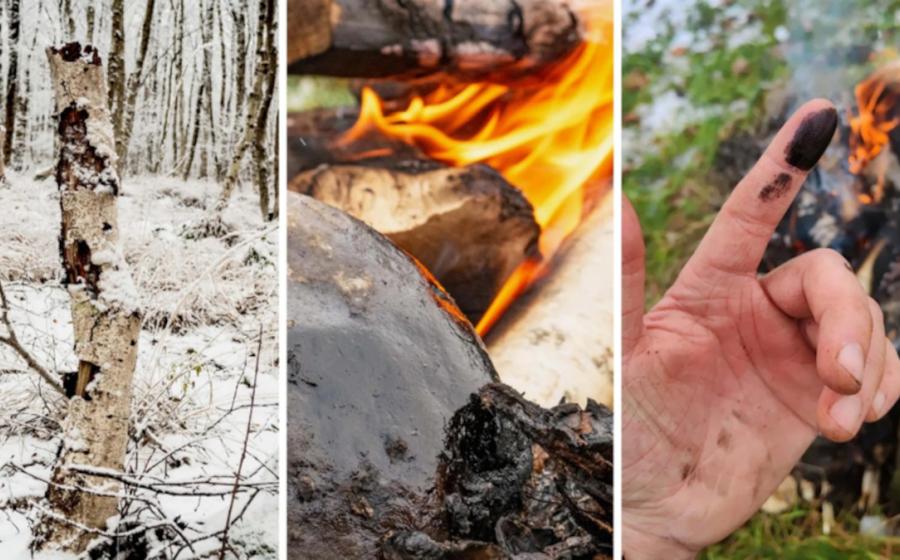
For decades, the sticky black tar that Neanderthals cooked out of birch bark has been filed away in the archaeological literature as prehistoric glue. A new round of laboratory experiments suggests that label is far too narrow. Researchers in Germany, Britain, Belgium and Canada made birch tar using methods reconstructed from Middle Palaeolithic sites, then tested it against bacteria, and every sample inhibited Staphylococcus aureus, the organism behind many infected wounds. The work, published in PLOS One, was led by Tjaark Siemssen of the University of Cologne and the University of Oxford. A Glue That Did Much More Than Stick Birch tar is found at Neanderthal sites across Europe, often still clinging to stone tools. It was made by heating
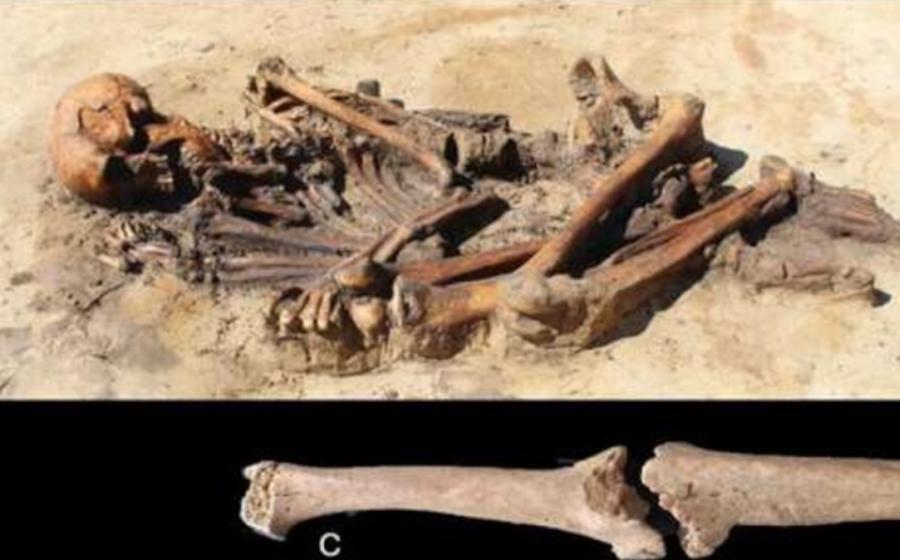
Fragmented human bones built into floors, hearths and walls across Scandinavia have been quietly holding evidence the cemeteries never recorded: the victims of violence who never got a proper grave. A new study in the Journal of Archaeological Method and Theory has identified 12 people carrying 19 serious injuries among 192 individuals whose remains were placed in and around homes in Denmark, Norway and Sweden. At least eight were attacked deliberately, and at least six died of their wounds. The most unsettling case is a small child whose damaged skull was buried in a house floor in North Jutland. Adult male with stress markers and a non-union "parry" fracture on the midshaft of the left ulna — the kind of
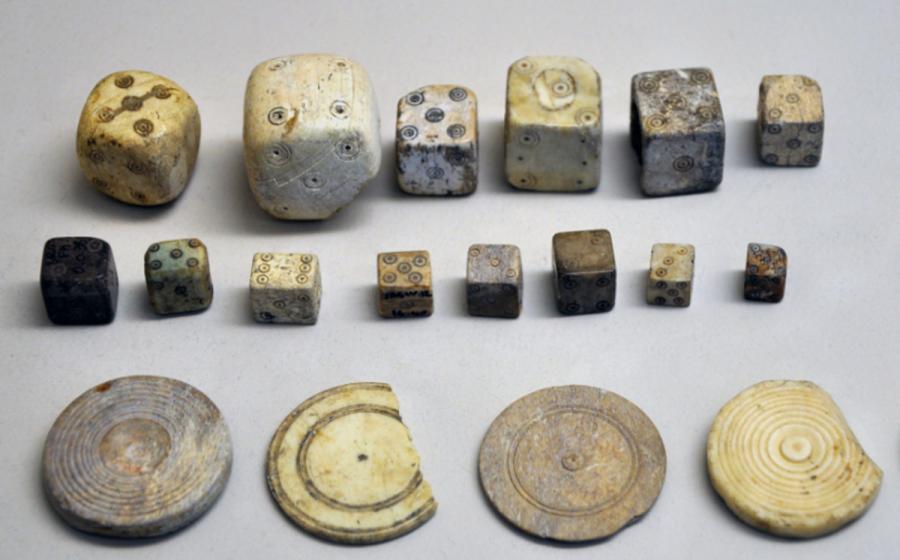
More than 1,000 ancient bone dice have been lifted from the soil beside a single small building in northeastern France, an accumulation so extreme that archaeologists are still arguing over what it means. The hoard comes from Grand, a village of a few hundred people in the Vosges that in Roman times was a Gallo-Roman town covering more than 70 hectares, with monumental buildings, an amphitheater for 17,000 spectators and a sanctuary of the healing god Apollo Grannus, explains the Greek Reporter. With that mix of spectacle and speculation, coverage has already reached for a modern nickname: an ancient "Las Vegas". A view of the excavation site in Grand, France. (CD88/via Historia ) A Tiny Building and a Very Large
A scribe in Roman Egypt needs the area of a field. He reaches for a reed pen, sketches a rough triangle on papyrus and writes numbers along its sides. A new study argues that scruffy sketch was not decoration, but the place where the mathematics actually happened. Thomas Kelly, a classicist at the University of Cambridge, has built the first full catalogue of these drawings and concluded they worked as scratch paper, memory aid and answer key all at once. The original papyrus fragment from Vienna. The damaged ink lines belong to a diagram for finding the volume of a square-based pyramid. (Kelly, T. Historia Mathematica, 2026 ) A Gap Filled After a Century of Scattered Sketches Kelly examined ten
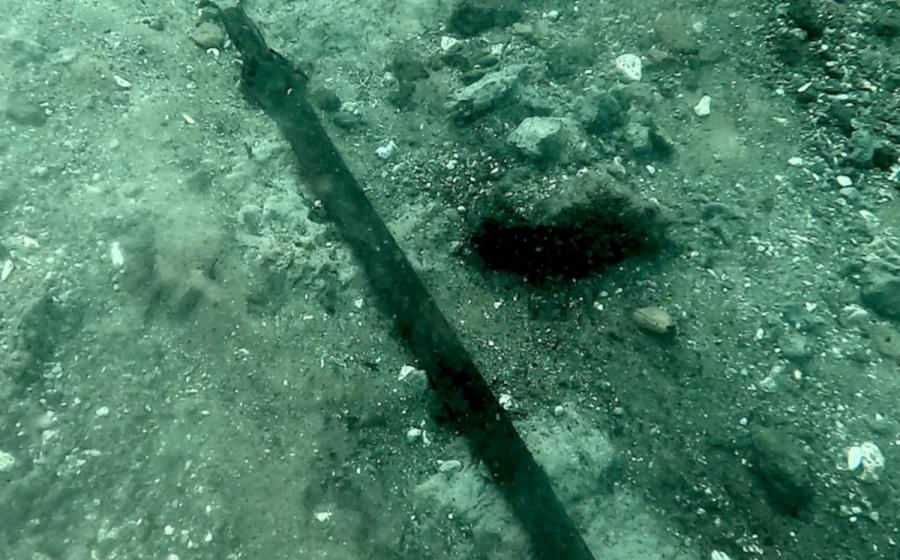
Underwater archaeologists have lifted a bronze sword from a submerged Bronze Age village in central Italy that is more than 3,000 years old – and still sharp enough to cut. The weapon, raised from Lake Mezzano in the Tuscia region of Lazio, is the third sword to come out of the same site since the 1970s. Why so many finely made blades ended up there is a question researchers still cannot answer. The find was announced by the Soprintendenza Archeologia, Belle Arti e Paesaggio for the province of Viterbo and Southern Etruria, whose Underwater Archaeology Service recovered the blade during the closing stages of its 2026 season, assisted by Carabinieri divers. As HeritageDaily reports, the Superintendency described the recovery as
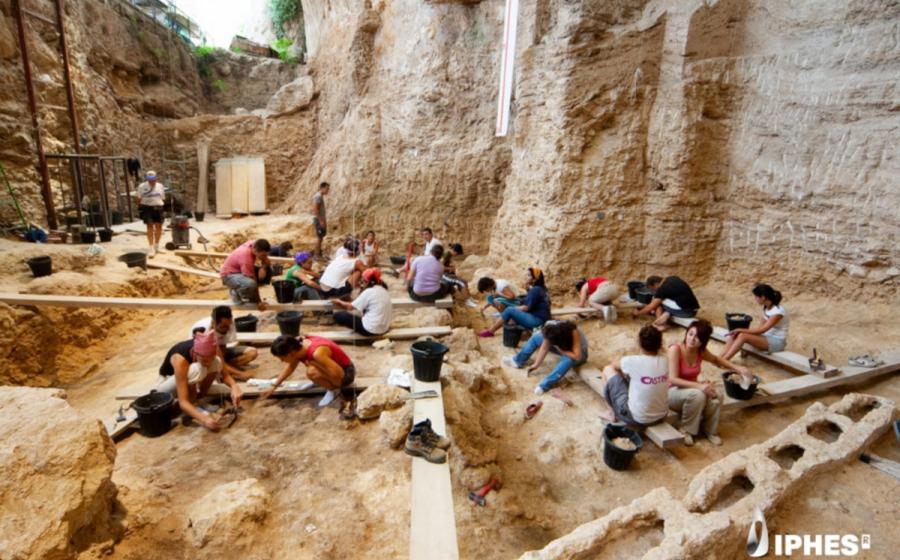
A cave in Catalonia has preserved something archaeologists almost never find: the wooden tools of Neanderthals. Spears, bark trays, digging sticks and a club-like object with no known parallel have been identified among wood remains left at Abric Romaní, near Barcelona, between roughly 62,000 and 40,000 years ago. The results, published in Science Advances, come from four decades of excavation at the site. Because wood normally rots, the study restores a branch of Neanderthal craft long missing from the story. Wood is the blind spot of the Palaeolithic. Stone tools survive by the million, but organic materials vanish, so much of the Neanderthal toolkit has never been found. Abric Romaní is the exception. The shelter sits beneath a cliff of
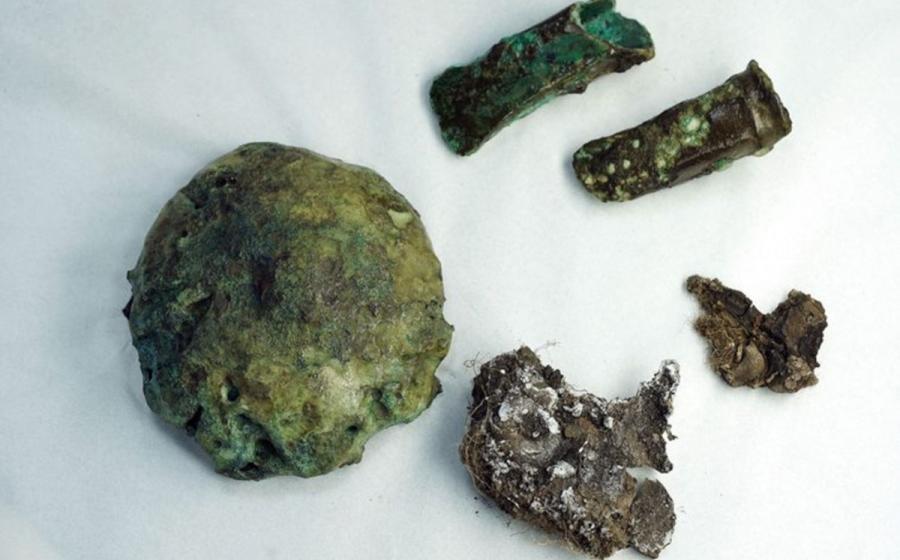
A metal detectorist who recovered one of Scotland's most important Bronze Age treasures has struck again, lifting a second hoard from the ground barely seven miles away and only two years later. Mariusz Stępień's 2022 find, now known as the Blyth Hoard, contains two bronze axe-heads, fragile clay molds and a complete copper ingot, the first of its kind ever recorded in Scotland. Archaeologists believe the modest-looking cache may explain how the extraordinary fittings in the earlier Peebles Hoard were made, and that both collections could be the work of the same Bronze Age craftspeople. "Having previously discovered the Peebles Hoard, it is quite extraordinary to think that two discoveries I made so close to one another could be connected,"
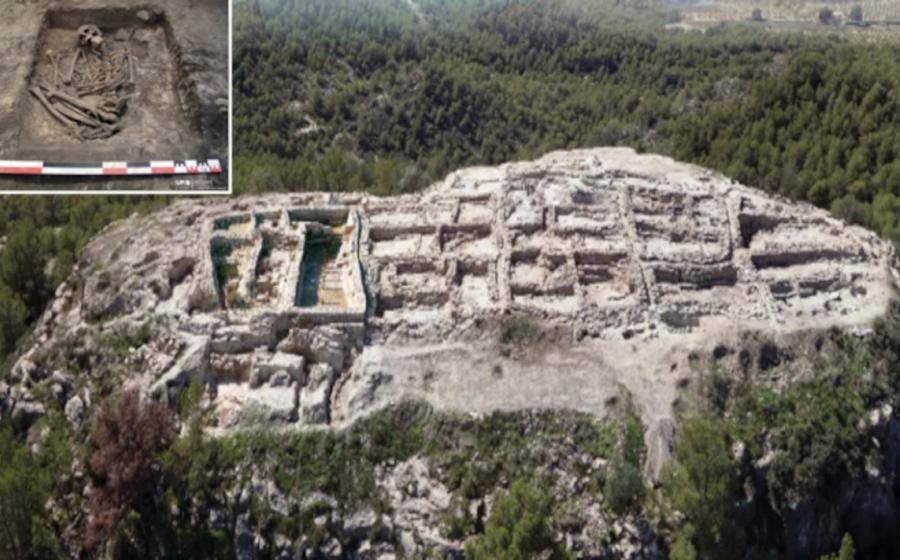
For roughly 3,700 years, anyone crossing the great hall of La Almoloya in south-eastern Spain walked over a man. His lower body lay beneath a hearth, his face sat barely a centimeter below the floor, and a large stone had been jammed between his teeth. His excavators called him "the enemy" and read the burial as punishment. A study in 'Ilu. Revista de Ciencias de las Religiones, reported by Archaeology News Online Magazine, now argues it was a magical ritual to hold down the forces of chaos he embodied. Sealed Between Two Floors of a Palace Hall The skeleton, catalogued as AY5, was found in Room H9 of Residential Complex 1 at La Almoloya, the Argaric settlement at Pliego in
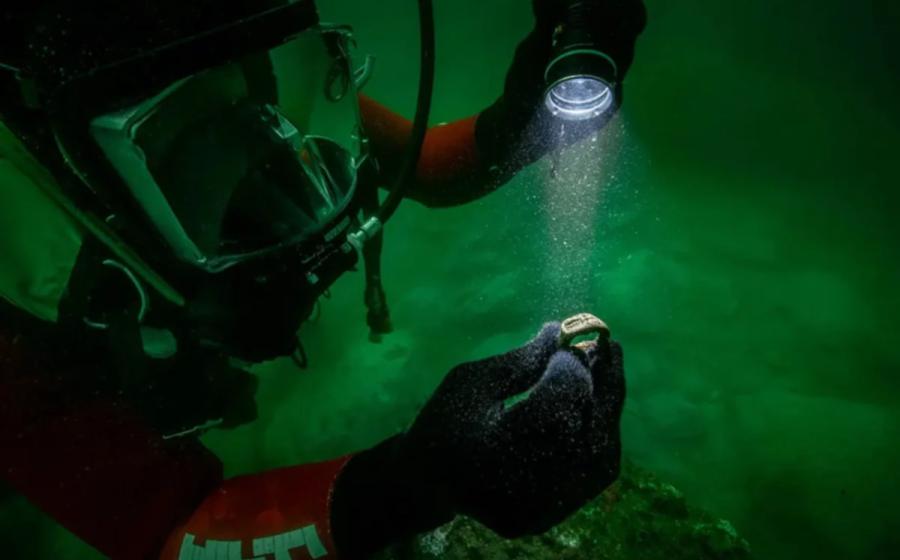
A bronze seal ring engraved with an image of the Lighthouse of Alexandria has been lifted from the sunken royal quarter of the city's Eastern Harbor. Egyptian authorities say it is the first known representation of the famous Pharos ever found on a seal ring, and the small object may tell us as much about the people who ran Alexandria's port as about the vanished wonder itself. The ring engraved with an image of the Lighthouse of Alexandria. (C. Gerigk / F. Goddio / Hilti Foundation/ MOTA ) A Wonder Shrunk to the Size of a Ring The announcement came from Hisham El-Leithy, Secretary-General of Egypt's Supreme Council of Antiquities, during a visit by Tourism and Antiquities Minister Sherif Fathy
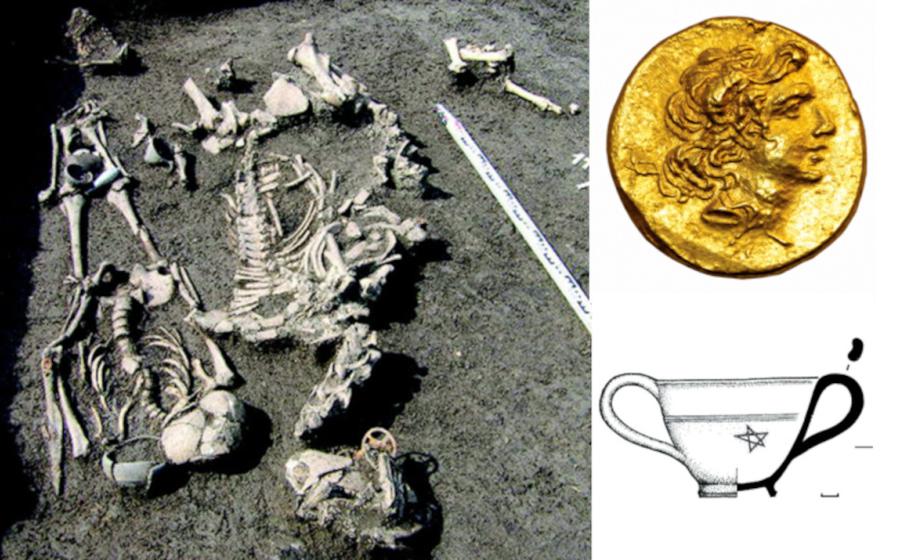
A young horseman buried more than 2,000 years ago in southern Russia went to his grave with weapons, his horse and a gold coin tucked beneath his jaw. Beside him lay a modest grey drinking cup scratched with a pentagram — a mark his community trusted to protect the dead. Archaeologists studying the Maeotian necropolis of Vinogradny 1, near Krymsk in Krasnodar Krai, now say his burial sat at the center of a far larger ritual landscape. The find, reported by Arkeonews, opens a rare window on how status, protection and hopes for the afterlife came together in one warrior grave. The warrior and his horse, excavated in Burial 52 at Vinogradny 1. ( Abramzon et al., Russian Archaeology, 2026