


July
13
/ 2026
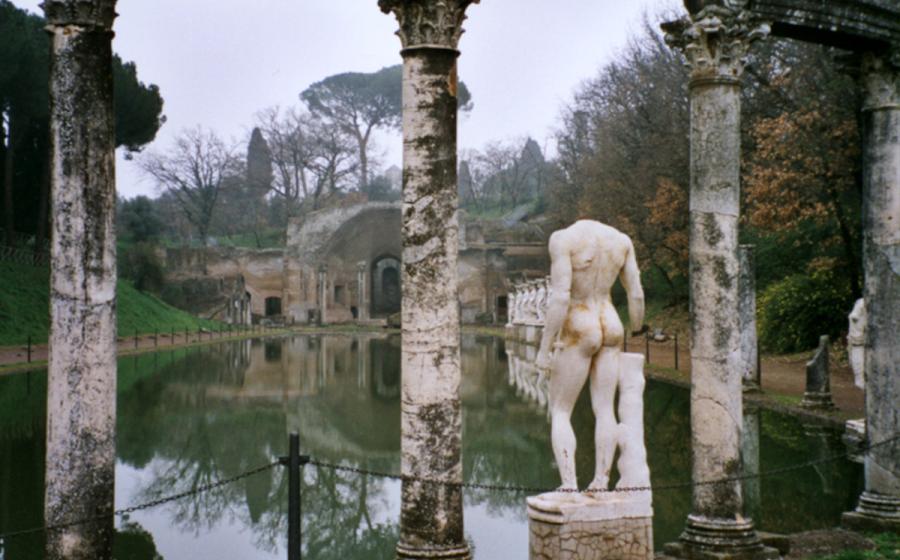
The extraordinary longevity of Roman concrete has puzzled scientists for centuries. Recent analysis of a 2nd-century AD latrine in Emperor Hadrian’s Villa is providing remarkable answers. Researchers have discovered that mineralized carbonates (specifically the slow, long-term formation of calcite crystals) are largely responsible for the incredible durability of these ancient structures. By examining the concrete matrix beneath a communal toilet at the luxurious Canopus western substructures in Tivoli, Italy, a team of international scientists has uncovered a self-healing mechanism that allowed the material to survive for nearly two millennia. The study, recently published in Science Advances , used advanced multiscale imaging (including synchrotron-based micro-computed tomography) to observe the concrete at the nanoscale. While experts previously attributed Roman concrete’s strength primarily

















