aprilholloway

Profile picture for user aprilholloway
April
Holloway

April Holloway is a Co-Owner, Editor and Writer of Ancient Origins. For privacy reasons, she has previously written on Ancient Origins under the pen name April Holloway, but is now choosing to use her real name, .

Joanna completed a Bachelor of Science (Psychology) degree in Australia and published research in the field of Educational Psychology. She has a rich and varied career, ranging from teaching children with autism in an early intervention program, owning and operating an online English teaching business, working as a research and project officer in the office of TRH The Prince of Wales and The Duchess of Cornwall and assistant in the office of Prince William and Prince Harry, as well as co-owning a website design and development company.

Joanna co-founded Ancient Origins with her husband Dr Ioannis Syrigos. Together they immersed themselves in their personal passion for ancient history, mythology and human origins.  She loves learning about and experiencing other cultures and has spent time living in Australia, UK, Greece, Ecuador and Ireland and travelling to hundreds of historic sites around the world.

Joanna has written over 1,000 articles for Ancient Origins, some of which have been mentioned in the New York Times, CNN, Fox News, The Guardian, Peru Weekly, International Business Times, Spiegel and The Daily Mail. She has contributed as a guest writer for other media organizations, including The Epoch Times and iSpectrum Magazine, and has been interviewed on historical subjects on ten radio shows, including the BBC. She has upcoming radio and TV appearances in Ireland on Newstalk and RTE’s Today Show.
Member for

13 years 8 months

View Recent Blogs

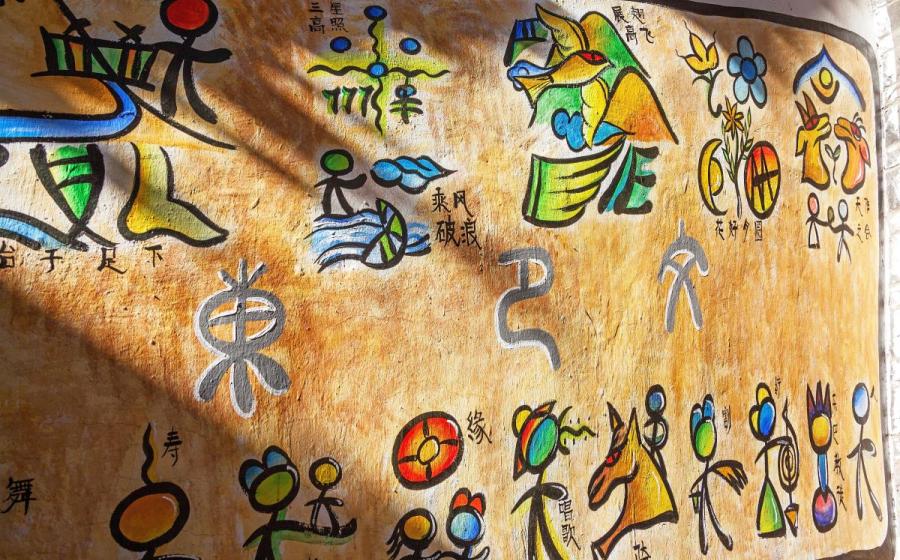
The Dongba symbols are an ancient system of pictographic glyphs created by the founder of the Bön religious tradition of Tibet and used by the Naxi people in southern China. Historical records show that this unique script was used as early as the 7th century, during the early Tang Dynasty, however, research conducted last year showed that its origins may date back as far as 7,000 years ago. Incredibly, the Dongba symbols continue to be used by the elders of the Naxi people, making it the only hieroglyphic language still used in the world today. Rare Chinese Anatomy Text Links Earliest Dissections and Acupuncture Ten Extraordinary Ancient Texts That Exploded Our Ancient Knowledge The Naxi People and Their Mountainous Homeland
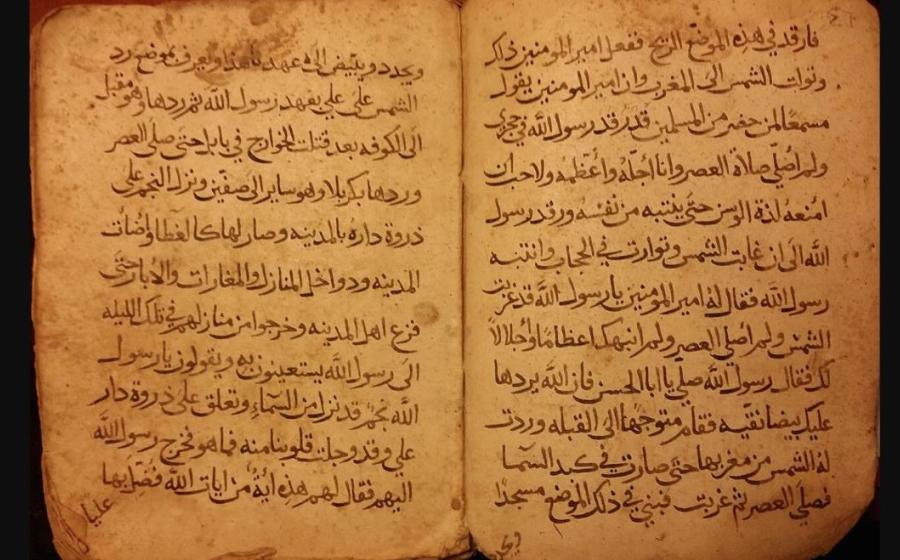
Written nearly a thousand years ago, the Kitab al-tabikh (book of cookery) written by Ibn Sayyar al-Warraq, is the most comprehensive work of its kind. It includes more than 600 recipes for culinary and medicinal dishes, including a well-known ancient Middle Eastern hangover cure, ingredients for enhancing sexual performance, and dishes for curing a range of health problems. The ancient text has been translated by Nawal Nasrallah, a former professor of English and comparative literature at the University of Baghdad, into the ‘Annals of the Caliph’s Kitchen’, making these fascinating recipes accessible to the English-speaking world. Could Ancient Textbooks Be The Source Of The Next Medical Breakthrough? Ancient Egyptian Texts Contain Hangover Cure And Radical Eye Disease Treatments The Enigma
The Great Pyramid of Giza is undoubtedly one of the most well-known icons of the ancient world. But thousands of other pyramids exist, not just in Egypt, but across the entire globe, including Europe, Asia, Oceania and the Americas. The reason why so many ancient civilizations, many of which had no contact with each other, were constructing pyramids at around the same time remains a bit of a mystery. Nevertheless, many of these impressive monuments remain as legacies of these rich, ancient cultures. Here, we look at 5 little-known pyramids from the ancient world. 2,000-Year-Old Pyramid in Rome Gets a Facelift The Djoser Step Pyramid: Architectural Marvel of Egypt (Video) 1. A Pyramid in the Heart of Rome, Italy Rome
Mangareva is home to just 2,000 inhabitants. The island is a tiny 18 square kilometres (6.94 sq mi) and is located halfway between Easter Island and Tahiti. Yet on this small, remote island, the ancient inhabitants were more mathematically advanced than the rest of Europe when they invented a numerical system for trading.  Omar Khayyam: Lasting Achievements of the Persian Polymath and Poet Yucatan Children Learn Math Better Thanks to Ancient Mayan Numeral System Uncovering Mangarevan Mathematics: A Cognitive Perspective Research conducted and published in the journal Proceedings of the National Academy of Sciences in 2013, revealed that the indigenous people of the Polynesian Island  invente d a binary number system , similar to the one used by computers to calculate, centuries
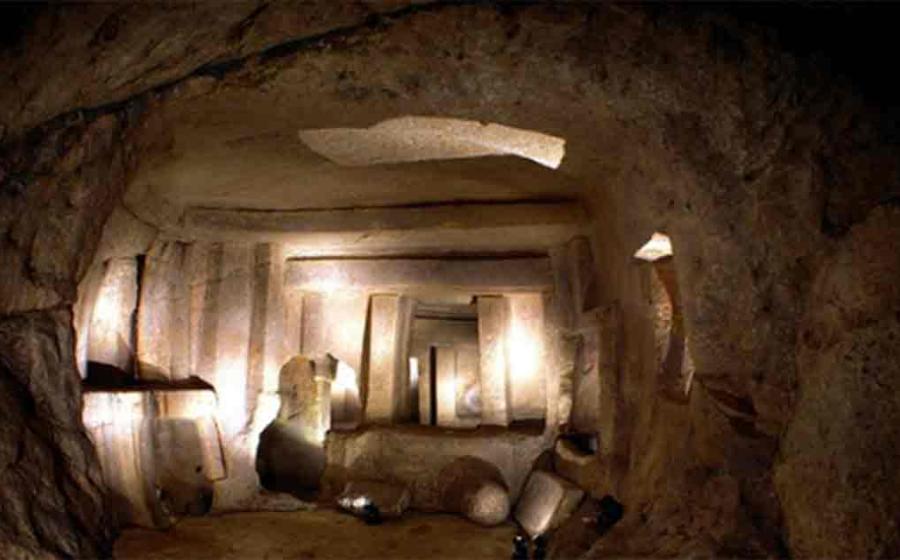
The Hypogeum of Hal Saflieni in Malta is a UNESCO World Heritage Site which is believed to be the oldest prehistoric underground temple in the world. The subterranean structure is shrouded in mystery, from the discovery of elongated skulls to stories of paranormal phenomena. But the characteristic that has been attracting experts from around the globe is the unique acoustic properties found within the underground chambers of the Hypogeum. Hal Saflieni Hypogeum is a cultural property of exceptional prehistoric value, dating back approximately 5,000 years and the only known example of a subterranean structure of the Bronze Age. The 'labyrinth', as it is often called, consists of a series of elliptical chambers and alveoli of varying importance across three levels
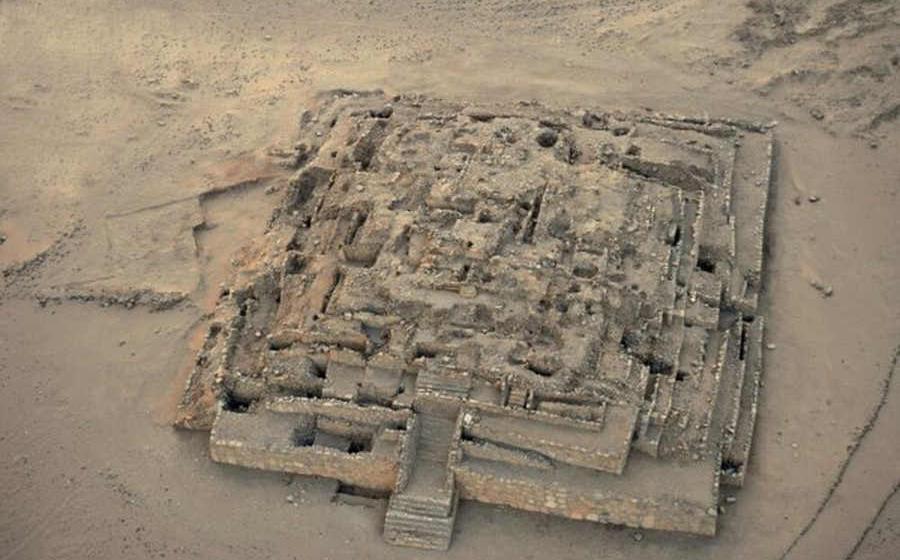
Located in the majestic Altai-Sayan Mountains in the south of Siberia, the city of Abakan has a long and rich history going back thousands of years. But in the 1940s, archaeologists found something near Abakan, that was entirely unexpected – the 2,000-year-old remains of a Chinese palace typical of the Han Dynasty in China. What was so unusual about this discovery was the fact that not only was the palace hundreds of miles away from the region of the Han Empire, it was also located in territory that belonged to their arch-enemy, the Xiongnu. Discovery of the Han Empire Palace in Khakassia The Xiongnu were a nomadic pastoral people who formed a great tribal league that came to dominate much
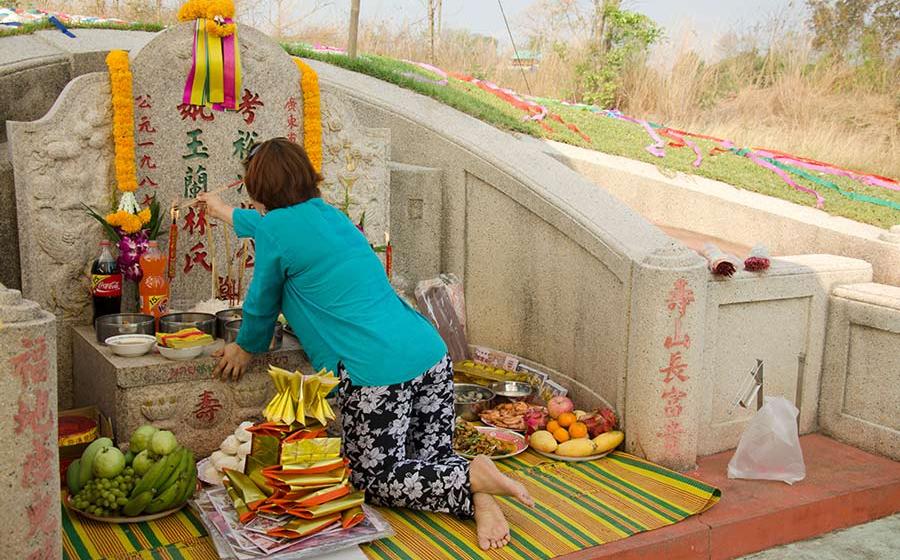
Every year, the Chinese celebrate the historic Qingming Festival. Fondly known as Ancestors Day or Tomb Sweeping Day, it is a day that commemorates the onset spring and the occasion when families show their respects to their ancestors by visiting and cleaning their graves. Tomb Sweeping Day takes place on the 15th day after the Spring Equinox, which falls on either the 4th or 5th April of the Gregorian calendar. Astronomically, Qingming is one of the Chinese solar terms, one of 24 points in traditional East Asian lunisolar calendars that matches a particular astronomical event or signifies some natural phenomenon. The points are spaced 15° apart along the ecliptic and are used by the Chinese to stay synchronized with the
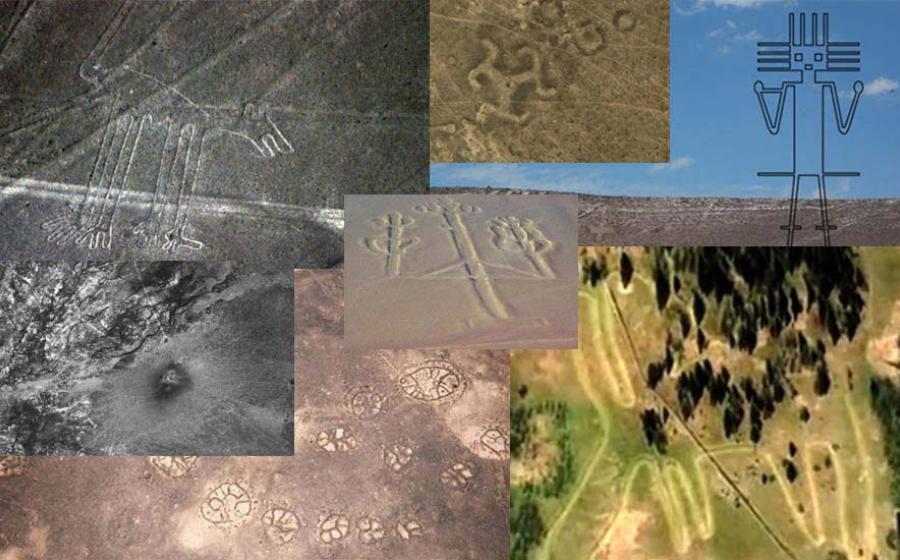
The most well-known geoglyphs in the world are undoubtedly the Nazca Lines of coastal Peru. Yet, scattered across the globe are thousands of other geoglyphs that are equally as impressive. The earth carvings remain one of archaeology’s greatest mysteries. Despite a plethora of research on these amazing creations, the purpose of geoglyphs continues to elude researchers and remains a matter of conjecture. Some scientists believe they are linked to the heavens, representing constellations in the night sky. Other experts believe that the lines played a role in pilgrimage, with one walking across them to reach a sacred place. Yet another idea is that the lines are connected with water, something vital to life yet hard to get in the desert
Angkor Wat is a fascinating temple complex in northwestern Cambodia, located in what was once the capital of the ancient Khmer Empire which presided over a vast kingdom in Southeast Asia. While Buddhists believe that it was built in a night under orders of the god Indra, it actually took decades to create what was originally a Hindu temple dedicated to Vishnu in the 12th century. Covering an area of about 162.6 hectares (about 400 acres), it is said to be the largest religious monument in the world. Creating the Unforgettable Angkor Wat Temple Angkor Wat was built over several decades starting in the first half of the 12th century by King Suryavarman II of the Khmer Empire who ruled
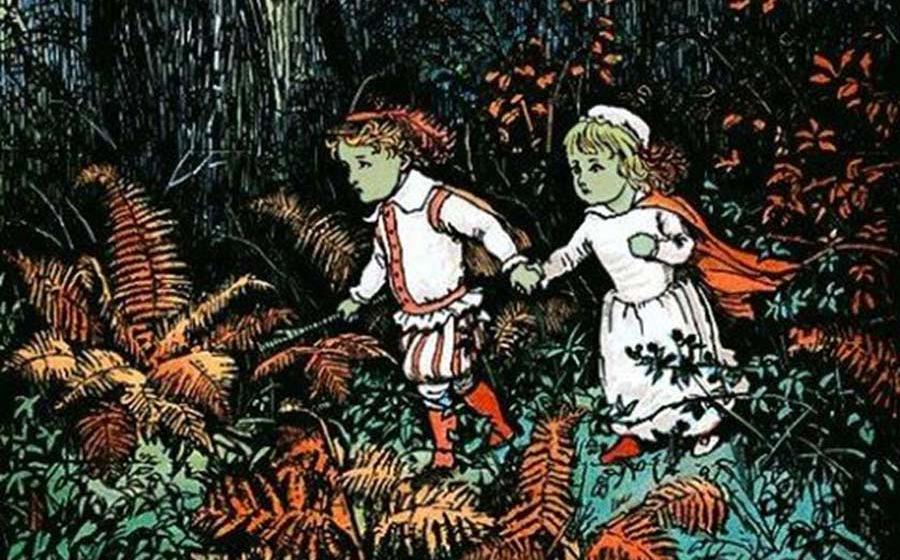
The 12th century tale of the Green Children of Woolpit, in Suffolk, is a bizarre medieval folk story which has been remembered for generations. It isn’t often we hear of children appearing at the edge of a field, with green-tinged skin and no knowledge of any locally-known language. Even today, historians debate as to whether there was any truth to the story, some going so far as to claim it describes an extraterrestrial encounter. [[{"type":"media","view_mode":"media_large","fid":"93529","attributes":{"alt":"A village sign in Woolpit, England, depicting the two Green Children of Woolpit from the 12th century legend. (Rod Bacon / CC BY-SA 2.0)","class":"media-image","height":"364","style":"width: 610px; height: 364px;","typeof":"foaf:Image","width":"610"}}]] A village sign in Woolpit, England, depicting the two Green Children of Woolpit from the 12th century legend. (Rod