
Celtic languages once extended across much of Iron Age Europe, but the journeys that carried their ancestral speech remain a matter of debate. Linguists reconstruct that ancestor, known as Proto-Celtic, through comparisons between related languages, while archaeologists trace communities whose surviving objects cannot identify the language their makers spoke.
Published in Nature on November 4, 2026, a study led by Hugh McColl, Guus Kroonen and Eske Willerslev compares those questions with genomes from 4,587 ancient individuals. Its authors favor an eastern central European route for Celtic expansion, linking linguistic estimates with population movements reconstructed from Bronze and Iron Age remains.
The study identifies three extended demographic processes, rather than a single migration that could explain every stage in the development of Celtic speech. Could these movements help locate the formation of Celtic speech, or does the surviving evidence still accommodate more than one credible route?
Three Movements Across Bronze Age Europe
The researchers place their findings on a timeline expressed in calendar years BP, with the reference point fixed at AD 1950 rather than the publication date. Their dataset includes 578 newly retained individuals from a larger generation set of 712 shotgun-sequenced genomes, alongside previously published ancient material that passed analytical filters.
The earliest of the three processes occurred between 4,400 and 4,000 BP, when Steppe-related ancestry spread through the Bell Beaker region of western Europe. This movement reached territory where Celtic and related languages were later spoken, giving researchers one possible demographic setting against which to test linguistic origin models.
Between 3,800 and 3,200 BP, another movement carried ancestry from southwestern Europe into Britain, providing a different route through the Bronze Age population record. That connection matters because proposals for an Atlantic formation of Celtic need evidence of relationships along Europe's western coast, rather than exclusively across the continental interior.
The third process brought ancestry related to Late Bronze Age Knovíz and Urnfield-associated populations westward from eastern central Europe between 3,200 and 2,800 BP. Its effects appear in France, the British Isles, northeastern Iberia and Italy, overlapping regions where Celtic languages were subsequently documented in the historical record.
Knovíz-related ancestry is the researchers' proxy for a broader population grouping, rather than an identification of every migrant as a member of the Knovíz culture. The authors connect this later movement with subsequent Iron Age Hallstatt contexts and La Tène contexts, without making archaeological culture a genetic test for speech.
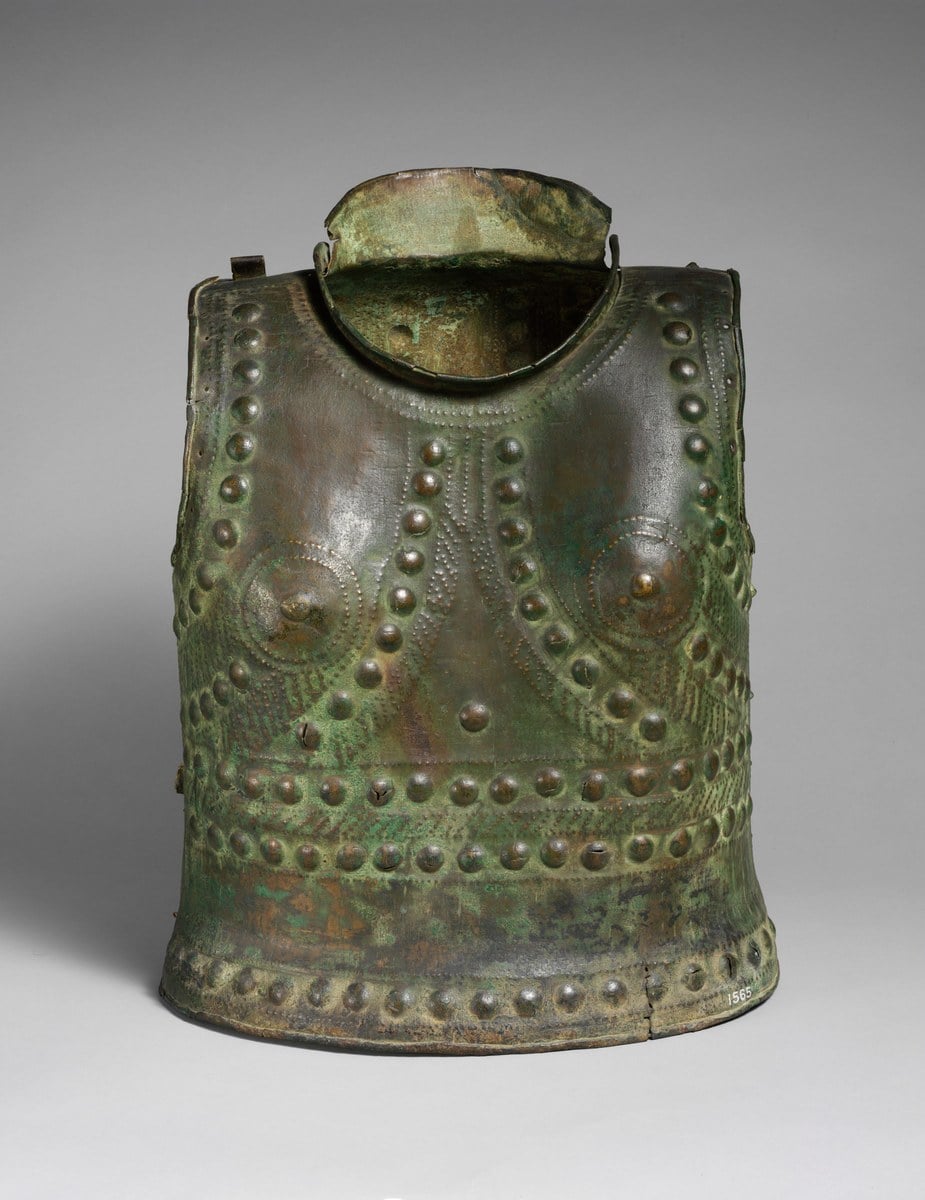
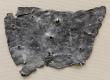
Bronze Age comparison only. Bronze breastplate dated to the 12th to 10th century BCE, cataloged by The Metropolitan Museum of Art as Late Bronze Age and Hallstatt (Western European). These centuries overlap the study's third movement, 3,200 to 2,800 BP. The museum record gives no findspot. Chronological overlap is not evidence of migration, language or genetic ancestry. This is not a find, sample or genome from the study. Credit: The Metropolitan Museum of Art, accession 09.41, object record, CC0. Resized, uncropped.
Why an Eastern Route Fits the Model
The team compared four proposed explanations for Celtic origins, bringing together linguistic dating estimates and the ancestry changes visible in its ancient genomic dataset. These were a Bell Beaker model, Celtic from the West, Celtic from the Centre and Celtic from the East, each proposing different starting points or routes.
The western model places formation along the Atlantic zone, while the central model favors inland France and possibly northwestern Italy as the relevant source area. The eastern model instead starts farther into central Europe, where the later westward movement offers a demographic connection with the subsequent distribution of Celtic speech.
Within these four predefined scenarios, the authors call the eastern explanation the most parsimonious, given the available samples and estimates for linguistic developments. In this comparison, parsimony means requiring fewer additional assumptions, such as the survival of an earlier language through substantial later changes in a region's population.
However, fewer assumptions do not establish a model's historical likelihood, and the authors explicitly treat parsimony as a comparative heuristic rather than proof. Human communities can preserve languages through population change, and a complicated history remains possible even when a simpler explanation fits the evidence currently available to researchers.
The linguistic side therefore remains essential, because reconstructing Celtic words and their development addresses questions that an inherited stretch of DNA cannot answer. Population history can constrain the journeys available to an origin hypothesis, but identifying shared ancestry does not recover the conversations through which a language was learned.
An Atlantic Alternative and a Missing Population
The Atlantic explanation retains a specific foothold in the results, because the southwestern movement into Britain is itself one of the study's reconstructed processes. The authors acknowledge partial support for other models and allow that Celtic formation and dispersal may have followed a more complex path than any single scenario.
The eastern proposal also encounters a substantial gap at precisely the period when its suggested carriers would have been moving through the Urnfield world. Few genomes survive in the dataset between 3,200 and 2,800 BP because cremation was practiced in Urnfield-associated communities, limiting the remains available for ancient DNA analysis.
However, this shortage leaves uncertainty about the source populations and timing of movement, rather than demonstrating that the proposed journeys did or did not occur. More relevant samples could change the reconstruction, especially where a language model currently depends on populations represented only unevenly in the surviving biological record.
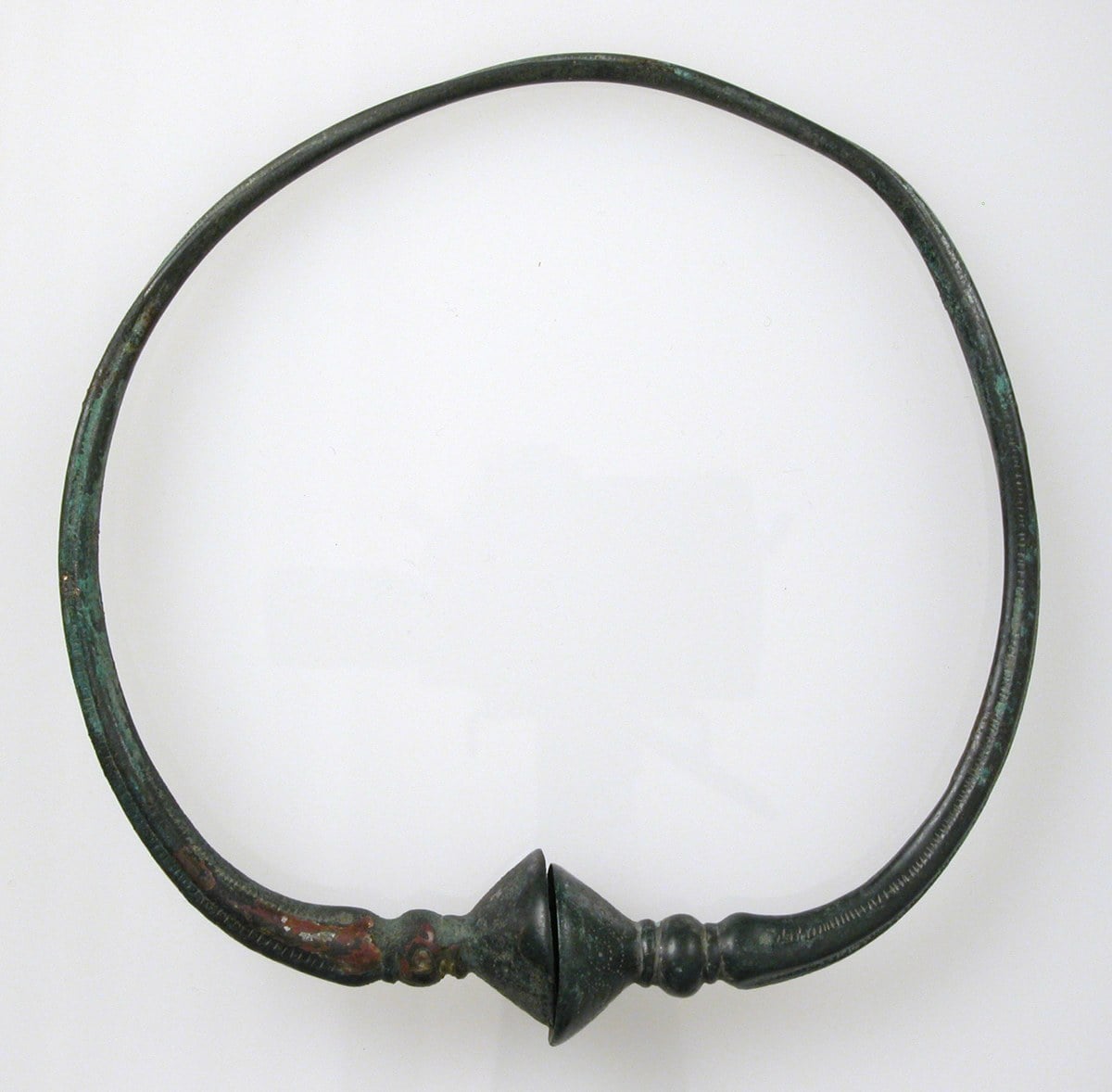
Later Iron Age comparison only. Copper alloy torc, or neck ring, dated to the 4th to 3rd century BCE and cataloged by The Metropolitan Museum of Art as Celtic, La Tène II. It is later than all three modeled movements and illustrates later material culture, not the missing Urnfield burials. It is not a study find or evidence of migration, language, genetic ancestry or modern identity. Credit: The Metropolitan Museum of Art, accession 17.191.244, object record, CC0. Resized, uncropped.
Languages Beyond the Reach of DNA
David Stifter, a historical linguist at the Dublin Institute for Advanced Studies, welcomed the correspondence between the genomic findings and arguments developed from language evidence. Speaking to Science, he described that agreement:
“The ancient DNA has, to a large extent, corroborated what we had been arguing about prehistoric population movements based on purely linguistic grounds,” said Stifter.
Stifter was outside the study's author list but reviewed the Celtic paper, while Joscha Gretzinger, an archaeogeneticist at the Max Planck Institute for Evolutionary Anthropology, reviewed its Germanic companion. Gretzinger told Science that much of the sampling had been assembled around Germanic questions, and that more specifically Celtic burials could alter the picture.
Gretzinger said, “It’s a nice hypothesis, but it’s not the final verdict.” Further ancient samples could still reshape the proposed scenario. These responses illustrate support and reservations about the proposed connection, rather than establishing a scholarly consensus on where the ancestral Celtic language originally took form.
The companion study, published in Nature on October 28, 2026, identifies ancestry entering Sweden, probably from the Baltic region, around 4,000 BP. By 3,500 BP, that ancestry had become widespread in Scandinavia. Its authors suggest a possible route for a Germanic precursor, again connecting demographic evidence with a linguistic hypothesis rather than identifying speech directly.
In their accompanying explanation for The Conversation, the researchers emphasize that ancient DNA cannot reveal the language spoken by a particular person whose remains are sampled. Written evidence, including later early Irish Ogham inscriptions, preserves words directly, but cannot provide a transcript of conversations from the much earlier Bronze Age movements.
Celtic linguistic features could also have circulated between mutually intelligible dialects, the paper suggests, without requiring the complete replacement of local languages as populations moved. The genomes give the eastern proposal a demographic framework, but about the languages spoken along those routes, there is still much to learn.
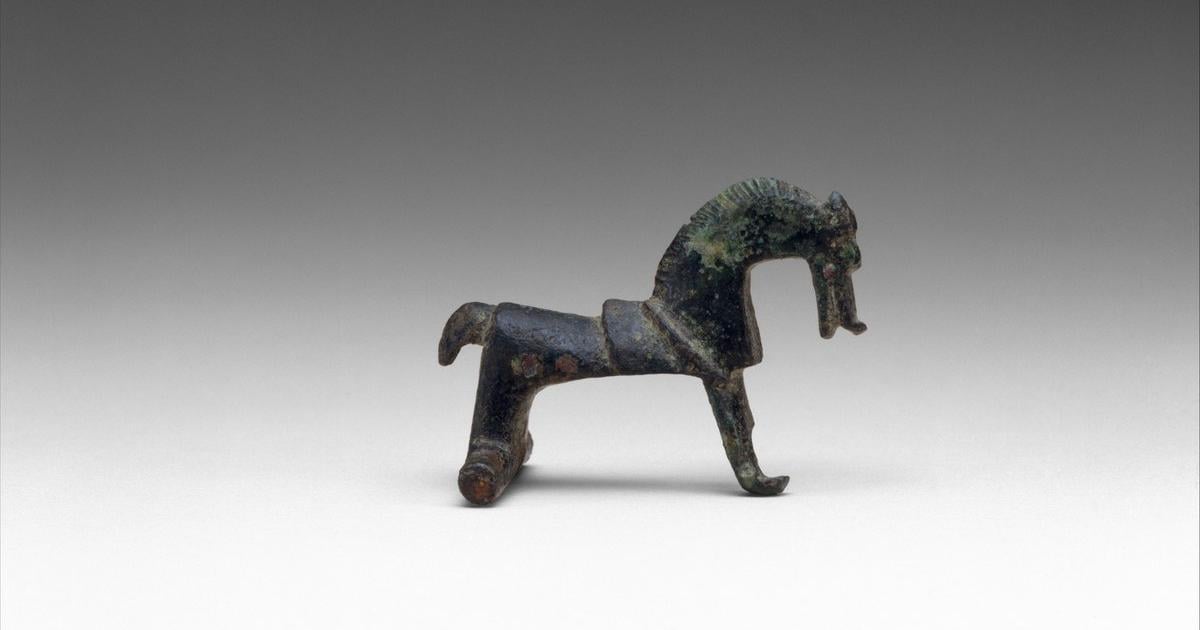
Later Iron Age comparison only. Horse-shaped bronze brooch dated 650 to 550 BCE, later than all three modeled movements, cataloged by The Metropolitan Museum of Art as Celtic and from central Europe. It is 4.6 cm (1.8 in) long. It illustrates material culture, not evidence of migration, language, genetic ancestry or modern identity, and is not a find from the study. Credit: The Metropolitan Museum of Art, accession 1992.107, object record, CC0. Resized, uncropped.
By Aris Manus
Sources
- McColl, H., Kroonen, G. et al. (2026). Tracing the spread of Celtic languages using ancient genomics. Nature. Published November 4.
- McColl, H., Kroonen, G. et al. (2026). Tracing the spread of Germanic languages using ancient genomics. Nature. Published October 28.
- Curry, A. (2026). Report on the Celtic-language study. Science, November 4.
- Kroonen, G., Willerslev, E. and McColl, H. (2026). Authors' explanation of the language studies. The Conversation, November 4.
- University of Gothenburg (2026). Ancient DNA reveals the origins of languages. November 4.