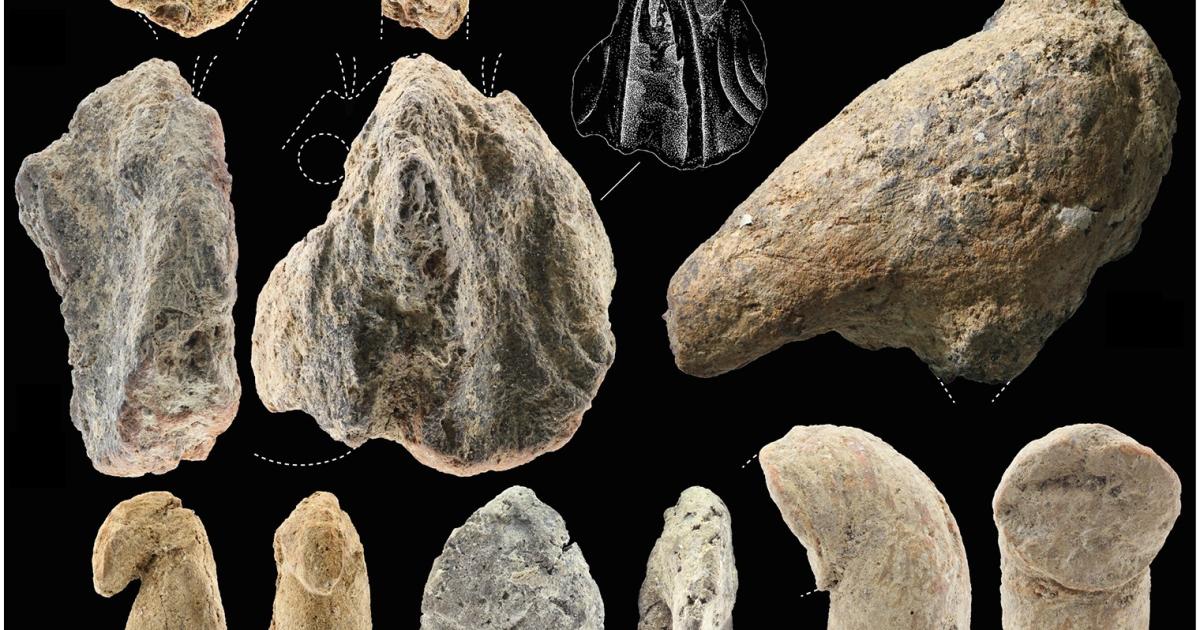

Sometime between about 15,000 and 13,000 years ago, at the settlement of Eynan-Mallaha in the Upper Jordan Valley, a child pressed a fingertip into a clay bird just under 14 millimeters tall. The print is still there, and its narrow ridges suggest the maker was probably younger than 10. It belongs to a group of clay figures that archaeologists now describe as the earliest clay figurative tradition in Southwest Asia, made by Natufian communities thousands of years before anyone in the region planted a field. The research, by Laurent Davin of the Hebrew University of Jerusalem and colleagues, was published on November 11 in PLOS One.
Found Again in a Pile of Burnt Clay
The Natufians lived in the Levant between about 15,000 and 11,650 years ago, and they were the first hunter-fisher-gatherers in Southwest Asia to adopt a sedentary lifestyle, according to the study. They carved figures of animals and people in bone and stone, yet only two figurines modeled in clay had been identified in their whole repertoire until now. One of those was the woman and goose from Nahal Ein Gev II, a Late Natufian figurine of a woman and a goose that the new paper discusses in detail.
The new finds came from an unglamorous source. Excavations at el-Wad Terrace on Mount Carmel, Hayonim Terrace in the Galilee and Eynan-Mallaha had produced tens of thousands of small heated lumps of clay and sediment, about 40 kilograms in all. Researchers had assumed these were leftovers from making mineral pigments by heating iron-rich clay. When the team sorted them again, they found more than a thousand worked artifacts, including 15 identifiable figurines and 139 clay cylinders that most probably come from bodies and limbs, for a total of 154 figurative pieces.
Birds, a Gazelle and Two People
The figurines are tiny, with an average length of about 15 millimeters, and almost all are broken. Thirteen come from Eynan-Mallaha and two from Hayonim Terrace. Eleven of the 15 depict birds, and the researchers describe two ways of making them. Some are simple curved cylinders with a schematic head, while one later figurine shows a folded wing, a tail and feathers marked with long parallel incisions.
Two fragments show the heads of hoofed animals, and the authors propose that one of them, with the profile of its head, the setting of its horns and lines of colored clay that resemble fur markings, could be a mountain gazelle. If so, it would be the first identified depiction of a gazelle in Natufian art, according to the study. Two more pieces are human. One is the upper half of a body with modeled arms, and the other is a stylized face that seems to have been made on its own without a body.
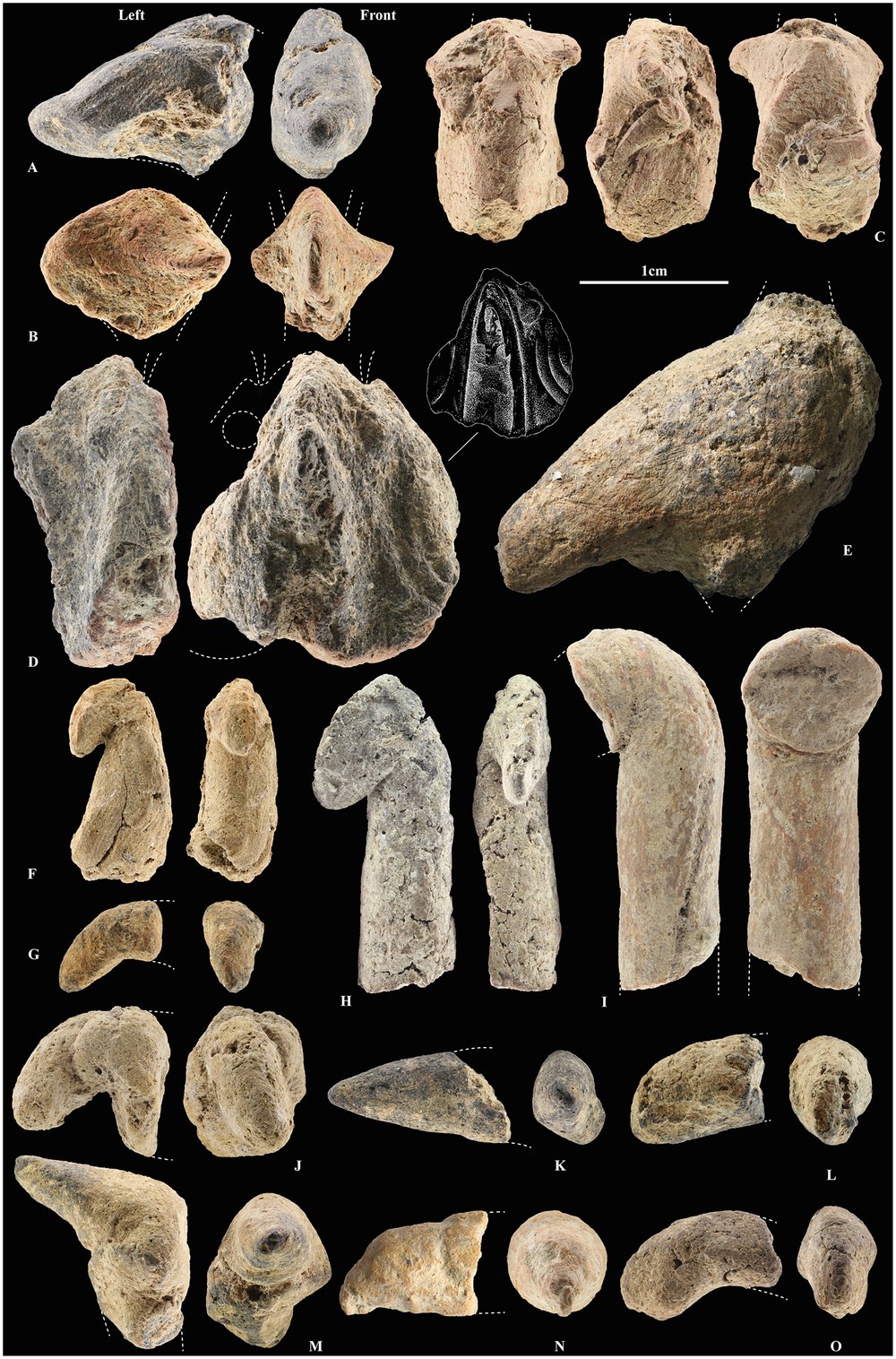
The 15 clay figurines from Eynan-Mallaha and Hayonim Terrace described in the study, with animal heads, two human forms and 11 birds. Scale bar 1 centimeter. (Image: Davin et al. 2026, PLOS One, Fig 4, drawing by Dasha Lokshin, CC BY 4.0)
Small Hands in Wet Clay
The most personal evidence lies in the fingerprints. The team found modeling prints on two figurines and five cylinders, a group that includes pieces from all three sites. Together with prints on clay ornaments and other shaped pieces from the same sites, the authors call it the largest pre-Neolithic collection of ancient fingerprints known to date. They measured the spacing of the skin ridges and compared it with a modern reference set of prints left in clay by 118 people aged 1 to 77, which sorts makers into children under 15, young adults of both sexes and adult women, and adult men.
The small human figure from Eynan-Mallaha carries two prints on its back. The first was left by someone in the young adult of both sexes or adult female group, and a child who had not yet reached puberty then pressed a second print partly over it. "This could be a rare direct testimony of inter-generational knowledge transmission in a hands-on apprenticeship," the authors write. The complete bird figurine carries the print of a child probably under 10 years old, and a slightly older child left one print while shaping a cylinder and another while coloring it.
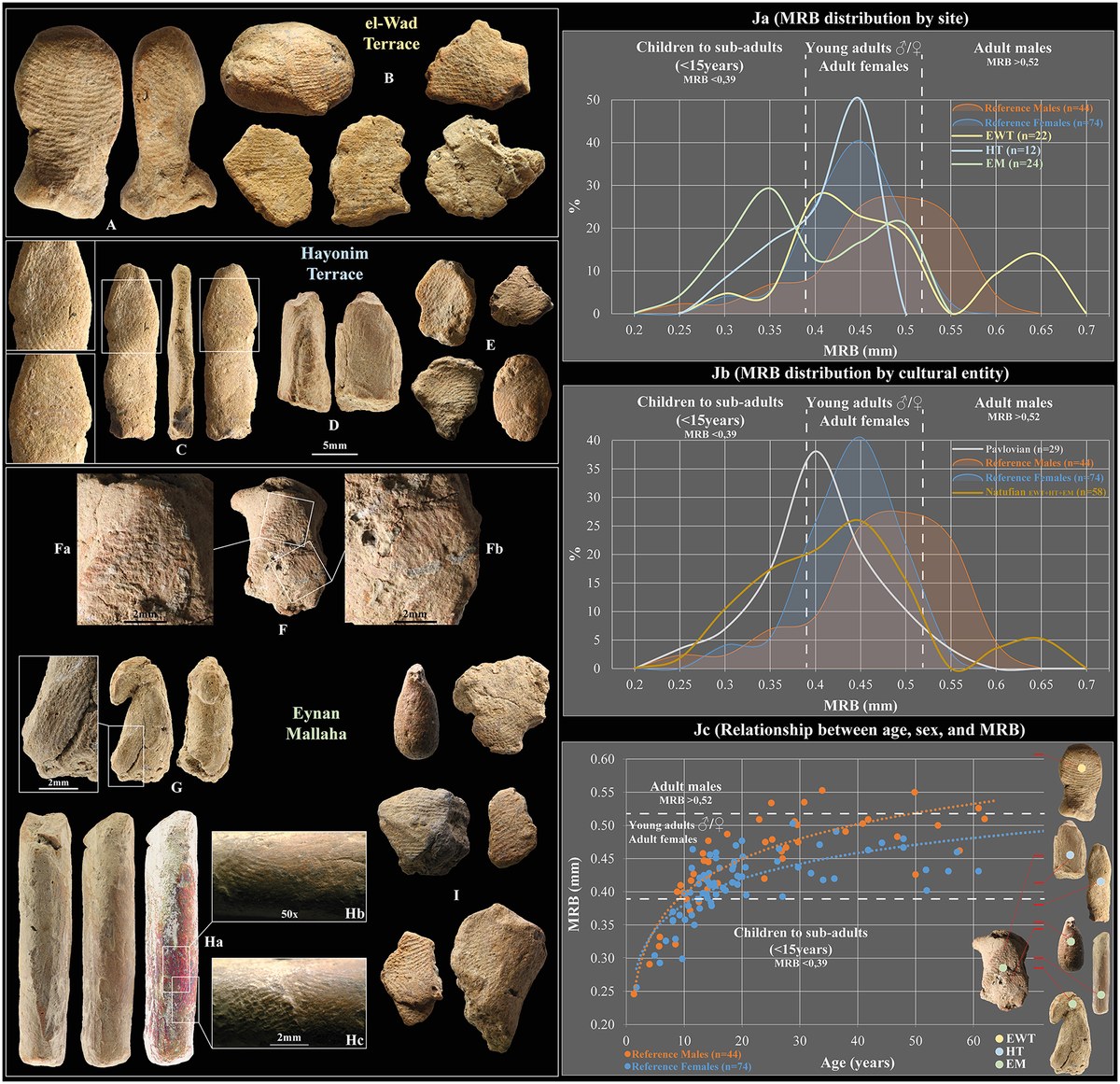
The study's figure of fingerprints found on clay figurines, cylinders and other pieces from el-Wad Terrace, Hayonim Terrace and Eynan-Mallaha, with charts comparing ridge breadth to a modern reference set. (Image: Davin et al. 2026, PLOS One, Fig 9, CC BY 4.0)
However, the picture differs from site to site. At el-Wad Terrace the prints include adult men, while at Hayonim Terrace and Eynan-Mallaha adult men seem to be absent and children appear alongside young adults and women. The authors conclude that children "are not simply curious onlookers who could have touched or handled the figurations before drying or firing," since their prints relate to shaping and even coloring the pieces.
"What is particularly fascinating is the evidence that children were involved in making these objects, suggesting that creativity and cultural knowledge were shared across generations," Davin said in the Hebrew University release.
Red Clay and a Duck in Courtship
Color clearly mattered to the makers, since ten of the 11 bird figurines keep traces of red colorant. On one Early Natufian figurine from Eynan-Mallaha, the team identified an engobe, a thin coat of orange red clay rich in iron oxide that was smoothed on with a finger. A fine diagonal line left free of color seems to have been made by laying a plant fiber across the wet coating. According to the authors, this figurine provides the earliest evidence of the engobe technique.
At Eynan-Mallaha, several birds were modeled with their heads tilted downward and turned to the left. The researchers suggest this captures the courtship display of male surface feeding ducks such as the mallard, which lower their heads and move them sideways during the breeding season at the end of winter and in spring. One duck-like figurine was found in a fireplace among about 500 burnt mallard bones, some with cut marks that suggest the feathers were removed. The authors read the figures as a sign of close knowledge about birds, the kind that societies without writing often pass on through songs and stories.
A Tradition Older Than Farming
For decades, the use of clay for symbolic figures in Southwest Asia was tied to the rise of farming in the Neolithic. The authors argue that their finds overturn that view, and they note that this collection from only three sites is already larger than all known clay figures from the whole Levant in the earliest farming period that followed. Natufian communities are already known for innovations such as 14,400-year-old bread baked by hunter-gatherers, and the figurines add art in clay to that list.
The Hebrew University release says the finds push the timeline of this tradition back by up to 3,000 years. In the paper, the authors write that the scenes of animal courtship predate by three millennia the stone figures of the monumental buildings at Göbekli Tepe. "These discoveries change how we understand the beginnings of artistic expression in this region," Davin said.
What Is Still Unknown
However, much about these figures remains open, starting with how the clay came to be hardened. All of them were heated in some way, which is why they survived. Nine of the 15 figurines show contact with fire. Whether they were fired on purpose, burned by accident or left near a hearth has yet to be tested, and the study calls itself preliminary. Nobody knows exactly what the figurines were for, or whether the children who touched them were learning a craft, playing or taking part in a ritual. Ancient fingerprints on clay have offered similar glimpses elsewhere, as with the Neolithic fingerprints found in Orkney, and future work on the clays and colorants may say more about how these small birds were made and why.
Natufian clay figurines from Eynan-Mallaha in the Upper Jordan Valley: a stylized human face with a line drawing by Dasha Lokshin, a naturalistic bird, and parts of several smaller figurines. None of the figurines in the study is longer than 3 centimeters. Detail of Fig 4 from Davin et al. 2026, cropped, panel letters removed. (Image: Davin et al. 2026, PLOS One, drawing by Dasha Lokshin, CC BY 4.0)
By Aris Manus
Sources
- Davin, L., Sindel, M., Weinstein-Evron, M., Yeshurun, R., Kaufman, D., Grosman, L., Belfer-Cohen, A., Khalaily, H., and Valla, F. R. 2026. Modelling symbols among the first-sedentary communities: Emergence of clay figurines in Epipaleolithic Southwest Asia. PLOS One 21(11): e0360388. DOI: 10.1371/journal.pone.0360388.
- The Hebrew University of Jerusalem. November 11, 2026. Tiny fingerprints, big discovery: Children helped shape clay art 15,000 years ago. EurekAlert.