
Bournemouth University archaeologist Miles Russell has reopened the case of Verica, the British ruler commonly linked to the exile behind Claudius’s invasion in AD 43. Could the person remembered as a king have been a queen? Russell’s answer depends on abbreviated coin inscriptions, disputed riders and a much later Roman narrative.
According to Bournemouth University’s November 5 announcement, Russell argues that Verica’s name, royal title and mounted figures on coins together point toward a woman. That conclusion is disputed, with Oxford epigrapher Roger Tomlin questioning both the title argument and the assumption that a coin’s rider represents its issuer.
Russell develops the case in a Current Archaeology feature, “Verica Rex,” and his forthcoming book, Caratacus: Great King of Britain, from Bloomsbury Academic. Only the feature’s accessible opening and the book’s publisher metadata, rather than either full text, were consulted for this article.
What Does Verica’s Name Reveal?
Verica belongs to the political world of the Iron Age tribes of Britain, with the Atrebatic ruler’s territory covering parts of present Hampshire and West Sussex. The British Museum dates Verica’s coin issues to approximately AD 10 to 40 and notes their explicit association with Calleva, now Silchester.
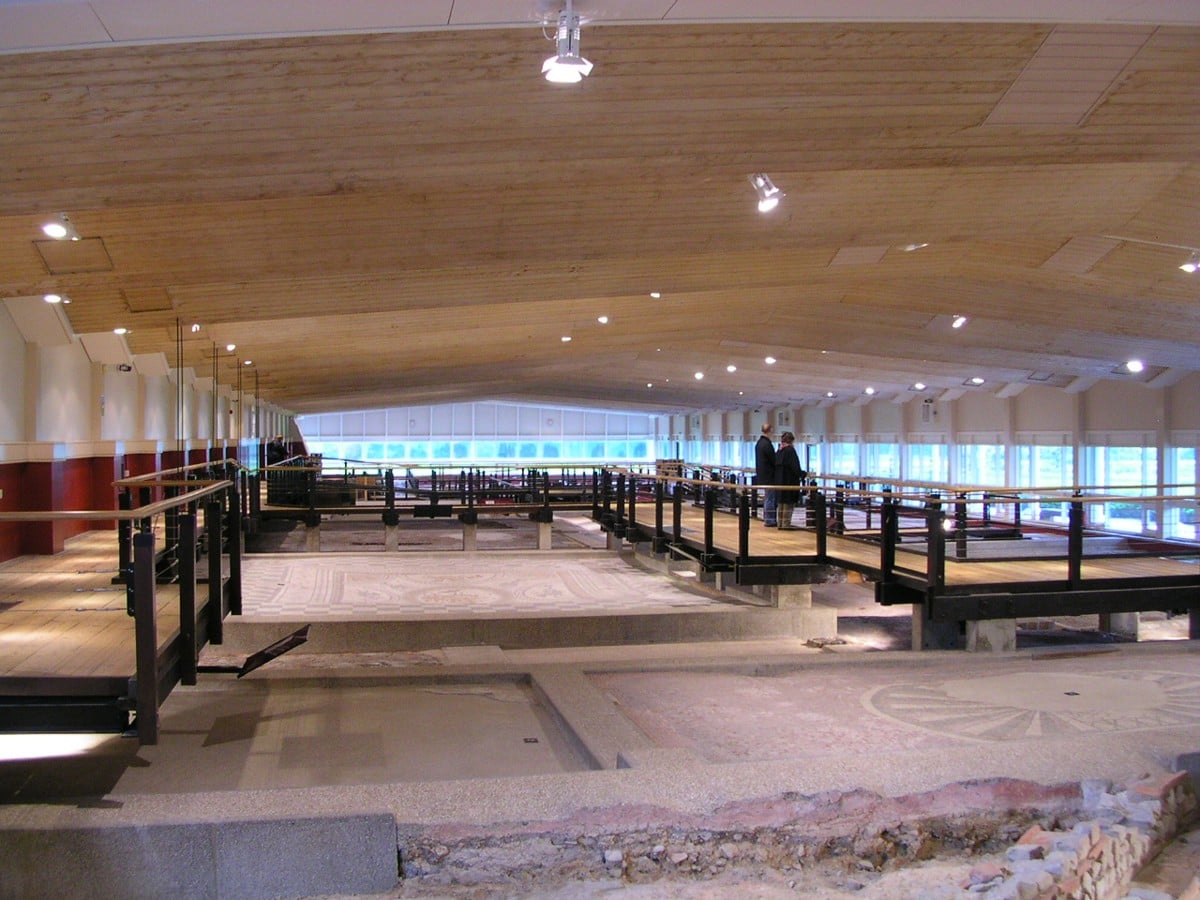
The covered north-wing interior at Fishbourne Roman Palace in West Sussex, shown for regional context. Resized without cropping. Charlesdrakew, public domain, via Wikimedia Commons.
The museum currently catalogs Verica as male and interprets the coin inscriptions as suggesting a son of Commios, reflecting the conventional identification Russell challenges. Its biography nevertheless distinguishes the ruler attested on coins from the possible appearance of that same person in an ancient historical account.
Russell begins with the final letter of the name, comparing Verica with female British rulers including Boudica of the Iceni and Cartimandua of the Brigantes. In his reading, the ending in a provides a reason to question the inherited male identification rather than treating it as an uncomplicated fact.
Tomlin’s response is more discriminating than a simple rejection of that clue, since he accepts that the name offers Russell a potentially useful argument. He told the Guardian that Latin male names could also end in a, while the masculine form Vericus strengthened the possibility that Verica was feminine.
The name offers a clue, not an explicit identification of its owner as female. Tomlin’s qualified response also shows why the debate cannot be reduced to Russell confronting a uniform body of scholarly opinion.
A Royal Title and an Abbreviated Family Connection
The title REX supplies a second, separate argument, with Russell treating it as a designation of recognized rule that did not specify the holder’s sex. In the university announcement, he invokes Cleopatra as an example of a female ruler recognized by Rome and links Verica’s title to imperial authorization.
Tomlin challenges the step from recognition to terminology, asking for evidence that Rome actually applied the same title to client queens as to client kings. The existence of recognized female rulers does not itself establish Russell’s more specific proposition about the word appearing on Verica’s coins.
“Of course the Romans recognised client-queens as well as client-kings, but Russell must prove, by finding other examples, that they referred to them both as Rex,” Tomlin told the Guardian.
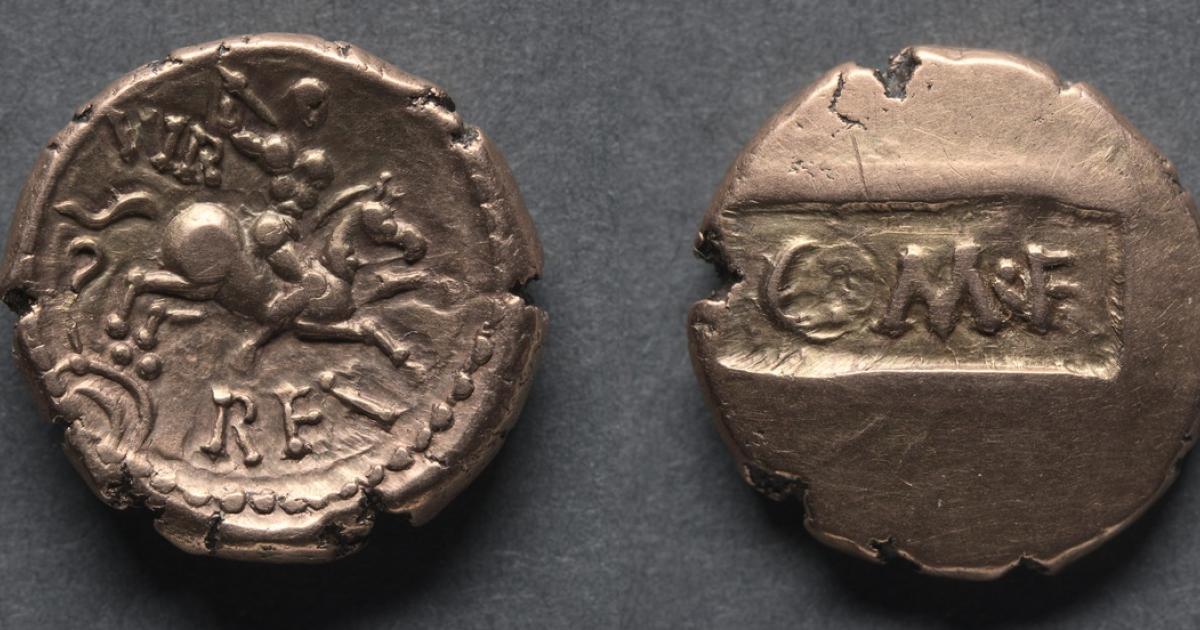
A family abbreviation raises a different problem. New Scientist’s Michael Marshall reports the legends COM F or COMMI F, conventionally read as a claim to be the son of Commios. The final letter does not spell out that relationship in full.
Russell argues that the abbreviated family relationship could instead mean daughter, as the Guardian reports, challenging the confidence of the conventional male reading. That proposed alternative concerns the expansion of a legend, rather than independently proving that the ruler issuing the coins was a woman.
Does the Rider Represent the Ruler?
Russell also reads the mounted figures on Verica’s coins as feminine, contrasting their slender, bare breasted appearance with male warriors on other British rulers’ issues. He explained to the Guardian that he considers the imagery a statement about Verica’s own identity, making the identification of the rider central to his case.
The British Museum’s record for gold stater 1919,0213.162 describes a vine leaf and a horseman carrying shield and spear, identifying Verica as the ruler. Such catalog descriptions establish the recorded design and attribution, while the disputed argument concerns how the figure should be understood and whom it represents.
Tomlin separates the sex of an image from that of the issuing monarch, illustrating his objection with the reverse design of Queen Victoria’s gold coinage. He compares Russell’s inference to treating Victoria as male because that design shows a male horseman killing a dragon, an analogy about representation rather than anatomy.
Coin specialist Daphne Nash Briggs also raised objections in the Guardian, describing some Verica images as male and pointing to portraits and apparent priestly dress. Russell disputes those identifications, arguing that one head represents the emperor and questioning whether the dressed figure is either male or Verica.
Katharina Rebay-Salisbury, a prehistoric archaeologist at the University of Vienna, takes a different position. She told New Scientist that the broader argument was highly compelling and drew on multiple lines of evidence. Yet she questioned whether male and female bodies could be distinguished reliably in such stylized coin images. Her caution about the riders should not be mistaken for rejection of Russell’s whole case.
Dio’s Exile and the Invasion Story
The literary evidence introduces another name, Berikos, rendered Bericus in Earnest Cary’s English translation of Cassius Dio’s Roman History. Dio wrote in the third century AD, long after the invasion. In Book 60, section 19, Dio says this person was expelled from Britain during an uprising and persuaded Claudius to send a force.
The British Museum describes the identification of Berikos with the Verica named on coins as very likely, making it a strong connection rather than direct certainty. The coins and Dio’s story remain different kinds of evidence, with the latter supplying the appeal to Claudius that gives Verica this wider historical significance.
Dio subsequently describes Roman commander Aulus Plautius fighting Caratacus and his brother Togodumnus, sons of the deceased Cunobelinus, before Claudius joined the campaign. The exile’s appeal thus belongs within Dio’s broader account of conquest, rather than providing a complete explanation of every Roman motive for invading Britain.
Tomlin regards Dio’s masculine Bericus as evidence against Russell’s reading, while Russell allows that the name could have become garbled in the later account. Russell also argues that a female petitioner would fit Dio’s hostile portrayal of Claudius as an emperor directed by women and freedmen.
Dio does portray Claudius in those terms elsewhere in Book 60, but identifying a literary pattern does not independently identify the petitioner as female. Russell’s interpretation offers a possible reading of the narrative’s politics, while the earlier coin evidence still requires its own linguistic and visual assessment.
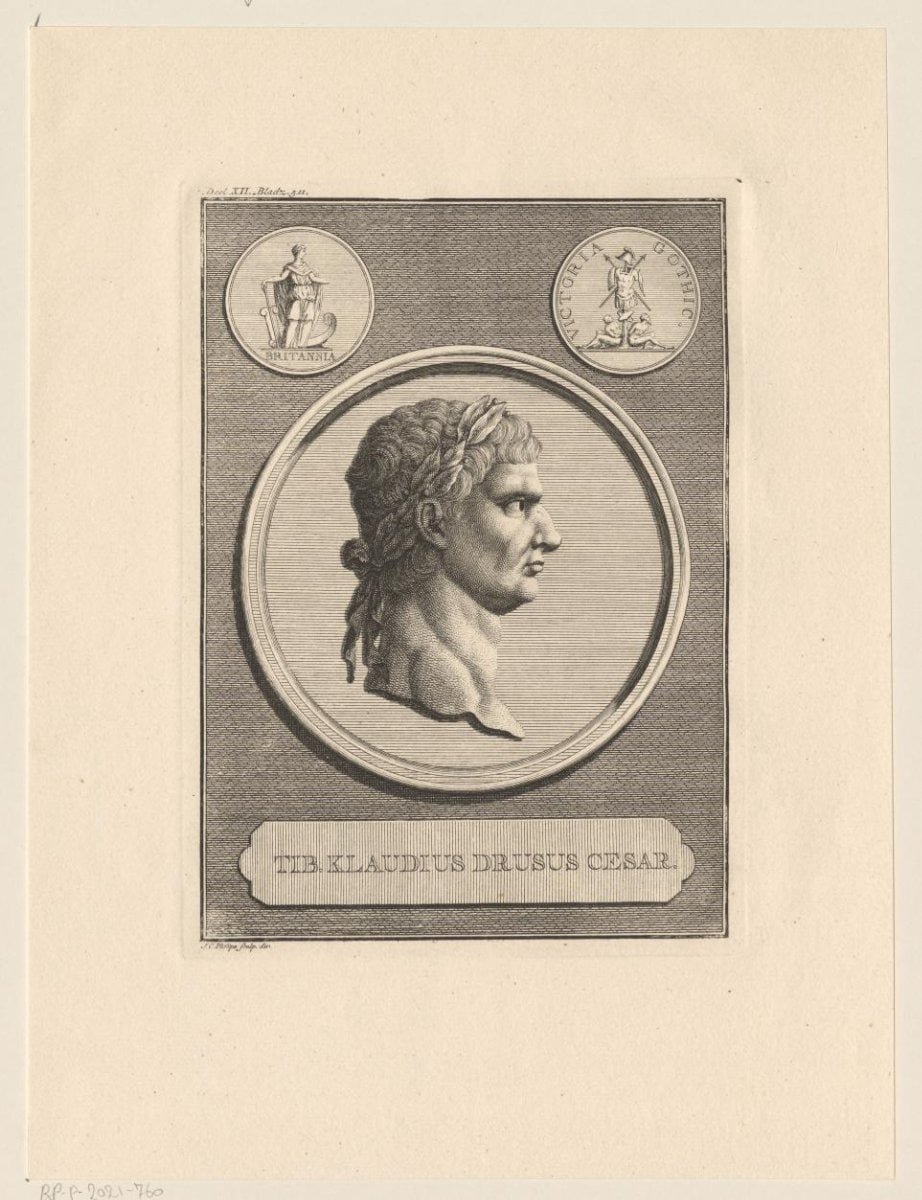
An eighteenth century portrait of Emperor Claudius, Jan Caspar Philips, 1730 to 1775. Rijksmuseum, RP-P-2021-760. Later artistic representation. Resized without cropping. Rijksmuseum, public domain.
An inscription spelling out Verica’s family relationship, or a securely identified portrait, could give the debate firmer evidence than abbreviated legends and disputed riders. For now, Russell has reopened a question that the coins and Dio’s account do not settle. The proposed queen remains a disputed identification.
A Verica gold stater, about AD 10 to 40, Cleveland Museum of Art, The Norweb Collection, 1969.146. Reverse with horse and rider (left), obverse with sunken COM F tablet (right). Coin diameter 17 mm. Museum specimen shown for comparison, not identified as Russell’s illustrated coin. Resized without cropping. The Cleveland Museum of Art, The Norweb Collection, 1969.146, CC0.
By Aris Manus
Sources
- Bournemouth University. November 5, 2026. New research reveals Iron Age King was female.
- Davis, Nicola. November 5, 2026. Historians say King Verica persuaded Rome to invade Britain. But could Verica actually have been a queen?. The Guardian.
- British Museum. Verica, authority record BIOG100262 and gold stater 1919,0213.162.
- Cassius Dio. Roman History, Book 60, sections 2 and 19 to 21. Earnest Cary translation, Loeb Classical Library, reproduced at LacusCurtius.
- Russell, Miles. November 5, 2026. Verica Rex feature. Current Archaeology 441 (opening consulted).
- Marshall, Michael. November 5, 2026. British Iron Age ruler who prompted Roman invasion may have been a woman. New Scientist.