
August
23
/ 2026
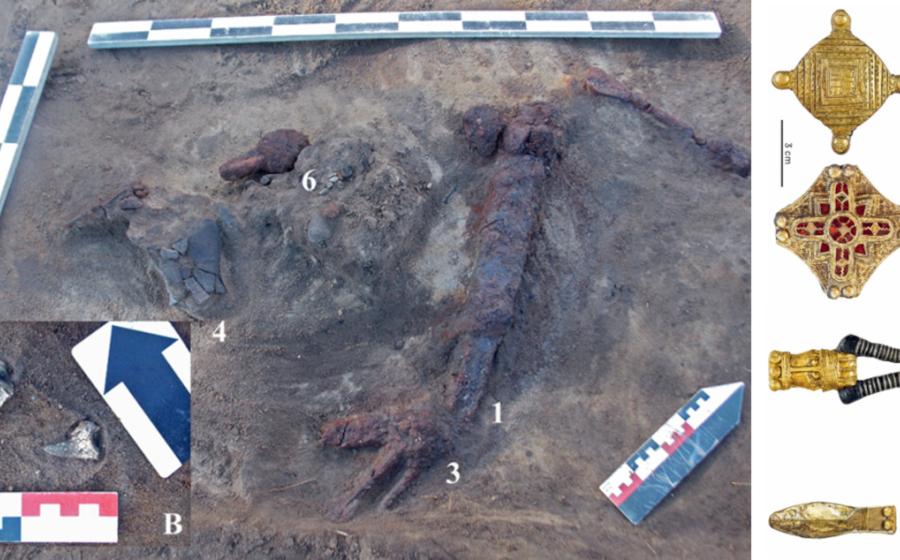
Archaeologists from the Institute of Archaeology of the Russian Academy of Sciences have uncovered brown bear claw bones in seven cremation burials dating to the sixth and early seventh centuries on the Kaliningrad Peninsula. The discovery, made during large-scale excavations in the Zelenogradsky District, points to elite status, ritual practices involving bear skins, and links to warrior traditions across Northern Europe among the Aestii people. In one grave, researchers recovered as many as 12 claws—an unprecedented find for the region—suggesting complete paws or skins were placed on funeral pyres. Bear claws (phalanges) from the inventory of grave №X-22 at the Alejka-7 burial site. – (Photo K. Skvorcov/ CC BY-SA 4.0 ) These burials belong to members of the Aestii population