Kerry Sullivan

Profile picture for user Kerry Sullivan
Kerry Sullivan

Kerry Sullivan has a Bachelor of Science and Bachelor of Arts and is currently a freelance writer, completing assignments on historical, religious, and political topics.

Member for

10 years 3 months

View Recent Blogs

In European folklore, Krampus is the antithesis of Santa Claus. The equivalent of a Christmas Devil, Krampus is a horrific beast that hunted down misbehaving children and whipped or terrified them into submission. Originally an ancient pagan tradition, Krampus was coopted into the story of Saint Nicholas. Since then, he has been rallied against by medieval clergymen and repressed by nationalists only to be revived in an era of mass consumerism. Today, practitioners are worried about how the influx of refugees will respond to the terrifying Christmas Devil. [[{"type":"media","view_mode":"media_original","fid":"101946","attributes":{"alt":"The Krampus of German-speaking folklore is a horned Christmas Devil who punishes naughty children. (Public domain)","class":"media-image","height":"630","style":"width: 413px; height: 630px;","typeof":"foaf:Image","width":"413"}}]] The Krampus of German-speaking folklore is a horned Christmas Devil who punishes naughty
Throughout history, the rich and powerful have attempted to control access to items considered luxurious or status symbols. Today, this is done through marketing and price setting (a prominent example is the strict control of the number of diamonds allowed to enter the global market). In previous eras, however, consumption could be directly regulated through the passage of sumptuary laws. These laws forbade ordinary citizens from obtaining food, clothing, or goods made of a particular material in order to reinforce social hierarchies. Sumptuary laws were also passed by religious institutions in order to prevent temptation and ensure moral behavior. Laws that regulate consumption have been passed throughout human civilization and continue to exist in the modern world (even in the
Many times, evidence of fantastic finds vanishes, leaving behind only legends (think the Tulli Papyrus or Robin Hood’s Hideout). However, sometimes, fabulous artifacts from history manage to survive intact across the millennia. Currently, controversy swirls around the authenticity of one such artifact, the sword of the Scottish revolutionary William Wallace. The Wallace Sword would have been in use at least until the Battle of Falkirk in 1298, possibly until Wallace’s death in 1305. Over the next 700 years, the sword changed many hands before coming to rest in the Hall of Heroes gallery of the National Wallace Memorial. It’s a fascinating tale – if it is the real sword. The History of the Wallace Sword Today, William Wallace (1270-1305) is
Of the many ancient remains found preserved in bogs and marshes, perhaps the most interesting is the Grauballe Man. Discovered in a peat bog in Jutland, Denmark in 1952, experts believe that the man had had his throat slit sometime in the 3rd century BC and his body dumped in the bog. But what scientists have so far been unable to confirm is whether his death was part of a ritualistic human sacrifice or his body is evidence of 2,300-year-old murder mystery. Well-preserved hand of Grauballe Man. ( Public domain ) The Intriguing 1950s Discovery of Grauballe Man The Grauballe Man was discovered on April 26, 1952, by a team of Danish peat cutters in the bog of Nebelgard Fen
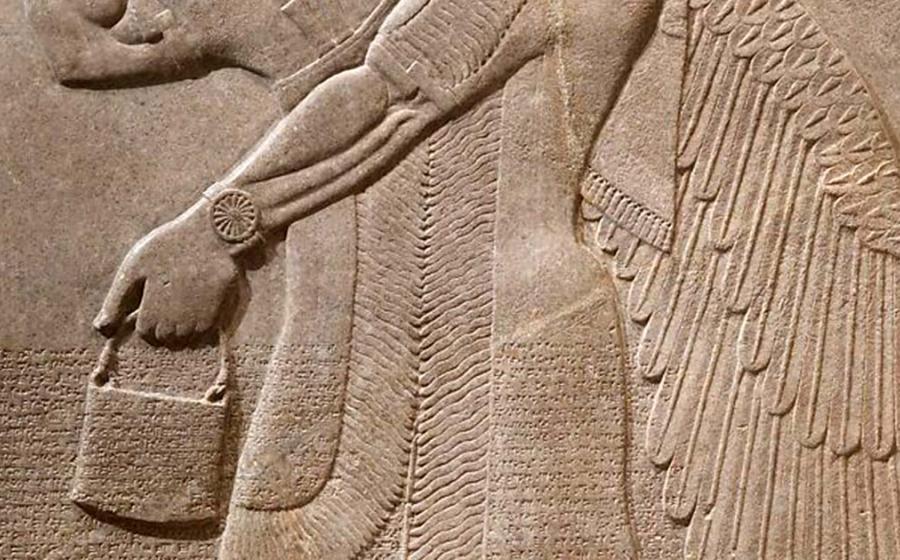
One of the more mysterious symbols that has been found in carvings from the ancient world is an image that looks uncannily like a modern-day handbag. The shape appears in depictions made by the Sumerians of Iraq, in the ruins of Turkish temples, in decorations of the Maori of New Zealand and in crafts made by the Olmecs of Central America. Handbags can be seen in the art of disparate cultures from around the world and throughout time, with the first known instance of a handbag appearing at the end of the Ice Age. Once it’s been pointed out, its actually quite hard to avoid and the ubiquity of this mysterious symbol raises captivating questions about its significance and purpose
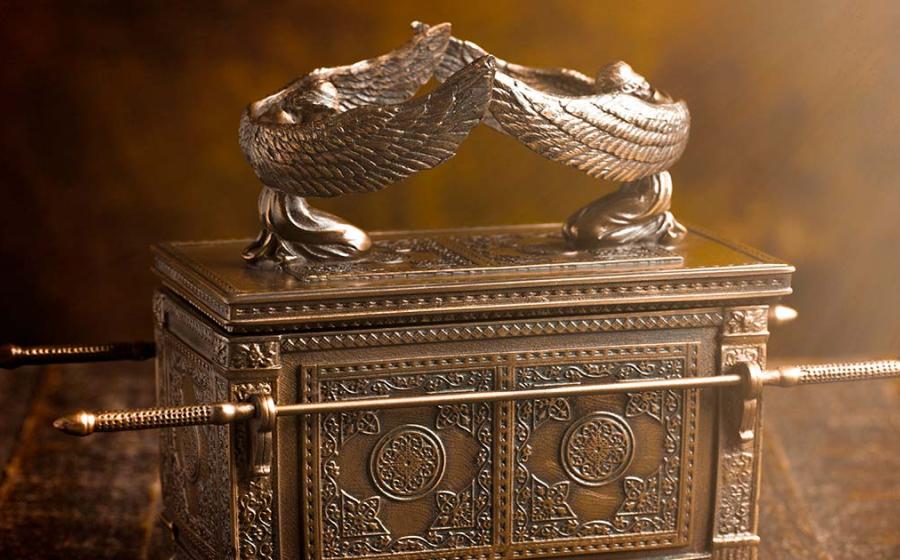
One of the greatest mysteries for believers of the Judeo-Christian religions is the present location of the Ark of the Covenant, a chest said to contain the two stone tablets of the original Ten Commandments. While age-old lore cautions that gazing upon this hallowed relic exacts tremendous consequences, there are many theories as to its whereabouts. In the 1980s, one man claimed to have not only found the Ark of the Covenant, but to have seen it with his own eyes. [[{"type":"media","view_mode":"media_large","fid":"110883","attributes":{"alt":"The Ark of the Covenant passing over Jordan, by James Tissot. (Public domain)","class":"media-image","height":"472","style":"width: 610px; height: 472px;","typeof":"foaf:Image","width":"610"}}]] The Ark of the Covenant passing over Jordan, by James Tissot. ( Public domain ) Possible Locations of the Ark of the Covenant
One might find it curious that we divide the hours into 60 minutes and the days into 24 hours – why not a multiple of 10 or 12? Put quite simply, the answer is because the inventors of time did not operate on a decimal (base-10) or duodecimal (base-12) system but a sexagesimal (base-60) system. For the ancient Sumerian innovators who first divided the movements of the heavens into countable intervals, 60 was the perfect number. The Useful Number 60 The number 60 can be divided by 1, 2, 3, 4, 5, 6, 10, 12, 15, 20, and 30 equal parts. Moreover, ancient astronomers believed there were 360 days in a year, a number which 60 fits neatly into six
Today, the word "Aryan" has become synonymous with all sorts of negative connotations, including theories of racial superiority and white supremacy. This association has led to a widespread misunderstanding of the term's origins and meaning, and resulting baseless concepts related to a supposed Aryan race have been coopted and misused by racist ideologies. Only in the late 19th early 20th centuries did Aryan become equated with Germanic or Nordic peoples. Prior to this corruption, Aryan referred to an archaic language whose speakers are thought to have spread and influenced languages throughout the Indian subcontinent. Ahnenerbe: Nazi Secret Society and their Reinterpretation of History Unearthed Brooch Tells of the Nazis’ Abuse of Ancient Norse Runes to Spread Their Dark Ideology Over
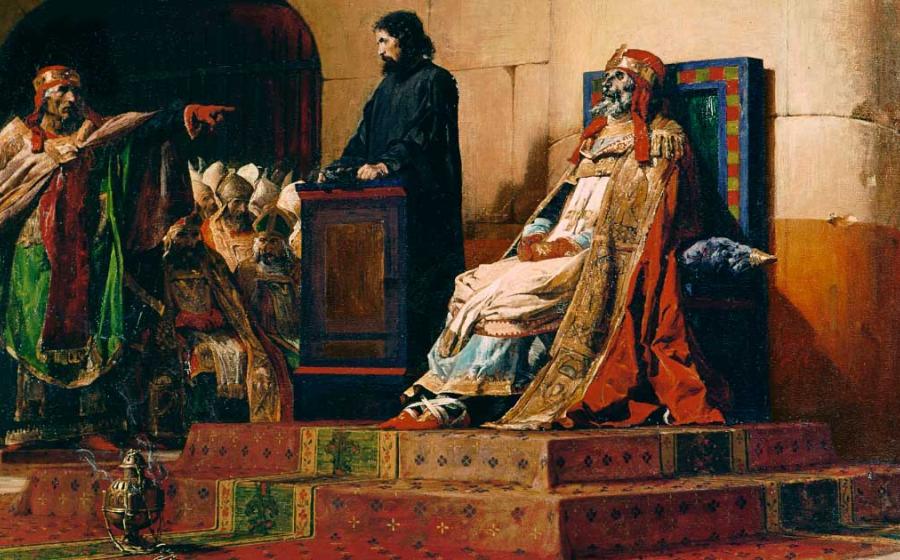
The ‘Cadaver Trial’ of the dead Pope Formosus would have to be one of the most absurd events in Rome’s history. Nine months after the Pope died, his body was exhumed and his rotting corpse was placed on a throne to face charges. Clearly incapable of defending himself, the dead Pope was found guilty on all counts. In 891 AD, Formosus was elected Pope, a position he held until his death in 896 of a stroke (although some suspect poisoning). While in office, Formosus made a lot of enemies in the upper echelons of power in Constantinople, the Holy Roman Empire, Italy, and within the Church itself. He also was persistently bothered by the encroaching Muslims. Yet for all this
The historic existence of the legendary English hero who ‘stole from the rich and gave to the poor’ is a perennial source of debate. Every few years, new evidence emerges of authenticity and possible identities of Robin and his friends/foes of Nottingham. Ancient Origins has already delved into the theories of the historic personage of Robin (or should we say Robert?). Now, we will broaden the scope to examine artifacts and skeletons that have been described as proof of the folk hero’s existence. Aside from possibly being connected to Robin Hood, the treasures themselves are generally rather ordinary (bows and arrows, crucifixes, some gold doubloons). However, their tendency to vanish makes each find a mini-legend in and of itself. [[{"type":"media","view_mode":"media_large","fid":"88974","attributes":{"alt":"","class":"media-image","height":"583","typeof":"foaf:Image","width":"610"}}]]