Jonathon Perrin

Profile picture for user Jonathon Perrin
Jonathon
Perrin

Jonathon is an author, explorer, and geologist who has searched for oil, gas, and gold in Canada. He has an archaeology degree and has excavated prehistoric Native sites. His passion is uncovering the subverted truths of history and religion. He has written sixty articles and five books. His most recent is Moses in Mexico (2025). Check out jonathonperrin.com for news and updates.

Member for

6 years 11 months

View Recent Blogs

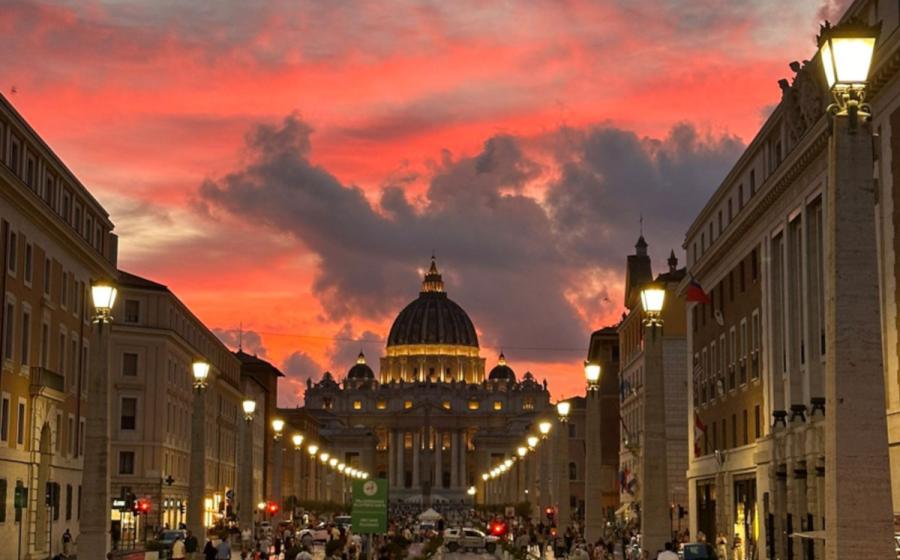
St. Peter’s Basilica is celebrating a milestone this year. The world’s most famous Church is turning 400 years old, and Catholic pilgrims from every country will journey to Rome to celebrate. One hundred and twenty years after Pope Julius II laid the Foundation Stone of the new church, Pope Urban VIII formally consecrated it as the new home of Christendom on November 18, 1626. Towering over the eternal city of Rome, its magnificent dome now the city’s ultimate symbol, the jewel of the Vatican outlasted dozens of architects, popes, objectors, a city sacking, a split Church, and cost hundreds of millions of dollars. Built over the tomb of St. Peter, Jesus’ disciple and the first Pope, its exorbitant price tag
Rome has been called the city of domes. The greatest of them sits majestically atop St. Peter’s Basilica, the largest and grandest church in the world. By law, no building in Rome’s city center may exceed the height of St. Peter’s. Recognized as a UNESCO World Heritage Site in 1984, it is a massive church in the style of the Italian High Renaissance located in Vatican City, an independent microstate within Rome, Italy. It contains countless treasures, antiquities, and art, and truly takes one’s breath away, both in its epic scale and artistic splendor. Its most impressive feature is its centerpiece: the great dome, soaring 448 ft high (137m) and which dominates the skyline of Rome. The dome marks the
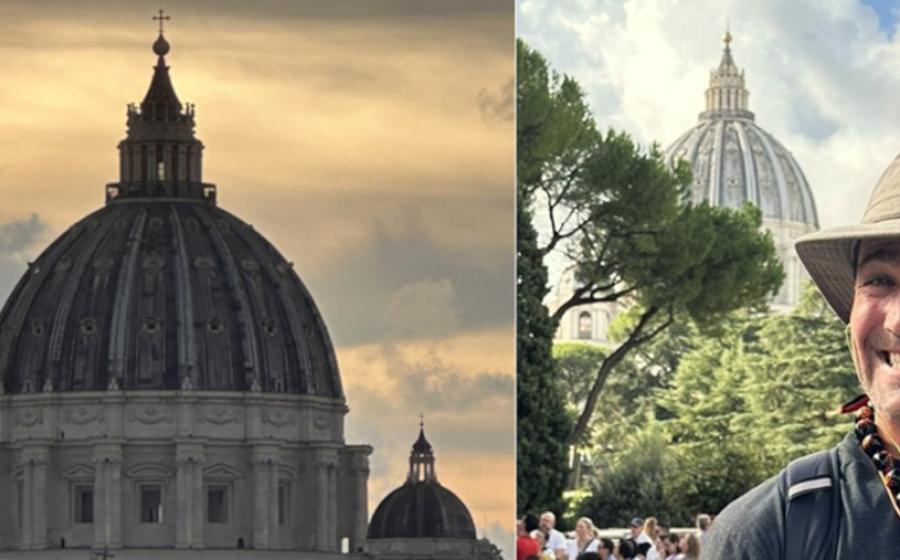
St. Peter’s Basilica is arguably the most famous Christian worship space in the world. It is a massive church in the style of the Italian High Renaissance located in Vatican City, an independent microstate enclaved within the city of Rome, Italy. A church that truly takes one’s breath away both in scale and splendour, it is regarded as the burial site of St. Peter, head of the twelve Apostles of Jesus and first Pope. Throughout 2026, Catholic pilgrims from across the world will journey to Rome to celebrate the 400th anniversary of its dedication. While the basilica contains countless treasures, antiquities, and art, all insured for billions of euros, one particularly mysterious feature of this sprawling edifice are its “painted”
Moses, the ancient Hebrew Lawgiver, is certainly never associated with Mexico in any traditional texts, either religious or not, in either the Old or New Worlds. So when a Vermont pastor named Ethan Smith proposed in an 1825 book that Moses may have provided the basis for the Mexican legends of Quetzalcóatl, the famous “Feathered Serpent”, it seemed a radical theory to say the least. He writes: “Though their ancient ‘legislator’ is called by a name importing the serpent of green feathers; yet he was an ancient man, a white man and bearded; called by Montezuma, a saint, who led them to this country, and taught them many things … Who could this be but Moses, the ancient legislator in
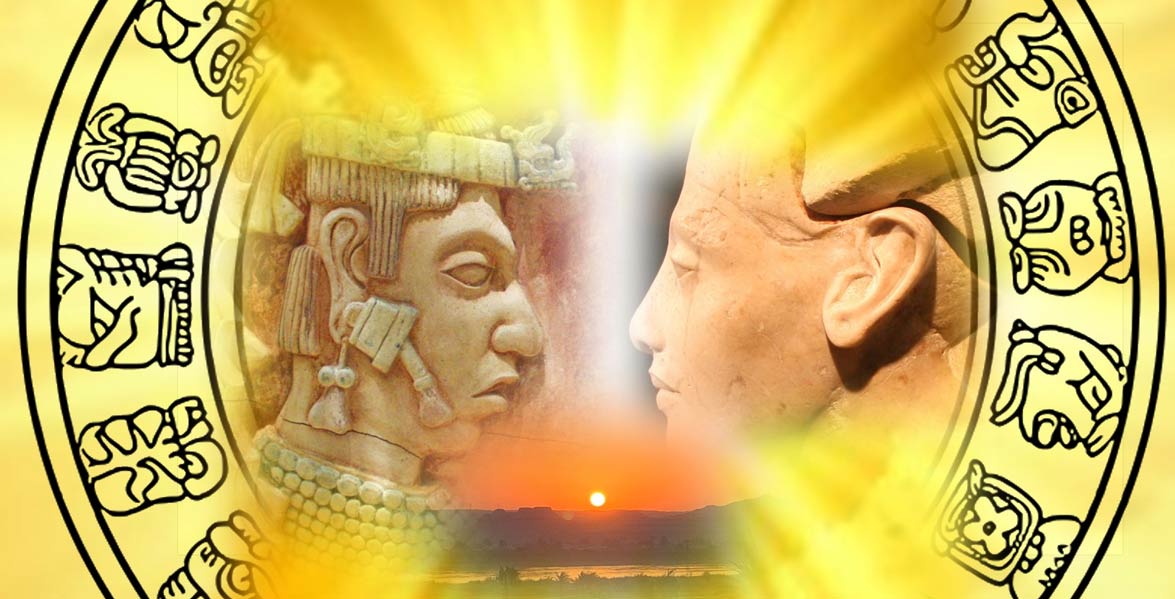
Akhenaten was known as Egypt’s Rebel Pharaoh. He lived during the 14 th century BCE in a huge desert city he built from scratch named “Horizon of the Aten sun god” (today called Amarna). His mummy has never been found, and he disappeared from history at age 37. During his reign, he was obsessed with sunrises and worshipping the sun. He shut down the temples of all other gods, and destroyed their idols. He was called the “rebel” and the “heretic” in later Egyptian texts, and his reign was referred to as the “rebellion”. His own statues were in turn destroyed under the orders of later vengeful Pharaohs. Meanwhile, an ocean away in Mexico, the Maya Sacred 260-day calendar is

Akhenaten was known as Egypt’s Rebel Pharaoh. He lived during the 14th century BCE in a huge desert city he built from scratch named “Horizon of the Aten sun god” (today called Amarna). His mummy has never been found, and he disappeared from history at age 37. During his reign, he was obsessed with sunrises and worshipping the sun. He shut down the temples of all other gods, and destroyed their idols. He was called the “rebel” and the “heretic” in later Egyptian texts, and his reign was referred to as the “rebellion”.

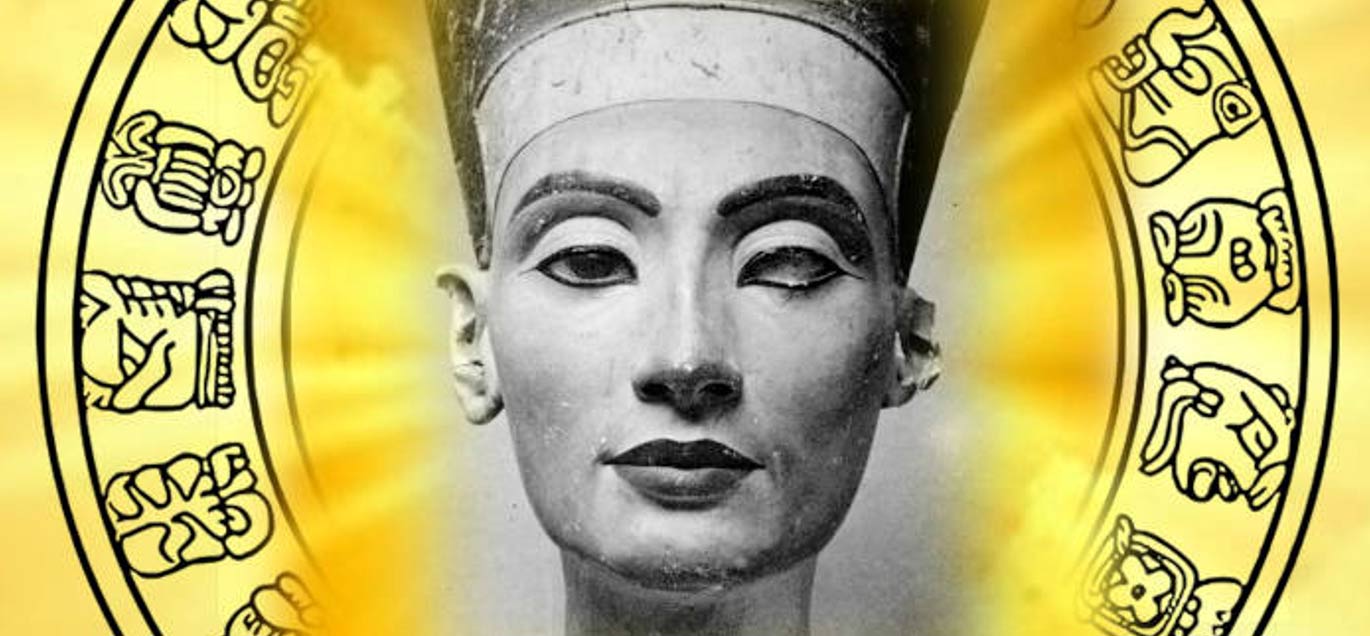
The Maya Calendar is perhaps the world’s most mysterious. Meanwhile, Nefertiti was Egypt’s most famous and mysterious queen. Married to the rebel Pharaoh Akhenaten and living in the 14th century BCE, her mummy has never been found, and she disappeared from history with no further mention in any records, royal or otherwise. How could there possibly exist any connection between Egypt’s most beautiful queen and a mysterious ancient calendar developed an ocean away? How could the glamour of Egypt’s richest and most opulent queen, married to history’s first religious revolutionary, have inspired a strange 260-day sacred calendar developed somewhere in the jungles of Mexico over three thousand years ago? What is the Maya Calendar? A man, his face lined with

The Maya Calendar is perhaps the world’s most mysterious. Meanwhile, Nefertiti was Egypt’s most famous and mysterious queen. Married to the rebel Pharaoh Akhenaten and living in the 14th century BCE, her mummy has never been found, and she disappeared from history with no further mention in any records, royal or otherwise. How could there possibly exist any connection between Egypt’s most beautiful queen and a mysterious ancient calendar developed an ocean away?

The Jewish prayer shawl, the tallit, is as mysterious as it is iconic. Worn by Jews each morning when they pray to God, it connects them to the divine realm, their history, and their culture. However, its origins are generally unknown. This article will argue that the seeds of the Jewish prayer shawl lie in a royal robe worn by Pharaohs since the beginning of Egyptian civilization, over five millennia ago. [[{"type":"media","view_mode":"media_large","fid":"126611","attributes":{"alt":"","class":"media-image","height":"820","typeof":"foaf:Image","width":"610"}}]] A rabbi reading in the forecourt of the Synagogue. By Isidor Kaufmann (1853-1921). His tallit appears nearly identical to Akhenaten’s jubilee robe. (Auktionshaus Bergmann/ Public Domain ) Royal Renewal and Rejuvenation The Heb-Sed, or Jubilee Festival, was one of Pharaoh’s most important events, held to celebrate thirty successful