Christos Djonis

Profile picture for user Christos Djonis
Christos A. Djonis

Christos A. Djonis, was born in 1961 on the Greek Island of Cyprus. Before migrating to United States in 1981, he lived in Athens, Greece, where he also finished his studies.

Today, he lives with his family in Atlanta, Georgia, where he works as a general contractor. His company specializes in refurbishing multi-million dollar residential and commercial properties.

In addition to being an architect, Chris is an artist, a photographer, an avid researcher and an author. His first book, Cyprus-The Island of Aphrodite, a travel guide to the island of Cyprus, was published in 2011. His second book, titled Cyprus in Photos was released later that same year. His latest book Uchronia?-Atlantis Revealed, which touches on several controversial topics, was published by Page Publishing in 2014.

UCHRONIA?-ATLANTIS REVEALED is available worldwide through Amazon and other major booksellers.

Facebook page for Uchronia?-Atlantis Revealed

https://www.facebook.com/pages/Atlantis-Revealed/767323790030925

Facebook page for Christos A. Djonis

https://www.facebook.com/profile.php?id=100008857055951

Author's website:

www.AtlantisIslandRevealed.com

Uchronia? - Atlantis Revealed

Uchronia - Atlantis Revealed Nearly 2,400 years ago, ancient philosopher Plato wrote the story of Atlantis, a compelling tale of an 11,000-year-old island civilization which has since captivated the imagination of poets, authors, and the minds of many scholars who over the centuries kept on searching for the legendary island.

Today, numerous speculations place Atlantis in locations like the Azores Islands in the middle of the Atlantic, in Spain, somewhere off the coast of southeastern Cyprus, in Malta, or in more exotic locations like Indonesia, Antarctica, even in the “Bermuda Triangle” off the coast of the United States. Of course, while some past claims seemed more probable than others, never before has there been a discovery where all the physical characteristics matched Plato’s description, until now!

Author and researcher Christos A. Djonis, reveals a tangible find where not one or two, but every aspect of the proposed location matches Plato’s physical description. The geography is identical, the volcanic geology is there, and the flora and fauna chronologically match the topography. If Plato’s Atlantis was ever real, finally, there is a perfect match!

This book does not end with the revelation of Atlantis though. Armed with DNA evidence and an array of other clues, it confirms the likelihood that Atlantians discovered North America more than 10,000 years ago. Other ancient civilizations followed later, including the Bronze-Age Minoans, a post-Atlantian culture which regularly mined copper out of the region of the Great Lakes.

In a compelling way, the book further connects with several more controversial topics and puts forth thoughts and clues that could help explain some of the most contentious mysteries of our time. Is the Human Genome a real miracle or genetics? What is the meaning behind the Nazca Lines? Is there a secret chamber below the Great Sphinx? Is the Old Testament of the Bible a copy of a much older original?

Be ready to open your mind, as history shall be revisited—in a way like never before.

Member for

11 years 4 months

View Recent Blogs

In 1976, in his book “The 12th Planet”, the late author Zecharia Sitchin (1920-2010) introduced the controversial hypothesis that modern humans did not evolve naturally, but instead they were genetically created by a race of anthropomorphic beings whose home is another planet in our solar system, one yet to be discovered. Mr. Sitchin, or better yet the ancient Sumerians (as he always insisted that his writings were based on Sumerian accounts) claimed that this planet with its highly elliptical trajectory, cuts through the plane of our solar system at a 90-degree angle (between Mars and Jupiter) every 3600 years. The Sumerians called this planet Nibiru (it means "the planet of the crossing".) [[{"type":"media","view_mode":"media_original","fid":"21062","attributes":{"alt":"Zecharia Sitchin","class":"media-image","style":"width: 318px; height: 566px;","typeof":"foaf:Image"}}]] Zecharia Sitchin (
In his story of Atlantis, written at around 360 BC, Plato mentioned a grand island or continent across the Atlantic, one larger than Libya and Asia combined. This continent was so enormous, he said, “it encompassed (wrapped around) that veritable ocean”. Is it possible that Plato was talking about the American continent and not that of Atlantis, as many automatically assume when they read that story for the first time? Let's not ignore that many scholars and researchers also show that proper translation of Plato's text places Atlantis in the Mediterranean and not in the Atlantic, or some other exotic location. Aside from those claims though, is it conceivable to accept that the ancient Greeks, around the 4th century BC
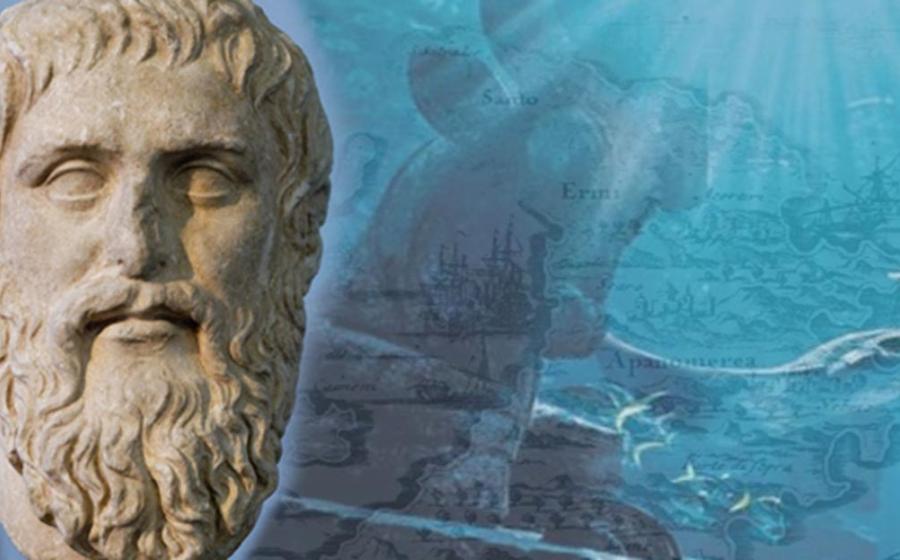
Around 360 BC, in his dialogues of Timaeus and Critias, the Greek philosopher Plato introduced an incredible story, a tale of an enigmatic island civilization which has since captivated the imagination of every generation that followed. This was the story of Atlantis, thought to be one of the most advanced societies of the ancient world, an idyllic island paradise of skillful navigators capable of crossing the Atlantic Ocean to conquer and explore! "For it is related in our records how once upon a time your State stayed the course of a mighty host, .....and it was possible for travelers of that time to cross from it (from Atlantis) to the other islands and from the islands to the whole of
The story of a “Great Flood” is a widespread account shared by many religions and cultures around the world, and dates back to our earliest recorded history. From India to ancient Greece, Mesopotamia and even among North American Indian tribes, there is no shortage of such tales that often enough sound very much alike. Some of these stories truly sound so similar that one could wonder whether all cultures around the planet had experienced such an event. ( Read Part I here) To challenge this theory, at least until recently, anthropologists insisted that 10,000 years ago humans were way too primitive to have been aware of such an event. So, in essence, as there were no known civilizations around at
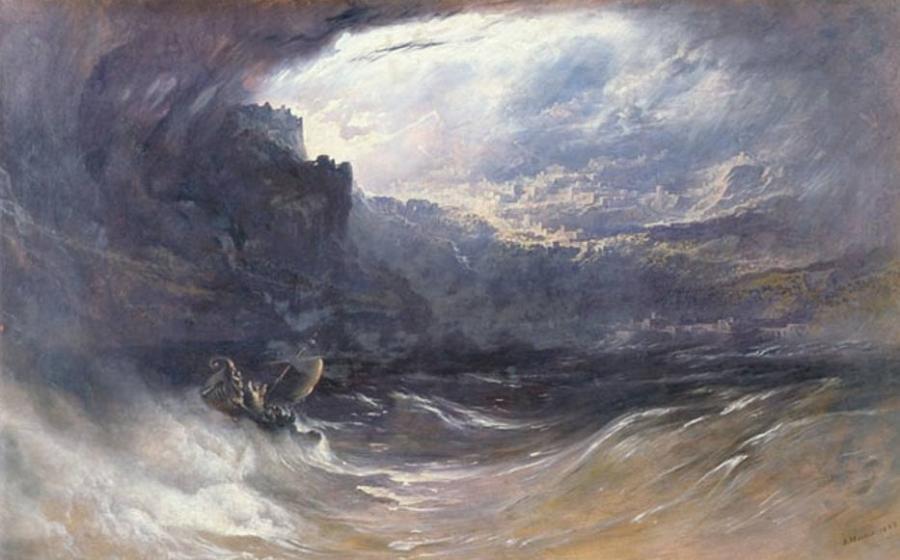
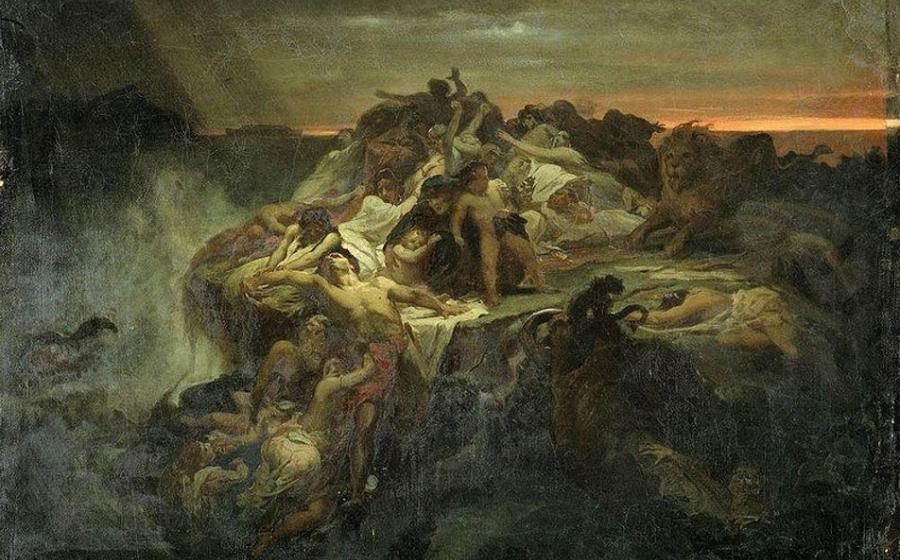
The story of a “Great Flood” sent by God (or gods according to much earlier testimony) to destroy humanity for its sins is a widespread account shared by many religions and cultures around the world, and dates back to our earliest recorded history. From India to ancient Greece, Mesopotamia and even among North American Indian tribes, there is no shortage of such tales that often enough sound very much alike. Some of these stories truly sound so similar that one could wonder whether all cultures around the planet had experienced such an event. Can it be that all flood accounts so zealously repeated around the world are a collection of myths or isolated incidents, as the mainstream academia maintains? Or
Earlier this year, several world news organizations reported that archaeologists had recently recovered 39 ingots of orichalcum from a 2,600-year-old shipwreck, found ten feet underwater off the coast of Sicily, near the town of Gela. (For those not familiar with the name, according to Plato, orichalcum was a type of copper broadly used by the legendary Atlantians.) Not surprisingly, while the ancient cargo provided the basis to every news report, unfortunately, none of the stories exposed anything new on Atlantis, or on the "mystical" ore, as one reporter called it. Essentially, every editorial capitalized on repeating the same familiar story, raising the usual questions, and sadly arriving at the same past conclusions. Nothing new! As for the particular freight, most
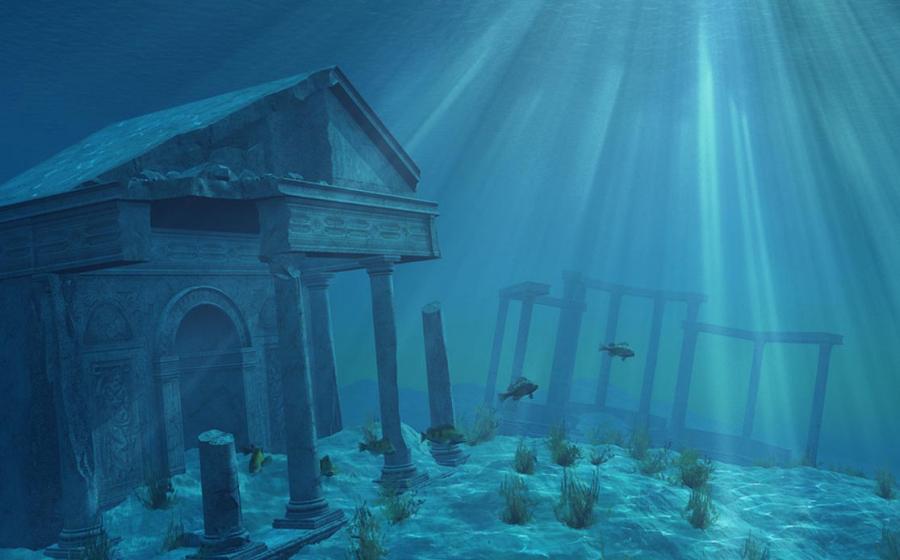
The time is 360 BC, the dawn of Western civilization. Athens, the cradle of democracy, is the epicenter of the ancient world. In his dialogues of Timaeus and Critias, Plato introduces a tale of an advanced prehistoric civilization, which since has captivated the imagination of every generation that followed. This was the story of Atlantis, an idyllic island paradise of skillful navigators who often crossed the Atlantic to explore. Atlantis, according to Plato, was ultimately lost to the sea. Its memory, though, was not soon forgotten. For two millennia, people unsuccessfully kept on searching for the legendary island, making Atlantis one of the most lasting and fascinating stories of all time! What about those, however, who over time claim to