annemieke

Profile picture for user annemieke
Annemieke Witteveen

Annemieke Witteveen

Annemieke Witteveen (1966) is a teacher at a primary school in the Netherlands.

12 years ago she came into contact with the phenomenon of crop circles. The shapes in the landscape moved her deeply and she knew that this was she had been looking for without even knowing she was searching.

Every year she can be found out in the fields of Wiltshire, England to study and examine the phenomenon.  With great regularity she gives lectures on the subject of crop circles in which she likes to share her experiences and findings in the fields. The subject of crop circles always gives food for thought and regularly leads to discussions. During a lecture she uses stunning visuals and tells what we know so far about crop circles. She feels it is important that everyone can form their own opinion.

In recent years there have been articles on several objects with great regularity and photos of hers published in different magazines. She published a childrens book on crop circles called 'Cirkeljagers' in Dutch and another childrens book about the Great Pyramid of Egypt is about to be published.

She is currently working on a travel guide for Wiltshire, the area where most crop circles appear.

Member for

13 years 2 months

View Recent Blogs

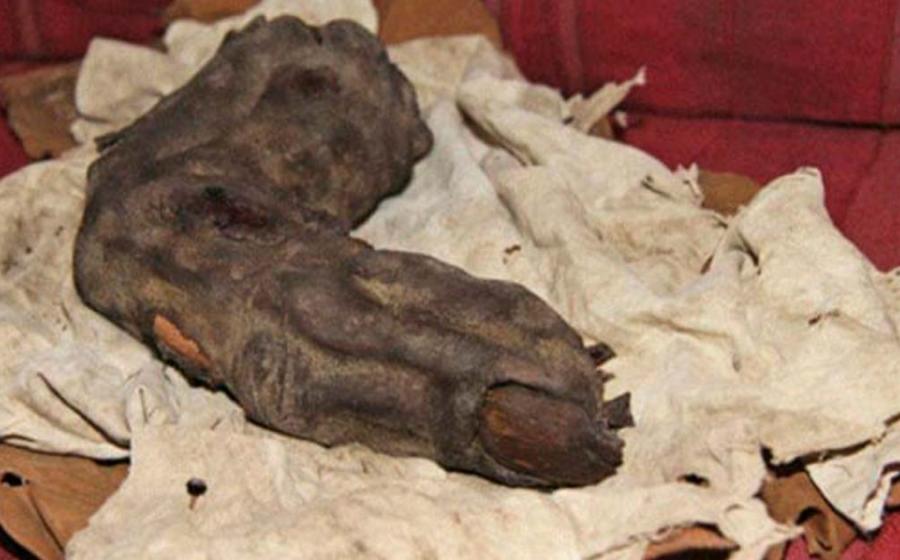
Ancient Origins Part 1 of the relic of Bir Hooker outlined the true account of Swiss club owner Gregor Spörri and his encounter with an elderly farmer in Egypt, Nagib, a descendant of an ancient family of grave robbers. Nagib showed Spörri a relic that had passed down through his family – a wooden box containing a mummified finger that measured 35 centimeters (13.77 in) in length, along with documents proving its authenticity, including x-rays carried out on the artifact in the 1960s. The Unsellable Relic of Bir Hooker and Giant Mythologies Nagib refused to tell Spörri where the finger was found but made allusions to a hidden room in the basement of the Great Pyramid where huge, empty graves
In April 1988 the Swiss club owner Gregor Spörri traveled to Egypt armed with a number of books recommended by a friend to learn about the ancient Egyptian culture. It was a journey that would change his life forever. During this trip to Egypt, Spörri was often found in the Great Pyramid where he wanted to find out whether there was any bio cosmic energy inside it. To achieve his goal, he crawled through shafts, bribed overseers, and spent endless hours in various sarcophagi waiting for evidence of a power supply. In vain. Spörri believed that if you put a bottle filled with water on top of the Great Pyramid it would explode because of the cosmic energy. He performed
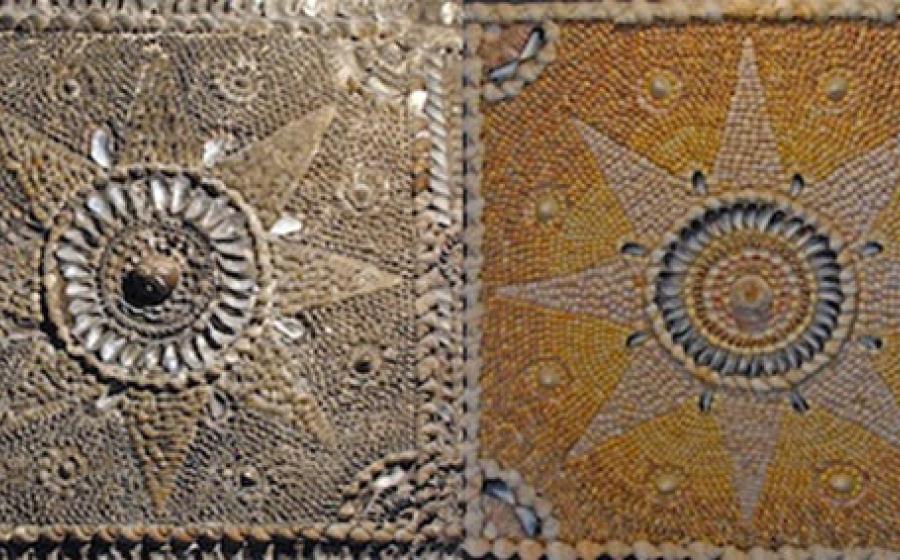
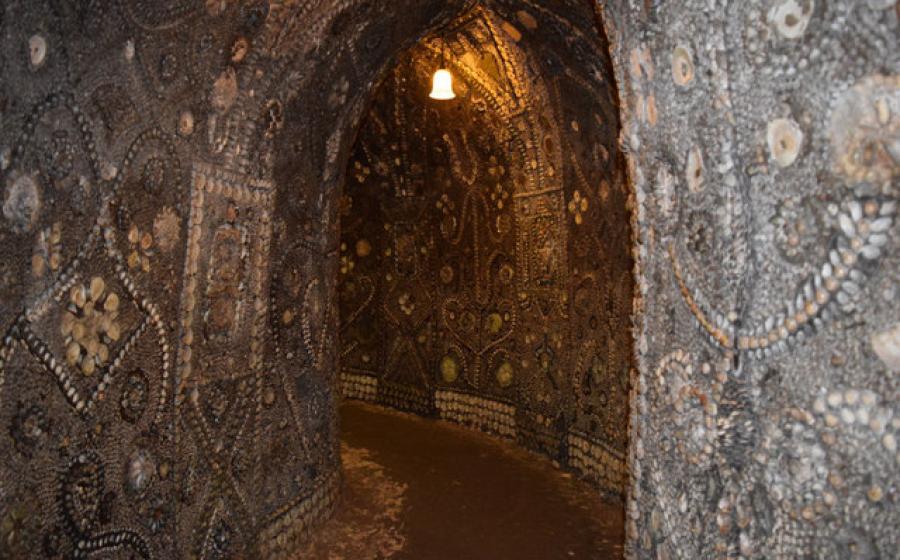
Ninety-nine per cent of the shells that were used in the Margate shell grotto (eg mussels, oysters, clams, whelk, razors and limpet) are from shellfish that occur along the English coast. Only in the altar room one can find some exotic shells from the Caribbean, such as the pink wing horn. In earlier times it must have been a beautiful, colorful place, but nowadays the shells have a dirty and drab appearance. That is due to the use of the gas lamps in the past that left a layer of soot behind on the shells. Cleaning with water would have a devastating impact and one stresses now on conservation. (Image: Example of an original wall decorations and a replica to
Thirty-five miles north of Dover, a 40 minutes drive, one can find the English town Margate in Kent - a coastal town with 57,000 inhabitants and a proud maritime history. Since 1760 Margate has been a favorite holiday destination for many Londoners for its sandy beaches. In the course of time, there have been some violent fires that burned down some of the historic buildings. In the middle of the last century, the fierce fighting between different groups caused the coastal town to fall somewhat into oblivion. Although the site does its best to have the look of a fashionable holiday resort, it is a typical English seaside with faded glory. Along the promenade you will find hotels, fish 'n