Alexander Jacob

Profile picture for user Alexander Jacob
Alexander
Jacob

Dr Alexander Jacob was born in Madras, India, and obtained his Master’s in English Literature from the University of Leeds and his Ph.D. in the History of Ideas from the Pennsylvania State University His post-doctoral research was conducted at the University of Toronto while he was a Visiting Fellow at the departments of Political Science, Philosophy, and English Literature of the University of Toronto.

His scholarly publications include works on natural philosophy:

De Naturae Natura: A Study of Idealistic Conceptions of Nature and the Unconscious, Franz Steiner, Stuttgart, 1992, 2nd ed. Arktos Media, 2011, Ātman: A Reconstruction of the Solar Cosmology of the Indo-Europeans, ‘Religionswissentschaftliche Texte und Studien’, Georg Olms, Hildesheim, 2005, Brahman: A Study of the Solar Rituals of the Indo-Europeans, ‘Religionswissentschaftliche Texte und Studien’, Georg Olms, Hildesheim, 2012; and The Grail: Two Studies (Leopold von Schroeder, “The Roots of the Saga of the Holy Grail' and Alexander Jacob, 'The Indo-European Origins of the Grail”), Colac, VIC, Numen Books, 2014.

Dr. Jacob also holds a Licentiate Diploma in Piano from the Trinity College of Music, London, and has given solo piano recitals in Canada, Bulgaria, Poland, the Czech Republic, Spain, Germany, England, Brazil and Mexico. He has recorded three CDs of piano transcriptions of Richard Wagner’s Der Ring des Nibelungen (Numen Books, 2015), Parsifal (Numen Books, 2015) and Lohengrin (Numen Books, 2017).
Member for

9 years 1 month

View Recent Blogs

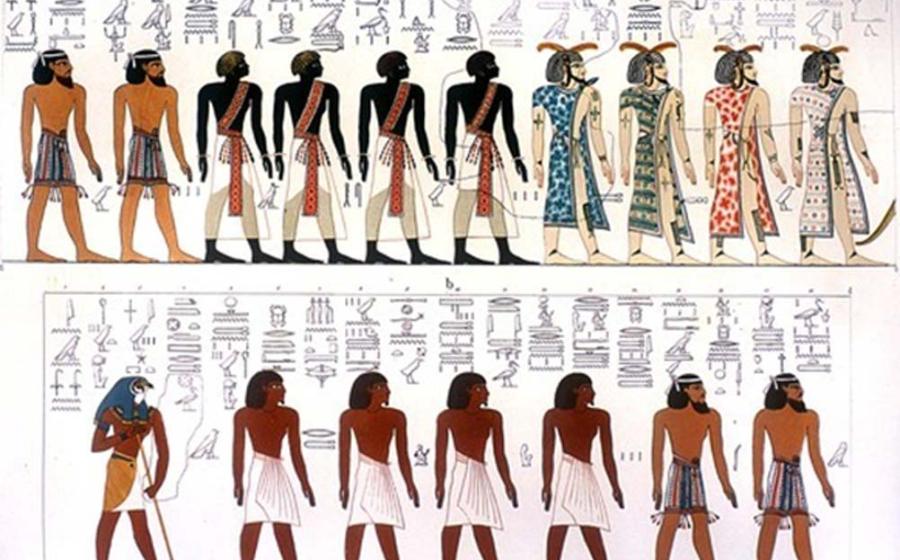
The imperfect state of archaeological research in the Near East impedes any definite identification of the original race or races that created the earliest civilizations of Mesopotamia and Egypt. According to Gordon Childe, however, the predominant racial element in the earliest graves in the region from Elam to the Danube is the ‘Mediterranean’. So we may presume that these early cultures were founded by the genius of that broad racial group. The dolichocephalic Mediterranean, or “brown”, race may thus have constituted the earliest strata of the populations of Asia, Egypt and Europe. [[{"type":"media","view_mode":"media_large","fid":"41807","attributes":{"alt":"Mediterranean dolichocephalic types 1897.","class":"media-image","height":"355","style":"width: 610px; height: 355px;","typeof":"foaf:Image","width":"610"}}]] Mediterranean dolichocephalic types 1897. ( Public Domain ) Genesis as a Genealogical Resource Given the difficulty of descrying the racial identities
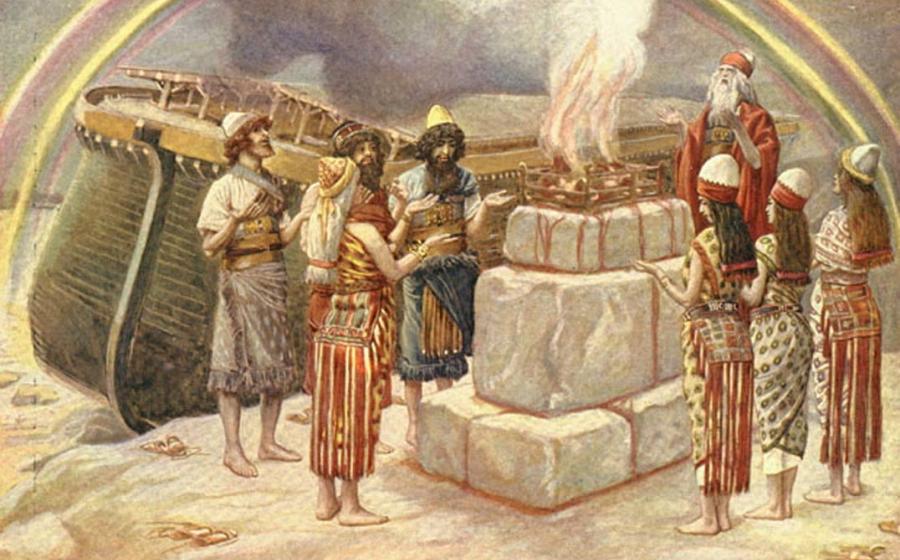
In Part I, the author pieced together the possible genealogy to be found in Mesopotamia and Egypt, taking as his starting point the Biblical account of human developments in the region after the deluge, which, of course, begins with Noah and his family. Part I concluded with the assertion that a New Race referred to as a ‘Dynastic Race’ was evident in the region. What further clues to the ethnology of this race can be found? Read Part 1 here Beaker Folk Links Since the physical character of the New Race detected among the early Mesopotamians and Egyptians is not typically Hamitic but rather Japhetic, we may reasonably inquire whether these newcomers might not be related to the Beaker folk
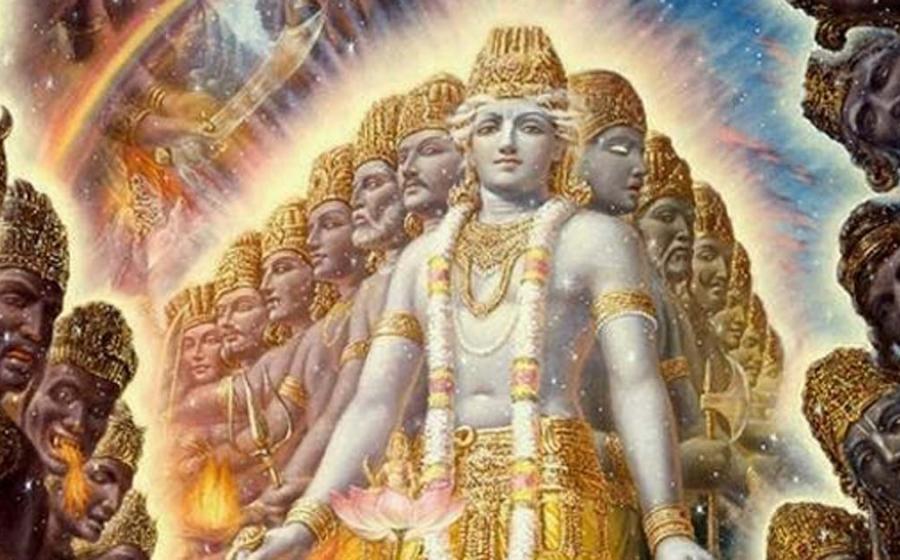
The ultimate aim of the original Indo-European sacrifices, modelled after the cosmic sacrifice of the Purusha [a cosmic man whose sacrifice by the gods created all life] … must have been the liberation of the self from the illusions of the material fabric in which it is entangled and the direction of the energy of man into the divine consciousness. The Proto-Vedic Ritual of Human Sacrifice – A Substitute for Self-Sacrifice? This liberation is the principal aim of yogic ascesis as well, which is, as J.C. Heesterman has pointed out, an internalisation of the sacrifice. Since the primary purpose of a sacrifice is indeed that of self-sacrifice , the sacrifice of a human involved in the proto-Vedic Purushamedha [a Śrauta