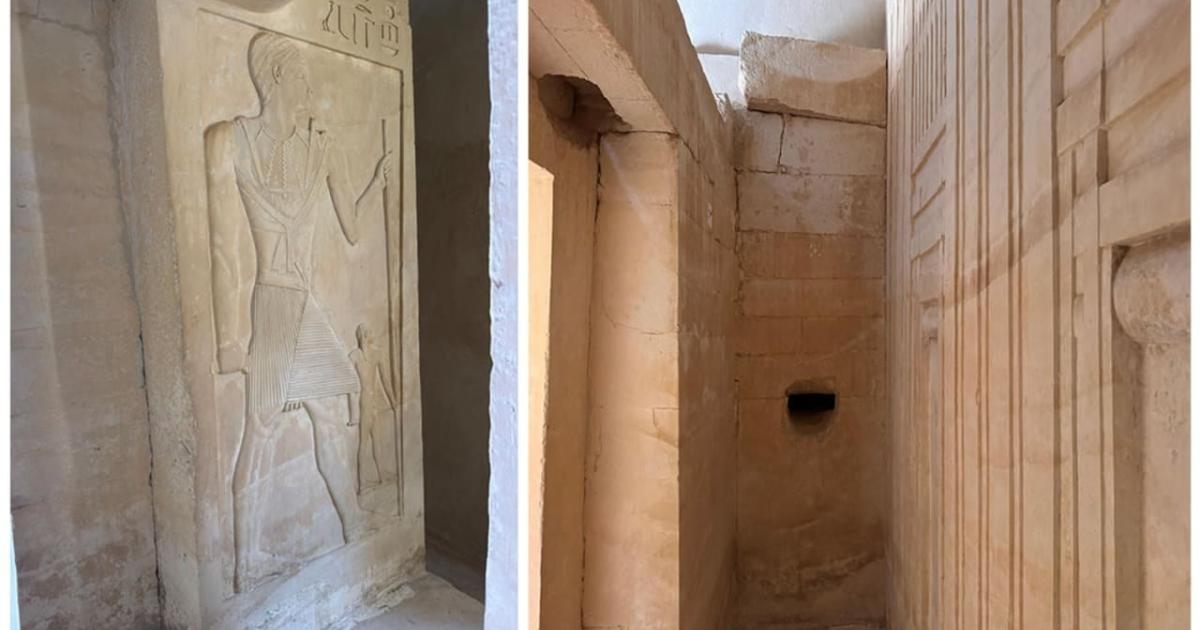

A Czech mission led by Professor Miroslav Bárta of the Czech Institute of Egyptology, Charles University, has relocated and uncovered the Old Kingdom tombs of Sabu and his son Ptahshepses at Saqqara, the sprawling necropolis of Memphis, the Egyptian Ministry of Tourism and Antiquities has announced. Ptahshepses grew up at the court of a pyramid builder, married a king's daughter and was buried in a tomb covering more than 900 square meters. After Mariette's dig in the 1850s, the sand covered it again and its location was forgotten.
The Czech institute published an English translation of the ministry's Arabic release on October 27, 2026. According to that release, both men "held prominent positions associated with the cult of the god Ptah at Memphis," yet the headline find of this season belongs to Sabu's wife.
Readers who follow Egyptology may feel a twinge of déjà vu, because Charles University first announced the rediscovery of the tomb of Ptahshepses, and the mummy inside it, in September 2023. What the 2026 announcement adds is the wife's chapel, a fuller excavation of both family tombs, and the official word from Cairo.
Mariette's quick dig
The story starts with Auguste Mariette, the French Egyptologist who founded the Egyptian Antiquities Service. Between 1858 and 1860, the ministry release says, he "identified approximately 160 tombs dating to different phases of the Old Kingdom." The release says his work "focused on selected parts of these tombs, particularly offering chapels, corridors, and some burial chambers," while the rest went undocumented.
According to the 2023 Charles University release, Mariette took the "monumental false door and a lintel" out of the tomb's cult chapel. The British Museum bought the false door and its architrave from R J Moss and Co in 1897. They stand today in Room 4, a combined 366 centimeters high. Back at Saqqara, the tomb "disappeared again under the sand of the Western Desert," as the 2023 release puts it.
Finding them again
Bárta's team found the site after a search of several years, and speaking in 2023, he said, "It was a difficult search lasting several years. Detailed satellite imagery of the area and the study of old maps led to the rediscovery of the tomb of Ptahshepses in 2022." The 2026 release credits satellite imagery and archaeological field surveys for relocating the tomb.
The father's tomb
Sabu's tomb lies north of his son's, and the release gives its size as 54 by 28 meters, with an original height estimated at about five meters. That is a lot of tomb for a man who was not a king.
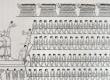
According to the release, "Its exterior walls feature architectural decoration imitating the façades of royal palaces." Inside, the offering chapel holds "well-preserved reliefs depicting Sabu and his son Ptahshepses overseeing processions of offering bearers."
The chapel Mariette missed
The real news sits in a chapel that Mariette missed. Bárta explained, in the ministry's words, that the most significant result was "the discovery of the offering chapel of Sabu's wife, Ikhetneferet, which had escaped Mariette's attention during his earlier investigations."
That chapel holds a false door, one of the false doors that served as gateways to the afterlife in Egyptian tombs. This one shows Ikhetneferet "alongside her husband and their two sons, Ptahshepses and Ranefer." The release says these scenes "provide new information about the family members and their kinship relationships."
The son who married up
Ptahshepses is the reason anyone cared enough to look, and his career is written on the false door in London. The British Museum describes "the biographical inscription of Ptahshepses in which he describes his birth in the time of Mycerinus, his marriage to Khamaat, a princess and daughter, probably, of Shepseskaf, and his career under four further kings, continuing down, probably, to Nyuserre of the Fifth Dynasty." Mycerinus is the Greek name for Menkaure, the king of the third pyramid at Giza.
The 2023 release says the false door tells "the story of his education at the court of the last Giza ruler Menkaura." The princess is where the sources part ways. The ministry release names Khamaat as "daughter of King Userkaf, the founder of the Fifth Dynasty," and the 2023 Charles University release also calls her Userkaf's daughter. The British Museum says she was probably the daughter of Shepseskaf. Userkaf's own family turns up elsewhere at Saqqara, including the pink granite false door of his son, Prince Userefre.
The sources also count his kings differently, since the ministry names four Fifth Dynasty kings he served: "Sahure, Neferirkare, Raneferef, and Nyuserre." The 2023 release lists six kings from Menkaure to Nyuserre.
On the marriage itself, the ministry release says, "According to the surviving written sources, Ptahshepses was the first non-royal official to marry an Egyptian princess." The 2023 release calls him "the first known official of non-royal descent in Egyptian history who was given the privilege of marrying a royal daughter." Both claims rest on what has survived, and a future find could change the count.
In the ministry release, Bárta draws a modern lesson from the family. "Although it may seem unlikely, our archaeological research over the past few years has produced entirely new evidence concerning the historical background of the Fifth Dynasty," he said. "This includes new insights into the early history of nepotism and lobbying in human civilisations, as well as innovations in the mummification process."
The architrave adds a religious footnote, and the British Museum says it carries "standard invocation-formulae to Osiris and Anubis." According to the 2023 release, this is "one of the earliest attestations of the god Osiris," the god Egyptians later knew as Osiris, king of the underworld. The same release goes further and suggests Ptahshepses "can be credited with the idea of introducing" Osiris into the pantheon. That is the researchers' reading of the evidence.
The burial chamber
The son's tomb is bigger than the father's. The release says it covers "an area exceeding 900 square metres" and has an entrance painted with offering bearers and the slaughter of sacrificial animals. Its burial chamber was reached "through a descending passage from the eastern side," and inside lay "a limestone sarcophagus containing the remains of Ptahshepses."
The chamber had been robbed long ago, as the ministry release makes clear: "Although the burial chamber had been looted in antiquity and its jewellery and other valuable objects had disappeared, remains of Ptahshepses' mummy survived." The 2023 release reported "canopic jars, and mummified fish (the first example of its kind)" among what the robbers left.
According to the 2026 release, Egyptian anthropologists found that he "died at an age exceeding sixty years, consistent with the information recorded in inscriptions describing his life." The 2023 release put the figure at "at least 65 years." For a man who started out under Menkaure and was still around under Nyuserre, that tracks.
More sand to move
The Czech mission is still studying and restoring both tombs. The release says the team is pursuing "further archaeological investigations aimed at uncovering additional monuments within the long-forgotten necropolis at Saqqara." Mariette left about 160 tombs behind him, so there is plenty of sand to move. The same ground has produced another Old Kingdom official's tomb at Saqqara.
Ptahshepses, meanwhile, keeps his place in the record as the earliest known outsider to marry into the royal house. In the age of the pyramid builders, it seems, who you married could matter as much as any title.
How we label claims
Established: Mariette's work at Saqqara from 1858 to 1860, the rediscovery and excavation of the tombs of Sabu and Ptahshepses by the Czech mission, Ikhetneferet's chapel and false door showing her husband and two sons, the size and decoration of Sabu's tomb, the tomb of Ptahshepses covering more than 900 square meters, the limestone sarcophagus with the remains of his mummy, the looting of the burial chamber in antiquity, and the false door and architrave in the British Museum (EA682). Established: his age at death of over 60, from the anthropologists' analysis, with an earlier estimate of at least 65. Established: that he is the first known non-royal official to marry a princess, as far as surviving written sources show. Disputed: the number of kings he served, four Fifth Dynasty kings (ministry) or six from Menkaure on (Charles University, 2023). Disputed: whether Khamaat was the daughter of Userkaf (ministry, Charles University) or probably of Shepseskaf (British Museum). Unverified: Bárta's reading of the family as early evidence of nepotism and lobbying, and the view that Ptahshepses introduced Osiris.
A funerary door and a burial chamber found during the excavations of the tombs of Sabu and Ptahshepses at Saqqara, in photos released by the ministry. Image: Egyptian Ministry of Tourism and Antiquities.
By Aris Manus
Sources
- Czech Institute of Egyptology, Charles University, Czech Archaeologists Rediscover the Tombs of Sabu and Ptahshepses at Saqqara, October 27, 2026 (translation of the Egyptian Ministry of Tourism and Antiquities press release)
- Egypt Independent, New archaeological discovery in Saqqara unveils 4,000-year-old secrets, October 27, 2026
- Faculty of Arts, Charles University, Czech Egyptologists from CU FA Rediscovered the Tomb of Ptahshepses at Saqqara, September 2023
- British Museum, Collection object EA682, false door and architrave of Ptahshepses