
Egyptian archaeologists digging beside the pyramid of King Merenre at Saqqara have pulled a small puzzle out of a burial shaft. Bronze instruments lay in the shaft of a decorated tomb belonging to an official called Weni, and Egyptian officials think they may have been used for medicine. So why would a man whose inscriptions describe a treasurer, mayor and priest take what look like a healer's tools to his grave?
According to Egypt's Supreme Council of Antiquities (SCA), whose statement was reported by the Egyptian Gazette on October 26, 2026, the inscriptions "do not identify Weni as a physician, leaving researchers to investigate why the objects were buried with him." The same excavation found two small wooden figures in a rare devotional pose, a false door naming a priestess of Hathor, and a skeleton with clues to the man's health in his later years.
Where Was Weni's Tomb Found?
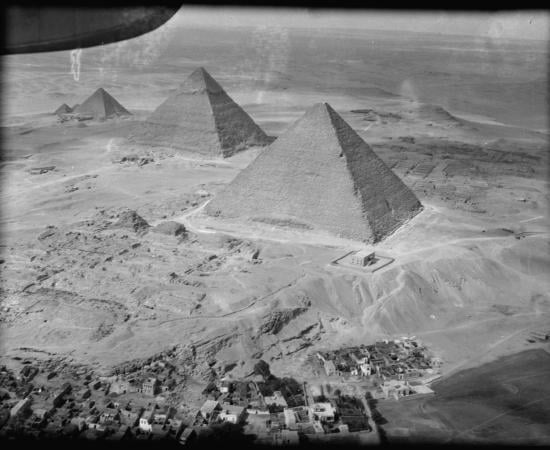
The mission, an Egyptian team from the SCA, was working northwest of Merenre's pyramid, a Sixth Dynasty royal monument in the Saqqara necropolis south of Cairo. There it uncovered a mudbrick mastaba, the bench-shaped tomb favored by Old Kingdom elites, which contained several burial shafts. One shaft led down to an inscribed burial chamber, which SEE News reports belonged to a high-ranking Old Kingdom official named Weni. Photographs released by the ministry show the chamber walls painted with food offerings and vessels.
Readers who know the site will recall how crowded this vast necropolis of the Memphite kings and their officials already is, and how much of its Sixth Dynasty history has come from inscriptions like the South Saqqara Stone that records the reigns of the period's pharaohs. The exact reign in which Weni died has not been stated.
During a site visit, Minister of Tourism and Antiquities Sherif Fathy descended into the burial shaft to be briefed by the mission's director, SEE News reports.
Who Was Weni?
Hisham El-Leithy, Secretary-General of the SCA, said the inscriptions revealed a wide range of administrative and religious titles, SEE News reports. That outlet lists them as "Mayor," "Sem Priest," "Director of Every Royal Kilt," "Treasurer of the King of Lower Egypt," "Sole Companion," and "Lord of the City of El-Kab." Arkeonews and the Egyptian Gazette instead give a title for overseeing royal expeditions. The reports do not explain the difference.
Taken together, the titles describe a senior official, which is why the bronze tools stand out.
The name is also borne by Weni the Elder, a Sixth Dynasty official who left what a Harvard publication program describes as "one of the longest biographical narratives known to date from the late Old Kingdom," excavated at Abydos. The ministry has not linked the Saqqara tomb to him, and any connection should be treated as Unverified.
Why Would a Treasurer Own Medical Tools?
SEE News describes the bronze set as "likely utilized for medical purposes" and calls it "a rare finding within funerary contexts." Mohamed Abdel Badie, head of the Egyptian Antiquities Sector at the SCA, noted that the inscriptions do not name Weni as a physician and that the tools merit "further interdisciplinary study," the outlet reports. The Egyptian Gazette puts it more cautiously, saying their possible medical use "was still under study." Until the objects are published, every explanation below carries an Unverified label.
The first and simplest option is that the tools were for personal use. A man who lived past 50 with serious dental disease, as his skeleton suggests, may well have needed treatment, and tools used on him could have followed him into the tomb. A second option points to his priestly role. University College London's Digital Egypt resource notes that "Sets of stone versions of the ritual tools were made as parts of burial equipment for officials, priests and their families in the late Old Kingdom, at the cemeteries of Memphis." Those tools served the Opening of the Mouth, a ritual in which a sem priest is a key participant, so instruments that look surgical to modern eyes might be ritual kit.
Several other possibilities also remain open at this early stage. The bronzes could be craft or cosmetic implements, symbolic grave goods, or objects that entered a shaft used by more than one burial. The finds so far are indicative rather than conclusive, and the ministry has not said how many instruments there are or what shapes they take.
Medicine in Ancient Egypt
Egyptian medicine did leave written texts behind. The best known is the Edwin Smith Surgical Papyrus, held by the New York Academy of Medicine, which describes it as "one of the oldest surviving medical texts, created in about 1600 B.C." The academy adds that "The main text consists of 48 cases dealing with wounds and trauma." The US National Library of Medicine says the papyrus was "probably based on material from a thousand years earlier."
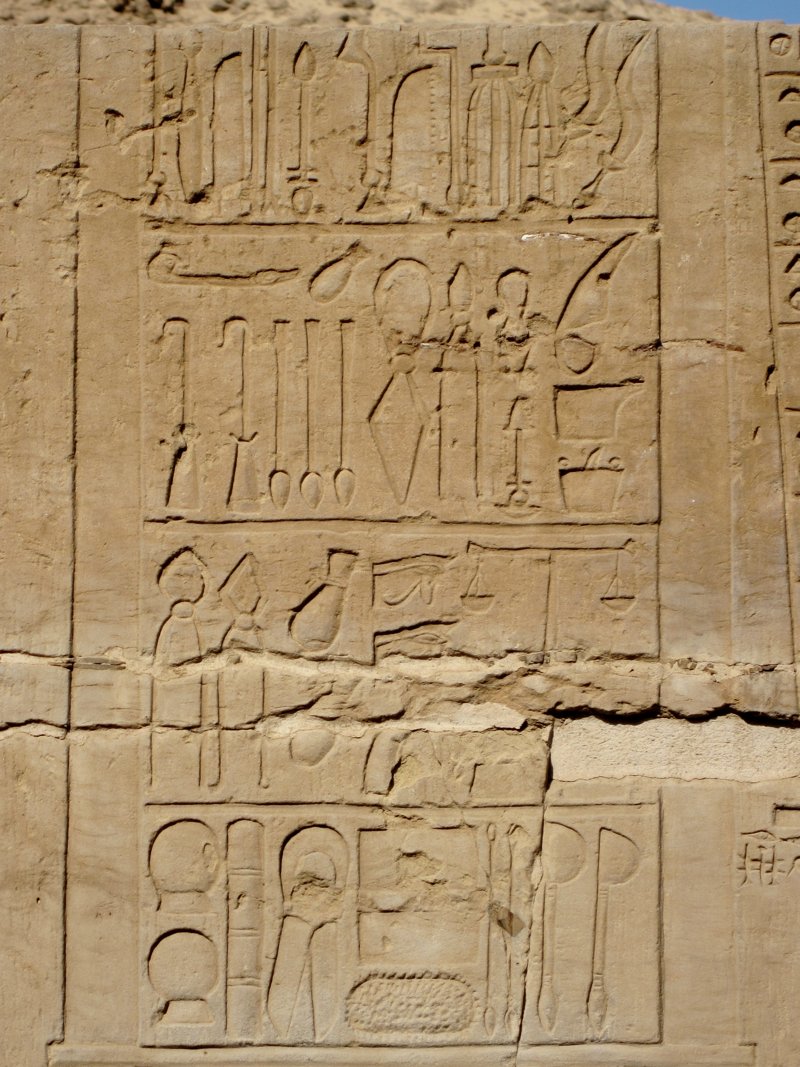
The so-called physicians' relief at the temple of Kom Ombo, described on Wikimedia Commons as dating to between 138 and 218 AD, in the Roman period. It is shown as an illustration for comparison only and is not from Weni's tomb. (Photo by Olaf Tausch, licensed under Creative Commons Attribution 3.0 Unported (CC BY 3.0), via Wikimedia Commons)
The most famous carving of Egyptian medical instruments is much later. A relief at the temple of Kom Ombo, a shrine shared by two gods, shows a set of tools that is often compared with surgical kits. A Wikimedia Commons file record dates the relief to between 138 and 218 AD, more than 2,000 years after Weni, so it can only serve as a loose comparison.
Two Figures in the Room Above
The other puzzle sits higher up in the tomb. Excavations directly above Weni's burial chamber uncovered a vaulted room holding "two small wooden statues depicted in a rare devotional posture," SEE News reports, citing Abdel Badie. Arkeonews notes that the ministry has not yet released photographs of the figures, so their exact pose cannot be described with confidence.
Their position may matter as much as their form. Placing figures in a separate room above the burial suggests that the space played its own part in the funeral arrangements, Arkeonews argues, though that is an interpretation rather than a finding. Abdel Badie said the discovery would help researchers investigate how the different spaces in Old Kingdom mastabas functioned, a question also raised by the richly painted mastaba found at Dahshur.
A Priestess of Hathor and the Evidence of the Bones
The team also found a false door, the carved stone portal through which the dead were thought to receive offerings, inscribed for a woman. Most reports give her name as Sekhet Nebti, though SEE News renders it as "Sekhet-neferti." Her titles included priestess of Hathor, but archaeologists have not established whether she had any family or personal tie to Weni, Arkeonews reports.
The skeleton adds the most personal detail of all. Preliminary analysis, the mission's director explained, suggests Weni died over the age of 50, with advanced dental and periodontal disease and skeletal markers consistent with chronic physical stress. Ancientist notes that the precise cause of that strain remains unknown, which is a fair warning against reading too much into it.
What happens next matters more than any guess. The mission is pursuing further architectural, linguistic and art-historical analyses of the complex, according to SEE News. Until the bronzes are measured, drawn and compared with other Old Kingdom tools, the question of whether Weni owned a doctor's kit remains less a discovery than a well-posed puzzle.
How we label claims
Established: the mastaba northwest of Merenre's pyramid, Weni's titles as reported, the bronze instruments in the shaft, the two wooden figures in the vaulted room, the false door of a priestess of Hathor and the preliminary skeletal findings, all as stated by Egyptian officials. Unverified: the medical function of the tools, every explanation for their presence, any link to Weni the Elder, Weni's exact date within the Sixth Dynasty and the meaning of the figures' pose and placement, which is interpretation.
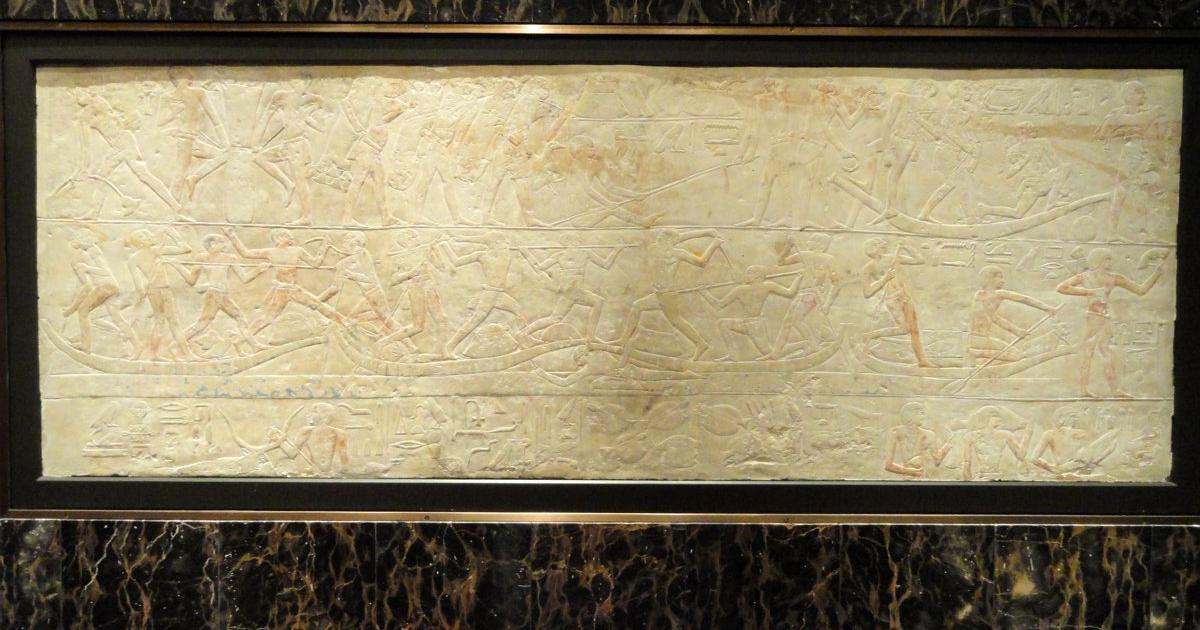
A relief from the Saqqara tomb of another official, Ny-ankh-nesuwt, early Sixth Dynasty, now in the Nelson-Atkins Museum of Art. It is shown as an illustration for context only and is not from Weni's tomb. (Photo by Daderot, public domain, via Wikimedia Commons)
By Aris Manus
Sources
- Salwa Samir, Ancient Egyptian official's tomb unearthed at Saqqara, Egyptian Gazette, October 26, 2026
- Ali Abu Dashish, Tourism Minister Inspects Saqqara, Unearthing High Official's Tomb, SEE News, October 26, 2026
- Arkeonews report on the two wooden figures found above Weni's tomb at Saqqara, October 27, 2026
- Two Wooden Figures and Possible Medical Tools Found in Saqqara Tomb, Ancientist, October 26, 2026
- The Opening of the Mouth ritual, Digital Egypt for Universities, University College London
- Edwin Smith Surgical Papyrus, New York Academy of Medicine
- An Ancient Medical Treasure at Your Fingertips, NLM Technical Bulletin, March to April 2010
- Biographies of Person and Place: The Tomb Complex of Weni the Elder at Abydos, Shelby White and Leon Levy Program for Archaeological Publications, Harvard
- Relief with surgical instruments, Temple of Kom Ombo, file record by Carole Raddato, Wikimedia Commons (date of the relief)