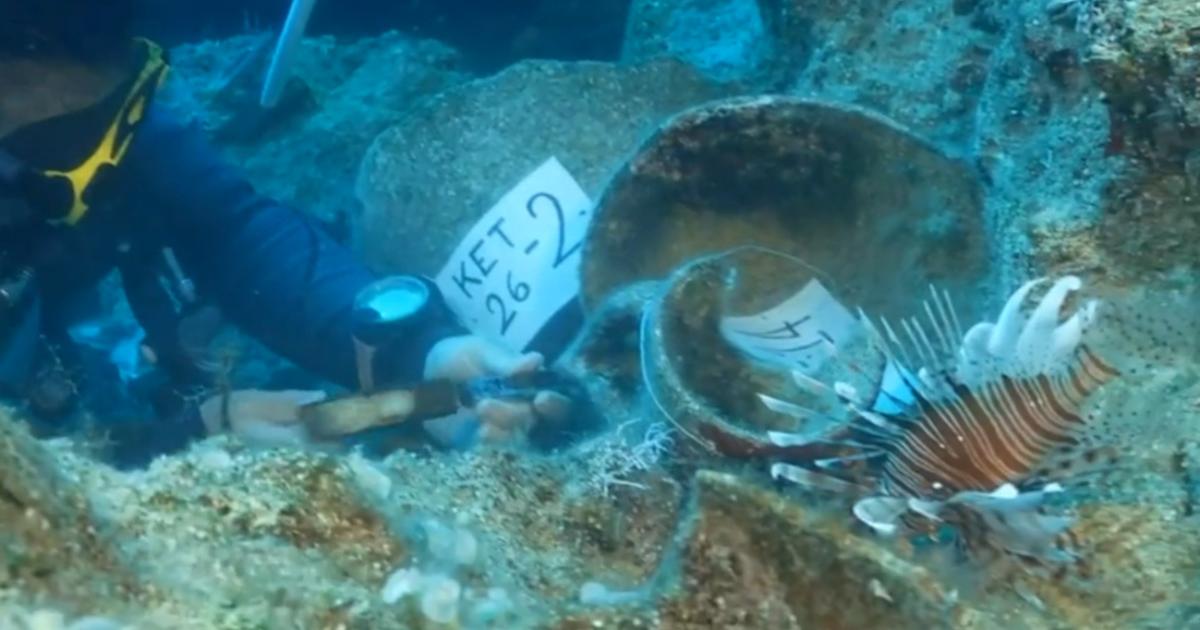

An announcement by Turkey Today has brought a remarkable find into view: archaeologists have recovered Early Bronze Age amphorae from a wreck near Kekova Island, off Antalya. The ceramics are dated to between 4,400 and 4,700 years ago, putting the vessel among the oldest known shipwrecks yet identified. The discovery is important because it preserves clues about how people, food and ideas moved across the eastern Mediterranean.
The wreck lies on an underwater slope about 30 meters below the surface, according to the BBC’s report. Divers documented more than 30 storage vessels and three large stone anchors, while the wooden hull has long since eroded away. Researchers estimate that the trading vessel was around 10 meters long, although further excavation may reveal more of its structure.
- Greek Divers Just Found One of the Richest Shipwrecks in the World
- Into the Drink! Roman Shipwreck Stocked with Amphorae Found Near Cyprus
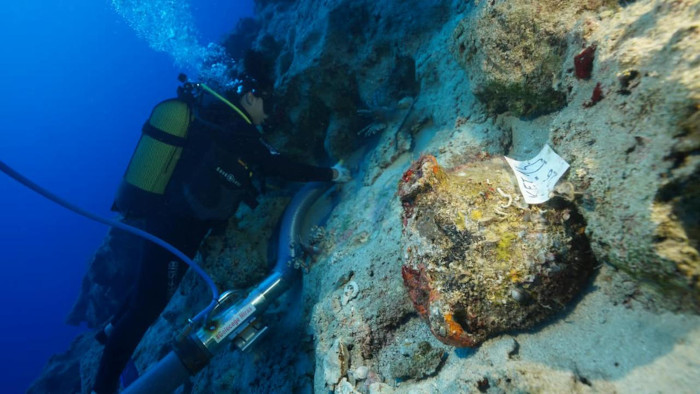
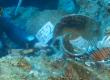
Underwater archaeologists examine and recover ancient amphorae from the shipwreck near Kekova Island in Antalya, southern Turkey. (Photo via Türkiye's Ministry of Culture and Tourism)
Pottery dates the lost vessel
The original academic study by Hakan Öniz and Ceyda Öztosun records the wreck after a 2024 Akdeniz University survey and describes planned 2026 excavation work. Because no timber survived, the team dated the site through amphora shape and decoration: two handles, a central ridge and a flat base match Early Bronze Age examples from Egypt and the Middle East. The “world’s oldest” description therefore rests on the age of the cargo and associated wreck, rather than radiocarbon dating of the ship itself.
- Ancient Underwater Trade Secrets at the Cape Gelidonya Shipwreck
- A Dozen Mediterranean Shipwrecks Reveal Global Trade
A Cargo that Crossed the Mediterranean
Clay analysis suggests that some jars were made in workshops in the Jordan Valley, as reported by Anadolu Agency. Similar vessels have been found near Egypt’s pyramids, Troy and Crete, pointing to a network wider than a single coastal route. The excavators believe the ship may have left a Levantine port bound for Troy or the Minoan world, carrying goods such as olive oil or wine.
Amphorae can preserve both the shape of a trade container and traces of what it held. At Kekova, some recovered jars still contain a glossy residue, which specialists are testing; it could be oil, wine or tree resin, although reuse remains possible. Comparable cargo evidence has helped researchers reconstruct ancient commerce in the Roman shipwreck near Cyprus.
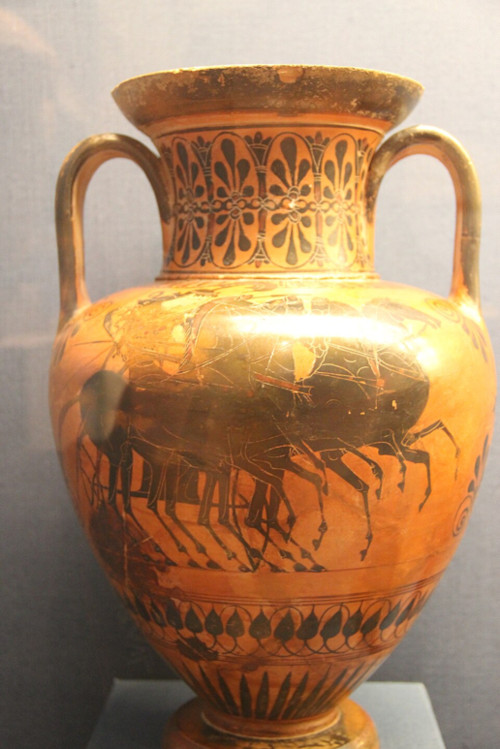
Bronze Age ceramic amphora from the Benaki Museum, Greece, included as an illustrative substitute, not an object from Kekova. (Gary Todd/CC0)
Clues to Life Aboard
One unusual jar carries nine markings and two holes, leading the team to suggest it may have been used as a churn for making cheese or butter. That raises an intimate possibility: sailors may have carried goats, milked them during a voyage and produced fresh food on board. The idea is provisional, but it shifts attention from commercial cargo to the practical routines of an Early Bronze Age crew.
“This shipwreck is a time capsule at the bottom of the sea,” expedition leader Hakan Öniz told the BBC. Conservation is continuing, and Turkey’s Culture and Tourism Ministry says recovered objects are intended for a planned museum in Antalya. The careful work resembles the methods discussed in Challenges and Triumphs in Underwater Archaeology and Ancient Greek Shipwreck Is Now Protected By Underwater AI Robots, offering hope that the Kekova wreck will reveal how its passengers lived at sea.
Top image: Still from the underwater excavation work at the find site. Source: Turkey's Ministry of Culture and Tourism via Türkiye Today
By Gary Manners
References
Francis, A., Morelle, R., and Church, K. 14 October 2026. World’s oldest shipwreck found off coast of Turkey. Available at: https://www.bbc.com/news/articles/c6gr80rk1yyko
Newsroom. 14 October 2026. World’s oldest shipwreck uncovered off Türkiye’s Mediterranean coast. Available at: https://www.turkiyetoday.com/culture/worlds-oldest-shipwreck-uncovered-off-turkiyes-mediterranean-coast-3230269
Öniz, H. and Öztosun, C. 24 July 2026. Preliminary Report on the Early Bronze Age Shipwreck in the Kekova Region of Antalya. Journal of Maritime Archaeology, 21(3 ). Springer Nature. Available at: https://doi.org/10.1007/s11457-026-09532-3
Yildirim, O. and Sunnetci, H. 14 October 2026. 4,700-year-old amphorae discovered near Türkiye’s Kekova Island. Available at: https://www.aa.com.tr/en/culture/4-700-year-old-amphorae-discovered-near-turkiyes-kekova-island/4088600