rand

Profile picture for user rand
Rand
Flem-Ath

RAND FLEM-ATH is a 5th generation Canadian living with his wife and co-author (ROSE FLEM-ATH) on the Pacific coast of Canada. In 1976, Rand discovered that an ancient map of Atlantis published in 1665 by the Jesuit priest, Athanasius Kircher, featured a remarkably accurate depiction of the sub-glacial contours of Antarctica (features unknown to the modern world until 1958). Convinced that Antarctica was Atlantis, Rand sought a climatic explanation for how people could have once lived on the now icy island continent. The answer came by reading the books of Professor Charles Hapgood with whom he corresponded about the theory of earth crust displacement from 1977 to 1982 (when Hapgood died). In 1981, Rand published in the scientific literature using the theory of earth crust displacement to explain the sudden global rise of agriculture around 9,600 B.C. (Plato’s date for the destruction of Atlantis). Rand then embarked upon a comprehensive study of world mythology using the resources of the Reading Room of the British Museum. Further research in archaeology, anthropology, geology, and the philosophy of science resulted in a trio of books, WHEN THE SKY FELL (with Rose), THE ATLANTIS BLUEPRINT (with Colin Wilson) and ATLANTIS BENEATH THE ICE (with Rose).

Read Rand's full profile here.
Member for

11 years 11 months

View Recent Blogs

In the early days of biblical archaeology there was a lot of optimism that the new science could verify the existence of Moses by proving that there was indeed a great migration of people from Egypt who eventually conquered and settled Canaan. This premature optimism was dashed by the stark reality of subsequent excavations. Contradictions and Puzzles Within the Biblical Account of Moses In The Bible Unearthed, Israeli archaeologists Israel Finkelstein and Neil Asher Silberman dispelled any illusions that their digs had verified the story of the Exodus: “The process that we describe here is, in fact, the opposite of what we have in the Bible: the emergence of early Israel was an outcome of the collapse of the Canaanite
Sigmund Freud’s article ‘Moses an Egyptian’ caused an outcry as he was taking the radical view that Moses was not a Jew and ascribing an Egyptian ancestry to the prophet, amid a time when Nazi’s were pursuing Jews, including Freud himself. In his controversial investigation, Freud opened the question: “Who Killed Moses?” that authors Rand and Rose Flem-Ath seek to answer in their book. [[{"type":"media","view_mode":"media_original","fid":"59046","attributes":{"alt":"Michelangelo's Moses in San Pietro (Luca Volpi / CC BY-SA 3.0)","class":"media-image","height":"700","style":"width: 467px; height: 700px;","typeof":"foaf:Image","width":"467"}}]] Michelangelo's Moses in San Pietro ( Luca Volpi / CC BY-SA 3.0 ) Freud’s Nightmare March 22, 1938 was the worst day of Sigmund Freud’s life. All the loving father’s prestige could not help his daughter now. His beloved Anna was with

Sigmund Freud’s article ‘Moses an Egyptian’ caused an outcry as he was taking the radical view that Moses was not a Jew and ascribing an Egyptian ancestry to the prophet, amid a time when Nazi’s were pursuing Jews, including Freud himself.  In his controversial investigation, Freud opened the question: “Who Killed Moses?”  that authors Rand and Rose Flem-Ath seek to answer in their book.

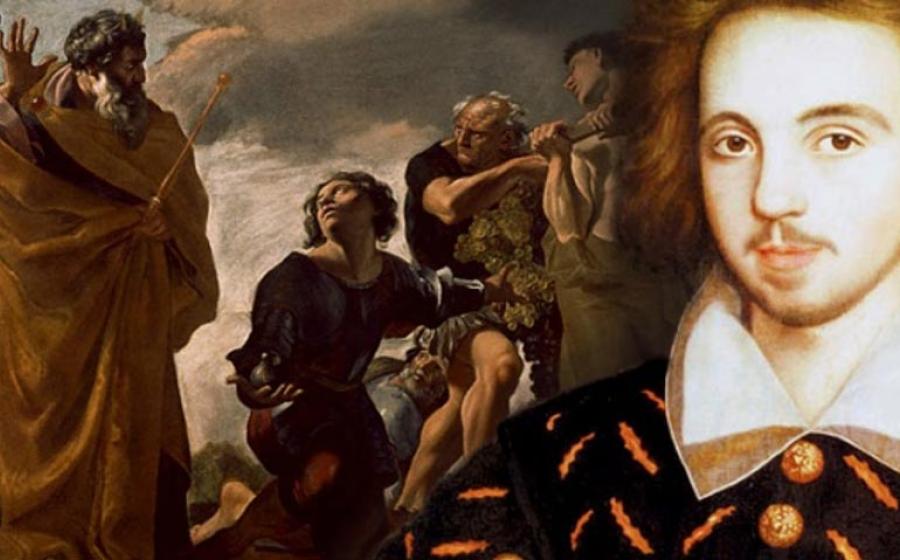
On May 29th, 1593, a government informer, Richard Baines, formally charged the famous playwright, Christopher Marlowe, with blasphemy. The complaint sent to Queen Elizabeth I read: “Containing the opinion of Christopher Marlowe concerning his damnable opinions and judgment of religion and scorn of God’s word. … He affirmed that Moses was but a Juggler and that one Herriot, being Sir Walter Releigh’s man, can do more than he. That Moses made the Jews to travel 11 years in the wilderness, ere they came to the promised land to the intent that those who were privy to most of his subtleties might perish and so an everlasting superstition remain in the hearts of the people. That it was an easy matter
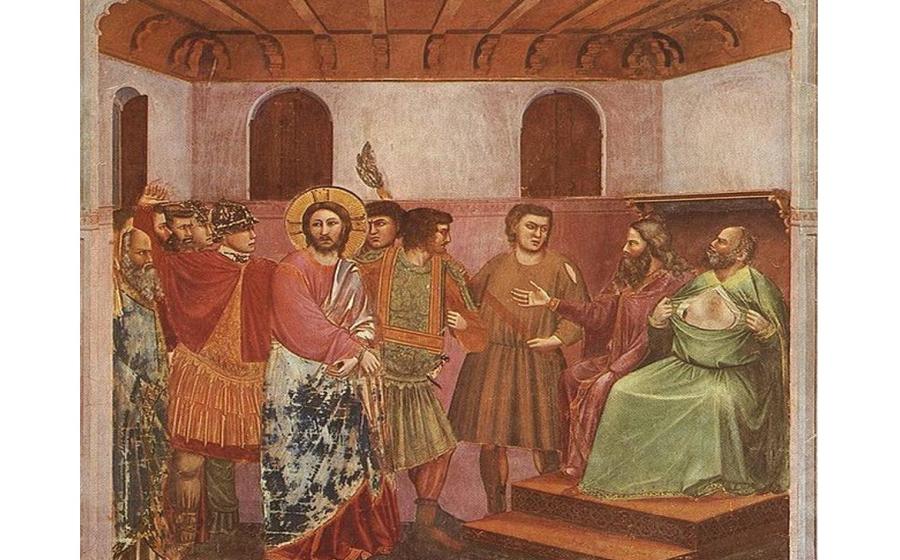
Arriving in Jerusalem, Jesus made an extraordinary accusation that infuriated the priests and scribes of the holy city: “Every secret you’ve kept will become known. What you have whispered in hidden places will be shouted from the housetops.” What was Jesus talking about? And how did he come to possess knowledge that threatened these influential men? [[{"type":"media","view_mode":"media_large","fid":"9395","attributes":{"alt":"Jesus and the high priest Joseph Caiaphas (left). Painting circa 1630.","class":"media-image","style":"width: 610px; height: 424px;","typeof":"foaf:Image"}}]] Jesus and the high priest Joseph Caiaphas (left). Painting circa 1630. Public Domain In the second century the Greek philosopher, Celsus, wrote an invaluable book about Christianity based on a variety of older, now lost, sources. A Christian writer, Origen, ( fl. 247 AD) wrote a reply to Celsus’ book
The truth about the powerful man who was Moses remains elusive, as his life has always been shrouded in mystery. The isolated details of the biblical story and the contradictory accounts of his behavior have mystified and frustrated scholars and devotees alike. For the last years of his life he chose to hide behind a mask. At times he is depicted as a meek, stuttering figure; pleading with God that he’s unfit for a sacred mission. At other times his tyrannical commands terrorized the children of Israel. What is the explanation for these extreme shifts in the prophet’s character? Was Moses a manic-depressive or was he brutalized by harsh experience? The evidence suggests something much more sinister. Was Moses murdered