Rafael Videla Eissmann

Profile picture for user Rafael Videla Eissmann
Rafael
Videla


Rafael Videla Eissmann is a historian from Chile (Santiago, 1979) who has written several books and articles about the Antarctic origins of mankind, the vestiges of the primal civilization of the Americas and its symbols, as well as other fields of the Pre-Columbian cultures. Some of his books are Raza Primigenia (“Primal Race”, 2003), El Diluvio y los Gigantes. Mitos y leyendas de Chile a la luz de la Cosmogonia Glacial (“The Deluge and the Giants. Myths and Legends of Chile according to the Glacial Cosmogony”, 2010), Símbolos rúnicos en América. El regreso a la tierra ancestral (“Runic Symbols in the Americas. The Return to the Ancestral Land”. Foreword by Vicente Pistilli. 2011), Mitos del Polo Antártico. Cosmogonía y antropogonía de la civilización prediluvial (“Myths from the Antarctic Pole. Cosmogony and Anthropogony of the Prediluvial Civilization”. 2012), El Símbolo Sagrado del Sol (“The Sacred Symbol of the Sun”, 2014), Los lituches. Los hombresdioses de la tradición del sur del mundo (“The Lituches. The God-Men of the Tradition of the Southern Hemisphere”. Foreword by Erich von Däniken. 2014), Los Dioses Extraterrestres y el regreso de B’olon Yokte’K’uh (“The Extraterrestrial Gods and the Return of B’olon Yokte’K’uh”. Foreword by Erich von Däniken. 2015), El Gran Diluvio. Mitos americanos sobre la última catástrofe planetaria (“The Great Flood. Myths of the Americas about the last World Catastrophe”. Foreword by Marco Nünemann. 2016) and Antártida, Arquinesia y la Atlántida. Aproximaciones al poblamiento americano (Antartic, Archinesia and Atlantis. Approximations to the American settlement”. Foreword by Vicente Pistilli. 2017). Rafael is a member of the Privatinstitut Fuer Welteislehre (“Private Institute of Glacial Cosmogony”) based in Berchtesgaden; member of РОИПА (“Russian Society for the Study of Atlantis”) based in Moscow and of the Italian Cultural Association Akakor Geographical Exploring.

http://obrasrafaelvidelaeissmann.blogspot.com/

http://charlasylecturas.blogspot.com/

http://losvikingosenamerica.blogspot.com
Member for

4 years 10 months

View Recent Blogs

A long time before the Inka reigned, there were in those parts men in the manner of giants, as grown as they showed the figures that were sculpted in the stones. Pedro de Cieza de León Crónica de Perú (1553) A Surprising Account On a recent journey to Bolivia and Peru, searching the traces of the primeval civilization of Tiahuanaco and of the Inca, engineer Celso García Vargas heard perhaps one of the most amazing accounts that resounds with a remote pre-Hispanic tradition. In fact, this account is a contemporary echo of the original substrate of the gods of the Americas. A few years ago, Celso García Vargas travelled to the Andean highlands. Near the sacred site of Ollantaytambo (about
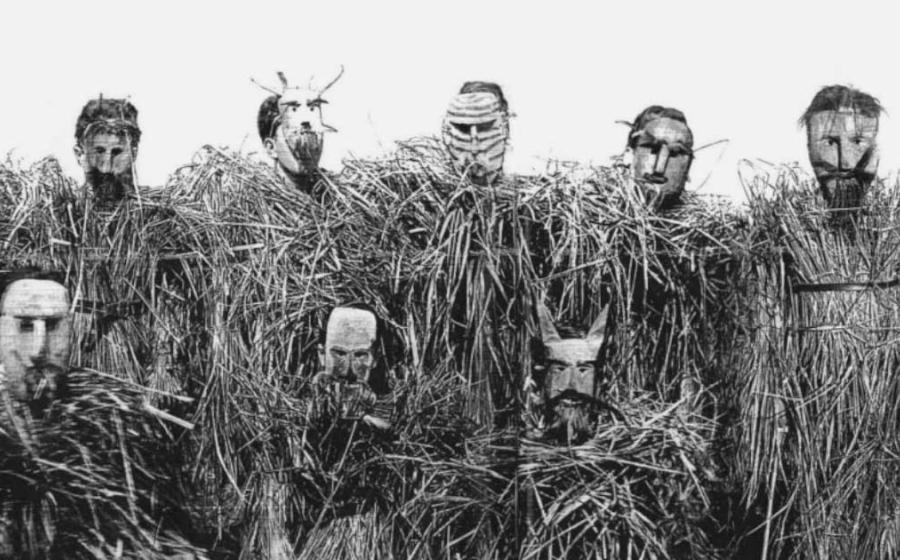
Significantly, the magical-religious “attire” of the tradition of ancient Araucania and the now disappeared Araucanians of the south-central and southern zone of Chile are related to the pagan Buttnmandl tradition of southern Germany, specifically the Berchtesgaden Valley. The distance between these two similar clothing styles is greater than 12,770 km (7,935 miles). Is it a coincidence that an Andean people of Chile and the Berchtesgaden people of Bavaria, Germany wore similar magical-religious clothing? Or was there an unknown connection between the two regions? Chilean Araucanians Linked To Bavarian Berchtesgarteners? The “attire” of the Araucanians is characterized by constituting a kind of straw clothing that covers the entire body. The Buttnmandl celebrants, a pagan tradition to drive out winter, even though
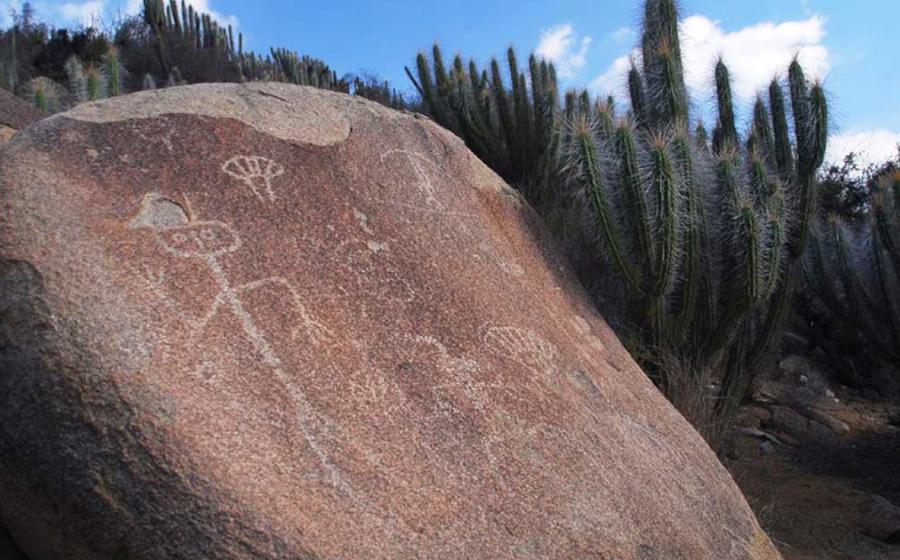
The Enchanted Valley, known as el Valle del Encanto in Spanish, is one of the most well-known rock art sites in Chile. Home to a varied set of petroglyphs, pictographs and so-called cup-marked stones, these archaeological remains have been attributed to the El Molle culture from 2,300 years ago. However, this author argues that these puzzling petroglyphs date back to a far earlier era and that they are actually part of a lithic library recording the visit of ancient aliens to planet Earth during prehistoric times. [[{"type":"media","view_mode":"media_large","fid":"98185","attributes":{"alt":"Representations of Viracocha - with a large headdress – in Chile's Enchanted Valle. (Author provided)","class":"media-image","height":"283","style":"width: 610px; height: 283px;","typeof":"foaf:Image","width":"610"}}]] Representations of Viracocha - with a large headdress – in Chile's Enchanted Valle. (Author provided) The
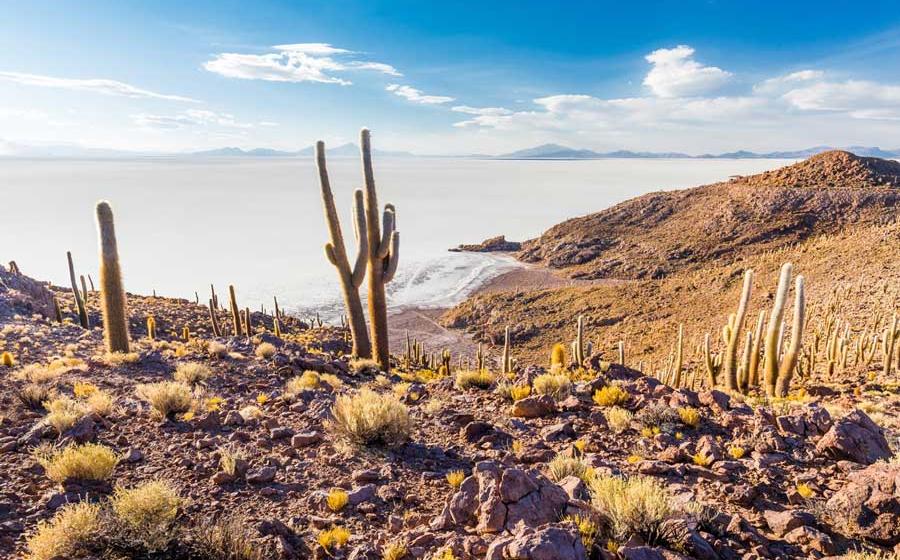
Within the Bolivia 2020 Pre-Expedition developed in February 2020 by the Akakor Geographical Exploring team under the direction of Lorenzo Epis, the imposing Salar de Uyuni and surrounding areas in the Department of Potosí in Bolivia, were visited, thus elaborating on the preliminary study of some archaeological sites. The present article addresses one of these fascinating places in an attempt to understand if the ancient Andeans had a complex understanding of astronomy and an ancient Andean calendar. Exploring the Salar de Uyuni The Salar de Uyuni, or Uyuni Salt Flats, in the Andean highlands is located around 3,650 meters (11,975 ft) above sea level. It is the largest continuous salt desert on the globe, with a surface that that covers
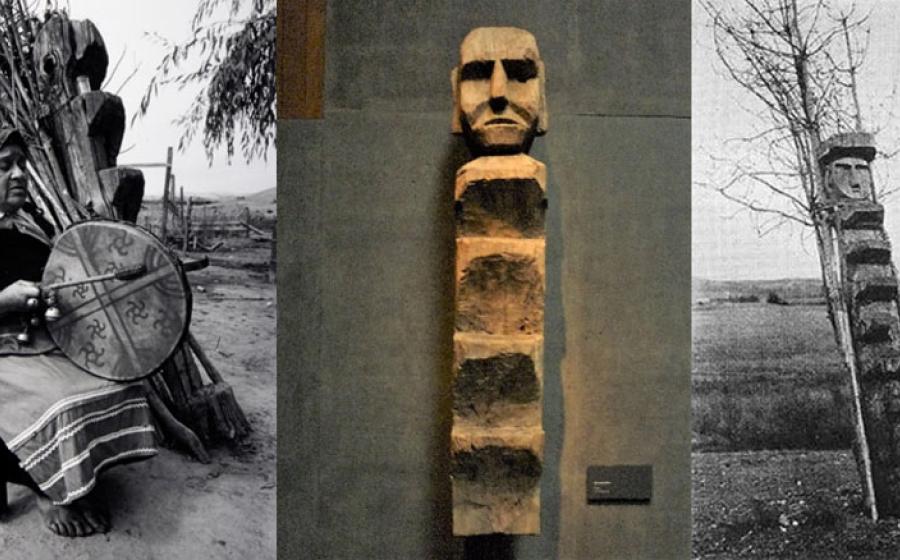
One of the fundamental magical-religious symbols of the Lituche-Araucanian cultural substrate of Chile is the Rehue or stepped totem carved in wood. The Rehue is a representation of the Axis Mundi, the Invisible Column of the World or The Cosmic-Polar Tree. In its upper part, it has an anthropomorphic face evoking the ANTHROPOS or Cosmic Man from Western tradition. Is it the Fucha-Huentru-Nguenechén, literally, the “Old-Man-God” of the Araucanians? Sometimes the anthropomorphic figure of the Rehues features a Callana or “plate” that protected the head of the Lituches from the Sun. The Lituches were the survivors of the Flood or Tripalafken. The “steps” of the Rehue, usually seven, allow the real and symbolic ascent where the ancient Machis and initiates