Molly Dowdeswell

Profile picture for user Molly Dowdeswell
Molly
Dowdeswell

Molly graduated with a bachelor’s degree in history and a master's degree in early modern history. She has a long-standing interest in the subject and enjoys researching and writing on a broad range of historical topics and is most interested in the history of medicine and disease. Molly is currently working as a freelance writer and is planning on returning to university to complete a PhD in history.

Member for

4 years 5 months

View Recent Blogs

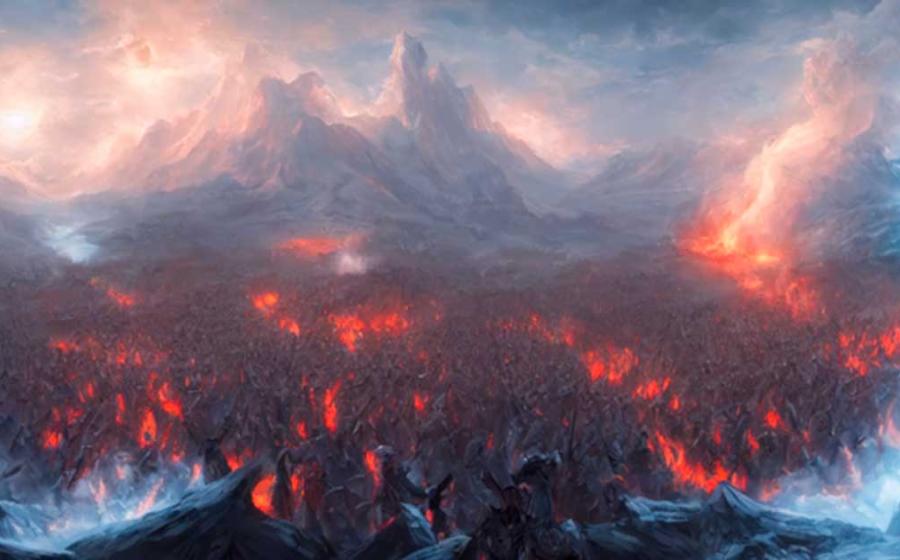
The Norse people were the ancient tribal communities of Scandinavia, who in the modern day are often referred to or thought of as the Vikings (who were actually a subset of them). Like many other ancient communities, they had their own ideas about how the earth and the universe were created. The Sources of the Norse Creation Myth Our understanding of the Norse creation myth comes from a small number of sources. The most useful of these were created in the medieval period, and therefore do not come from the time when Scandinavian people were telling these myths. Thus, they must be taken with a pinch of salt. This is for a number of reasons. Later authors could have easily
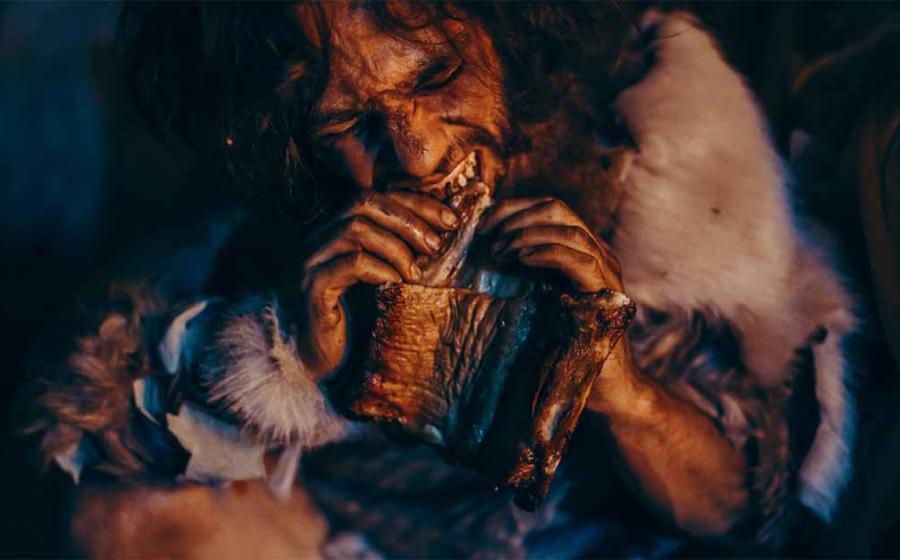
There is no denying that the weight loss and diet industry in the Western world is huge. For many people, inspiration comes from our very early ancestors, who are believed to have eaten a simple, healthy diet. Because ancient people did not have access to the amount of processed and therefore unhealthy food that we do, people tend to assume that they were healthier than we are today. Furthermore, many hunter-gatherers lived extremely active lifestyles, often out hunting and foraging for food for long hours, meaning they burned a considerable amount of calories. So how have people adapted ancient eating habits to modern diets, and how do these modern diets shape up when compared to the eating habits of our
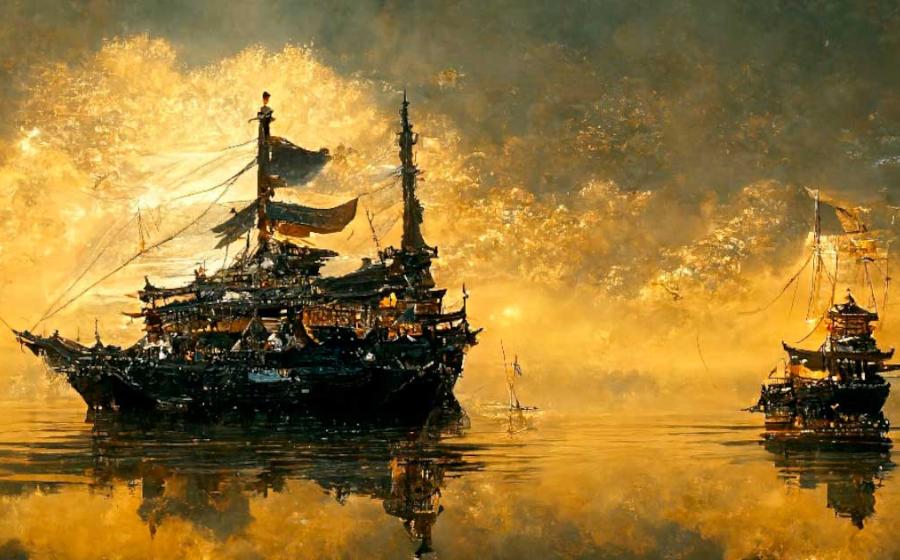
The wako (also called wokou or waegu) were a group of marauders that dominated the seas of East Asia for centuries. They have been seen by Western historians and culture as a kind of Japanese pirate, but as scholars dig deeper into the history of these people, questions arise about their true nature. What was the reaction to these ‘pirates’? How did governments try to control their actions, and were they successful? These are questions that scholars are now working to answer. “Wako”: The Difficulties of Translation The difficulties with understanding the wako begin with their name. In the West, wako, read in Mandarin as wokou, in Korean as waegu and in Japanese as wakō, has been translated to ‘Japanese
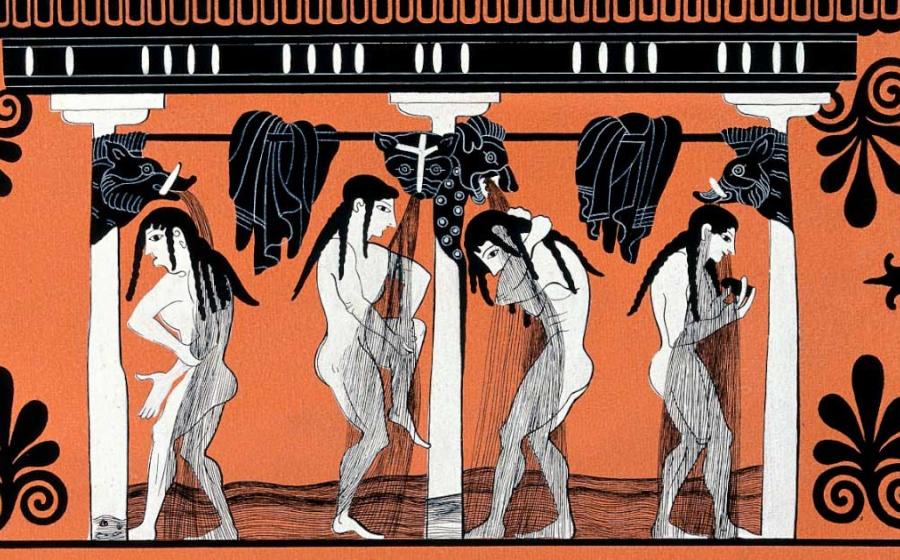
People in the past have a reputation for being dirty and unhygienic, but is this true? While many aspects of personal hygiene have evolved over the centuries, others have remained surprisingly similar. So, how did our ancestors’ hygiene practices differ from ours? Toilet Hygiene: A Messy Affair An obvious place to begin when discussing the hygiene practices of our ancestors is with their toilet habits. Until relatively recently, most homes were not equipped with indoor bathrooms or running water. Individuals in the past, therefore, had rather different toilet habits from us. For example, it was not uncommon for medieval houses to be equipped with closet-like rooms or nooks where people could go to relieve themselves in chamber pots. Some of
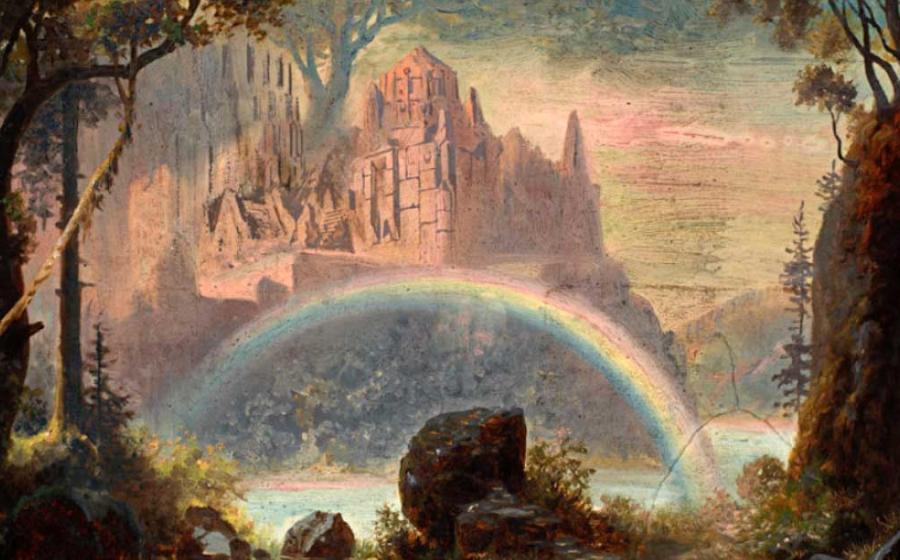
Asgard was the home of the mighty Norse gods, from where they watched over the other eight realms and administered justice. It was also the final resting place of the dead and where Odin, King of the Gods, held court. Asgard played an essential part in the Norse stories and is still prevalent in some popular culture today. Many of us know of Asgard from the Marvel Universe, but how did the Norse people really think about the realm of the Gods? What Was Asgard? Who Lived There and How? Asgard was part of a complex system of beliefs held by Scandinavian and Germanic people. The general mythological tradition in which the ideas of Asgard can be placed is thought
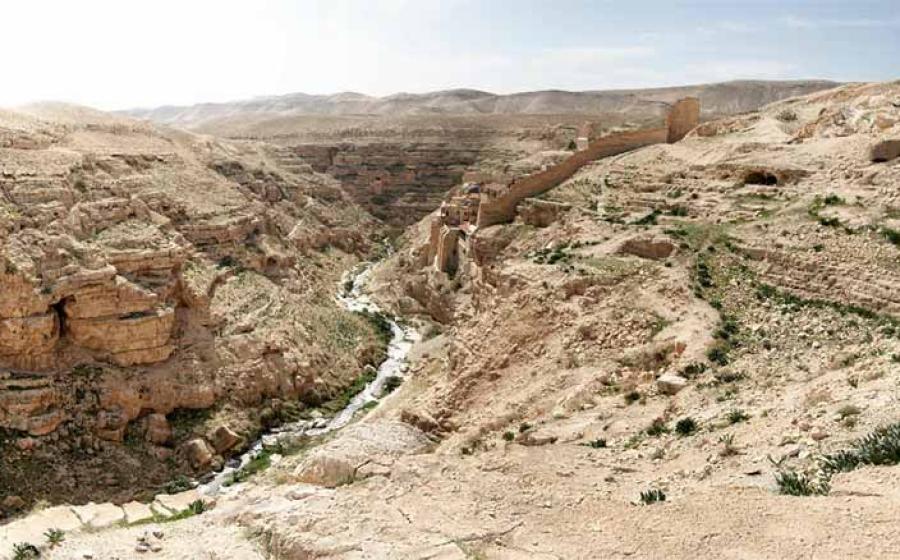
The Cave of Letters is quite literally a cave of secrets. Rediscovered by archaeologists in the 1960s, its contents told of uprisings as well as everyday life in ancient Israel. What at first appeared to be an unassuming cave located in a cliff face in the Judean desert actually turned out to be a perfectly preserved time capsule, full of letters and documents from the 1st and 2nd centuries. Archaeologists have worked hard to pick apart these letters and the other items found in the cave in order to understand who used the cave and why. Where is the Cave of Letters? The Cave of Letters is located in the Judean desert roughly 25 miles (40 kilometers) south of Qumran
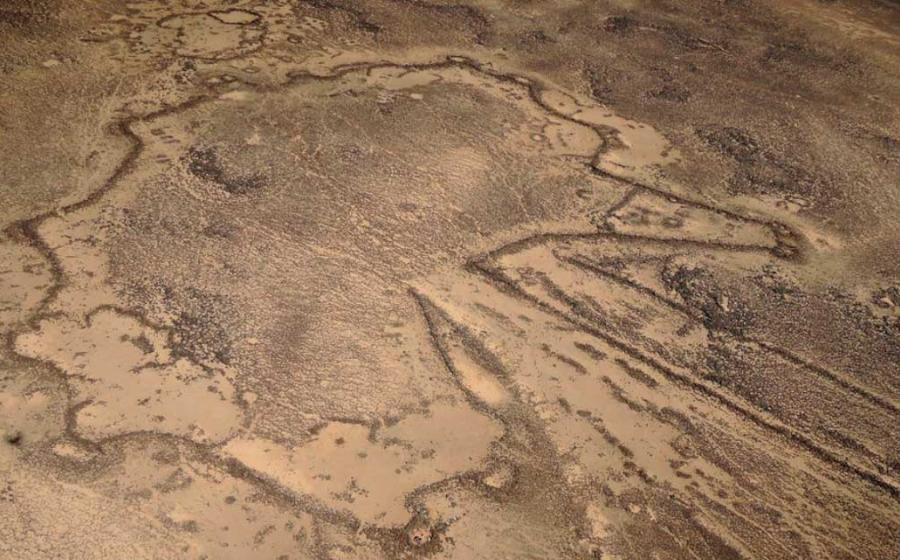
Located on the Ustyurt plateau spanning Kazakhstan, Uzbekistan and Turkmenistan are some puzzling ancient structures - or what remains of them. The plateau is a dry, clay desert which stretches a staggering 200,000 square miles and receives less than 5.1 inches (13 centimeters) of rainfall a year. In the 1920s, a Royal Air Force pilot first spotted these ancient structures when flying over this desert. Dubbed desert kites for their shape, these ruins have been inspiring questions ever since, and archaeologists are still putting the pieces together. What was the purpose of these ancient structures? Who built them and why in such an unusual shape? The Discovery of the Desert Kites Of course, the Arab desert tribes known as Bedouins
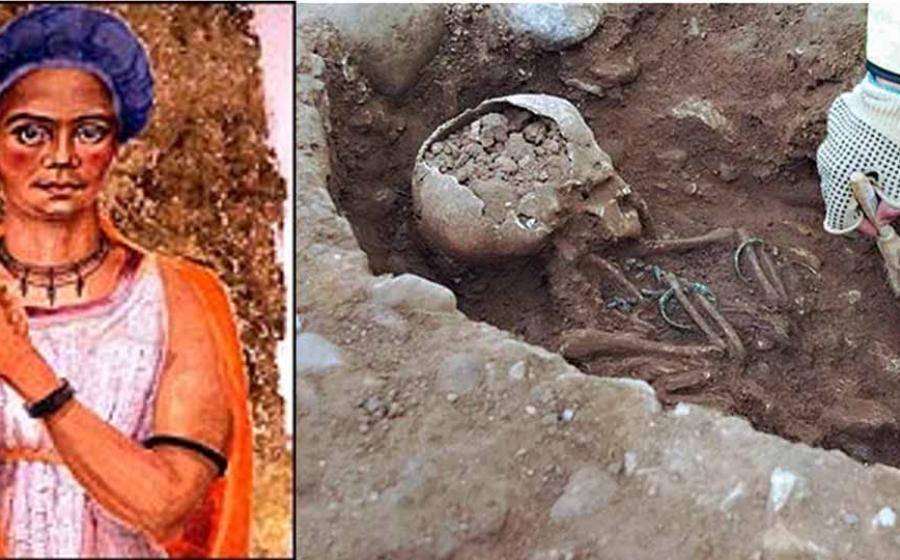
The galli were priests who formed the cult of the goddess Cybele (Magna Mater in Rome) and her consort Attis. Because of the galli’s adoption of women’s clothing and jewelry, self-castration, and preference for anal intercourse, all of which violated Roman gender norms, they present an interesting juxtaposition to what was expected of men in ancient Rome. It is thought that the cult originated in Mesopotamia and then traveled to Greece around 300 BC. It then arrived in Rome as the cult of Magna Mater in the 3 rd century BC. Originally, its sacred symbol, a black meteorite, was located in a temple named Megalesion in modern-day Turkey. It is thought that the word galli, or galloi in Greek, can
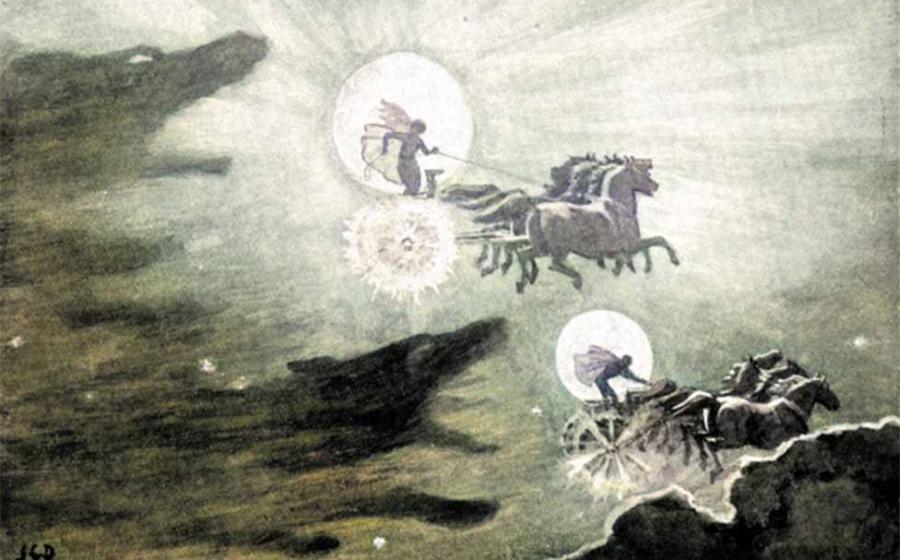
Chased across the sky by a pair of wolves, the Norse sun and moon gods were tasked with a heavy burden. The Sol and Mani were responsible for pulling a chariot across the sky every day and night while simultaneously evading a gruesome death at the hands of wolves. The task was split between the two; Sol operated during the day, and Mani during the night. Similar tales have been told throughout history by many civilizations, and because of this, the tale of the Norse sun and moon gods Sol and Mani remains influential in numerous cultures. Many ancient mythologies attribute the creation of the sun and the moon to a pair of siblings, one male and one female, who
The story of Ymir and the creation of the universe typifies the emphasis on sacrifice as a theme, in Nordic myth and in creation stories around the world. In Norse mythology, Ymir was the primeval frost giant, and also a being whose death led to the creation of humanity, as well as the natural elements of Earth itself. Gylfaginning or The Fooling of Gylfi The main source on Ymir and the creation of the universe according to Norse mythology was written by the Icelandic scholar Snorri Sturluson, who lived in the 13th century. His text, Gylfaginning (The Fooling of Gylfi), is contained within a larger book known as the Prose Edda. Sturluson, like many writers who recorded ancient myths, took