Maura Andreoni

Profile picture for user Maura Andreoni
Maura
Andreoni

Maura Andreoni (Genova, Italy 1962), translator and interpreter in Russian, German, French and English. She received a second First Master’s degree in Ancient History at the University of Bologna, in 2009. Her historical researches mainly focus on the relationship between humans and nature in the ancient word, with particular attention to birds and their significance in Antiquity. To her credit in this sector is the participation in various excavation campaigns, conferences and study days and the regular collaboration with different Italian and foreign magazines, both discursive and scientific.

Member for

7 years 3 months

View Recent Blogs

Byssus is an extremely fine, rare, and valuable fabric of animal origin. It is a sort of natural silk with golden and sparkling reflections that is obtained from the filaments secreted by a large marine bivalve mollusk known as a “noble pen shell” or “fan mussel” - Pinna nobilis. Its processing has been developed exclusively in the Mediterranean area since ancient times. Pinna nobilis is an endemic species of the Mediterranean and is the largest bivalve present in that sea; the shell is usually 30–50 cm (0.98–1.6 ft.) long, but it can reach 120 cm (3.93 ft). It lives about 20 years and theoretically, like other mollusks, is also edible. In the past it was also used for its marked
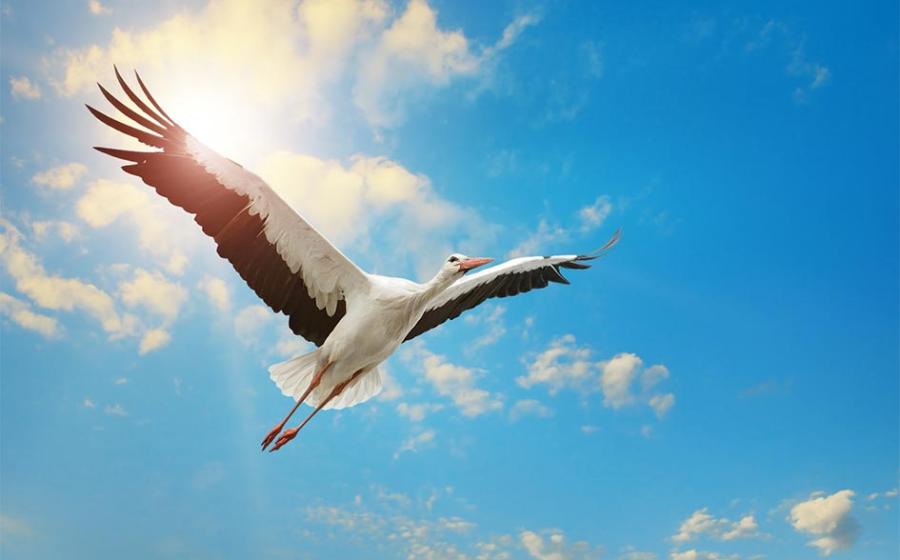
Contrary to what is happening today, humans of the past had close relationships to nature and wild animals. These bonds did not concern only utilitarian aspects, but also involved the sphere of the imaginary and myth. This article is a short overview of the relationship the ancient Mediterranean civilizations had with the stork, an animal which has always fascinated humans and stimulated man's creative imagination and curiosity. Perhaps this is thanks to the sharing of the same open environments - often agricultural - and to the use of anthropogenic structures for the placement of their bulky nests. It is little wonder that there are so many ancient stork legends. Representations of Storks in Ancient Art The stork has always been
Eutyches was a homo bonus - a good man - and evidently a good surgeon. His name was engraved, probably by a grateful patient, on the wall of the cubiculum where patients were kept under observation, in the Roman taberna medica of Rimini (the Roman A riminum, a city in the northern Italian region of Emilia-Romagna, corresponding to the ancient Cisalpine Gaul and then to the VIII regio Aemilia of Augustan Italy). The house is known as Domus del Chirurgo, the Surgeon's House, and is a splendid example of Roman architecture dating back to the 2nd century AD. It was destroyed by fire between 258 and 260 AD by an Alemanni raid which, according to Zosimus the Historian (5/6th century
Lupus in fabula or perhaps more accurately in historia, given that historically the figure of the wolf is not marginal at all. The undisputed symbol of the forest, the wolf has always been strongly present in the collective imagination of all ancient civilizations. Its symbolism has a dichotomous aspect because it has forever been admired for its pride, the orderly social hierarchy and discipline of command. But it has also been viewed with suspicion and fear and often associated with demoniacal aspects, because of the nighttime thefts and the destruction of herds, heritage and perhaps the wealth of the ancient man. Wolves were said to have the sharpest sight of all animals, able to see even during the moonless nights
In the ancient past, relationships between humans and animals were stricter than today and included the sphere of the imaginary and the sacred. Investigations on how the ancients approached different species can allow us to throw light on some beliefs and some concealed aspects of daily life not revealed in the ‘official’ history. Beyond the purely scientific interest, aimed at verifying the possibility of using historical sources to acquire information on the biogeography of certain species, the results of this kind of investigation permit us to confirm with more and more evidence how, over time, humans change their attitude towards nature in general and animals in particular. The Thesis of the Flamingo Here I present the thesis of an investigation