marinasohma

Profile picture for user marinasohma
Marina Sohma

Marina has an undergraduate degree in Anthropology, focused on ancient human evolution and archaeology. She did a post graduate year of studies in Renaissance History and discovered, among many things, that her passion belongs to the ancient world.

Marina is currently focusing her self-study on the subject of ancient Egypt, and hopes to achieve the career path change she seeks. Her areas of interest are many, including the beginning of civilization, mythology, magic and uses of magic arts (especially for healing), ancient Egypt, Mesopotamian history, Renaissance European history, Japanese history, and the beginning of science and astronomy, to name a few. Marina's other passions include reading books, playing video-games, horseback riding, traveling and experiencing new cultures, going for walks or hikes, and meditation.

Member for

10 years

View Recent Blogs

Grimoires are books containing magic spells and instructions for the making of amulets and talismans, but some of them also contained directions on how to summon and control demons. Grimoires have gained great popularity in recent years through movies and television shows, but their origins date back to ancient times, and their full purpose still remains under much speculation. The Oxford dictionary defines a grimoire simply as a book of magic spells and invocations, and these books are usually attributed to famous figures such as Moses and King Solomon. Owen Davies is perhaps one of the most prominent scholars in the field of magic studies. His book, "Grimoires: A History of Magic Books"(2009), compiles extensive research on the history of
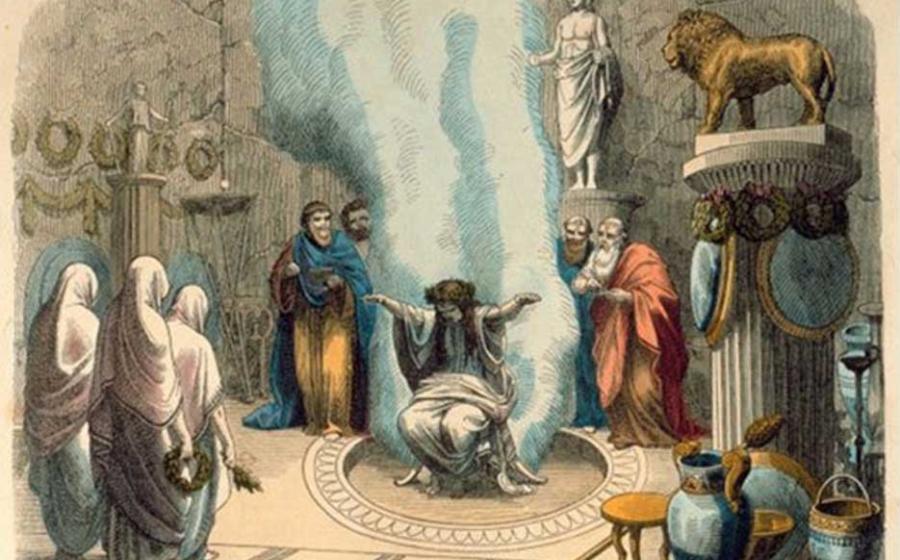
To this day the Eleusinian mysteries remains a subject enveloped by broken pieces of information, creating great controversy among historians who work under heavy assumptions while trying to piece together this ancient tradition. Complete details involving the rites and celebrations which took place during the mysteries were marked by a sworn oath of secrecy by the initiated and, therefore, vanished from our knowledge. In that respect, what do we know about the mysteries and what is just speculation? Although modern historians still argue about different aspects regarding the mystic rituals, some ideas are often accepted among them, which are understood by the testimonials of the initiated. In ancient Greece, the town of Eleusis, situated west of Athens, became the most
Primarily associated with British legends, stories about black dogs, ghost dogs, or hellhounds are present in almost every region of the world. Perhaps the first things to come to your mind when thinking of eerie ghost dogs are evil images, death omens, or even the two-headed dog Cerberus from Greek mythology. That makes sense, as most of the time these shadowy creatures are depicted as malevolent beings, but did you know that sometimes they are seen as great protectors too? The immense popularity of dog legends is not a surprise, since dogs were humanity’s first domesticated animals - the man-dog partnership has been traced back to the Paleolithic era and lasted for thousands of years. To narrow down black dog
Located in the central Gifu Prefecture, not very far from Tokyo or Kyoto, a beautiful example of traditional Japanese architecture survives in the villages of Shirakawa-go and Gokayama. Some of the existing houses were built over 300 years ago and have been beautifully preserved by each successive generation of residents. The 'gassho-style' houses, as they are known, are rare examples of their kind, even in Japan. The villages stretch along the Sho River, in a mountainous region, remote and isolated. Access to the area was difficult for a long period of time, which has contributed to its preservation throughout the ages. These villages, with their Gassho-style houses, thrived on the cultivation of mulberry trees and the rearing of - silkworm
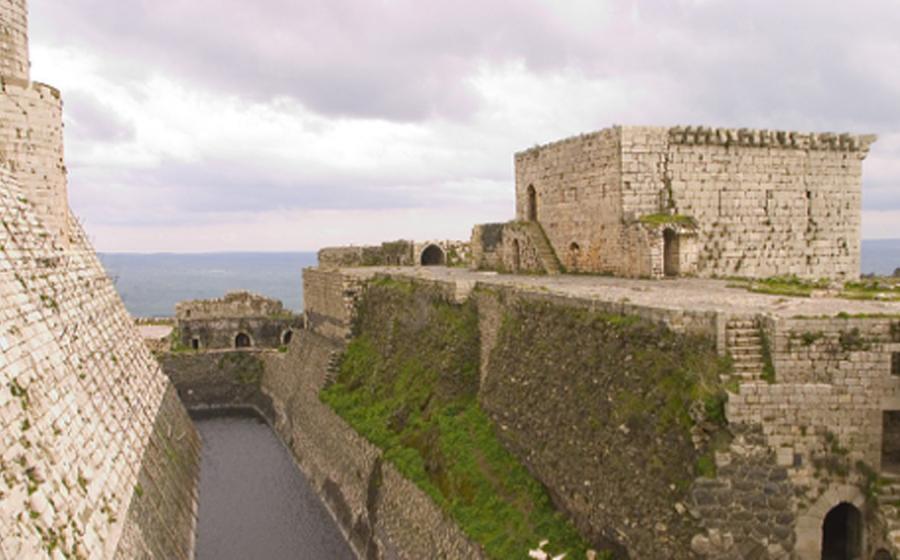
The Krak des Chevaliers, located in modern day Syria, is one of the best-preserved examples of European medieval military architecture done in the Gothic style. It is a massive fortress that was built during the first Crusades. The Krak was constructed on a strategic defensive position on top of a hill known as Jebel Kalakh, in the middle of the Syrian desert on the route leading to Antioch, Beirut, and the Mediterranean. It guarded what was the only major pass between Antioch in Turkey and Beirut in Lebanon. Perhaps the Krak is better known today from its description by T.E. Lawrence in 'Lawrence of Arabia". [[{"type":"media","view_mode":"media_large","fid":"32549","attributes":{"alt":"The Krak des Chevaliers and surrounding landscape.","class":"media-image","height":"332","style":"width: 610px; height: 332px;","typeof":"foaf:Image","width":"610"}}]] The Krak des Chevaliers and
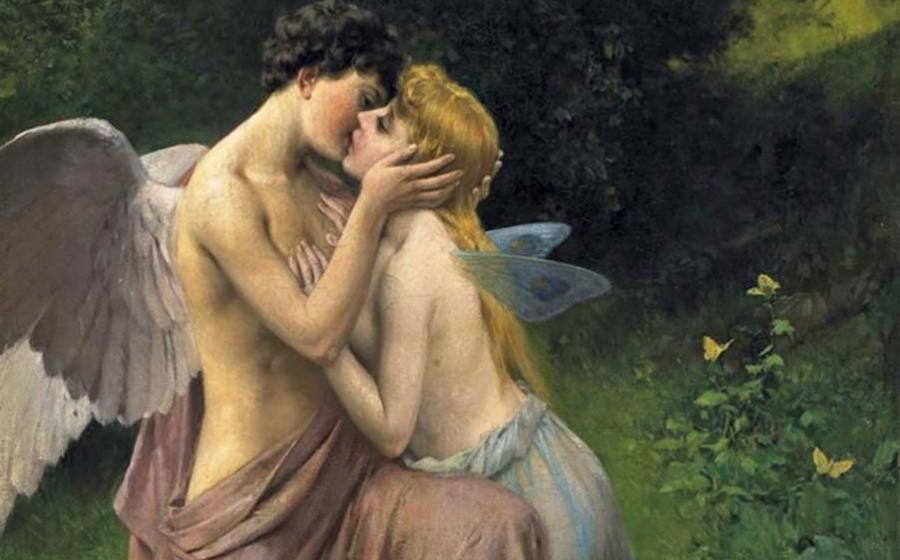
For the ancient Greeks, 'love' was categorized into distinct words, each representing a different kind of infatuation; which is considerably different from our ideas of generalizing all aspects and types of 'love' into a single word. This played a significant role when working with magic spells and amulets, as the intention of the magic would be focused on what kind of love or relationship a person was seeking to obtain or strengthen. Common Terms for Love The most commonly used 'love' terms in Greek were: agape: selfless, unconditional love. This was a love that you extended to all people, regardless if they were family members or distant strangers. It is the love that all people should strive to have towards
The magical traditions of ancient Greece encompassed spells, curse tablets, drugs, potions, poisons, amulets, and talismans. For many cultures of the past, there was a very fine line between magic, superstition, religion, and science. The ancient magicians were seen as symbols of wisdom, keepers of secrets, and masters of the arts, mathematics and science, particularly chemistry. Because magicians were believed to be individuals with access to supernatural powers, they were both feared and respected. Spells and incantations had been used by the Egyptians for thousands of years and the Greeks carried this tradition forward, as evidenced by surviving Greek papyri containing magic records that date back to the 4th and 3rd century BC. [[{"type":"media","view_mode":"media_large","fid":"31268","attributes":{"alt":"Magical book written in ancient Greek, which
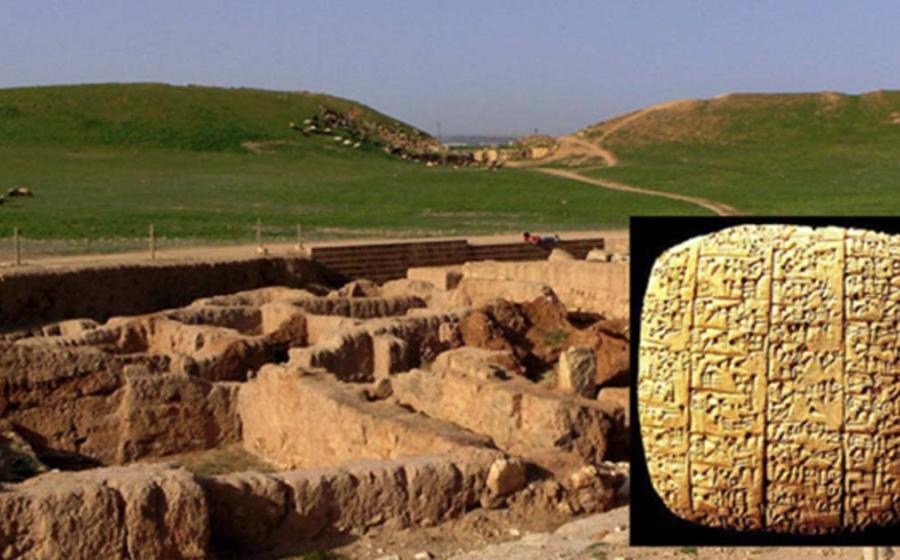
The Ebla clay tablets have provided researchers with a wealth of information regarding cultural practices and myths, judicial affairs, ancient languages, business, and foreign and domestic policies from the ancient city of Ebla between 2500 BC and the destruction of the site in 2250 BC. Moreover, these clay tablets provide some key evidence for controversial biblical accounts. A new source of suggestive evidence for the studies of Biblical stories and the Abrahamic Traditions was found within the contents of the Ebla clay tablets. Discovered in 1975, by the University of Rome professor Paolo Matthiae and his team of archaeologists, the tablets were unearthed in the site where the ancient city of Ebla once stood. This is the current location of
The legend of Yuki-onna (the snow woman) comes from The Land of the Rising Sun. This beautiful but dangerous character may be a personification of death in a severe snow storm. Japanese legends do tend to mention her ability to turn humans to ice. Yet other times, stories speak to her softer, gentler side, and suggest Yuki-onna is more a benevolent snow-spirit than a snowy reaper waiting for her next victim. Preying on Lost Travelers in the Snow Yuki-onna is included among the lengthy list of what are known as ‘yokai’ (supernatural creatures known as monsters, demons, spirits or other mythical beings) from Japan. She’s not a very popular mythological creature, but Yuki-onna is known by most people living in
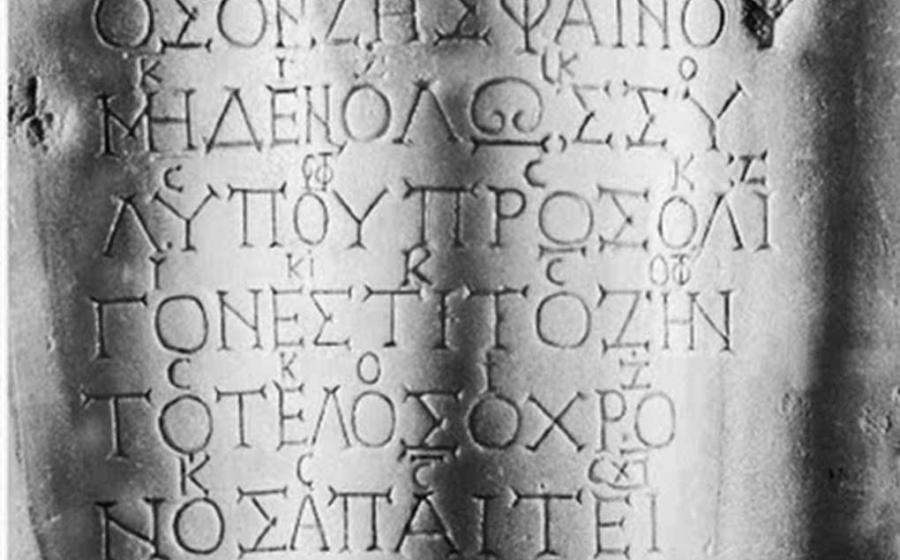
The Song of Seikilos is the oldest complete surviving music composition in the world engraved in a marble stele that served as a flower stand. The beautiful composition, also known as the ‘Seikilos epitaph’, dates from around the first or second century AD, and was inconspicuously being kept in the garden of a Turkish woman prior to its current placement in the National Museum of Denmark. Seikilos Epitaph - Song of Seikilos The Song of Seikilos was discovered carved on a marble column-shaped stele in Tralleis, near Ephesus in Turkey, in 1883. Although short in length, this piece of the past has remarkable historical value in its rarity as an artifact. It is not the oldest song in the world