KenGoudsward

Profile picture for user KenGoudsward
Ken
Goudsward

Ken Goudsward is an independent researcher and author whose interests include archaeology, philology, ontography, epistemology, and thaumaturgy. He writes in a variety of genres, including non-fiction, science fiction, dark comedy, and poetry.

His books include: “UFOs In The Bible”, “Magic In The Bible”, and “Enuma Elish: The Original Text with Brief Commentary”

Ken's webpage is at https://dimensionfold.com/authors/ken-goudsward/

Member for

4 years 6 months

View Recent Blogs

In 1956, a hypothesis was proposed by UCLA archaeology and anthropology professor Marija Gimbutas. Her proposal, which was in part based on prior work by Otto Schrader (1883) and V. Gordon Childe (1926), came to be known as “the Kurgan hypothesis”, and it stated that the Proto-Indo-European culture could be tracked backed to an origin in the geographical region roughly between the Black Sea and the Caspian Sea. ​ Linguistic Correlations: Unveiling the Kurgan Hypothesis The theory was supported by two key lines of cultural evidence. The first line of evidence focused on so called “ kurgans,” which were a type of earthen mound, functioning as burial chambers. The locations of known kurgan sites formed a recognizable cultural pattern across
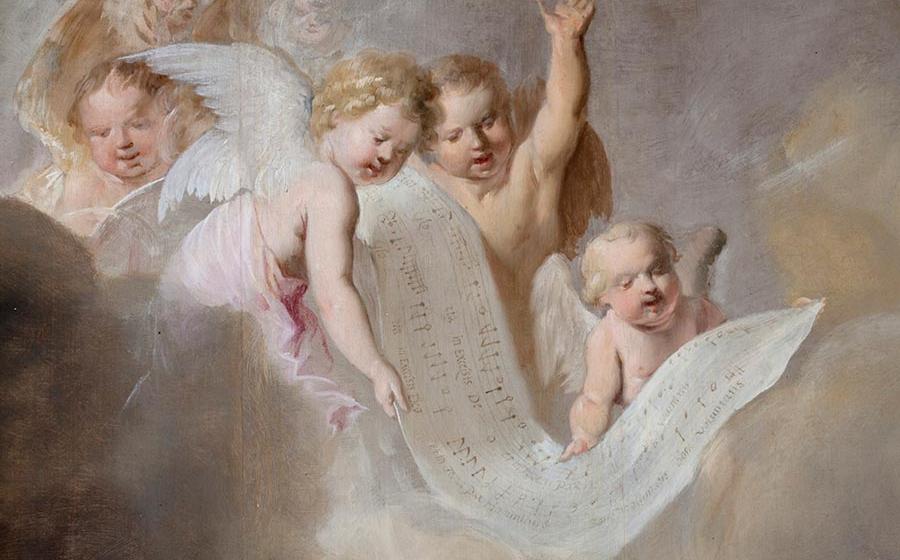
The cherubim are a somewhat mysterious topic that occurs numerous times in the Hebrew Bible, but is never truly explained. We are given only brief glimpses into their role and their nature. Since the information given is insufficient to truly answer the question posed, thus we will attempt no such answer, but instead will present several possible partial interpretations which may or may not be mutually exclusive or contradictory. One thing that can be said with certainty is that the word “cherubim” is by definition a plural word. The suffix 'im indicates a plural noun. Therefore, although the word appears as “cherubim” it should be read as “the cherubim” with a plural meaning. In the few cases where a single