
Igor Gontcharov

Profile picture for user Igor Gontcharov
Igor Gontcharov

Igor Gontcharov is an independent researcher studying how scientific paradigms emerge and decline, how science and alternative approaches to the unknown – shamanism, religion, meditation, inspiration… – shape each other and contribute to our understanding of who and what and where we are. Igor has previously studied and worked in the fields of sociology, socio-political theory, philosophy and law in Siberia and beyond. Currently he is a PhD candidate at the Osgoode Hall Law School, York University in Toronto where he conducts research in the area of research governance and ethnography of science. His recent popular science articles are at http://ancientscienceartifacts.org, scholarly publications at https://www.researchgate.net/profile/Igor_Gontcharov).

Member for

11 years 10 months

View Recent Blogs

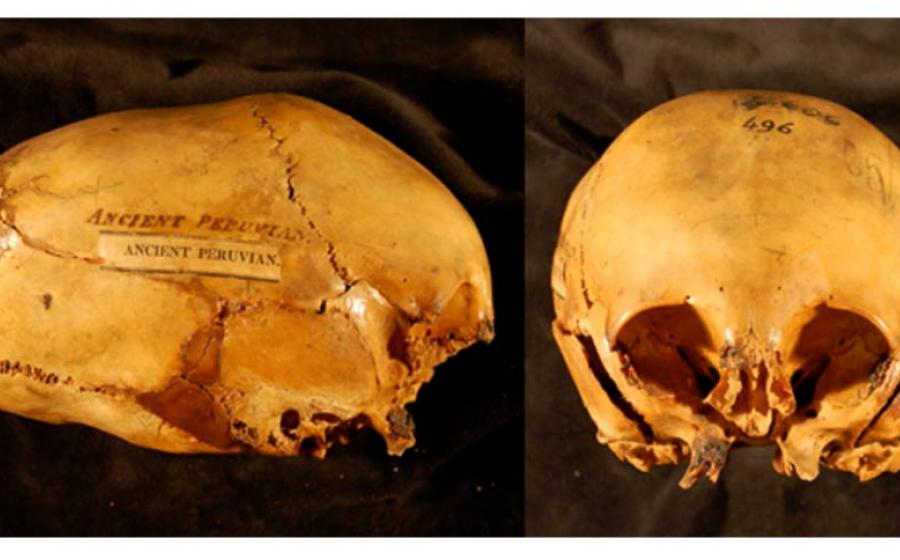
Elongated skulls are usually explained in terms of head-binding or artificial cranial deformation. This paradigm emerged in the first half of the 19th century as a way of explaining unusual skulls discovered in Europe and South America, in places such as Crimea and Peru respectively. The main idea behind the head-binding paradigm is that ALL elongated skulls are a result of intentional modification of the form of the skull by applying external pressure. In other words, ALL elongated skulls are merely deformed ‘normal’ skulls similar to those of modern humans. [[{"type":"media","view_mode":"media_large","fid":"7445","attributes":{"alt":"Elongated Skull from Crimea and other parts of the worlds, Baer 1860","class":"media-image","height":"311","style":"width: 610px; height: 311px;","typeof":"foaf:Image","width":"610"}}]] Elongated Skull from Crimea and other parts of the worlds, Baer 1860 Challenging the Paradigm