Heidi Schultz

Profile picture for user Heidi Schultz
Heidi
---

Heidi Schultz is hot on the path of lifelong learning. She holds a master's degree from Harvard University in Spanish. Synthesizing those analytical skills with meditation practices, she is in pursuit of the truth. She aspires to take an extended trip to an intergalactic mystery school. In the meantime, she currently works as a translator at the Escuela Politécnica Nacional in Quito, Ecuador, where she also teaching an advanced writing class in English. You can visit her bilingual blog at flangosta.wordpress.com

Member for

10 years 7 months

View Recent Blogs

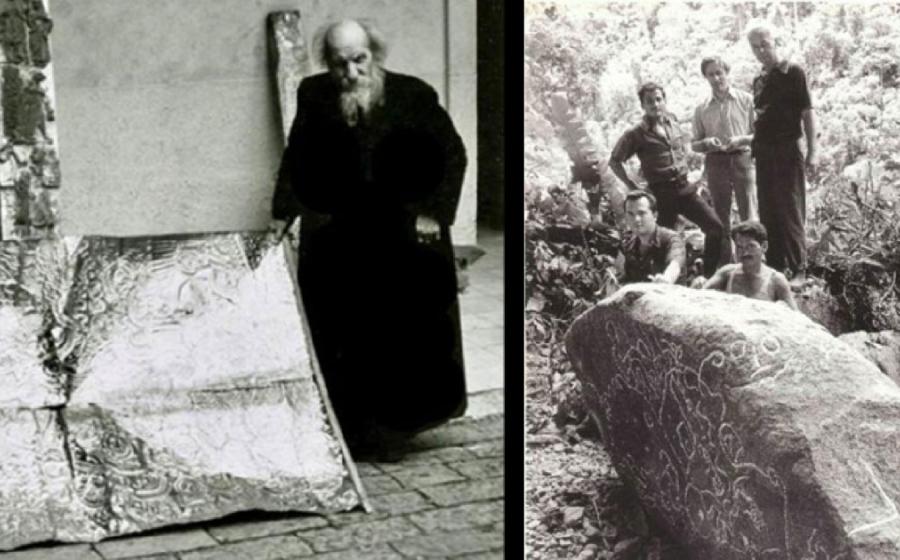
[Read Part 1] [Read Part 2] This is the thrilling conclusion to the investigation on the true mystery regarding the Tayos Caves – what has happened to the pure, prestigious, and lustrous golden ore? Stanley Hall: Have Gun Will Travel Based on the telegram in part two of this investigation, we know that British explorer Stanley Hall was as interested in mining for gold as Móricz. Móricz and Hall were organizing an expedition to the Tayos Caves together, but after squabbling about who would be in command and who would have exclusive rights to any discoveries, Móricz withdrew from the business partnership, and Hall became the head of the largest expedition to enter the Tayos Caves, the famous joint British-Ecuadorian
[Read Part 1] This investigation acknowledges that more than one party was in involved in illegal gold extraction, and that gold may have been extracted in more than one form. That said, let’s examine the evidence against each suspect. Carlo Crespi Croci: Antiquities Merchant As a point of clarification, readers who are familiar with the Tayos Caves story may object to the accusation that Father Crespi was a thief, since many sources assert that Crespi was “beloved” by the indigenous people he served in Cuenca. However, Crespi attended a mostly Kichua and mestizo population at his mission. Shuar communities living on their ancestral lands are another matter. Distinct indigenous nations cannot be lumped together as a generic group called “Indians.”
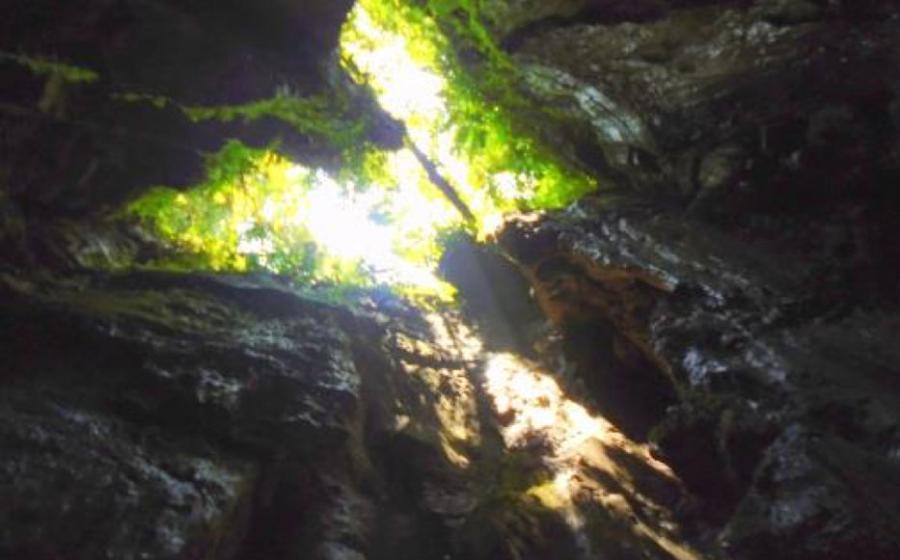
The Tayos Caves ( Cuevas de los Tayos in Spanish) in Ecuador are a subterranean complex that forms part of the incredible Napo System of Caves stretching from Venezuela to Chile. The Tayos Caves have long been a site of controversy, and various theorists and enthusiasts have claimed that they contain evidence for extraterrestrials, ancient civilizations, heroic human migrations, and/or lost languages. A careful examination of the evidence hardly supports any of these claims. However, there is a true mystery regarding the Tayos Caves, and that mystery revolves around gold. In truth, the Tayos Caves were a source of pure, prestigious, and lustrous golden ore! This investigation lays a foundation for addressing the question, “Where is the gold now?” In
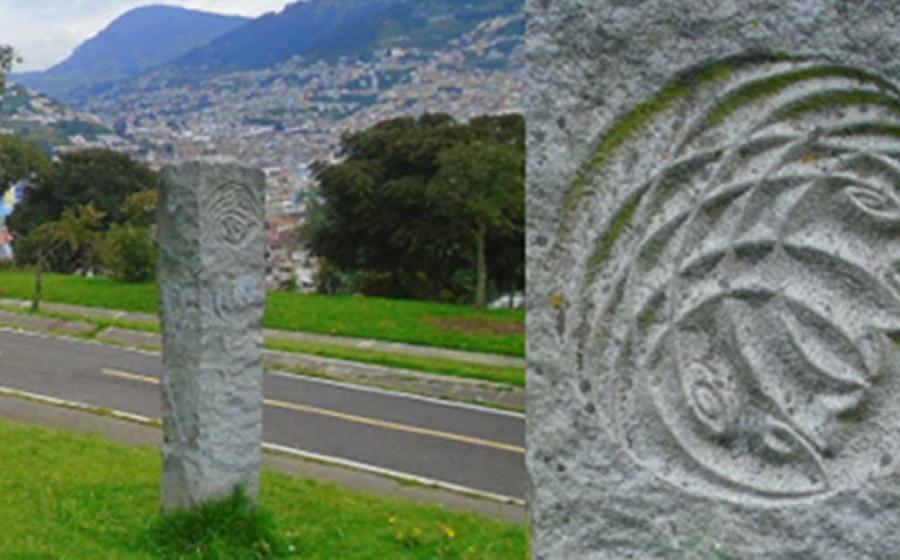
During the period 2002-2003, Marko Pogačnik, UNESCO Artist for Peace, oversaw the installation of eleven small monoliths and one bronze plaque in the city of Quito, Ecuador. The monuments run along a NE-SW axis through the center of the city. Each stone or plaque is emblazoned with a cosmogram, or symbolic design representing the Earth’s energy at that geographic point. According to the artist, the stones and plaque penetrate the earth like acupuncture needles, stimulating terrestrial energy in what Pogačnik calls the practice of geopuncture. But why did Pogačnik select these twelve specific sites in Quito? Following an Ancient Grid According to Diego F. Velasco, long-time scholar of ancient Ecuadorian cultures and co-founder of the group, Kitu Milenario: Cosmovimiento Andino