Dr Pat Hanratty

Profile picture for user Dr Pat Hanratty
Pat
Hanratty

Dr. Pat Hanratty received his bachelor’s degree at the University of Wisconsin-Milwaukee in psychology, master’s degree in counseling psychology from Marquette, and PhD in clinical psychology from Saybrook in San Francisco. He did clinical work much of his career.

While at Saybrook, Dr. Hanratty completed a dissertation on holotropic breathwork, an experiential psychotherapy, based on a transpersonal model of the psyche, discovering it reduced emotional distress and, after a period of time, death anxiety in a small group of subjects. This triggered an ongoing search for reasons this might have happened. In his first unpublished book, Quantum Psychology: The Search for a New Paradigm, he concluded that consciousness exists independently of the brain. This would allow such things as near-death experiences and reincarnation, which a more comprehensive paradigm would include.

His second nonfiction book, Atlantis: The Evidence, is currently under consideration for publication. In it he compares the hypotheses of new paradigm theorists, who believe civilization is much older than mainstream science proposes, with those of mystics about the existence and destruction of Atlantis. In addition to these books, he has written four fictional works, two volumes of short stories and two novels. 

Dr. Hanratty is also a member of the Society for Scientific Exploration (SSE), which publishes the Journal of Scientific Exploration. This is a fascinating journal that explores anomalous phenomena in which PhD’s argue back and forth on a variety of subjects, including Atlantis. They also review books that are related to the lost continent.


Member for

7 years 2 months

View Recent Blogs

What if the individuals we study from ancient cultures are not distant strangers separated by millennia, but rather ourselves in previous incarnations? Could it be that when we feel drawn to certain historical periods or civilizations, we are actually remembering fragments of our own past experiences? This intriguing possibility raises profound questions about the nature of human existence and consciousness itself.

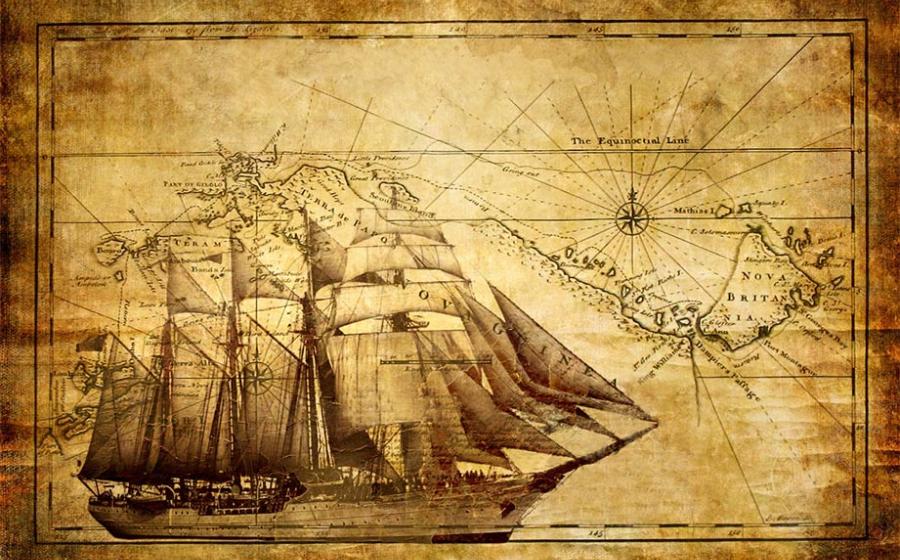
Charles H. Hapgood began his book, Maps of the Ancient Sea Kings, by stating, after studying composite maps at least partially derived from ancient sources, that ancient voyagers traveled from pole to pole. The evidence, he said, indicated that some ancient people explored Antarctica when its coasts were free of ice. It is clear too that they had an instrument of navigation for accurately determining longitudes that was far superior to anything possessed by the peoples of the ancient, medieval, or modern times until the second half of the 18th century. The Piri Reis Map of 1513 Hapgood became interested in the study of ancient maps after reading a book on the subject by Captain A.H Mallory, Lost America. Mallory
According to geologists, in the interval from 10,000 to 8,000 BC, some 35 to 45 species of large mammals became extinct. This is called a mass extinction. Mass extinctions can be defined as species death within a relatively short interval of time. None of the mainstream theories which attempt to account for these great extinctions are entirely satisfactory. This is likely because orthodox geologists are operating out of the straitjacket of the theory of uniformitarianism, which suggests a rather slow, gradual change over time. In geology, the present is key to the past. However, it’s commonly agreed that geologic time is marked by a relatively sudden change in climate about 10,000 years ago or more, from a cold glacial to
These days, few people still believe Christopher Columbus was the first explorer to travel to the “New World.” But there is still a debate over whether adventurers and explorers from Europe, Asia, and Africa all landed on North and South American shores prior to 1492. Let’s look at the evidence. Anomalous Coins and Artifacts Americans using metal detectors found Roman bronze coins in Maine that dated to the reign of the Emperor Severus Alexander who was murdered in 235 AD. In 1974, a similar coin was found not far from that location dating from the same period. Fourth century coins were found at a sand dune in Beverly, Massachusetts, located on the North Shore and 26 miles (41.84 km) from