chickasaw

Profile picture for user chickasaw
Chickasaw
Nation Video Network

Chickasaw Nation Video Network

The Chickasaw Nation Video Network, Chickasaw.tv, is an online video-rich resource created to increase awareness of the culture, legacy and continuing contributions of the Chickasaw people. The engaging, high-quality content is available on all devices and platforms with a user-friendly experience.

Chickasaw.tv is where the Chickasaw Nation’s past and present come together. Hundreds of interviews with tribal officials, community leaders and elders were conducted to create over 1,500 videos of in-depth profiles and stories available at www.chickasaw.tv. Tribal historians and anthropologists complete the picture, putting the story of the Chickasaw people into perspective by connecting the relationships between scholarly research, oral history and today’s thriving Chickasaw Nation.

Chickasaw.tv features an interactive and informational History section. This educational tool brings to life the ancestors and historical events that shaped the Chickasaws’ past as well as the people who are dedicating their lives to preserving the Chickasaw cultural legacy for future generations.

The journey into the Chickasaw Nation’s past begins with the history timeline—which spans from the tribe’s roots in prehistory to its present-day existence and vividly documents the life and times of the Chickasaw people. The Prehistory era of the timeline offers information and videos about how Chickasaw ancestors migrated to their homelands, their clan societies and the evolution of mound building.

The ancient sites that define the Chickasaw Nation and characterize the cultural landscape of the Chickasaw people are available to explore in the Destination section. High-definition videos and aerial footage highlights the most significant locales and ancestral landmarks in Chickasaw history, such as Moundville, Cahokia and the original Chickasaw settlement in Mississippi.

In addition to History, Chickasaw.tv features programming about the Culture, Language, and People of the Chickasaw Nation. Chickasaw.tv is not only for Chickasaws—it is for everyone who would like to become better acquainted with the history and thriving culture of the Chickasaw Nation. This deep well of information and news is constantly updated with stories about the Chickasaw Nation and the Native American community. To learn more about the Chickasaw Nation, their history and impactful present, visit www.chickasaw.tv.

Links

Chickasaw.tv

Contact the Chickasaw Nation Video Network

Chickasaw.tv Social Media

Member for

12 years 6 months

View Recent Blogs

As a Native American culture, the Chickasaw people broadly trace their ancestry back to the migratory peoples of the Paleo-Indian period, which spanned from roughly 10,000 BC - 8500 BC. Legend has it that the Chickasaws migrated for generations from “the place in the West” to settle in what is now the Southeast. The climate was drier and colder than today in the centuries after humans first migrated to the Americas and glaciers covered the northern lands. Paleo-Indian era people roamed the country in small extended family bands and hunted herds of mammoth, mastodon, giant bison, horse, ground sloth and other Pleistocene megafauna. Storm Spirits and the Undead: Native American Tornado Myths and Legends Native American Creation Stories: Creator Animals
Native American philosophy is centered on observations of the world and is an integral part of deeply held spiritual beliefs. For the Muskogean tribes of the southeast United States and the Chickasaw people, animal symbols were used as a way of listening to the innate wisdom of animals. Animal and man were considered as being the same—neither one above the other—and all things are considered different, but equal, from nature’s perspective. The Chickasaw people believe that The Creator ( Aba' Binni'li', “sitting above”) gave them the need for the clan system with special animal guides. Over the years, the number of active clans waxed and waned, but the ancestral Chickasaws had over 15 clans that determined their social organization. The
For Chickasaws, the village was the heart of the people, representing their culture and their relationship to the land and each other. Traditionally, the ancient Chickasaw homelands were once scattered across the forests, mountains and prairies of lands that later became parts of western Kentucky and Tennessee and northern Mississippi and Alabama. Chickasaw towns were typically spread 10-15 miles apart and surrounded by a stockade. When under attack, the Chickasaws withdrew into a few of the larger towns, making it difficult for their enemies to mount any successful attack by virtue of the terrain. A traditional Chickasaw town or village consisted of several compounds or households. Some Chickasaw towns were reported to have numbered over two hundred households. The number
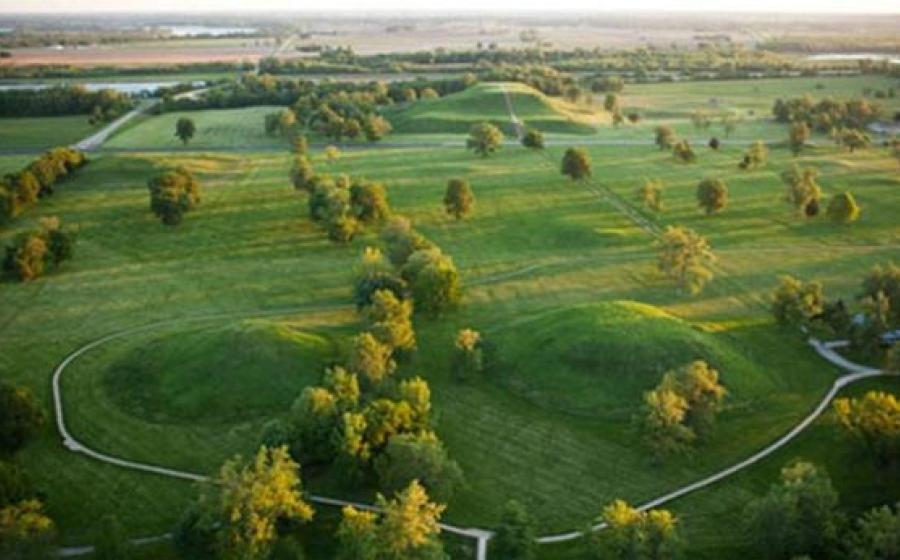
From about 700 to 1400 CE, Cahokia flourished as one of the greatest cities in the world. The complex society at Cahokia prospered in the fertile lands off of the Mississippi River (situated across the river from modern St. Louis, Missouri), and it was booming long before Europeans came to America. By 1000 AD, the Native American community in and around Cahokia Mounds was exhibiting a host of characteristics, which was later to become common among Indian societies along the major river drainages throughout the Midwest. Not surprisingly this has been termed the Mississippian culture. Cahokia is currently believed to be the largest archaeological ruins north of Mexico’s great pre-Columbian cities. The mound complex was named after the Cahokia sub-tribe
From their prehistoric migration to present-day Mississippi, Kentucky, Alabama and Tennessee, to the purchase of their new homeland in south-central Oklahoma in the mid 1800s, Chickasaw culture and heritage has always had roots in nature and the elements. In ancient times, Chickasaws placed great importance and meaning on the locations significant to their history and religion. The great migration legend, which described how the tribe moved from the “place of the setting sun” to the east as ordained by Abaꞌ Binniꞌliꞌ (the Chickasaw creator god), is central in explaining the importance of the homelands. Before the Chickasaws were forcibly removed in the 1830s from the southeastern United States to Indian Territory in present-day Oklahoma, their vast domain extended northward from
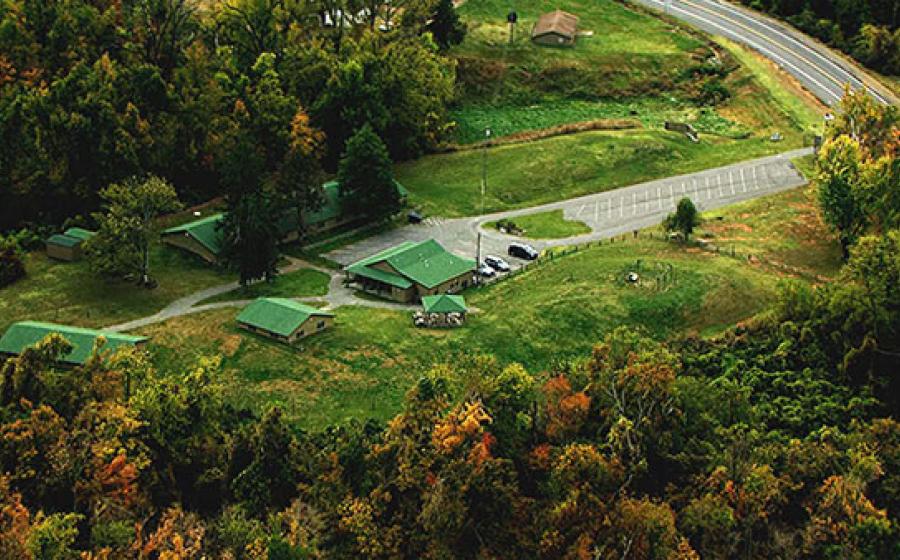
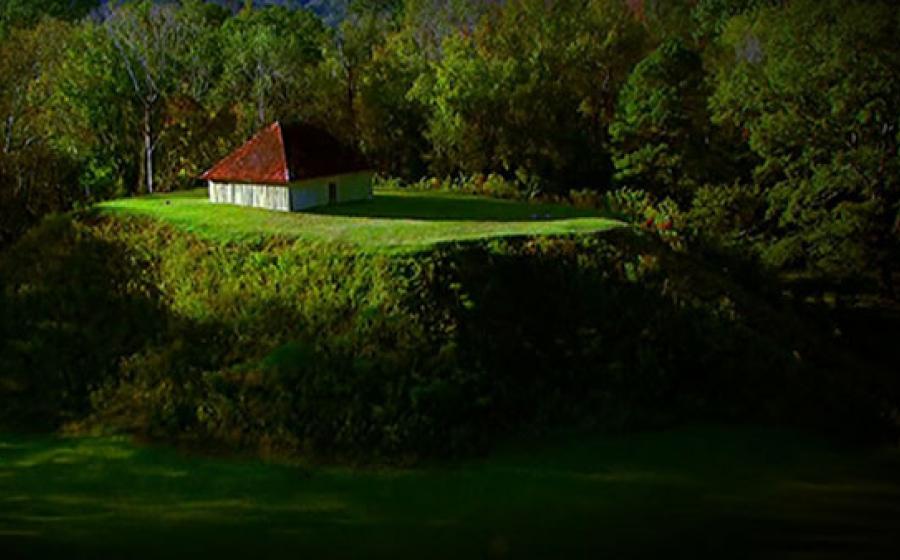
The Wickliffe Mounds make up a Native American complex that was discovered in Ballard County, Kentucky, near the town of Wickliffe. The prehistoric Mississippian site is situated on a bluff near the Ohio and Mississippi Rivers in the original Chickasaw homelands and includes a residential mound, a ceremonial mound, a cemetery building and early villages. The Wickliffe Mounds archeological site prominently features two central platform mounds, a central plaza and eight smaller mounds surrounding the area. Ancient Native Americans inhabited the Wickliffe Mounds from approximately 1100 CE to 1350 CE. Agriculture was significant to Mississippian people, and corn was a staple crop that was stored and used to feed the dense population that occupied the site. The Mississippian civilization at
The Moundville archaeological site, occupied from around 1120 CE until 1650 CE, was a large Mississippian settlement on the Black Warrior River in central Alabama. Many archaeologists and scholars believe that the Chickasaws and other tribes from the Southeastern United States descended from the Mississippian-era inhabitants of Moundville. Much of the Chickasaw culture and the economic and political structure—as well as that of dozens of other tribes—was greatly influenced and shaped by the mound-building Mississippian civilization, which is named after the river valley in North America where this culture flourished. Complex societies emerged during the Mississippian period, which spans from roughly 900 CE to 1400 CE. The hierarchical ranking of clans, family house groups and lineages developed into permanent institutionalized
Less than 20 Native American languages spoken in the United States are projected to survive another 100 years and the Chickasaw language, or Chikashshanompa', is just one of many tribal languages that culture keepers are working to preserve. In 1994, the estimated number of fluent Chikashshanompa' speakers was less than 1,000 and today, the Chickasaw language has less than 75 fluent speakers, with the vast majority older than age 55. It is because of these declining numbers that the United Nations Educational, Scientific and Cultural Organization (UNESCO) categorizes it as “severely endangered.” Emily Johnson Dickerson, a full-blood Chickasaw who spoke only the Chickasaw language her entire life, died at her Ada, Oklahoma, home on Monday, Dec. 30, 2013, at the