Cam Rea

Profile picture for user Cam Rea
Cam Rea

Cam Rea is a Military Historian and currently the Associate Editor/Writer at Strategy & Tactics Press. Mr. Rea has published several books and written numerous articles for Strategy & Tactics Press and Classical Wisdom Weekly. His most current publication is "Hebrew Wars: A Military History of Ancient Israel from Abraham to Judges." He is currently working on “The Wars of Israel: A Military History from the End of Judges to Solomon."


Publications:

The Wars of Israel: A Military History from the End of Judges to Solomon (2016)​
Hebrew Wars: A Military History of Ancient Israel from Abraham to Judges (2015)
Leviathan vs. Behemoth: The Roman-Parthian Wars 66 BC-217 AD (2014) (revised 2016)
The Rise of Parthia in the East (2013)
March of the Scythians (2013)

Forthcoming publication:

Horsemen of the Apocalypse: Mongol Invasions and Conquests From 1206-1227. Vol I (2017)

 

Member for

11 years 2 months

View Recent Blogs

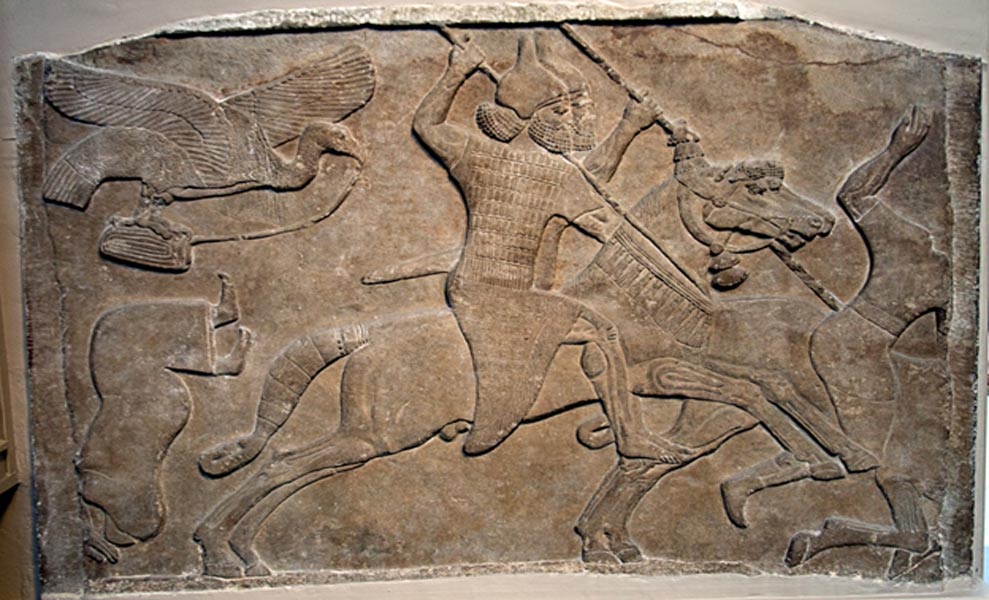
When examining the mysteries of the 8th century BC, all one has to do is look in the Bible or an ancient history book to realize that Assyria had no outside threats. The Hittites and Egyptians were a shell of their former glory and imposed no threat to the Assyrian borders. The once mighty United Kingdom of Israel, under the reign of King David, and later his son Solomon, divided into two separate kingdoms after Solomon’s death. The kings of Israel were too busy fighting amongst themselves. Syria, to the northwest of Assyria, was not a threat to Assyrian expansion either. As for Phoenicia, they were unstable on land and had no real standing army other than those they relied
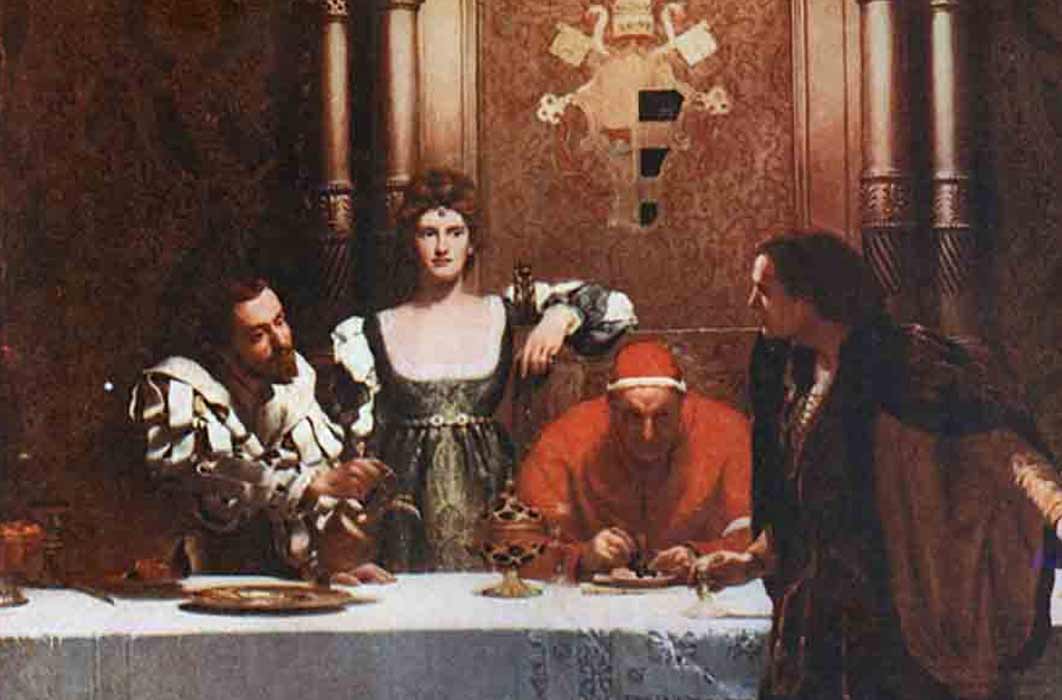
Niccolo Machiavelli, a 16th-century man, is today still feared and yet revered. Machiavelli has come to represent the archetype of a scheming and conniving mastermind and even modern psychology refers to Machiavellianism as one of the Dark Triad personality traits. He is perceived as one who deceives, plays tricks, and shows no mercy. However, this profile of the man may be biased. Niccolo Machiavelli did not invent and manufacture what many consider his nefarious ideas on his own accord. Rather, sourcing his education, experience, knowledge, and wisdom, he penned three books. His first book was The Art of War (1519), his second book Discourses on Livy (1531), and his most famous work, The Prince (1532), which earned him his notorious
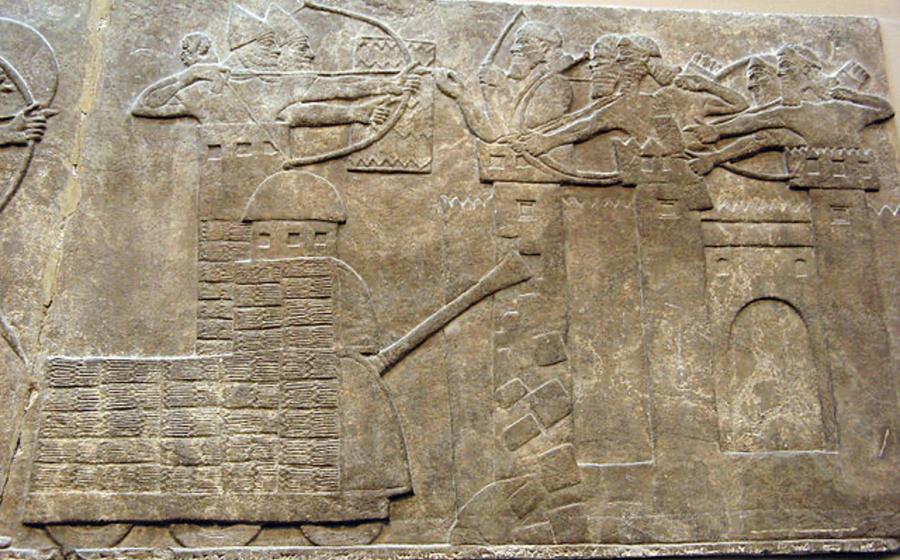
In 1221, to avoid being captured by the invading Mongols, Rashid, the Shah of Shirvan, abandoned his capital Shemakha, where the Genghis Khan’s generals Subotai and Jebe had ordered a siege tower to be built from corpses. Rashid fled to the fortress of Derbent. With winter still in their favor, Subotai and Jebe pursued Shah Rashid and headed north towards the Pass of Derbent. The Pass of Derbent was strategically important as it occupies the narrow gateway between the Caspian Sea and the Caucasus Mountains and it served as a barrier between civilization and the steppe. In their quest to reach “ the land of the narrow faced men with light hair and blue eyes” the Mongols needed to secure

By late 1220, after being relentlessly pursued for months by Genghis Khan’s generals Shah Ala ad-Din Muhammad II of Khwarazm, wearing a torn shirt, died exhausted, poor, and from pleurisy. With the death of the Shah, Genghis Khan had received reports of a territory where “narrow-faced men with light hair and blue eyes” lived beyond the Caspian Sea. 

By late 1220, after being relentlessly pursued for months by Genghis Khan’s generals Shah Ala ad-Din Muhammad II of Khwarazm, wearing a torn shirt, died exhausted, poor, and from pleurisy. With the death of the Shah, Genghis Khan had received reports of a territory where “ narrow-faced men with light hair and blue eyes” lived beyond the Caspian Sea. The Mongol forces analyzed their newly acquired intelligence, accumulated during the pursuit of the Shah, and turned their eyes to the west – the prelude to the great raid into Europe had begun, with a siege tower built of corpses, but this was just an omen of what Europe was to experience 16 years later. [[{"type":"media","view_mode":"media_large","fid":"89292","attributes":{"alt":"","class":"media-image","height":"395","typeof":"foaf:Image","width":"610"}}]] Routes taken by Mongol invaders
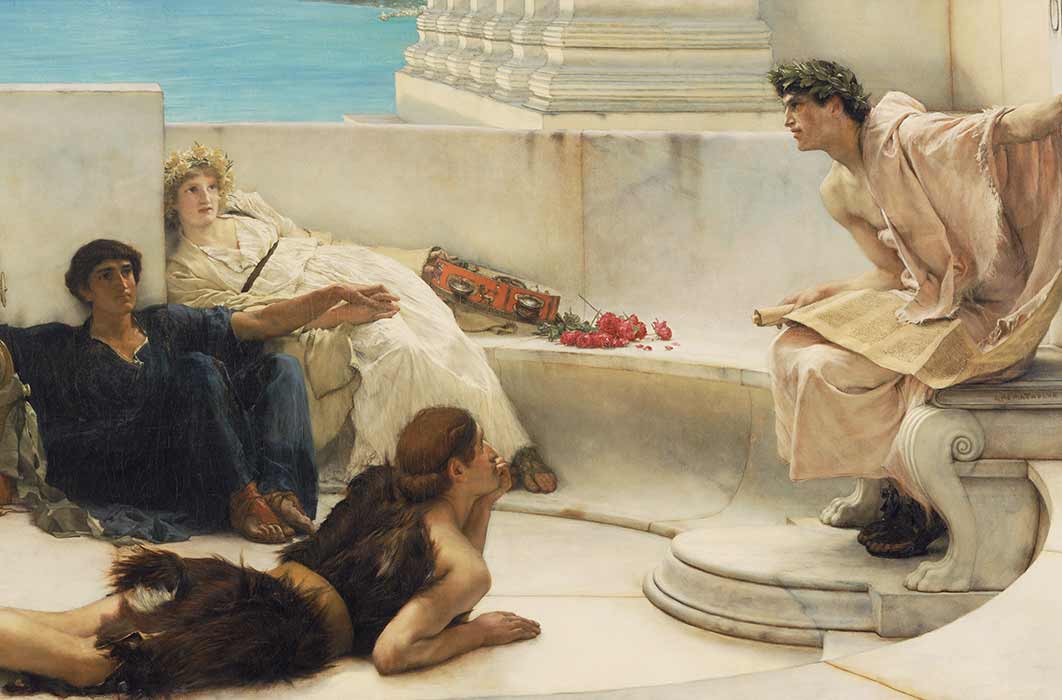
Greece, a modern country found in Southeastern Europe, has for more than a thousand years presented the world with famous battles, fine art, wine, poetry, gods, and tales that at times bewilder the mind. But none of this could have happened had it not been developed by men of various backgrounds and experiences. Men like Homer, Hesiod, Herodotus and Thucydides, wrote the history of Greece as it is known today. These men of poetry and prose brought more to the discussion than just dreary stories. [[{"type":"media","view_mode":"media_large","fid":"82913","attributes":{"alt":"Symposium scene: banqueters playing the kottabos game while a girl plays the aulos. National Archaeological Museum (CC BY-SA 2.5)","class":"media-image","height":"406","style":"width: 610px; height: 406px;","typeof":"foaf:Image","width":"610"}}]] Symposium scene: banqueters playing the kottabos game while a girl plays the aulos