Anthony Adolph

Anthony

ANTHONY ADOLPH has been a professional genealogist for over a quarter of a century. His interest in the past started with his own family, whose story led him back into the nineteenth century, and then further back, up lines of aristocratic and ultimately royal ancestry which ran far back into the Dark Ages before terminating with mythological heroes; and also up genetic lines which lead back inexorably to the origins of the human race, and beyond.

He therefore developed a dual fascination in origin myths, particularly those of the British Isles which lead back to the mythological hero Brutus of Troy, said to be a great grandson of the Trojan hero Aeneas, himself son of the Greek goddess Aphrodite; and simultaneously in the story of our ancestry as revealed by science, which goes back through the evolution of humans to the story of Life on Earth itself.

The result of this life-long interest is two books, both published by Pen and Sword in 2015 (and available on Amazon), Brutus of Troy, and the Quest for the Ancestry of the British and In Search of Our Ancient Ancestors: from the Big Bang to Modern Britain, in Science and Myth. 

Anthony lives in Kent, on the outskirts of London, England and his website (which includes details of his books) is www.anthonyadolph.co.uk.

Videos:

Member for

10 years 7 months

View Recent Blogs

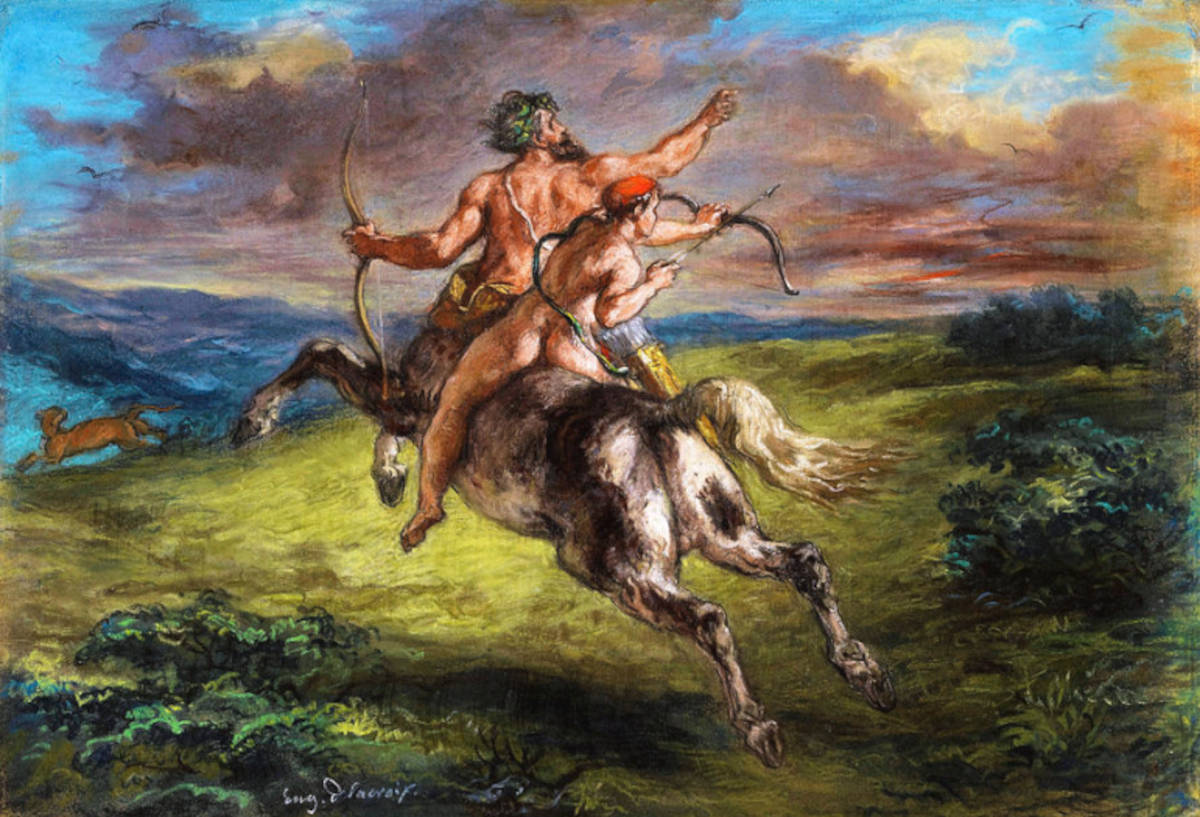
In Dares’s account of the diplomatic mission to rescue Hesione, before Antenor and Aeneas’s reached Salamis, they called in to Phthia to try to enlist the help of Peleus. Dares has us imagine, therefore, their ship leaving Troy and travelling west across the Aegean, until they saw Mount Pelion and entered the straits between the mainland and Euboea, to reach Phthia. The king, who was father of Achilles, entertained his visitors for three days, but when Antenor asked for his help in securing Hesione’s release, Peleus became angry and ordered them to leave.

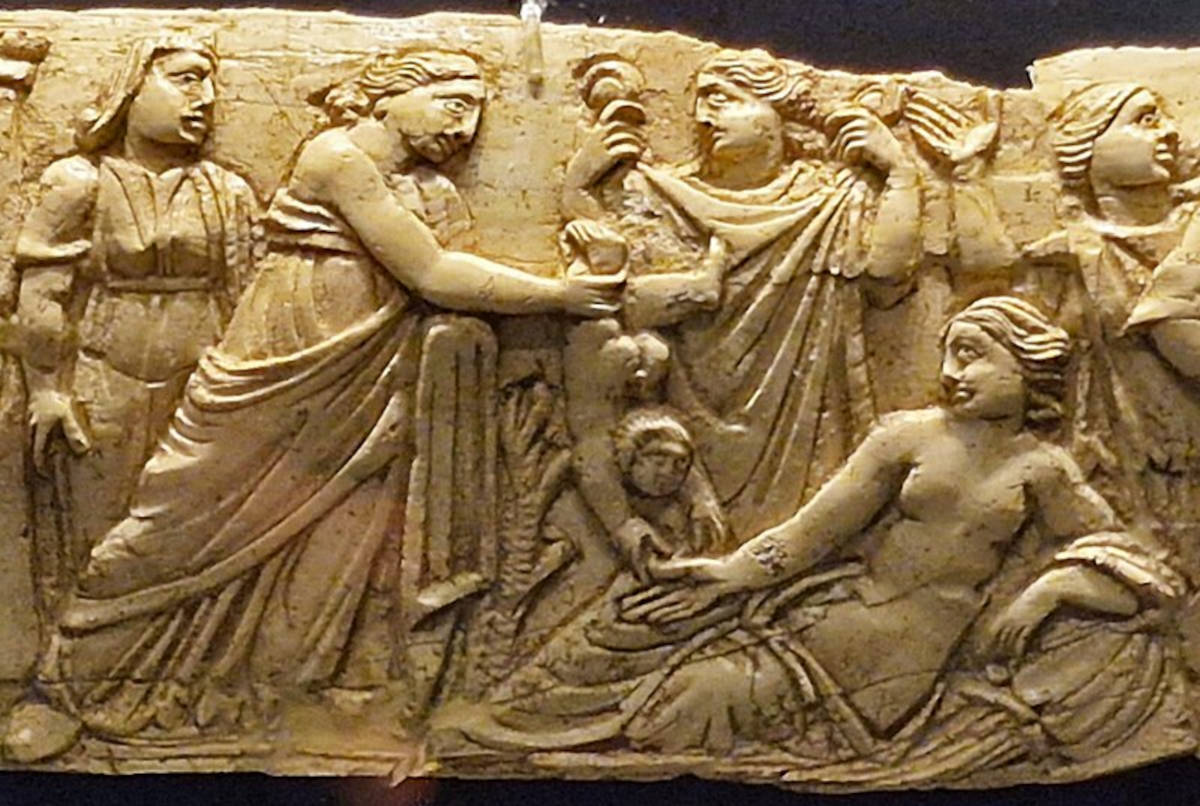
Most Greek genealogies start with an abduction by a god. In this case, Zeus abducted Aegina, daughter of the god of the River Asopus, which flows from Mount Oeta into the Malian Gulf in central Greece. He then carried her off to the island of Oinone, in the Saronic Gulf, 20 miles south-east of Athens, which he renamed Aegina in her honour. They had a son, who they named Aicos. 

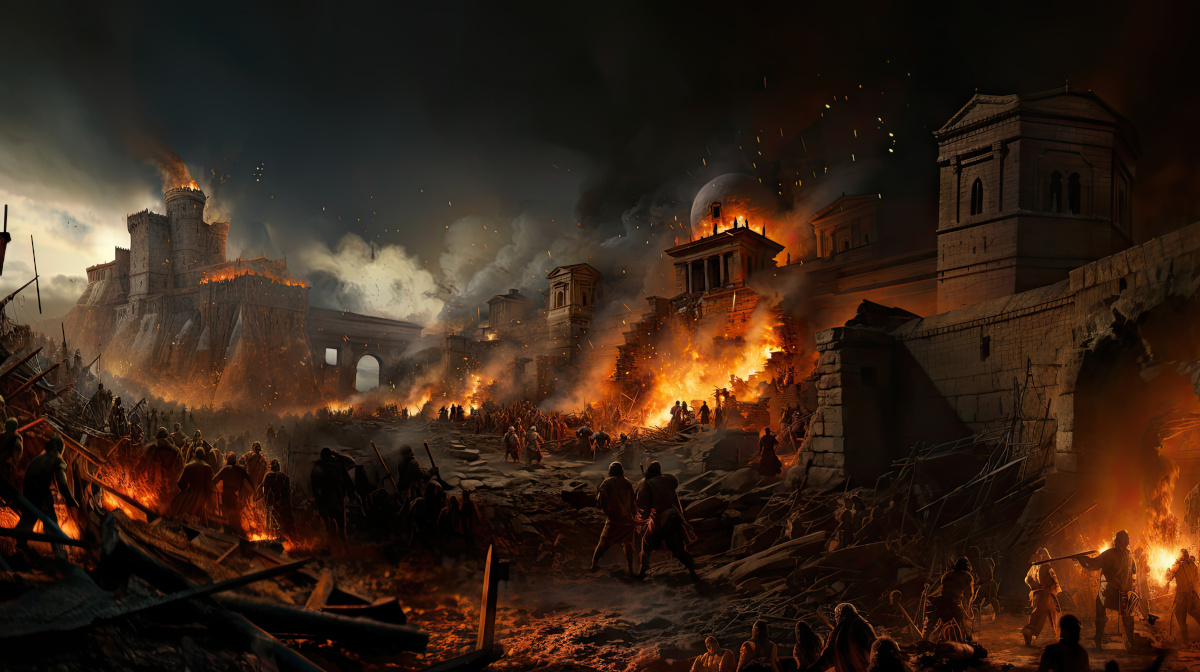
Nobody reading Homer’s Iliad or Virgil’s Aeneid has ever failed to wonder ‘was this real?’ and ‘where was Troy? ’ . Homer’s Troy lay across the Aegean from Greece, whence the angry Greeks sailed to avenge the abduction of Helen. Since Homer’s time, Troy was known to have been near, if not below, the Roman city of Ilium, in the north-western tip of Anatolia ( now Turkey ) , immediately south of the mouth of the Dardanelles. In his poem Civil War , Lucan describes Julius Caesar visiting Ilium , fascinated by the myths of Aeneas, who he believed to be his ancestor. Every rock had some myth attached to it. Once, says Lucan, Caesar walked into some tall grass

Nobody reading Homer’s Iliad or Virgil’s Aeneid has ever failed to wonder ‘was this real?’ and ‘where was Troy?’. Homer’s Troy lay across the Aegean from Greece, whence the angry Greeks sailed to avenge the abduction of Helen. Since Homer’s time, Troy was known to have been near, if not below, the Roman city of Ilium, in the north-western tip of Anatolia (now Turkey), immediately south of the mouth of the Dardanelles.

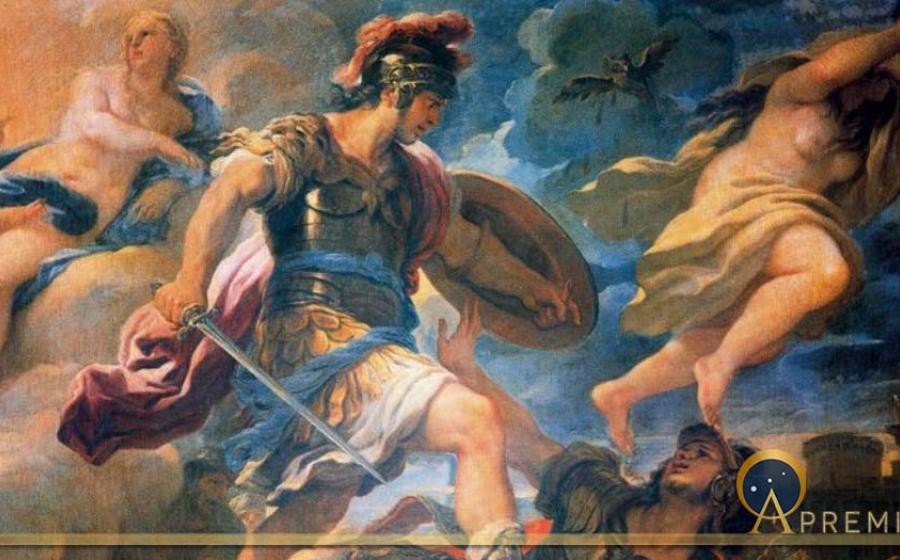
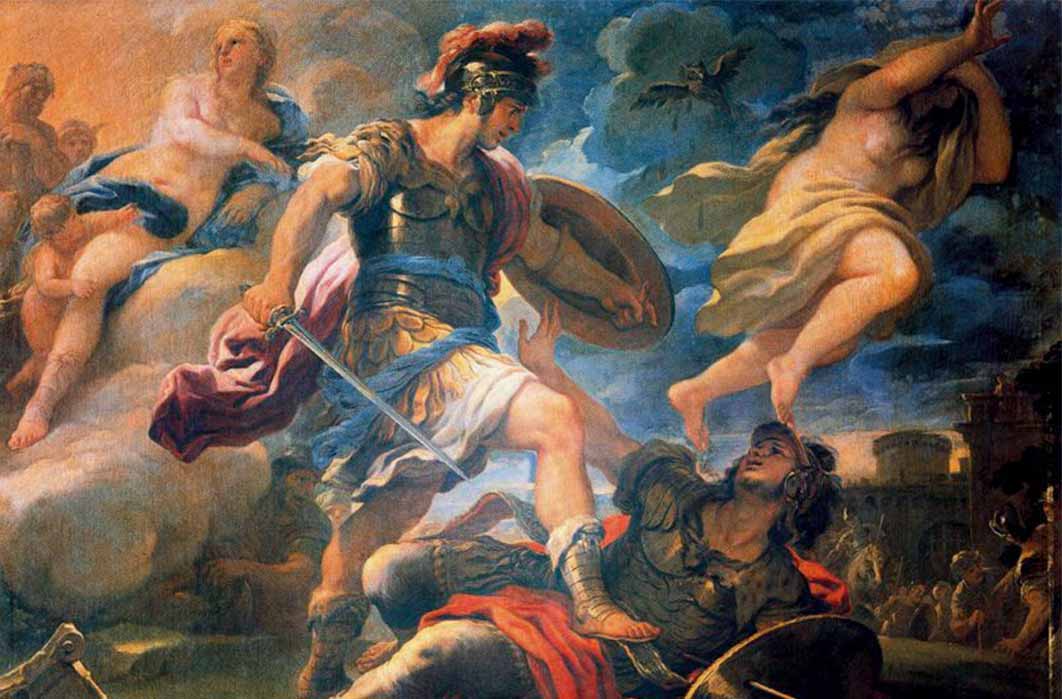
One hears of Aeneas’ pedigree for the first time from his own mouth, in the Iliad, as he stands facing his arch-foe, Achilles, on the battlefield before Troy: ‘ Learn then my lineage if you will – and it is known to many – in the beginning Dardanos was the son of Zeus, and founded Dardania, for Troy was not yet established on the plain for men to dwell in, and her people still abode on the spurs of many-fountained Ida. Dardanos had a son, king Erichthonius, who was wealthiest of all men living; he had three thousand mares that fed by the water-meadows, they and their foals with them… Erichthonius begat Tros, king of the Trojans, and Tros had
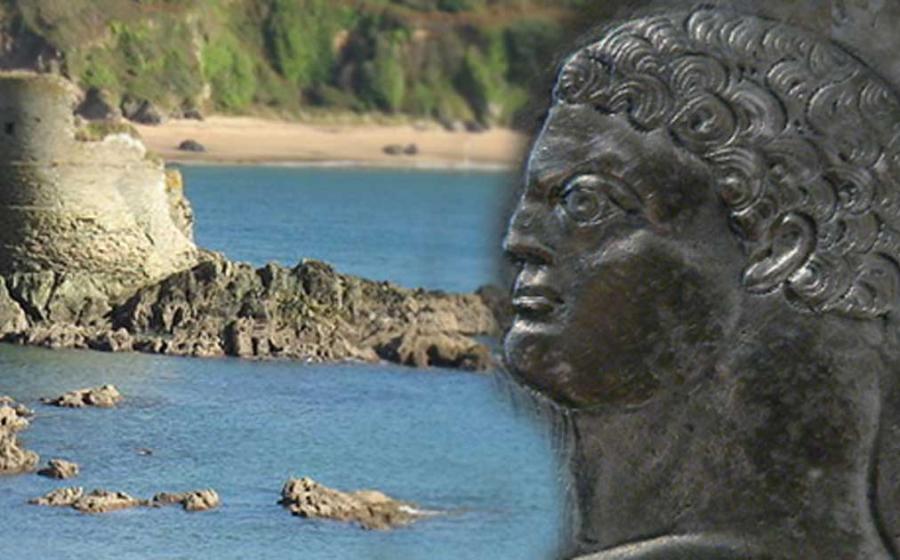
The myth of Brutus of Troy is well over a thousand years old, yet it continues to fascinate and current scholarship seeks to find new truths hidden in its mossy folds. John Clark’s excellent paper ‘Trojans at Totnes and Giants on the Hoe: Geoffrey of Monmouth, Historical Fiction and Geographical Reality’ was published in Transaction of the Devonshire Association (148, 89-130, June 2016). It provides an excellent modern assessment of the story, written by Geoffrey of Monmouth in his History of the Kings of Britain (c. AD 1135), of the landing of Brutus of Troy and his side-kick Corineus in Devonshire and their battle with the giants they found living there, which resulted in Corineus defeating the giants’ leader, Goëmagot
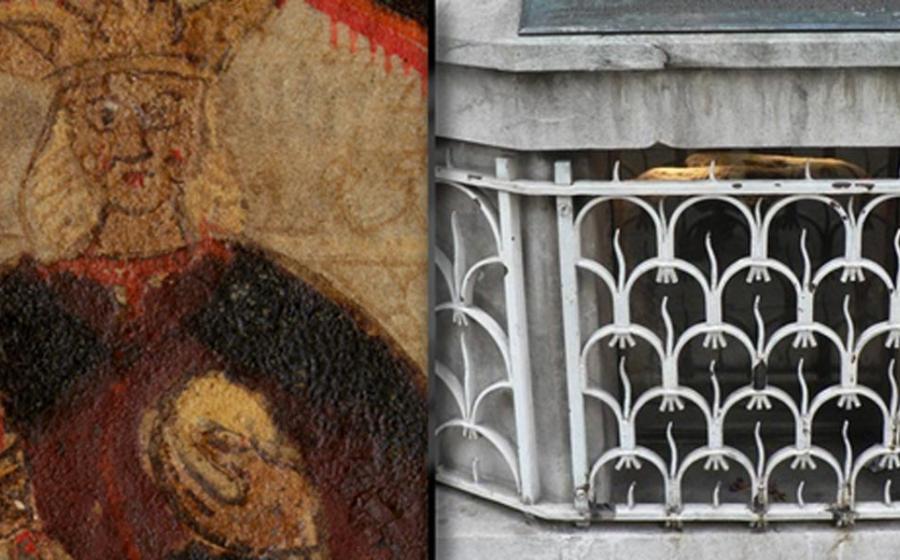
Until very recently, the London Stone was set into a shop wall in Cannon Street, nearly opposite the entrance to the railway station, but a few weeks ago it was removed and on 13 May this year [2016] it went on display in the Museum of London. [[{"type":"media","view_mode":"media_large","fid":"22396","attributes":{"alt":"London Stone, seen through its protective grille. ","class":"media-image","height":"477","style":"width: 610px; height: 477px;","typeof":"foaf:Image","width":"610"}}]] London Stone, seen through its protective grille. ( CC BY-SA 3.0 ) The London Stone is widely associated with Brutus of Troy, the subject of my biography Brutus of Troy and the Quest for the Ancestry of the British. The myth of Brutus has no basis in real history but was invented in the Dark Ages to provide Britain with a noble
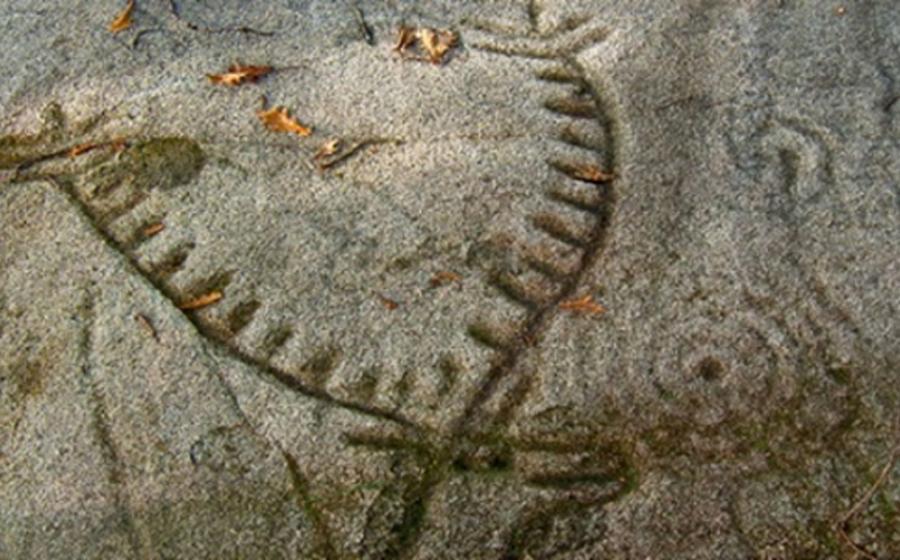
From the Upper Palaeolithic and down through the Neolithic, the Chalcolithic and into the Bronze Age, our ancestors in western Europe left behind traces of their thoughts and beliefs through rock art, characterised by cup and ring marks, spirals and other designs, particularly depicting deer and sometimes also hunters, warriors and weapons. [[{"type":"media","view_mode":"media_large","fid":"19964","attributes":{"alt":"Palloza houses in eastern Galicia, an evolved form of the Iron Age local roundhouses.","class":"media-image","height":"197","style":"width: 610px; height: 197px;","typeof":"foaf:Image","width":"610"}}]] Palloza houses in eastern Galicia, an evolved form of the Iron Age local roundhouses. ( CC BY-SA 2.0 ) Dating these carvings, which are called petroglyphs, is difficult but in Galicia, in north west Spain, the carvings include images of datable objects such as Bronze Age swords. Many of them are