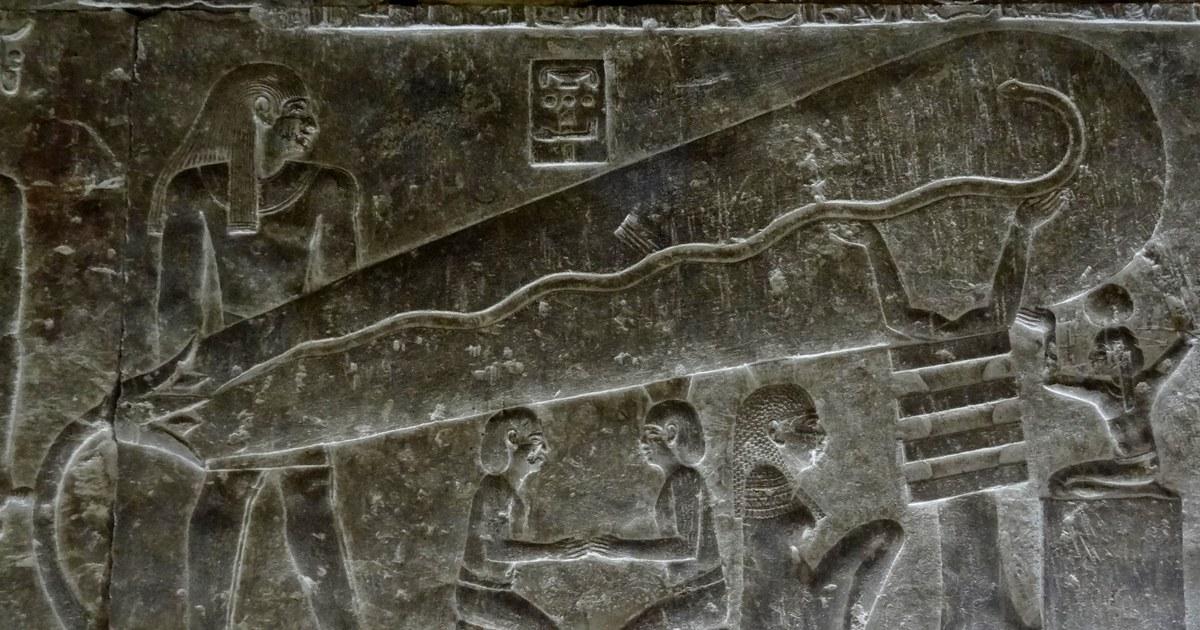

Fact Check verdict: Fringe. The texts beside the reliefs name a snake god rising from a lotus, made as gold and copper cult objects, and no source consulted reports any electrical object from the temple.
The Temple of Hathor at Dendera, in southern Egypt, was begun in 54 BC under Ptolemy XII, according to the Egyptologist Sylvie Cauville, as cited by Barbara Richter. Below its floors and inside its walls lies a set of narrow rooms known as crypts, and a few reliefs in one of them have become famous far beyond Egyptology.
To many viewers online, the long ovals in these reliefs look like giant glass bulbs with a filament inside. Since the 1980s, writers in the ancient astronaut movement have argued that they show electric lamps, so is there any evidence for it?
According to the scholars who have published and translated the carved texts, the reliefs show cult objects of Harsomtus, a creator god worshipped at Dendera.
What the reliefs show
Crypts were an old feature of Egyptian temples that the builders of Dendera took much further. In her 2012 study for the University of California, Berkeley, Richter explains that such crypts "provided secret storage areas for sacred statues." At Dendera, she writes, "decorated crypts surround the heart of the temple on three sides and three levels."
The best known scenes are in what the French edition of the temple texts calls south crypt 1, chamber C. In a 1987 study of the temple's cult statues, Cauville noted that the lower crypts were built with the temple walls and carry the name of Ptolemy XII.
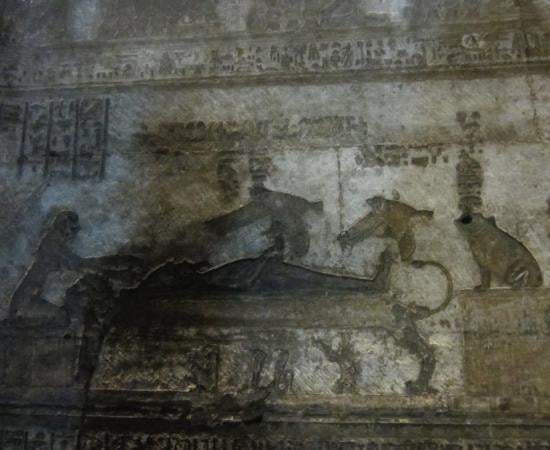
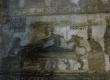
Each scene shows a long oval rising from a lotus flower, with a snake inside it. In the best known version, a standing man holds the lotus end, while a djed pillar with two human arms and a small figure with raised arms support the far end.
The French Egyptologist Auguste Mariette published drawings of these walls in 1871. His drawing of this scene shows the same figures, along with a baboon-bodied figure holding two knives, a man before a shrine and a seated goddess.
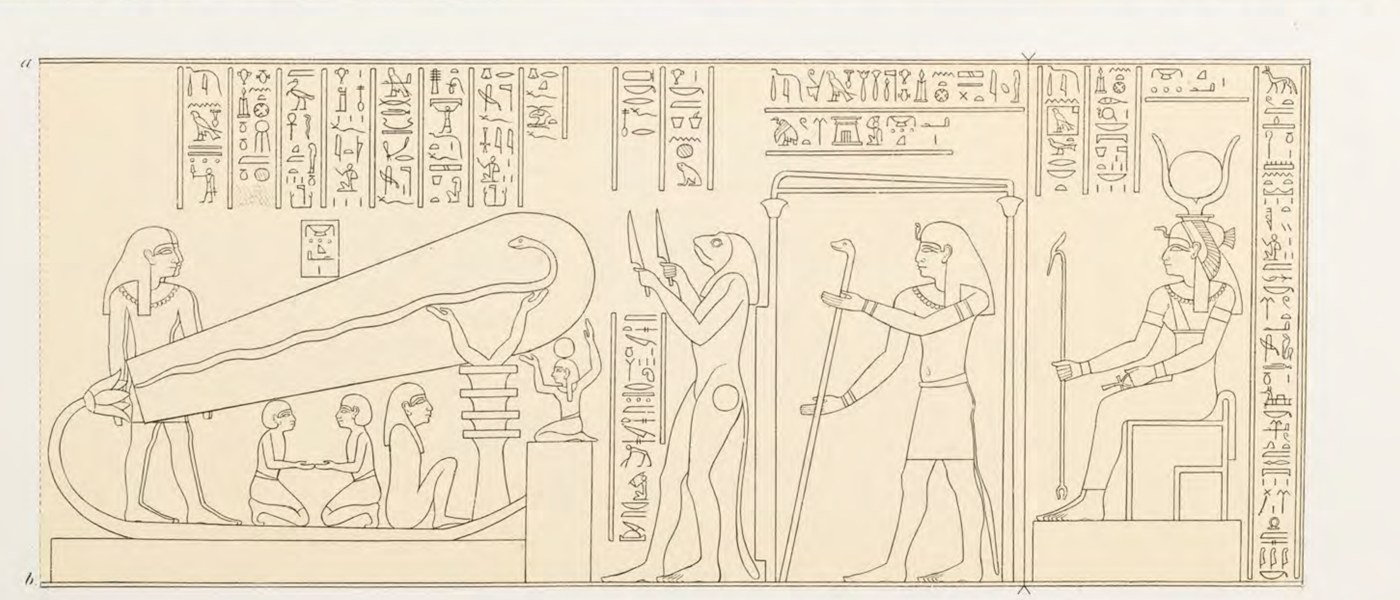
The same scene as drawn for Auguste Mariette's Dendérah, volume III (1871), plate 45, lower register, labeled Crypte N° 4 in Mariette's numbering. Scan via the Ancient Egypt Foundation, cropped, public domain.
What the evidence says
The texts of this crypt were published by Émile Chassinat in 1952, in volume V of Le temple de Dendara, with notes matching each wall to Mariette's plates. For the north wall scene, his edition lists separate texts for the boat and lotus, for the snake and for the figure holding the lotus, as well as legends naming each god.
In a 1982 study of Harsomtus for the French Institute of Oriental Archaeology in Cairo, the Egyptologist Zeinab el-Kordy translated these legends into French. The English renderings here are by Ancient Origins. In her reading, the text on the north wall names the snake as Harsomtus, great god of Dendera, who rises from the lotus as a living ba. A ba is a form in which a god appears. The text says the figures around him lift up his perfection, and it gives the material as gold and the height as one cubit.
El-Kordy explains that the curved stem of the lotus forms a boat, which is the line read as a cable in the electrical theory. The arms of the djed pillar and the raised arms of the god Heh are there to help the god rise.
Cauville lists scenes of Harsomtus rising as a snake from a lotus in four parts of the temple, including this chamber. She notes that the objects shown on these walls and used in his festivals were a copper boat and a small gold snake and lotus, about 30 centimeters high.
These scenes belong to a story of creation. El-Kordy writes that Harsomtus was known at Dendera as a god who emerged, as a primordial snake, from a lotus floating on the waters that covered the world at the beginning.
Where the light bulb idea came from
The electrical reading spread through the Vienna-based writers Reinhard Habeck and Peter Krassa. Their 1982 book Licht für den Pharao (Light for the Pharaoh) was previewed that year in Ancient Skies, the newsletter of the Ancient Astronaut Society. Their English article begins its argument with the clay jar examined in the Ancient Origins Baghdad Battery Fact Check.
They read the oval as an outsize bulb, the snake as a filament and the boat as a cable leading to a box holding a power source. Rejecting readings based on symbolism, they wrote of the reliefs that "They depict facts."
Their other argument was that no soot had been found in temples and tombs, so the builders must have had a smokeless light. In 1894 the astronomer Norman Lockyer wrote that freshly opened tombs showed no trace of burning, and that his friend Bouriant, head of the French archaeological school in Egypt, "laughingly suggested the possibility that the electric light was known to the ancient Egyptians." Lockyer's own explanation was mirrors reflecting sunlight.
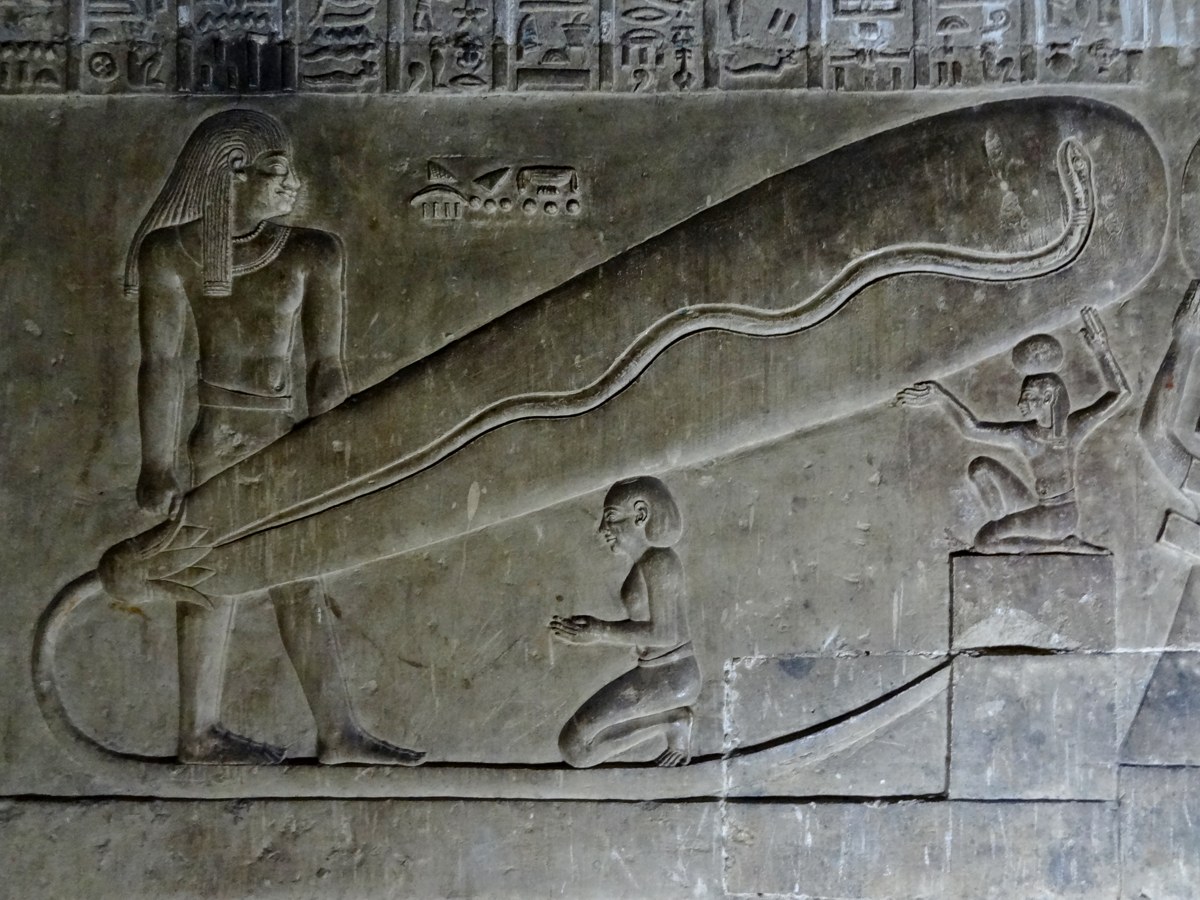
Another relief in the Dendera crypts, with the snake in its oval rising from a lotus held by a standing figure. Photo by Olaf Tausch, 2014, via Wikimedia Commons, CC BY 3.0.
The alternative view
Supporters of the lamp reading have a fair point about appearances. In a photograph, a smooth oval with a wavy line running through it does look like an early electric tube, and the repeated scenes make the likeness hard to dismiss as one odd carving.
The difficulty is that the likeness exists only in the picture, since the texts on the same walls describe gold and copper images of a god and give their heights. A lamp made of gold would give no light at all.
Habeck and Krassa also asked why the djed pillar leans and why the baboon-bodied figure holds knives. El-Kordy reads the pillar as one of the helpers lifting the god, and the figure with knives as a protective spirit whose legend promises to slay the god's enemies.
Where this leaves it
According to the published texts and the Egyptologists who have studied them, the Dendera reliefs show cult objects used in the festivals of Harsomtus, a god born from a lotus at the creation of the world. None of the sources consulted reports wires, glass vessels or any other electrical object from the temple, and the soot argument rests on remarks about tombs rather than any study of the crypts themselves.
Readers can learn more about the site in the Dendera atlas entry, about ritual tools found in honor of Hathor, and about another Egyptian carving read as a modern machine in the Abydos helicopter Fact Check.
How we checked this
Read for this check were Chassinat's 1952 edition of the crypt texts, Mariette's 1871 plates, the studies by el-Kordy and Cauville, Richter's dissertation, Lockyer's book and the Ancient Skies article. Translations from the French are by Ancient Origins and appear as paraphrase.
The German studies of the crypt texts by Wolfgang Waitkus could not be opened. No interviews were conducted, earlier Ancient Origins coverage was not a source, and the labels are explained on the evidence standards page.
The crypt relief at the Temple of Hathor, Dendera, with the snake inside the oval and the pillar with arms at right. Photo by Olaf Tausch, 2014, cropped, via Wikimedia Commons, CC BY 3.0 (https://creativecommons.org/licenses/by/3.0/)
By Aris Manus
Claim by claim
- Fringe: The Hathor temple reliefs at Dendera show electric light bulbs. Reason: the texts beside them describe a snake god rising from a lotus, made as gold and copper cult objects.
- Established: The reliefs are in a lower crypt of the temple built under Ptolemy XII. Reason: Cauville places the scenes in south crypt 1 and dates the lower crypts to his reign.
- Established: The carved texts name the snake as the god Harsomtus rising from a lotus in a boat. Reason: el-Kordy and Cauville read the same published texts this way.
- Established: The scene draws on the Dendera account of creation. Reason: el-Kordy cites temple texts that describe Harsomtus emerging from a lotus at the beginning.
- Unverified: The crypts were lit without any lamp that left soot. Reason: no study of soot on the crypt walls was found for this check.
Sources
Chassinat, Émile (1952). Le temple de Dendara V. Cairo, Institut français d'archéologie orientale. Second edition, IFAO online.
Mariette, Auguste (1871). Dendérah. Description générale du grand temple de cette ville, tome III, Planches. Paris, A. Franck. Plates 44 and 45.
El-Kordy, Zeinab (1982). Deux études sur Harsomtous. Bulletin de l'Institut français d'archéologie orientale 82, pp. 171 to 186.
Cauville, Sylvie (1987). Les statues cultuelles de Dendera d'après les inscriptions pariétales. Bulletin de l'Institut français d'archéologie orientale 87, pp. 73 to 117.
Richter, Barbara Ann (2012). The Theology of Hathor of Dendera: Aural and Visual Scribal Techniques in the Per-Wer Sanctuary. PhD dissertation, University of California, Berkeley. eScholarship, item qt8np4d4hf.
Lockyer, J. Norman (1894). The Dawn of Astronomy. London, Cassell. Project Gutenberg edition.
Habeck, Reinhard, and Peter Krassa (1982). Light for the Pharaoh. Ancient Skies 9, no. 4, September to October 1982. Translated from the German by Hans Schindler Bellamy.