
Fact Check verdict: Unverified. The Baghdad Battery was an ancient electric battery.
A January 2026 paper has jolted an old archaeological puzzle back to life by reporting that a replica of the so-called Baghdad Battery can deliver more than 1.4 volts. The clay jar, found near Baghdad in a layer about 2,000 years old, has been called an ancient battery since 1938. Was it really one? Verdict: Unverified.
According to the paper's author, Alexander Bazes, his result is "the strongest evidence to date" that people in the Near East understood electrochemistry long before Alessandro Volta. Replicas do make a current, but no electrical apparatus, plated object or text has been reported showing that anyone in antiquity used the jar that way.
What the evidence says
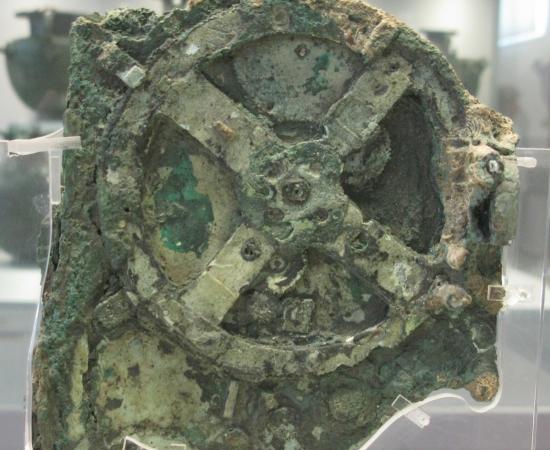
During excavations at Khujut Rabu'a near Baghdad in 1936, diggers found a clay jar about 15 cm (6 inches) tall. A copper cylinder was fixed in its neck with asphalt, and a corroded iron rod sat inside. Wilhelm König, an Austrian painter who was then director of the Baghdad Museum, described and published the find in 1938.
Paul Keyser of the University of Alberta, who examined the object, wrote in the Journal of Near Eastern Studies in 1993 (read here in the Circle of Ancient Iranian Studies reproduction) that it came from "an undisturbed stratum of a Parthian settlement site" and was found "in association with magical bowls". Its layer dates it to the first century BC or the first century AD. Later jars of the Sasanian period, he noted, held cylinders filled with papyrus or other organic material and had no iron rod.
In the English translation quoted by the chemist Gerhard Eggert, König wrote that "one might think that it must be a kind of 'galvanic' element or battery". Eggert, who then headed conservation at the Rheinisches Landesmuseum in Bonn, suggested that its resemblance in form to a modern dry cell may have led him there.
Replicas do make electricity, though not much of it. Keyser reported that the models "produce about 0.5 V at a few thousandths of an amp," and that a flashlight battery gives several hundred times the power. In his own tests, grapefruit juice and diluted acetic acid gave 0.49 volts, while copper sulfate held about 0.45 volts for several hours.
The first replica builder, W. F. M. Gray, filled his model with copper sulfate and found that it "worked quite well for a short time". Eggert cites that phrase to a 1954 magazine article by Ley.
A current in a lab is not evidence of ancient use, as Eggert pointed out in Skeptical Inquirer in 1996 (read here from the Center for Inquiry's scan). In his words, "successful experiments alone can show only a supposed ancient technique to be possible". He found no ancient object supporting electrotherapy or electroplating, and no written evidence of either, adding that "Archaeometry so far could not prove any ancient Near Eastern object to be electrogilded."
The gilding claim also runs into a chemical problem. Keyser argued that electroplating with this device "is impossible", because the acids that dissolve silver and gold were not isolated until about AD 1300, and a plating bath needs the metal in solution. His notes add that at about 1 milliamp, plating a single gram of silver would take about 1.1 days.
König also pointed to Baghdad silversmiths of his day who gilded with a simple electrical method, asking, in the translation Eggert quotes, "Probably it is older than one might think?" Eggert traced that technique to a very similar method invented by John Wright in Birmingham, England, in 1839. At the time of König's report, Eggert concluded, the process was "only 99 years old."
The alternative view
Keyser accepted that the jar worked as a cell but rejected plating, proposing instead that it served as a mild electric pain reliever. He pointed to the Roman writer Scribonius Largus, who around AD 47 to 48 recorded placing a live torpedo ray under the feet of gout sufferers until the leg went numb, and he noted that modern nerve stimulation for local pain relief uses a few milliamps at a few volts.
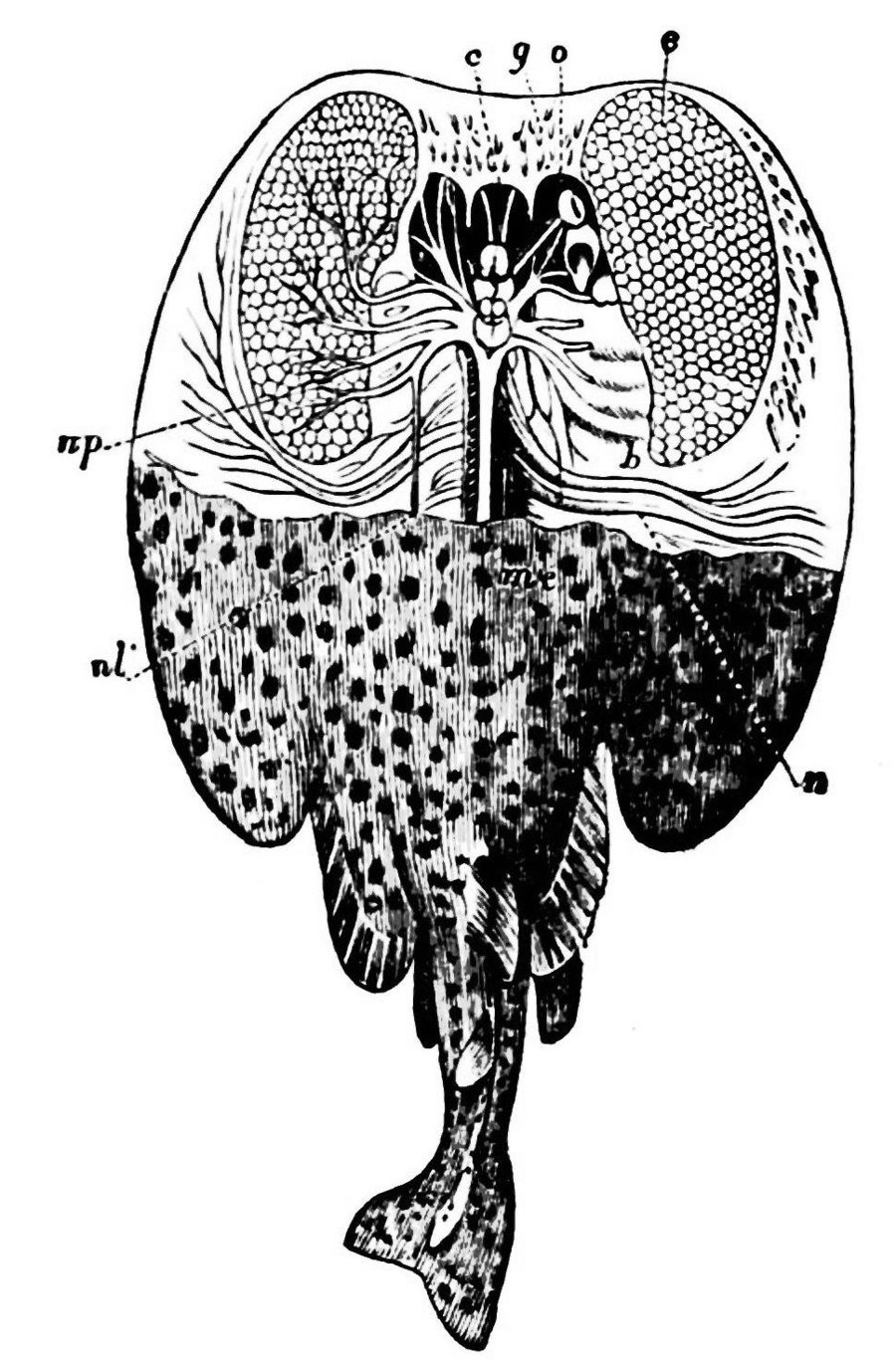
A torpedo ray with its electric organs exposed, from Popular Science Monthly in 1882. The Roman writer Scribonius Largus recorded using a live torpedo ray to numb pain. Popular Science Monthly, volume 21 (1882), via Wikimedia Commons. Public domain
He conceded that it "must remain hypothetical until further confirming evidence is forthcoming." He linked it to bronze and iron needles found with the later jars at Seleucia. Eggert found no ancient object that supports it, so the theory stays Unverified.
Bazes argues in Sino-Platonic Papers that earlier replicas missed half of the design. In his reconstruction, tin solder on the outside of the copper tube and a lye solution in the porous clay jar form a second cell, wired in series with the copper and iron. He reports that "When fully assembled, the device delivers over 1.4 volts," enough to raise bubbles on a wired copper plate and etch it overnight.
The series that published him is edited at the University of Pennsylvania. It says it exists for research that "because of its unconventional or controversial nature, might otherwise go unpublished." Lye is his own assumption. Eggert had noted that "it is unknown which type of electrolyte (if any) was inside the copper cylinder". The tests are indicative rather than conclusive, and the figures show etching and bubbling, with no plated object.
The main rival reading comes from E. Paszthory, who argued in 1989, as Eggert summarizes, that such objects may have held blessings or incantations written on organic material. Keyser saw it differently, writing, "It is indeed difficult to see what else the device could be." Eggert judged the container idea much more probable, though it too remains Unverified for the jar from Khujut Rabu'a.
Where this leaves it
The jar is real, its layer places it in the first century BC or AD, and its parts will make a weak current when filled with an acid or salt solution. What no one has produced is evidence that anyone in Parthian Mesopotamia used it that way. Eggert summed up the replica work bluntly: "With the help of additional assumptions, one can get some current some of the time from the object."
Keyser knew of no attempt at thermoluminescence dating of the clay and suggested that analysis of the metals might confirm the date. Until an excavation turns up something the jar was wired to, the Baghdad Battery remains less an ancient power source than a well made jar of unknown purpose, and the claim stays Unverified.
How we checked this
Read in full for this check: Keyser's 1993 paper (in a reproduction by the Circle of Ancient Iranian Studies), Eggert's 1996 article (from the Center for Inquiry's scan) and Bazes's 2026 study. König's words of 1938 and 1940 are quoted from the English translation cited by Eggert, Gray's result as Eggert cites it from Ley, Paszthory's argument as Eggert summarizes it, and Scribonius Largus as Keyser describes him.
No interviews were conducted, earlier Ancient Origins coverage was not used as a source, and every quote was checked against a saved copy on October 25, 2026.
How we label claims: see How we check evidence.
More in this series: Göbekli Tepe, the Sphinx and Atlantis: what the evidence says.
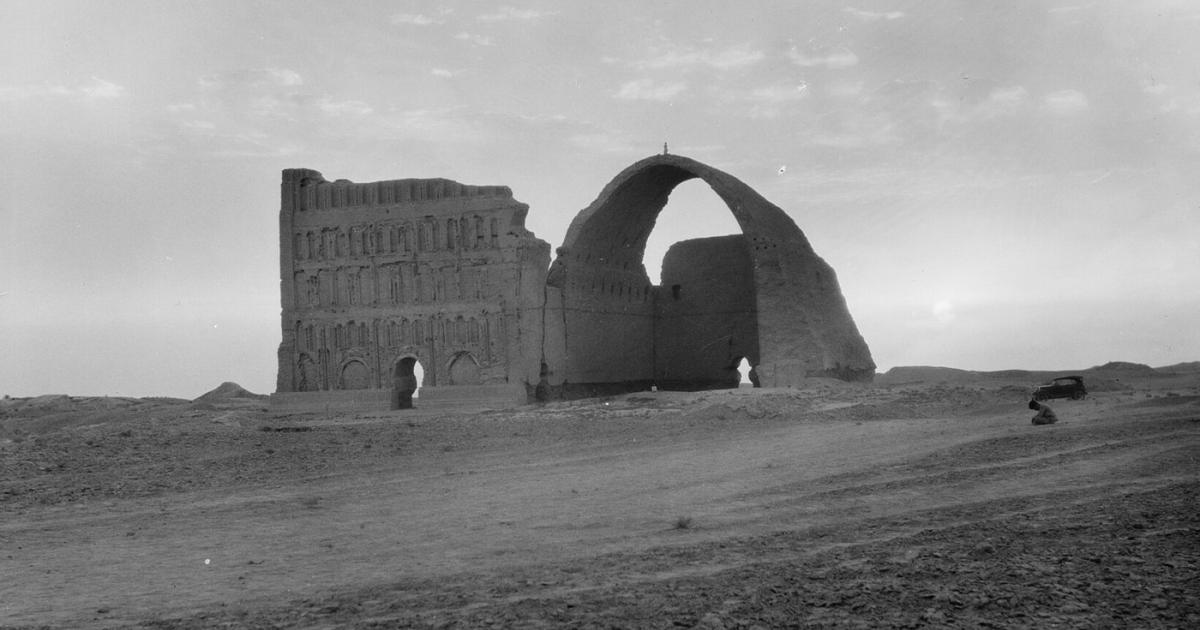
The Arch of Ctesiphon, Iraq, photographed at sunset in 1932. Later jars holding sealed bronze cylinders, from the Sasanian period, were found at Ctesiphon. Matson Photo Service, Library of Congress (matpc.16068), via Wikimedia Commons. Public domain
By Aris Manus
Claim by claim
- Unverified: The Baghdad Battery was an ancient electric battery. Reason: replicas can produce a weak current, but no connected device, plated object or text shows that anyone used it as one.
- Established: The find is a clay jar holding a sealed copper cylinder and an iron rod, from a Parthian settlement layer near Baghdad. Reason: König's published description and Keyser's later examination of the object agree on its parts and context.
- Established: Replicas filled with an acid or copper sulfate solution produce about half a volt. Reason: Keyser measured 0.45 to 0.49 volts in his own tests, in line with earlier models.
- Unverified: The jar was designed as two linked cells giving more than 1.4 volts. Reason: one 2026 replica reached that figure using lye in the clay jar, but which liquid, if any, the original held is unknown.
- Unverified: Its makers used it to electroplate objects with gold or silver. Reason: no ancient Near Eastern object has been shown to be electrogilded, and Keyser argued that no suitable plating solution could be made at the time.
- Unverified: It was used to relieve pain with a mild electric current. Reason: Keyser proposed this in 1993 by analogy with Greco-Roman use of electric fish, and he conceded that it must remain hypothetical.
Sources
- Keyser, Paul T. (1993). The Purpose of the Parthian Galvanic Cells: A First-Century A.D. Electric Battery Used for Analgesia. Journal of Near Eastern Studies 52(2): 81 to 98. Read in full in the Circle of Ancient Iranian Studies reproduction.
- Eggert, Gerhard (1996). The Enigmatic 'Battery of Baghdad'. Skeptical Inquirer 20(3): 31 to 34. Read in full from the Center for Inquiry scan.
- Bazes, Alexander (2026). The Baghdad Battery: Experimental Verification of a 2,000-Year-Old Device Capable of Driving Visible and Useful Electrochemical Reactions at over 1.4 Volts. Sino-Platonic Papers 377. Read in full.