
Fact Check verdict: Unverified. The temples were built by known kings between the 9th and 12th centuries AD, and no study read for this check finds their layout copied from Draco or from a sky of 10,500 BC.
Angkor Wat was built as a temple to Vishnu, and later Khmer kings turned to Buddhism, so its halls hold the sacred traditions of two faiths. This fact check passes no judgment on either faith and tests only one modern claim about how the temples of Angkor were placed on the ground.
Where the Draco idea comes from
The claim comes from Heaven's Mirror, a 1999 book by Graham Hancock with photographs by Santha Faiia. The book's own page on Hancock's website lists a part on Cambodia with a chapter titled "Draco," after the northern constellation that his gallery calls the serpent.
That page says the book decodes a "secret doctrine passed down by initiates from time immemorial," carried out in "temples whose layout mirror the stars and constellations of the night-sky." Hancock links this doctrine to precession, the slow shift of the stars that he puts at "one degree every 72 years."
The gallery of photographs from the book, also hosted on Hancock's site, spells out the Cambodian part of the idea. One caption calls Ta Keo "the terrestrial counterpart to Zeta Draconis in the constellation of Draco." Another says the royal temple of Phimeanakas "was perhaps the scene for Khmer astronomical rituals involving the constellation of Draco, the serpent."
A third caption, for a different constellation, carries the only date in the gallery. It says the Bakong temple at Roluos, with two nearby temples, "forms the pattern of the three stars in the Corona Borealis visible above the horizon at dawn on the spring equinox, 10,500 BC." On this reading, the builders were heirs to a far older plan of the sky.
What the evidence says
The temples themselves are well dated, and UNESCO's World Heritage listing describes Angkor as holding the remains of the capitals of the Khmer Empire "from the 9th to the 15th century."
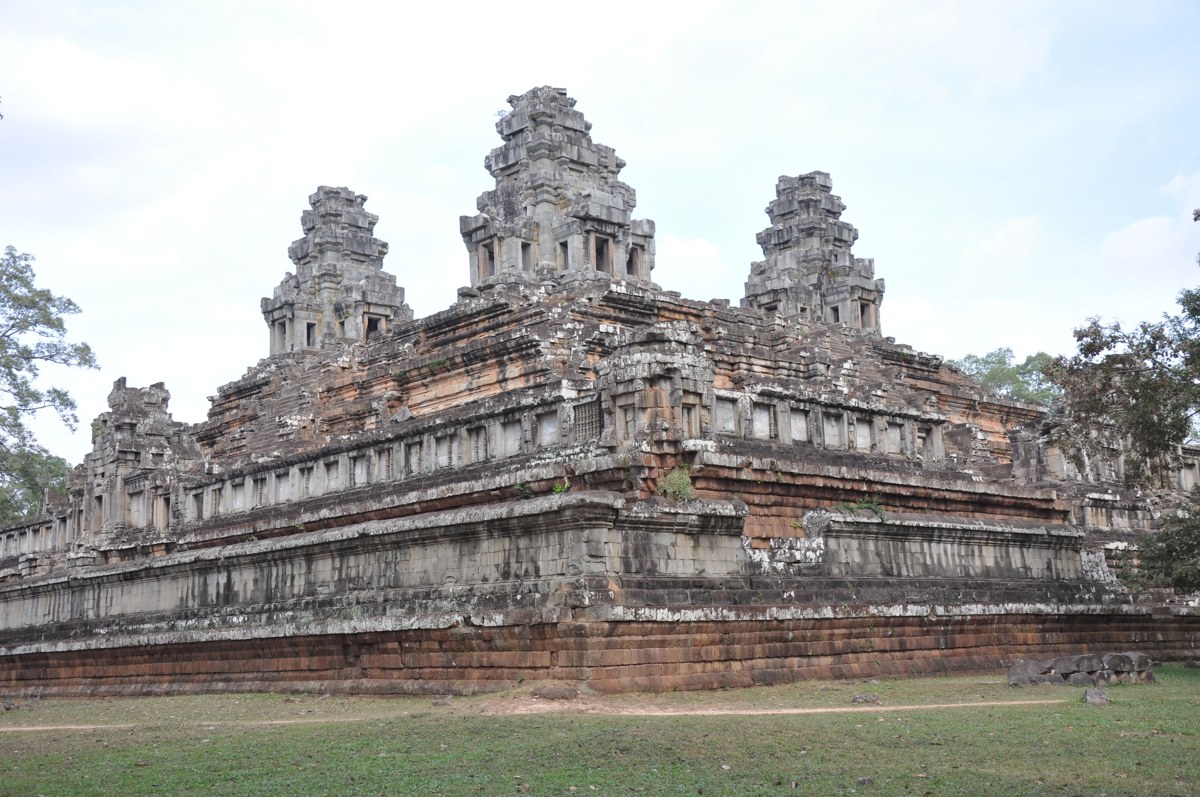
The temple of Ta Keo at Angkor, which Hancock links to a star in Draco. Photo by Jorge Láscar via Wikimedia Commons, CC BY 2.0, resized.
The independent scholar William Romain sets out the building record in a 2018 paper in the Journal of Skyscape Archaeology. Indravarman I, who reigned from 877 AD, built Preah Ko and Bakong. Romain describes Bakong as one of the earliest Angkor pyramids "built to symbolise Mount Meru," the sacred mountain at the center of the Hindu cosmos.
Angkor Wat came more than two centuries later. Romain names Suryavarman II, who reigned from 1113 AD, as its founder. Subhash Kak, then at Louisiana State University, places the main temple building at Angkor between 879 and 1191 AD.
Romain adds that Jayavarman VII, who ruled from 1181 AD, changed the state religion from Shaivism, a Hindu tradition, to Mahayana Buddhism. That change, he writes, "accounts for the mix of Brahmanical and Buddhist elements within the temples." The temples of Angkor were therefore founded by different rulers, for different gods, across roughly three centuries.
That spread makes a single star map hard to sustain, and Romain, after surveying a dozen temples, concludes that "no single design scheme was utilised throughout Angkor."
The sky the builders watched
The alignments that can be measured at Angkor point to the Sun of the builders' own day. Giulio Magli of the Politecnico di Milano, writing in Studies in Digital Heritage in 2017, found that all 31 monuments he considered in the Angkor area are oriented within five degrees of due east.
Angkor Wat itself faces west, at an azimuth of 270.5 degrees. Magli says the likely reason is that the temple "was originally dedicated to Vishnu, a god closely connected to the west." That half a degree has a visible result each spring and fall at the site.
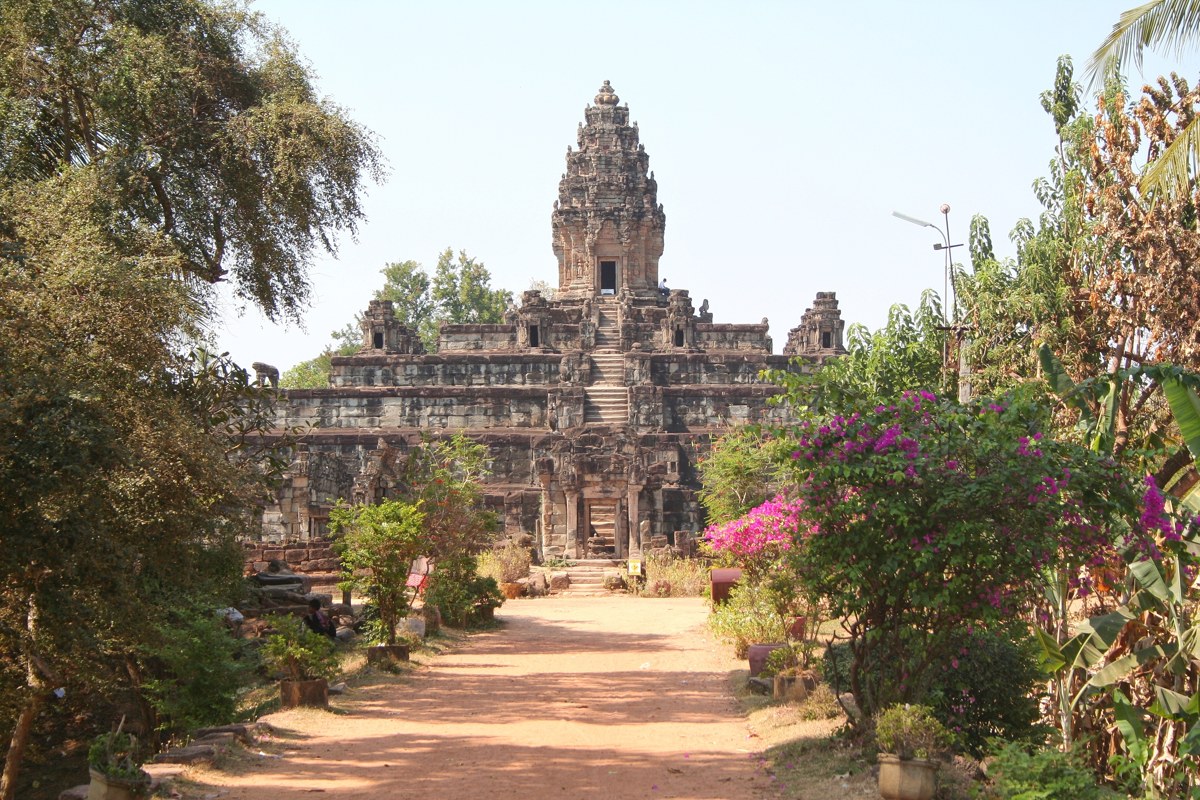
The Bakong temple at Roluos, built under Indravarman I in the late 9th century AD. Photo by a Wikimedia Commons user, 2009, via Wikimedia Commons, CC0, resized.
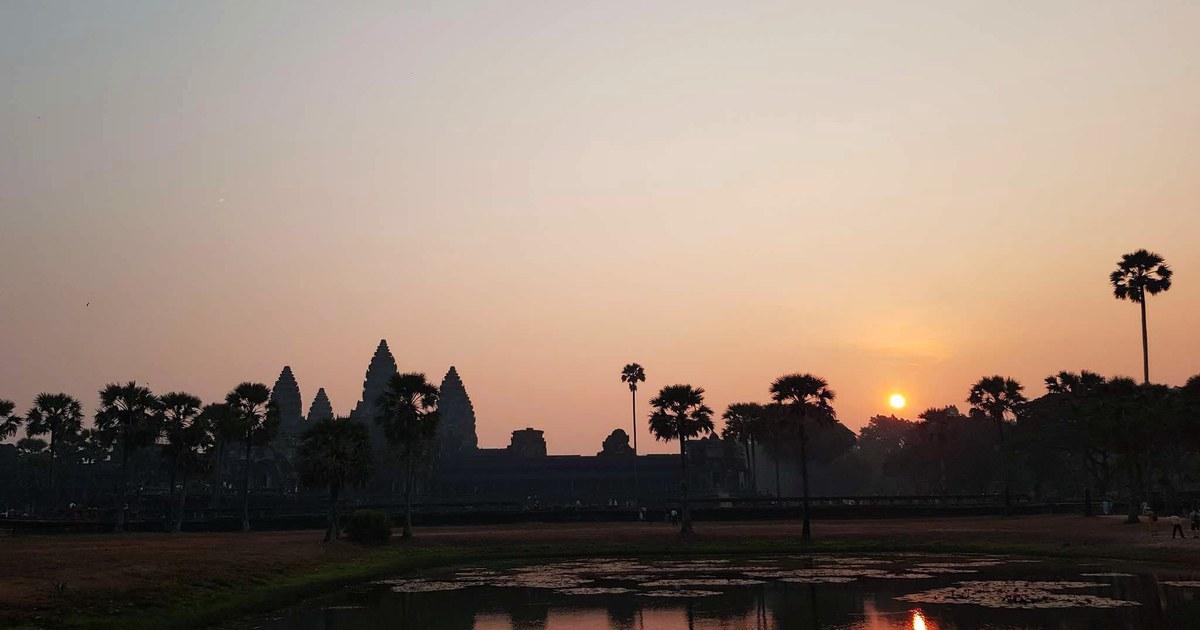
"Looking from the west gate towards the temple at dawn on the equinoxes, the sun is seen to rise just above the central tower," Magli writes. Robert Stencel and colleagues described the effect in the journal Science in 1976. Romain notes that the French scholar Pierre Paris proposed this equinox alignment in 1941.
Romain's own survey went further and identified more than 70 solstice alignments at Angkor Wat and 11 nearby temples, including Bakong and Ta Keo. He argues that if the temples were "microcosmic models of the cosmos," then these alignments tied them to the yearly cycle of the Sun.
Magli also explains why the builders favored the Sun, noting that stars were hard to sight in the humid air of Angkor and that "owing to precession, no “pole star” was available in Khmer times."
The alternative view
Hancock's case rests on matching the positions of temples to the positions of stars. On his own website, the date of 10,500 BC appears only in the Roluos caption, which names Corona Borealis, while the Draco captions for Ta Keo and Phimeanakas give no date. The captions give the pairings without the measurements behind them, and the book, including its chapter titled "Draco," was not read for this check.
Magli's table of monuments lists Phimeanakas with the note "Date and king unsure," so the sources read do not firmly date one of the two Draco temples.
None of the archaeological or astronomical sources read for this check reports a temple plan copied from Draco or from the sky of 10,500 BC, or any building at Angkor from that period. The published work instead finds solar alignments tied to Hindu and Buddhist ideas of the cosmos.
Where this leaves it
Angkor's temples were laid out with real astronomical care, from the equinox sunrise over Angkor Wat to dozens of solstice lines. Romain and other scholars read those plans as models of Mount Meru and of the order of the cosmos.
The claim that the temples copy Draco, or a sky of 10,500 BC, has no support in the archaeological record read for this check. The temples were founded by named kings over about three centuries, and the alignments they share point to the Sun of their own time.
Earlier Ancient Origins coverage looked at how ancient people marked the equinox, including the sunrise over Angkor Wat. Background on the temple is in the Angkor Wat atlas entry.
How we checked this
Read for this check were the Heaven's Mirror page and the Cambodia gallery on Hancock's website, UNESCO's listing, Romain's paper on the website of its publisher, Magli's open access paper and Kak's preprint on arXiv. The 1976 Science paper and the earlier French studies are cited only as reported by Romain and Magli.
Hancock's book was not read, so this check relies on the claims as his own website states them. Earlier Ancient Origins coverage was not a source, and the labels are explained on the evidence standards page.
Sunrise over Angkor Wat, seen across a pond in front of the temple, March 2025. Photo by Martaapue via Wikimedia Commons, CC0 (https://creativecommons.org/publicdomain/zero/1.0/), cropped and resized
By Aris Manus
Claim by claim
- Unverified: The temples of Angkor mirror the Draco constellation. Reason: no study read for this check finds such a plan, Hancock's own website gives no date for his Draco pairings, and the temples were built by known kings centuries apart.
- Established: Angkor Wat was founded by Suryavarman II in the 12th century AD. Reason: Romain and Kak both report it.
- Established: The temples of Angkor were built by different kings between the 9th and 12th centuries AD. Reason: Romain's building record and Kak's dating.
- Established: Seen from the west gate, the equinox sun rises over Angkor Wat's central tower. Reason: Magli and Romain, citing Stencel and colleagues.
- Established: Angkor Wat was dedicated to Vishnu, and later Khmer kings adopted Buddhism. Reason: Magli, Kak and Romain.
Sources
Hancock, Graham, and Santha Faiia (1999). Heaven's Mirror. Author's website, cited for the claim only.
Hancock, Graham. Cambodia: The Temples. Gallery on the author's website, cited for the claim only.
Romain, William F. (2018). Solstice Alignments at Angkor Wat and Nearby Temples: Connecting to the Cycles of Time. Journal of Skyscape Archaeology 4(2), pp. 176 to 200.
Magli, Giulio (2017). Archaeoastronomy in the Khmer Heartland. Studies in Digital Heritage 1(1), pp. 1 to 17.
Kak, Subhash (1999). The Solar Numbers in Angkor Wat. Author's preprint, arXiv.
UNESCO World Heritage Centre. Angkor. World Heritage List, property 668.