
Fact Check verdict:
Atlantis was a real place. Plato is our only source, and no site has been found: Unverified
Atlantis is Plato's invention. Most classicists we consulted think so: Disputed
A continent sank in the Atlantic. Geologists tested this and found no sign of it: Fringe
The Richat Structure in Mauritania. NASA describes it as a natural dome shaped by erosion: Fringe
Thera and the Minoans, Doñana, Malta, other African sites and Antarctica: Unverified
The verdict
In Plato's Timaeus, the Athenian lawgiver Solon visits the Egyptian city of Sais. A priest tells him of an ancient war against a power that "came forth out of the Atlantic Ocean, for in those days the Atlantic was navigable". Verdict: the claim that Atlantis was a real place is Unverified. Plato is our only ancient source, and no site has been found. A literal continent sinking in the Atlantic is Fringe, because geologists have tested that idea and found no sign of it. That Atlantis is Plato's own literary and philosophical creation is Disputed. It is the majority view among the classicists we consulted, though it cannot be proven.
- Atlantis was a real place, as Plato describes it: Unverified.
- Atlantis is Plato's literary and philosophical creation: Disputed. This is the majority view of the classicists we consulted, though it cannot be proven.
- The Thera (Santorini) eruption happened in the Late Bronze Age, in the 17th or 16th century BC: Established. Its exact date: Disputed.
- Minoan Crete and Thera lie behind Plato's story: Unverified.
- A sunken Atlantic continent near the Azores: Fringe.
- Doñana, in south-west Spain, as Atlantis: Unverified.
- The Richat Structure, Mauritania, as Atlantis: Fringe.
What the evidence says
In 1972 the Caltech professor Nicholas Tschoegl, who favored a Minoan Atlantis, admitted that the Atlantis books "are all based on a single literary source: The Platonic dialogues, Timaeus and Critias."
So what does Plato say? In the Timaeus, Critias calls it "a tale which, though strange, is certainly true, having been attested by Solon". The priest describes "an island situated in front of the straits which are by you called the Pillars of Heracles". He says "the island was larger than Libya and Asia put together". After the war came "violent earthquakes and floods", and "in a single day and night of misfortune" the island "disappeared in the depths of the sea". The Critias adds that the sunken island "became an impassable barrier of mud to voyagers".
The frame matters too. The day before, Socrates had described an ideal city. Critias offers to make it real: "The city and citizens, which you yesterday described to us in fiction, we will now transfer to the world of reality." Socrates welcomes the story for "the very great advantage of being a fact and not a fiction".
Benjamin Jowett, whose translation we quote, wrote in his introduction to the Critias, "No one knew better than Plato how to invent 'a noble lie.'" He also noted that the oldest witness to the story after Plato, Crantor, lived a generation later "and therefore may have borrowed it from him".
The classicist Christopher Gill, author of Plato's Atlantis Story, admits the text resists a simple answer. "It's difficult to work out when the story is set, whether it is real or not, whether it could have been real," he said in 2018. Plato's vivid telling, he added, "has driven people over time to actually look for Atlantis even though it absolutely isn't there."
The priest tells Solon, "Nine thousand years have elapsed since she founded yours, and eight thousand since she founded ours, as our annals record." Solon's laws date to about 594 BC. Nine thousand years before that is about 9600 BC.
In 1917 the Yale geologist Charles Schuchert tested the French geologist Pierre Termier's suggestion that the region north of the Azores sank recently. Schuchert concluded that the Azores "are volcanic islands and are not the remnants of a more or less large continental mass". He added that "there are no known geologic data that prove or even help to prove the existence of Plato's Atlantis in historic times." In 1913 the scholar K. T. Frost had said much the same: "It is however geologically certain that no such subsidence in the Atlantic or Mediterranean has taken place in human times".
The alternative view
Frost also made the best real-world case. In a 1913 paper in the Journal of Hellenic Studies, he looked for "a cataclysm in the usual instead of in the literal sense of the word". He meant the sack of Knossos and the fall of Minoan Crete. Plato's island was "the way to other islands". Frost wrote, "These words exactly suit Crete," and added that "they are meaningless if applied to any spot in the Atlantic ocean". He concluded that "the main outlines of the story told by the Priest about Atlantis contain a true account of the closing scenes of Minoan history from an Egyptian point of view". He admitted one difficulty: "Atlantis should be outside, and not inside the Pillars of Heracles".
Tschoegl tells how the volcano entered the story. In 1939 the Greek archaeologist Spyridon Marinatos, digging at Amnissos near Knossos, argued in Antiquity that a vast eruption of Thera lay behind the Minoan collapse. The Greek seismologist A. G. Galanopoulos later linked the Minoans with Atlantis, and Marinatos came to agree. Galanopoulos argued that Plato's figures in thousands "appear too large by a factor of 10". Read 900 years for 9,000 and the disaster falls around 1500 BC, close to the eruption date then accepted of about 1450 BC. Divide Plato's plain of 3,000 by 2,000 stadia by ten and it fits the Plain of Messara on Crete. Galanopoulos put the royal city on Thera itself.
The eruption is real and now closely dated. In 2006 Walter Friedrich and colleagues dated an olive tree "buried alive in life position" by the eruption deposits. They placed the eruption between 1627 and 1600 BC, with 95.4% probability. In 2018 Charlotte Pearson and colleagues used a year-by-year radiocarbon record from calendar-dated tree rings to move the likely date "toward the 16th century BCE". They write that a date "more recent than c.1510 BCE is highly unlikely", though an eruption "in the late 17th century BCE" is not excluded.
Either date leaves a gap to explain. Plato's war falls about 8,000 years before the eruption. The theory reads his numbers as ten times too large and places Atlantis inside the Pillars of Heracles. No ancient text makes the link directly, so it stays Unverified.
Other sites have been put forward. In 2004 Rainer Kühne, writing in Antiquity's Project Gallery, linked Plato's war to the Sea Peoples around 1200 BC. He pointed to two large rectangular features on satellite photos of the Marisma de Hinojos, inside Doñana National Park, one of them 230 by 140 meters, and suggested one "could be a remnant of a temple of Poseidon". His conclusion was cautious: "there is a possibility that the city and society of Atlantis may refer to either Iron Age Tartessos or a Bronze Age culture in the same area of south-west Spain."
Where people have placed Atlantis:
- Thera/Santorini and the Minoans: the best-argued case, from Frost, Marinatos and Galanopoulos. Unverified.
- Southern Spain (Doñana and Tartessos): Kühne's satellite features still await excavation. Unverified.
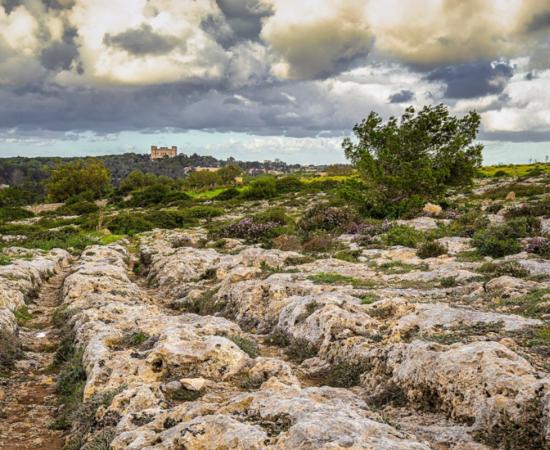
- Malta: a 19th-century theory built on Malta's megalithic temples. Unverified.
- Other African proposals, from Tunisia to the Green Sahara: Plato's sea read as ancient North African lakes and rivers. Unverified.
- The Richat Structure, Mauritania: NASA describes it as about 40 kilometers across and "an uplifted geologic dome", its rings left by uneven erosion. Fringe.
- The Azores and the mid-Atlantic: Schuchert tested a sunken continent in 1917 and found no sign of it. Fringe.
- Antarctica: a civilization now under the ice. Unverified.
Where this leaves it
Plato wrote a story and had his speakers call it true. The Thera eruption happened, and it was big enough to matter. No source we read joins the two. A real Atlantis stays Unverified, and Plato's invention of it stays Disputed. Could any memory of a Bronze Age disaster have reached Plato's Athens a thousand years later, and could it ever be traced in a text that is not his?
How we checked this
We quote Plato in Benjamin Jowett's public-domain translation from Project Gutenberg. The Sources list shows how much of each work we read, including scanned copies and the Friedrich et al. (2006) abstract. Marinatos is reported through Tschoegl, as we read only the opening of his 1939 paper. Links were checked on 20 October 2026. How we label claims: see How we check evidence. For Atlantis alongside Göbekli Tepe and the Sphinx, see our evidence page Göbekli Tepe, the Sphinx and Atlantis: what the evidence says.
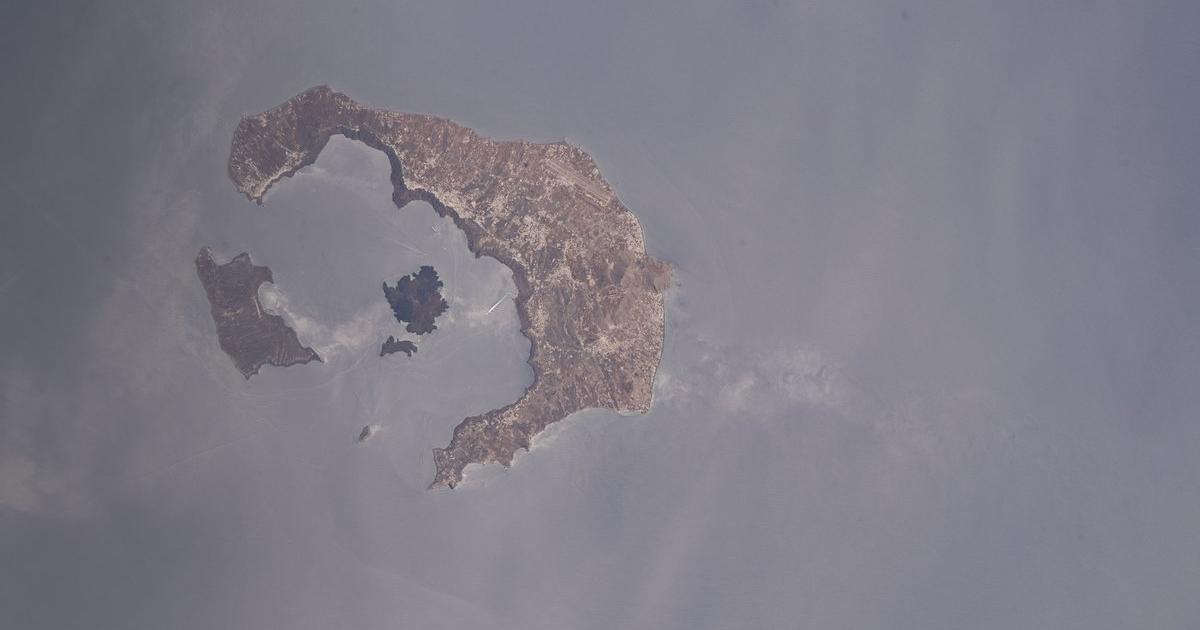
The flooded caldera left by the Bronze Age eruption that the Thera theory of Atlantis rests on. Santorini caldera seen from the International Space Station, Expedition 67, June 2022 (photo ISS067-E-153820). Image: NASA Johnson Space Center, via Wikimedia Commons. Public domain.
By Aris Manus
Sources
- Plato. Timaeus. Translated by Benjamin Jowett. Project Gutenberg eBook 1572. Atlantis passages and Jowett's introduction read.
- Plato. Critias. Translated by Benjamin Jowett. Project Gutenberg eBook 1571. Atlantis narrative and Jowett's introduction read.
- Liverpool University Press (2018). "The 'truth' behind Atlantis: Christopher Gill on Plato's Atlantis Story." Interview, 29 August 2018. Read in full.
- Frost, K. T. (1913). "The Critias and Minoan Crete." Journal of Hellenic Studies 33: 189 to 206. Read in full (scan of the journal volume, Internet Archive).
- Tschoegl, N. (1972). "Atlantis: Cradle of Western Civilization?" Engineering and Science 35 (7), California Institute of Technology, June 1972. Read in full.
- Friedrich, W. L., Kromer, B., Friedrich, M., Heinemeier, J., Pfeiffer, T. and Talamo, S. (2006). "Santorini eruption radiocarbon dated to 1627-1600 B.C." Science 312 (5773): 548. Abstract read.
- Pearson, C. L., Brewer, P. W., Brown, D., Heaton, T. J., Hodgins, G. W. L., Jull, A. J. T., Lange, T. and Salzer, M. W. (2018). "Annual radiocarbon record indicates 16th century BCE date for the Thera eruption." Science Advances 4: eaar8241. Read in full.
- Kühne, R. W. (2004). "A location for 'Atlantis'?" Antiquity 78 (300), Project Gallery: 1 to 4. Read in full.
- Schuchert, C. (1917). "Atlantis and the Permanency of the North Atlantic Ocean Bottom." Proceedings of the National Academy of Sciences 3 (2): 65 to 72. Read in full (scan of the journal issue, Internet Archive).
- NASA Earth Observatory (2022). "The Eye of the Sahara." Image of the Day, 10 July 2022. Read in full.