
Fact Check verdict:
The three main Giza pyramids were laid out to mirror Orion's Belt: Unverified
Egyptian funerary texts link the dead king to Orion: Established
The pyramids were built for Fourth Dynasty kings around 2500 BC: Established
The pyramid layout matches Orion's Belt as it stood in 10,500 BC: Unverified
The southern shaft of the King's Chamber was aimed at Orion's Belt: Disputed
The verdict
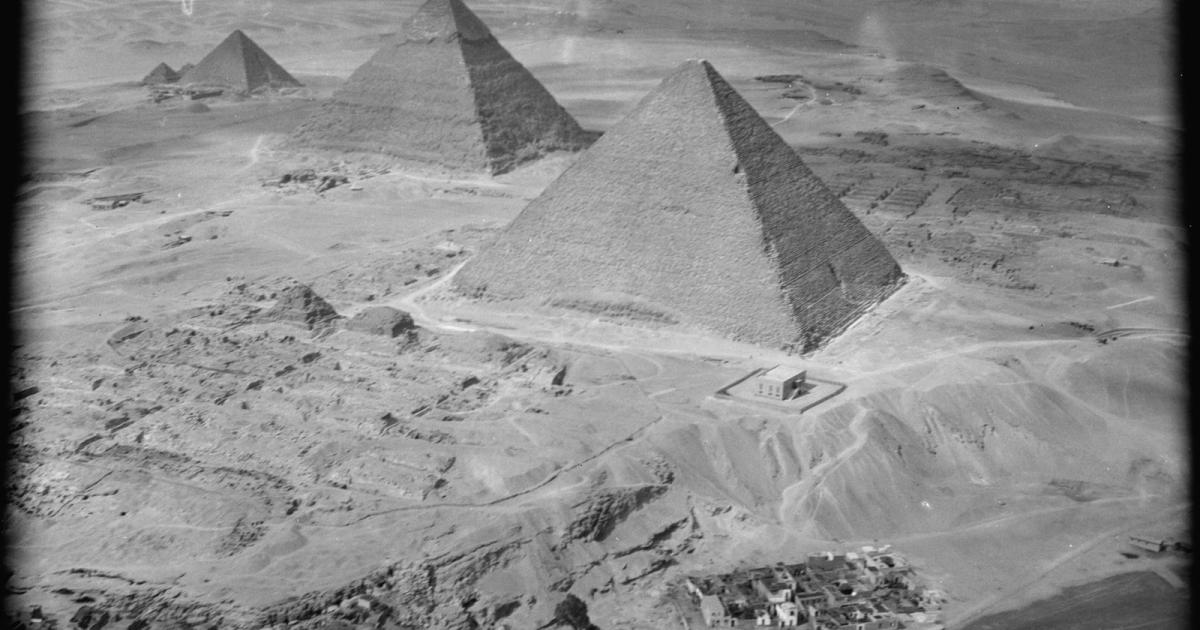
Three pyramids stand in a slightly crooked line on the Giza plateau, and the three stars of Orion's Belt form a similar line in the sky. Since the 1990s, Robert Bauval has argued that the likeness is deliberate and records the sky of 10,500 BC. Did the builders really copy Orion's Belt onto the ground? Verdict: Unverified.
According to the publisher's description of The Message of the Sphinx, the book Bauval wrote with Graham Hancock, the pyramids "are in fact a precise map of the three stars of Orion's belt". The likeness is real, yet the measurements and the texts fail to show that anyone planned it, and the 10,500 BC date fails the astronomers' checks.
- Unverified: The three main Giza pyramids were laid out to mirror Orion's Belt. Reason: the pattern looks similar, yet no Egyptian text describes such a plan, and John Legon found the match works only with Orion upside down.
- Established: Egyptian funerary texts link the dead king to Orion. Reason: the Pyramid Texts tie the king to Sah, usually rendered as Orion, and critics of the theory accept this.
- Established: The pyramids were built for Fourth Dynasty kings around 2500 BC. Reason: a radiocarbon program supports the historical dates, and Kate Spence dated the start of the Great Pyramid from its star alignment.
- Unverified: The pyramid layout matches Orion's Belt as it stood in 10,500 BC. Reason: astronomer Tony Fairall measured 38 degrees for the pyramid line against about 47 to 50 degrees for the Belt in that year.
- Disputed: The southern shaft of the King's Chamber was aimed at Orion's Belt. Reason: Fairall judged the shaft alignments intentional, while Legon argued that geometry and ventilation set their angles.
What the evidence says
Between 1984 and 1995, a team led by Georges Bonani collected over 450 organic samples from Old and Middle Kingdom monuments, mostly charcoal and plant matter from mortar and mud brick. Their 2001 paper in Radiocarbon notes that "The Giza pyramids are memorials to 4th Dynasty rulers whose reigns are placed by egyptologists around 2500 BC".
The first phase of that program was funded by the Edgar Cayce Foundation, whose interest "rested on a hypothesis offered by Cayce that the Giza pyramids dated to 10,500 BC". The results placed the monuments in the Old Kingdom instead, though the two sets of dates agreed only approximately.
Kate Spence reached the same era from the stars. In Nature in 2000, she argued that the Egyptians aligned their pyramids to north "by using the simultaneous transit of two circumpolar stars". Modeling the precession of those stars, she wrote, "yields a date for the start of construction of the Great Pyramid that is accurate to ±5 yr".
The star religion behind the theory is real, since the Pyramid Texts tie the dead king to Sah, a name usually rendered as Orion. One spell quoted by Bauval reads "O King, you are this great star, the companion of Orion". John Legon, a critic of the theory, accepts the link and argues only that Sah was first a single star, Rigel.
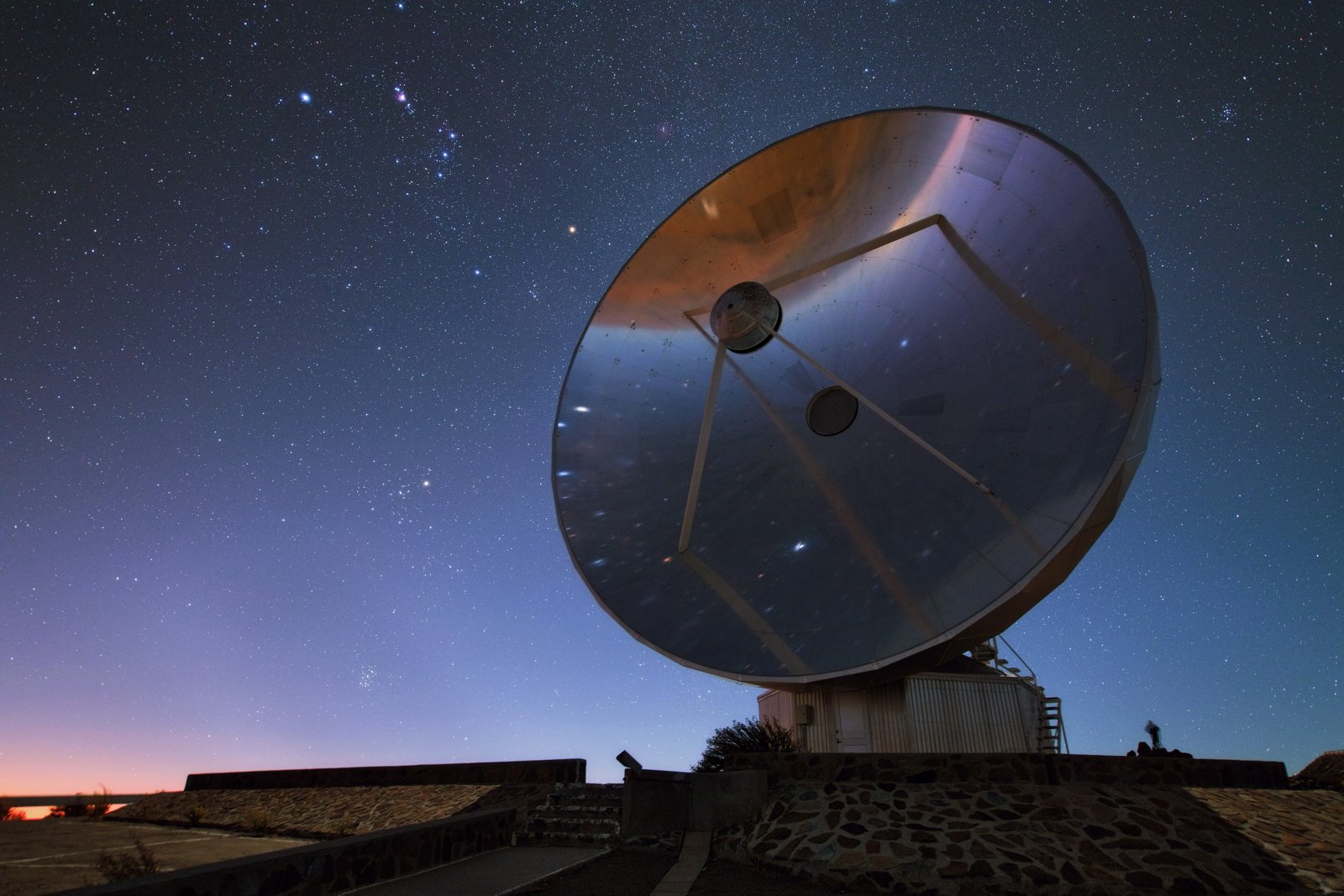
The constellation Orion rising over La Silla Observatory in Chile, with the three stars of Orion's Belt at its center. (Y. Beletsky (LCO)/ESO/CC BY 4.0)
The layout is the problem. Writing in Discussions in Egyptology in 1995, Legon found that "Bauval has had to turn Orion upside-down, reversing the positions of the stars from north to south". Mintaka is offset north of the line through the other Belt stars, while the smallest pyramid, built for Menkaure, is offset south of the line through the other two pyramids.
Fairall credits astronomer Ed Krupp with noting that the pyramid line bends north while the Belt bends south. Legon added that around 2500 BC, the Belt stars "diverged by more than 30º from the corresponding alignment on the ground".
Bauval's wider plan links outlying pyramids at Abu Roash and Zawiyet el-Aryan to other stars of Orion, yet Legon found the real ground distances ran about two to two and a half times what the star map required. "Anything less resembling a correlation would be hard to imagine," Legon concluded.
Legon also points out that "There is, after all, no evidence from the Pyramid Texts or elsewhere to support the idea that different pyramids of the Fourth Dynasty might be equated with different stars of the constellation of Orion". He rejects the brightness argument too, since the three stars "appear almost equally bright" while the third pyramid has a tenth of the Great Pyramid's volume.
Bauval's answer to the angle problem was precession, the slow wobble of the Earth's axis that shifts star patterns over about 26,000 years. Testing it in 1999, Fairall of the University of Cape Town found that "the line of the two outer pyramids is set 38 degrees from north", while the Belt in 10,500 BC sat at close to 50 degrees, or 47 by a simpler calculation.
Fairall added that the course of the Nile in that era is not known with any accuracy, so its supposed fit with the Milky Way cannot be checked, and he judged the astronomical case for the early date "very thin". His figures leave a gap of roughly 9 to 12 degrees in the very epoch chosen to close it.
The alternative view
In a December 2000 essay on his website, Bauval replied that the tilt of the Belt "is very difficult to measure within an accuracy of less than +/- 5 degrees" with simple instruments in the dark. That margin is still smaller than the gap Fairall reported.
In another essay, Bauval writes that the sky of 10,500 BC "does not, of course, mean that the monuments themselves were constructed in that remote epoch". In his view the builders wanted "to define the 'beginning' and the cosmic order of the world", a plan that would need a knowledge of precession no surviving text records.
The strongest academic support comes from Vincenzo Orofino, a physicist at the University of Salento. In an arXiv paper submitted on September 28, 2011, he reported a linear correlation between the heights of the pyramids and the brightness of the Belt stars, and concluded that the theory "is not incompatible with what expected for the stars of the Orion Belt".
Following Bauval, Orofino explains the reversal as a map drawn with south at the top. His result is indicative rather than conclusive, because it shows that a match is possible rather than planned. Even he judged that the early date, which Bauval had since moved to 11,500 BC, "if not wrong, is at least very unlikely".
The Great Pyramid's air shafts are the other pillar. Fairall accepted that around 2500 BC the shafts aimed at Thuban, Orion's Belt, Sirius and Kochab, "clearly intentionally and not coincidentally". Legon replied that "the geometry of the air-shafts is entirely a function of the meridian cross-section of the Great Pyramid" and that they were built for ventilation. Either way, a 2500 BC alignment fits the known builders and does nothing for 10,500 BC.
Where this leaves it
The Pyramid Texts show that Old Kingdom kings hoped to join Orion in the sky, and the Giza pyramids were built for Fourth Dynasty kings around 2500 BC. The leap to a deliberate star map remains less secure than its fame suggests, because the pattern fits only when the constellation is flipped and the angle fits only with figures that Fairall's calculations contradict.
The 10,500 BC date fares worse, since Fairall's figures leave a gap of several degrees, Orofino calls the date very unlikely, and radiocarbon and star alignments place construction in the third millennium BC. The headline claim stays Unverified until a text, a survey plan or an independent measurement shows the builders meant to copy Orion's Belt.
How we checked this
Read in full for this check: Legon's 1995 paper and its 2002 web reprint, Fairall's 1999 article in a web reprint, Orofino's arXiv paper and two essays on Bauval's website. The Bonani paper was read in its first pages and abstract, the Spence paper as an abstract only, and The Message of the Sphinx through its publisher's description.
Krupp's point is cited as reported by Fairall. No interviews were conducted, and earlier Ancient Origins coverage was not used as a source. Every quote was checked against a saved copy on October 24, 2026.
How we label claims: see How we check evidence.
More in this series: Göbekli Tepe, the Sphinx and Atlantis: what the evidence says.
The three main pyramids of Giza from the air in 1932, with the Great Pyramid of Khufu in front, then Khafre's pyramid and the smaller pyramid of Menkaure. G. Eric and Edith Matson Photograph Collection, Library of Congress, via Wikimedia Commons. Public domain
By Aris Manus
Sources
- Legon, John A. R. (1995). The Orion Correlation and Air-shaft Theories. Discussions in Egyptology 33: 45 to 56. Digital Giza scan. Read in full, with the 2002 web reprint.
- Fairall, Anthony (1999). Precession and the layout of the Ancient Egyptian pyramids. Astronomy and Geophysics 40(3). Read in full in the author's web reprint.
- Bonani, Georges, et al. (2001). Radiocarbon dates of Old and Middle Kingdom monuments in Egypt. Radiocarbon 43(3): 1297 to 1320. First pages and abstract.
- Spence, Kate (2000). Ancient Egyptian chronology and the astronomical orientation of pyramids. Nature 408: 320 to 324. Abstract only.
- Orofino, Vincenzo (2011). A quantitative astronomical analysis of the Orion Correlation Theory. arXiv preprint 1109.6266. Read in full.
- Bauval, Robert G. (2000). The Giza Pyramids as a Stellar Representation of Orion's Belt. Author's website, December 2000. Read in full.
- Bauval, Robert G. The Anchor of the World. Author's website. Read in full.
- Hancock, Graham, and Robert Bauval. The Message of the Sphinx. Penguin Random House book page. Publisher's description only.