
Sometime between AD 250 and 402, according to radiocarbon dating, a woman was laid to rest in Bats'ub Cave, high in the rugged Maya Mountains of southern Belize. Over the next few centuries, people returned to her grave and left offerings of human teeth, and ancient DNA now suggests that many of those teeth came from members of elite families whose other remains lay in tombs far away.
The findings are set out in a preprint posted on bioRxiv by a team led by Esther Brielle and David Reich of Harvard University and Keith Prufer of the University of New Mexico. A preprint has not passed peer review, and the researchers declined to talk to journalists until it does, Lizzie Wade reported for Science on October 23, 2026.
According to the abstract, "elite lineages created ancestors from their deceased relatives in geographically expansive ways." In other words, the same people were buried in two places, at home and in a distant cave.
A woman at the center of the cave
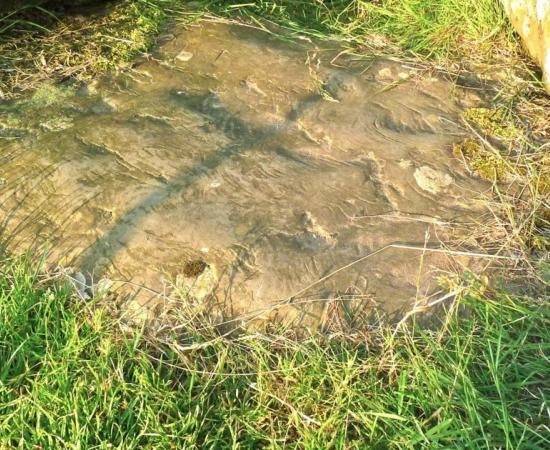
The preprint describes the primary burial at Bats'ub as an adult female placed in a shallow pit between 20 and 25 centimeters deep. Her head had been removed, and in its place lay the lower half of an undecorated vessel holding a single jade bead. Fragments of a poorly preserved cranium, which the authors say was possibly her own, were found near the pelvis.
A bowl with five cacao seeds had been set upside down above her pelvis. At least 144 teeth lay in a cluster around the pelvis, with a smaller group near her upper spine and others scattered through the burial, "for a total of 226 teeth," the authors write. Science gives the count as more than 226, and Archaeology Magazine reports more than 200.
Dating of her tibia gives a median of AD 331. The grave goods, the authors argue, "are appropriate for a royal individual in an underworld setting." They include a bowl painted with a corpse whose detached head rests on its abdomen, a vessel decorated with a feathered hummingbird-serpent, and a small rosewood stool that the team describes as "the first of its kind found in a mortuary context."
The ancient Maya saw caves as entrances to the underworld, Science explains, and as places where elites could communicate with ancestors and deities. Other Belize caves held Maya ritual deposits too, among them Actun Tunichil Muknal, and in the north the Maya also linked sacred cenotes with the underworld.
Who did the teeth belong to?
The team screened 487 tooth and bone samples and obtained genome-wide data from 430 of them. Of these, 341 samples representing 107 individuals came from elite and non-elite tombs at Muklebal Tzul, a Classic period center in the Maya Mountains. Archaeology Magazine spells the site Muklebal Tsul, but the preprint and Science use Tzul.
The teeth in Bats'ub Cave came from at least 30 people. Of those 30, the preprint reports, 24 also had remains in the Plaza Tomb at Muklebal Tzul. The authors call this "far more overlap than expected by chance," and they back the statement with a one-sided Fisher exact test giving a probability of 4.9 in 10 million, along with a simulation test that gives a weaker result of 0.04.
The two places are 26.5 kilometers (about 16.5 miles) apart, on opposite sides of the Maya Mountains. Archaeology Magazine rounds this to some 16 miles, while Science says more than 26 kilometers. The preprint's route model gives a walking time of six to seven hours, but the authors add that, given the mountainous terrain, "the journey would take more than one day."
Why carry remains so far? The preprint notes that there are many caves closer to Muklebal Tzul, so the choice of Bats'ub seems to have been deliberate. "Bones were still family," Prufer said in a presentation at the Society for American Archaeology meeting in May, as quoted by Science.
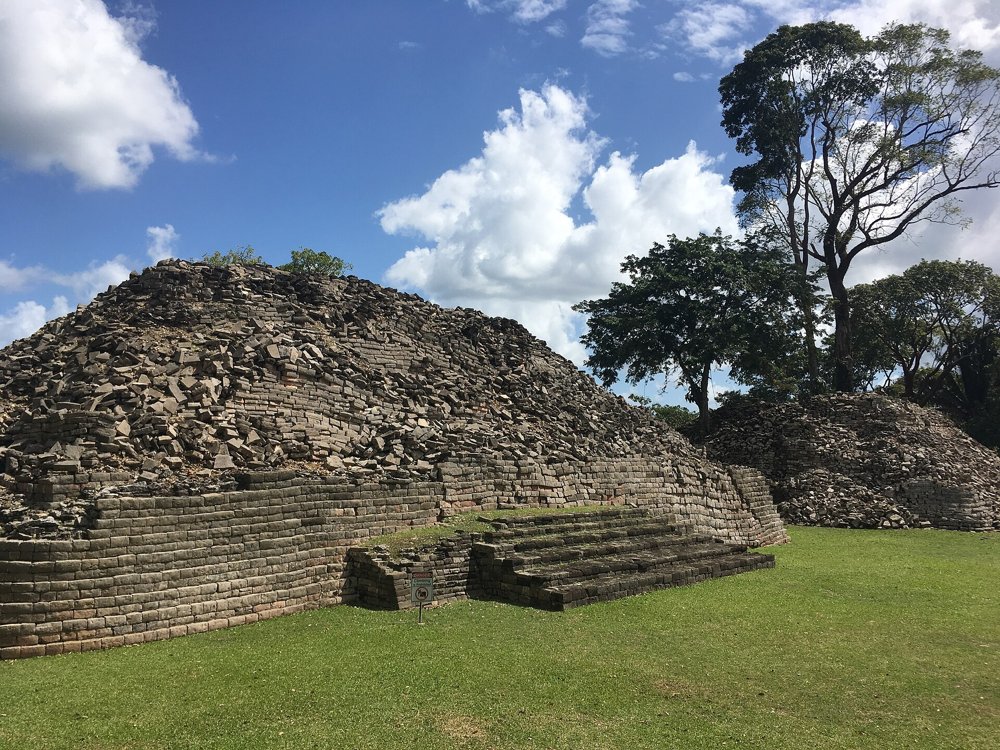
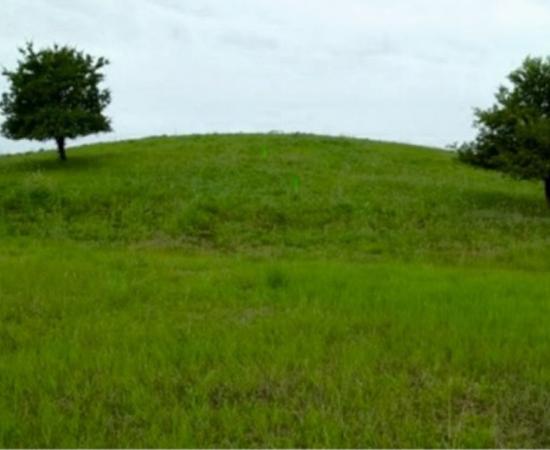
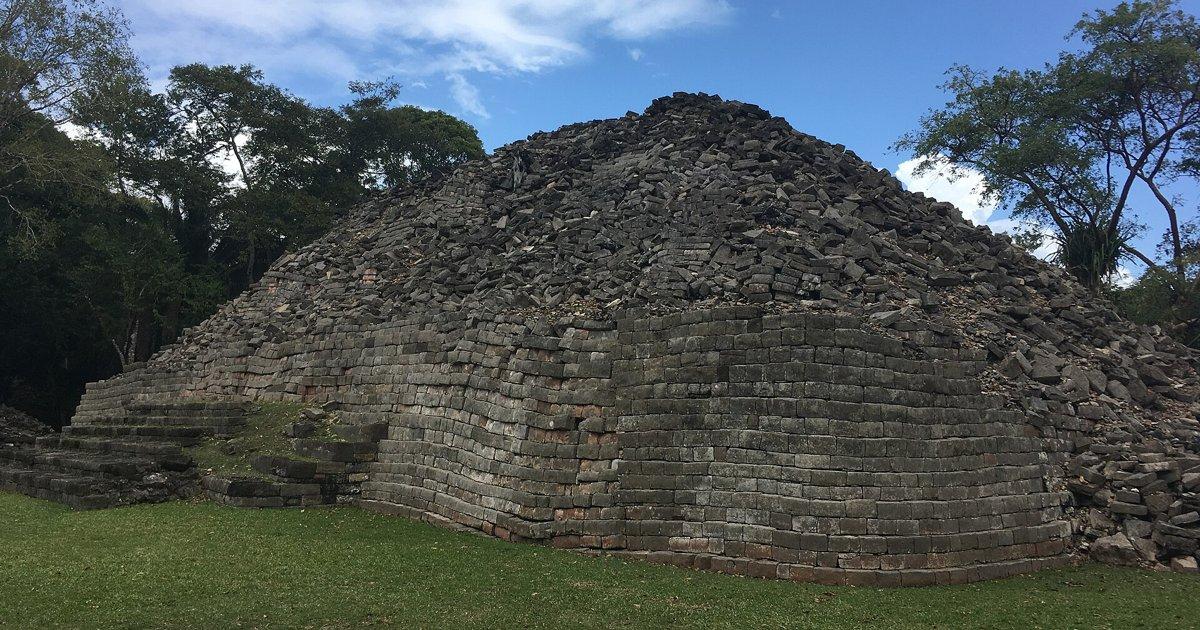
Stone mounds at Lubaantun, another Maya archaeological site in Belize. Lubaantun is not part of the study, and the image is shown only to give a sense of Maya architecture in the country. Image: Kaldari via Wikimedia Commons, CC0.
An honor reserved for elite families
The researchers reconstructed three family lineages spanning four, six and eight generations. The two larger ones were buried in elite tombs, while a third lineage came from non-elite burials. According to the preprint, 25 of 89 individuals from elite tombs had remains in more than one site, against none of 18 from non-elite tombs.
None of the cave teeth were linked to the non-elite lineage. Science concludes that being buried in two places "was a privilege reserved for the powerful," a reading consistent with the preprint's numbers. Elsewhere in the Maya world, archaeologists have studied elite burials such as the tombs of the Snake dynasty kings, though those finds come from a different part of the Maya world.
The woman herself was not closely related to anyone in the study. The team found no first to third degree relatives of her at any site, which they say is not unexpected because she predates the earliest reconstructed lineage member by 104 years. Instead, she is distantly related, at the fourth degree or beyond, to several individuals buried in the Plaza Tomb and in the cave. The authors interpret her as "an ancestor or ancestor-like relative whose real or fictive descendants venerated her with offerings of their teeth."
The deposits seem to have built up over a long time, although two teeth found away from the main caches date to between 45 BC and AD 125 and between AD 26 and 219, earlier than the woman herself. At the other end, the latest dated tooth has a lower bound of AD 666. The authors favor a series of visits over the following centuries rather than a single funeral.
What the DNA says about Maya families
The genetic data also bear on what Keith Eppich of Tyler Junior College calls a "heated debate about Maya social structure," Science reports. Individuals who link earlier and later generations within the elite lineages are disproportionately male, and the authors write that their tests "support patrilineal descent and patrilocal residence, with outside females marrying into the lineage." Being represented in the cave was not linked to sex. Some archaeologists have argued that elite Maya houses included kinship beyond genetic ties, Science notes, and the Muklebal Tzul data instead fit descent through the male line.
Several questions remain open, and Science notes that the researchers do not specify whether the teeth were removed before or after death. The two statistical tests on the overlap also differ in strength, a point for peer reviewers.
Working with present-day communities
The preprint states that the skeletons were excavated and analyzed under permits from the Belize Institute of Archaeology and the Belize Forest Department. The team worked within the Bladen Nature Reserve with the Ya'axché Conservation Trust and invited Indigenous leaders and residents from nearby villages to public consultations in 2016, 2018, 2020, 2022 and 2024.
According to the preprint, community members asked for future updates and for copies of all results in English, with translations into Mopan and Q'eqchi'. For now, the teeth in Bats'ub Cave look less like a puzzle than a long record of families honoring someone they counted as their own, pending peer review.
A stepped stone structure at Lubaantun, a Maya archaeological site in Belize. It is not Muklebal Tzul or Bats'ub Cave and is shown only for regional context. Image: Kaldari via Wikimedia Commons, CC0.
By Aris Manus
Sources
- Brielle, E. S. et al., including Reich, D. and Prufer, K. M. 2026. Buried in two places: Lineages from elite Maya tombs also found in distant caves. bioRxiv preprint, not peer reviewed. https://doi.org/10.64898/2026.06.07.724338
- Wade, L. October 23, 2026. Stash of hundreds of human teeth reveal surprising Maya burial practice. Science. https://www.science.org/content/article/stash-hundreds-human-teeth-reve…
- Archaeology Magazine. November 3, 2026. Teeth Found in Belize Cave Burial Linked to Maya Elites. https://archaeology.org/news/2026/11/03/teeth-found-in-belize-cave-buri…