
For most of the last century, the answer to where Stonehenge's Altar Stone came from seemed settled, and then it changed twice. First it was Wales and then it was Scotland, and a newly published study in the Journal of the Geological Society now says that the evidence does not yet point to any one place with confidence.
The paper, led by Duncan Pirrie of the University of South Wales, does not reject the idea that the stone came from the north. What it does is test that idea against far more evidence than before, and much of north-east Scotland does not pass the test.
A stone unlike its neighbors
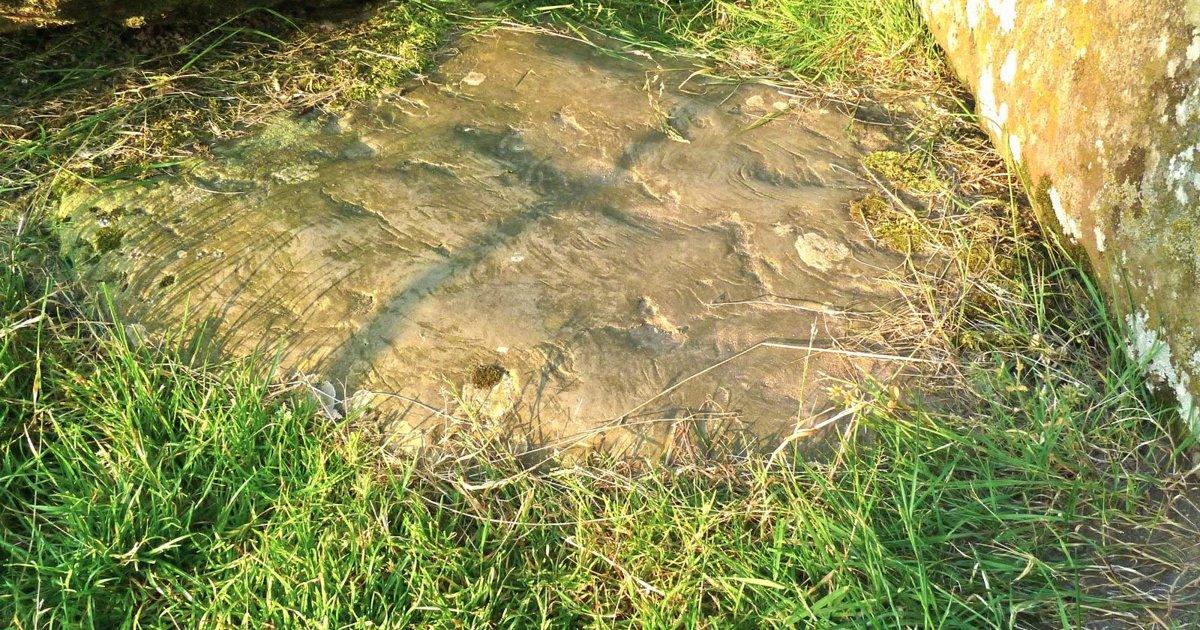
The Altar Stone is a slab of fine-grained sandstone, measuring 4.9 by 1 by 0.5 meters and estimated to weigh six tonnes. It lies flat at the heart of the monument, pinned beneath two fallen sarsen stones. According to the new paper, there is no evidence as to whether it ever stood upright, or when it became part of Stonehenge at all.
It is easy to lump it in with the rest, but it is neither a sarsen nor, in the view of the researchers, a true bluestone. Most bluestones can be linked to outcrops in the Mynydd Preseli area of west Wales, about 225 km from Stonehenge. The Altar Stone is larger than any of them and, unlike most of them, it is a sandstone that was never altered by heat and pressure. For that reason, Richard Bevins and colleagues proposed in 2023 that it should no longer be counted as a bluestone.
From Wales to Scotland
In 1923, the geologist Herbert Thomas proposed a source in the Old Red Sandstone of west Wales, partly on the assumption that the Altar Stone belonged with the bluestones. The new paper notes that this view "remained unchallenged for over 90 years". The University of South Wales puts the figure at more than a century, while Bevins speaks of "almost a century".
The Welsh idea fell in 2020, when Bevins and his co-authors showed in the Journal of Archaeological Science that the stone could not have come from west Wales. Later work, the new paper adds, ruled out the wider Anglo-Welsh Basin as well. A study of 2024 then excluded Mainland Orkney.
That same year, a team led by Anthony Clarke published dated grains of zircon, apatite and rutile from museum samples in Nature. They reported a "remarkable similarity" to the Old Red Sandstone of the Orcadian Basin in north-east Scotland, at least 750 km away by their reckoning. A further study, by Clarke and colleagues in the Journal of Quaternary Science, named Caithness as the closest match on zircon ages and gave the distance as about 700 km. The Ancient Origins report on the Scottish result and the Ancient Origins fact check on the Welsh and Scottish sources describe where the case stood before this paper appeared.
Testing a stone that cannot be sampled
The problem with the Altar Stone is that nobody is allowed to chip it, and the paper is blunt about this, stating that "the in situ Altar Stone cannot be sampled". So the team worked in two ways, studying the stone where it lies and studying pieces of it taken long ago.
At Stonehenge, they studied the exposed patches with Raman spectroscopy and with portable X-ray fluorescence, which they ran on July 6, 2021, after a night of heavy rain, and again on July 19, 2022, after three weeks of hot, dry weather. Both sessions ran between 5 and 9 in the morning, and no new drilling or cutting was involved.
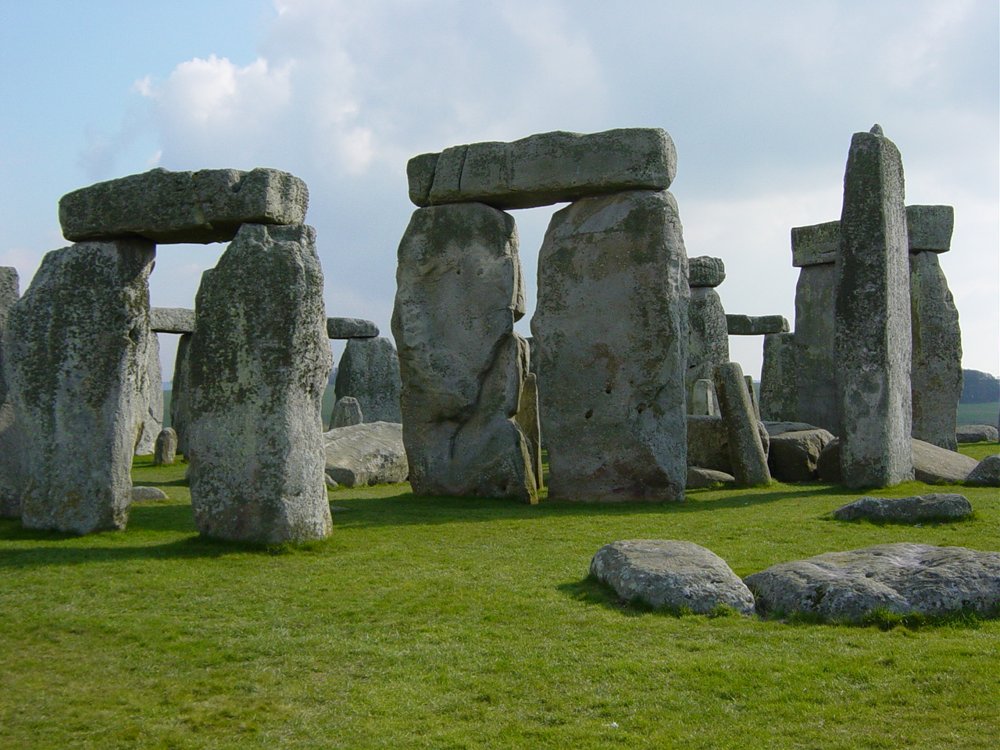
A closer view of the stones at Stonehenge, photographed in March 2004. The sarsens shown here are a different rock from the sandstone Altar Stone. Photo via Wikimedia Commons, public domain.
The museum side of the work rests on eight fragments identified with high confidence as coming from the Altar Stone. One was taken from its base during an excavation in 1844. Others were excavated by William Hawley in 1920, collected by Cunnington in 1884, or recovered in a dig in 2008. From these, the team built a profile of the stone's minerals, chemistry, clays and isotopes.
What the profile shows
The stone carries a high level of barium, averaging 2,758 parts per million, which the authors trace to a fine cement of the mineral baryte. It also contains chrome spinel among its heavy minerals. According to the paper, that mineral "would thus appear to exclude West Wales, but also much of the Orcadian Basin" as source areas.
The clays point the same way, and the paper reports that a key measure of the clay minerals reaches about 20% in the Altar Stone, compared with values of less than 10 in Caithness and Orkney. On that basis, the authors write, Caithness and Orkney are excluded as sources, which cuts against the leading candidate named by the zircon work.
None of this sends the search back to Wales, and the authors accept that the earlier grain dating supports a Laurentian source for the heavy minerals, meaning rocks of the ancient northern landmass that now forms much of Scotland. They also judge an Old Red Sandstone origin more likely than a younger Carboniferous one. The paper rules out the Southern Uplands on other grounds, but there are almost no modern heavy mineral data from the Old Red Sandstone that stretches from the Scottish Midland Valley to the Anglo-Welsh borderland. On the heavy mineral evidence, those areas therefore remain possible.
The conclusion of the paper is careful and plainly worded. "To date, no outcrop area of the ORS examined can be shown to have the same suite of lithological characteristics as documented from the Altar Stone," the authors write, adding that its provenance "has yet to be determined with confidence."
What the researchers say
Pirrie said in a university statement: "This is the most comprehensive geological investigation of the Altar Stone ever undertaken." He went on to say: "So far, none of the locations examined have the same set of characteristics as the Altar Stone. That tells us the search is not over, but we are now far better equipped to focus on the areas most likely to yield an answer."
Nick Pearce of Aberystwyth University, a co-author, framed the result as progress rather than a setback. "In a geological detective story such as this, ruling out potential source areas is just as important as identifying new ones," he said. Bevins added that the study "significantly refines the search by identifying the specific geological characteristics we need to look for".
The paper also offers a quiet warning to anyone tempted by a single neat test. The stone's sandstone type is "not particularly uncommon within the UK geological record", the authors note, and "utilizing one characteristic alone may lead to an incorrect interpretation."
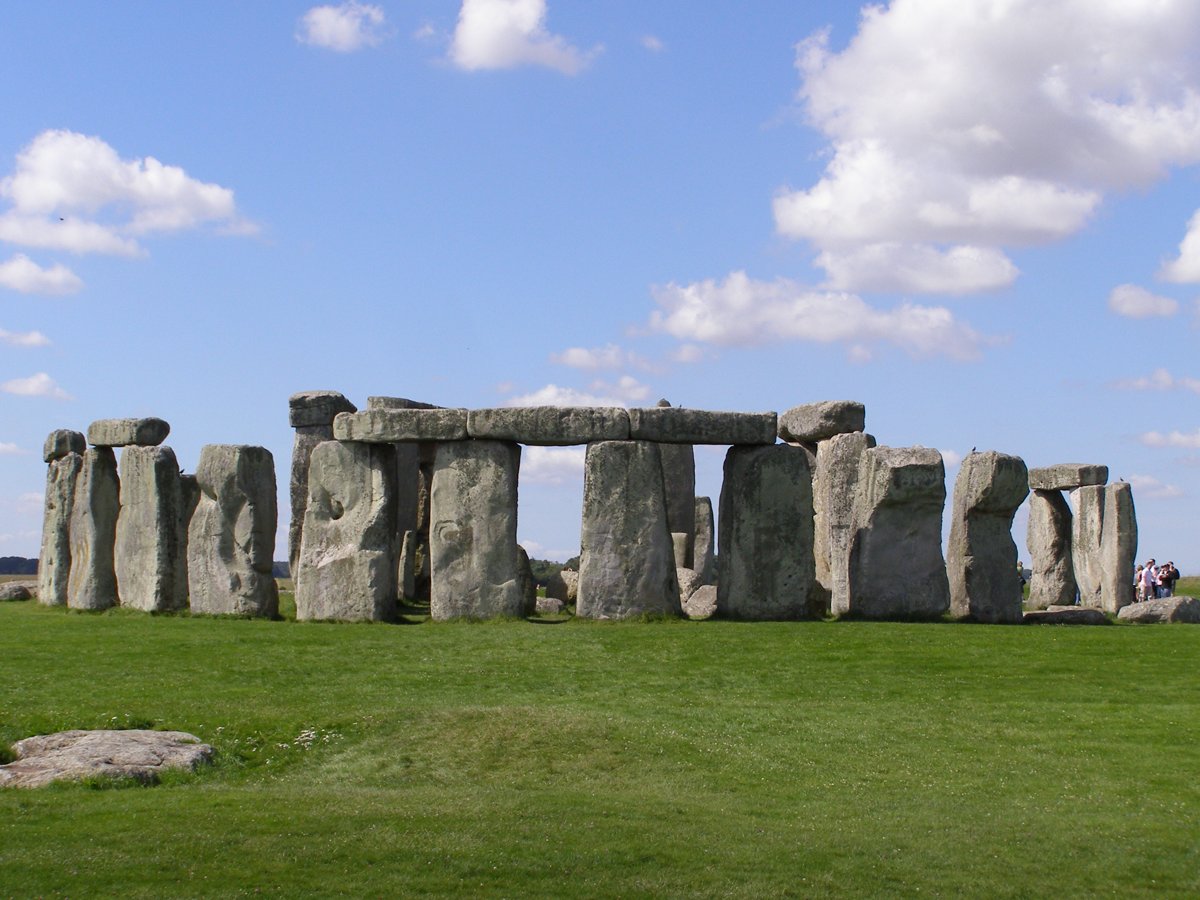
Stonehenge on Salisbury Plain, where the monument was built in phases between about 3000 and 1600 BC. Photo: garethwiscombe, via Wikimedia Commons, CC BY 2.0.
A long way, however it came
If the source does lie in the north, the stone still made a long journey. The Journal of Quaternary Science study, whose abstract tested ice flow models against the sandstone evidence, concluded that glaciers "alone cannot account for the final emplacement on Salisbury Plain". It added that, even under a glacially assisted scenario, "substantial anthropogenic transport would have remained necessary." That fits other work on the sand grains of the Stonehenge area and on the quarrying of the Welsh bluestones, which point to people, not ice, moving the smaller stones.
How and when the Altar Stone traveled, and why anyone would carry a six tonne slab so far, are questions the new paper does not try to answer. For now, it offers something more modest and more useful, a detailed fingerprint of the stone that any future candidate outcrop will have to match.
The Altar Stone lies flat at the center of Stonehenge, partly covered by two fallen sarsens. Only three small patches of one surface can be seen. Photo: The Stones of Stonehenge, via Wikimedia Commons, CC BY 4.0.
By Aris Manus
Sources
- Pirrie, D., Bevins, R.E., Ixer, R.A., Pearce, N.J.G. et al. 2026. Searching for the origin of the Stonehenge Altar Stone. Journal of the Geological Society, 183(6). https://doi.org/10.1144/jgs2026-090
- University of South Wales. November 5, 2026. Press release on the Altar Stone study. https://www.southwales.ac.uk/news/2026/november/mystery-origin-of-iconi…
- Clarke, A.J.I., Kirkland, C.L., Bevins, R.E., Pearce, N.J.P., Glorie, S. and Ixer, R.A. 2024. A Scottish provenance for the Altar Stone of Stonehenge. Nature, 632, 570-575. https://doi.org/10.1038/s41586-024-07652-1
- Clarke, A.J.I., Veness, R.L.J., Kirkland, C.L. et al. 2026. From highlands to henge. Journal of Quaternary Science, 41, 888-895. https://doi.org/10.1002/jqs.70080
- Bevins, R.E., Pirrie, D., Ixer, R.A. et al. 2020. Constraining the provenance of the Stonehenge 'Altar Stone'. Journal of Archaeological Science, 120, 105188. https://doi.org/10.1016/j.jas.2020.105188