
The desolate, wind-swept desert of the Paracas Peninsula on the southern coast of Peru holds one of the most enduring mysteries of the ancient world. In 1928, the renowned Peruvian archaeologist Julio Tello made a staggering discovery beneath the harsh sands. He unearthed a massive and complex graveyard, a sprawling necropolis containing hundreds of elaborate mummy bundles. While the intricate textiles wrapping the dead were marvels of ancient craftsmanship, it was the skeletal remains hidden within that would capture the world's imagination.
Tello had discovered the remains of the Paracas culture, a civilization that flourished from approximately 800 BC to 100 BC. But the skulls of these individuals were profoundly unusual. Over three hundred crania were unearthed, displaying extreme, sweeping elongation that radically altered the natural shape of the human head. For nearly a century, these enigmatic remains have sparked fierce debates, inspiring fantastical theories of extraterrestrial visitation and unknown hominid species.
- Initial DNA analysis of Paracas elongated skull released
- How DNA Testing Revealed European Ancestry in Elongated Skulls
Anatomy of an Anomaly: Beyond Human Limits?
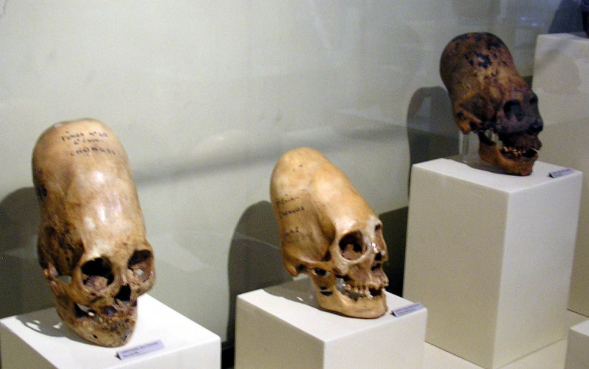
A slightly wider shot showing three actual Paracas elongated skulls lined up in the Museo Regional de Ica. It provides a great sense of scale and proves this wasn't an isolated anomaly. (Jonski/CC BY-SA 4.0)
The sheer physical presence of the Paracas Skulls is startling. When compared to a standard human cranium, the morphological differences are immediately apparent and deeply perplexing. Proponents of alternative history often point out that some of these skulls possess a cranial capacity up to 25 percent larger than a conventional human head. Furthermore, the bone density and overall weight of certain specimens are reported to be significantly heavier than average.
These startling volumetric anomalies are the primary reason the Paracas Skulls have become central to "ancient alien" hypotheses. Critics of the mainstream archaeological narrative argue that while you can alter the shape of a skull through mechanical pressure, you cannot fundamentally change its total volume or mass. Additionally, some researchers have noted the apparent absence of a sagittal suture, the connective tissue joint that runs down the center of the skull, in some of the most extreme Paracas specimens.
These anatomical quirks have led to bold declarations that the beings buried on the Peruvian coast were not entirely human. The position of the foramen magnum, the opening at the base of the skull where the spinal cord attaches, has also been cited as anomalous. In some Paracas skulls, this opening appears to be positioned further back than in typical humans, suggesting a completely different center of gravity and, consequently, a unique method of bipedal locomotion.
The Science of Artificial Cranial Deformation
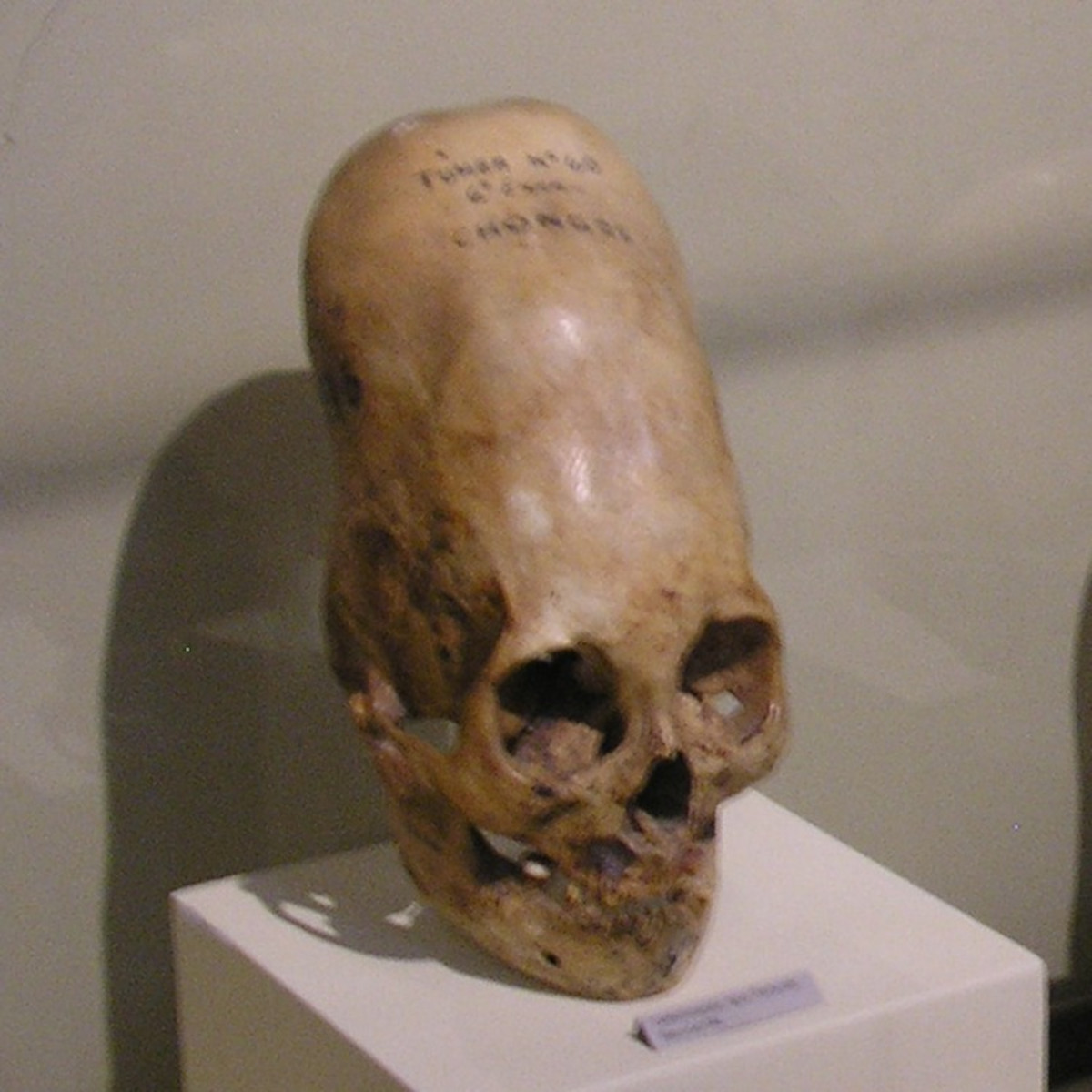
Another angle of the elongated skulls at the Regional Museum of Ica, showing the distinct shape of the cranial vault. (CC BY-SA 4.0/Marcin Tlustochowicz)
Despite the sensational claims of extraterrestrial origins, the broader scientific community provides a thoroughly terrestrial, culturally rooted explanation. The extreme shapes seen in the Ica Museum specimens are widely recognized by bioarchaeologists as the result of artificial cranial deformation. This intentional body modification practice was astonishingly common across various ancient global cultures, from the Huns in Eurasia to the Maya in Mesoamerica.
In the ancient Andes, artificial cranial deformation was a highly formalized practice. According to foundational studies in geometric morphometrics, the process began shortly after birth. An infant's skull is highly pliable, as the cranial plates have not yet fused. The Paracas people would bind a newborn’s head between wooden boards, using tight woolen textiles to direct the growth of the bone upward and backward.
This extreme and arguably painful process was not a random act of cruelty, but a deeply significant cultural tradition. Intentional cranial modification served as a potent, visible marker of identity and social status. In the highly stratified Paracas society, an elongated head was a permanent crown, instantly identifying the individual as a member of the ruling elite or a specific noble lineage. It was a physical manifestation of power and divine connection, literally separating the nobility from the common populace.
Controversial DNA Claims: "Not Human"
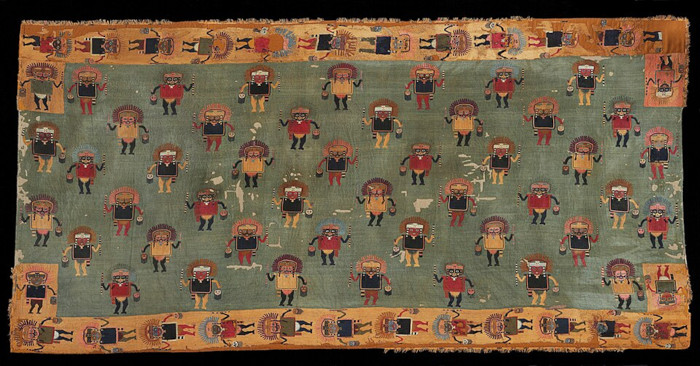
An intricate, ancient Paracas textile. Since the skulls were found inside elaborate mummy bundles wrapped in these exact textiles by Julio Tello, this provides crucial archaeological context. (Metropolitan Museum of Art/Public Domain)
The debate surrounding the Paracas Skulls reached a fever pitch in 2014 when preliminary DNA testing results were announced to the public. Independent researchers and authors, notably Brien Foerster, commissioned genetic analysis on samples of hair, bone, and teeth taken from several skulls. The initial findings broadcast across alternative media were nothing short of explosive.
The geneticists involved reportedly stated that the mitochondrial DNA, inherited solely through the maternal line, featured mutations that were entirely unknown in any human, primate, or animal species known to science. The narrative quickly shifted from cultural body modification to the sensational idea of a new, unknown hominid. Some reports even suggested the DNA indicated the beings were "not human, Neanderthal, or Denisovan," fueling wild speculation that a separate, perhaps unearthly, race had governed ancient Peru.
These claims generated a whirlwind of media attention and cemented the Paracas Skulls as a cornerstone of modern fringe mythology. For believers, the DNA results were the ultimate vindication, definitive proof that mainstream history was concealing a massive secret about human origins. However, the academic community met these dramatic announcements with intense skepticism, demanding peer-reviewed data, transparent methodologies, and rigorous contamination controls.
Paleogenomics and the Terrestrial Truth

A sweeping aerial photograph of the dramatic golden cliffs and Pacific Ocean coastline at the Paracas National Reserve in Ica, Peru, the exact coastal desert region where Julio Tello excavated the Paracas Necropolis in 1928 and unearthed the elongated skulls. (masT3rOD/CC BY 2.0 )
To understand the truth hidden within the ancient bones, one must look to the rigorous field of modern paleogenomics. Extracting ancient DNA (aDNA) is an incredibly delicate process. Remains that have been handled by archaeologists, museum curators, and independent researchers for decades are highly susceptible to modern genetic contamination. Without highly sterilized clean-room environments, the DNA sequenced is often that of the people who recently touched the artifact, leading to confused or "anomalous" data sets.
Recent advancements in population genetics have painted a much clearer, albeit entirely human, picture of pre-Columbian Peruvian populations. Modern, peer-reviewed sequencing has consistently shown that the individuals buried on the Paracas Peninsula were of distinct Native American ancestry. However, as noted in recent articles detailing the DNA analysis, there are fascinating, complex genetic markers that hint at vast, ancient migration patterns, possibly including distant European or Eurasian admixture that challenges our standard timeline of global exploration.
While the DNA does not point to the stars, it does point to a human history that is far more dynamic and interconnected than previously imagined. The Paracas people were master weavers, sophisticated engineers, and survivors in a harsh, unforgiving coastal desert. They developed complex societal structures and religious beliefs that drove them to literally reshape the bodies of their children in pursuit of the divine.
A Legacy Written in Bone
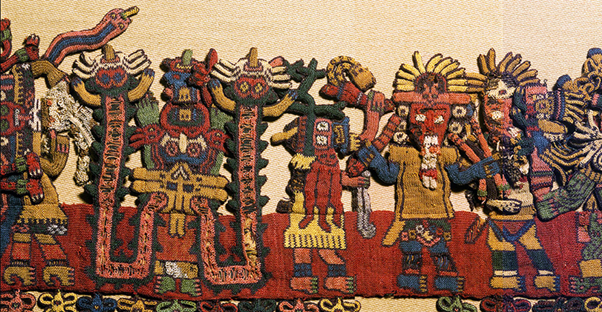
One of the most extraordinary surviving Andean textiles in the world, this Nasca/Paracas-era mantle (100–300 AD) features ninety intricately needle-knitted figures along its border. (Brooklyn Museum/Public Domain)
Ultimately, stripping away the extraterrestrial mythos does not diminish the profound wonder of the Paracas Skulls; rather, it elevates the ingenuity and resilience of ancient humanity. These elongated craniums are a testament to the lengths to which a culture will go to define itself, to assert its power, and to connect with the spiritual realm. They are a permanent, physical record of an ancient society's deeply held beliefs.
The necropolis discovered by Julio Tello continues to yield secrets, offering vital insights into the health, genetics, and daily lives of a lost civilization. The textiles that wrapped these modified elites remain some of the most complex and beautiful woven artworks ever created in the ancient world. The true magic of Paracas lies not in an alien intervention, but in the astonishing capabilities of the human hands that carved out a civilization on the edge of the Pacific.
As paleogenomics continues to evolve, we will undoubtedly learn even more about the intricate lineage of the Paracas people. For now, their elongated skulls remain safely housed in museums, silent sentinels of a bygone era. They serve as a powerful reminder that human history is wildly diverse, infinitely complex, and deeply fascinating all on its own.
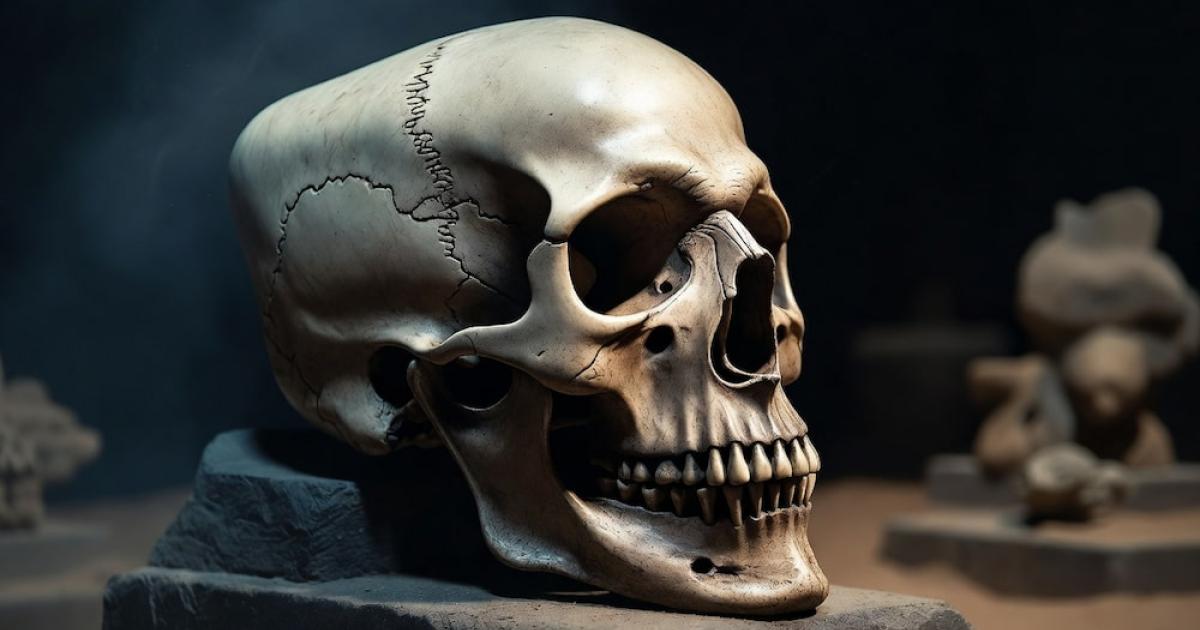
Top image: A dramatic, atmospheric close-up of a single elongated Paracas child skull resting on a museum display block. AI-generated image created to illustrate the mysterious and striking appearance of the Paracas elongated skulls.
FAQs
1. Why did the Paracas people elongate their skulls? The Paracas culture practiced artificial cranial deformation as a visible, permanent marker of high social status, elite lineage, and group identity. It visually separated the ruling class from the common people.
2. How did they achieve the elongated skull shape? The process began during infancy when the cranial bones were still soft and pliable. The baby's head was tightly bound using wooden boards and heavy textiles to force the skull to grow upward and backward over several months.
3. Did DNA testing prove the Paracas Skulls are alien? No. While early, unverified claims suggested unknown mutations, rigorous scientific ancient DNA (aDNA) testing has confirmed that the skulls belong to human beings of Native American descent, with some tests indicating complex ancient migration patterns.
References
Blom, D.E. 2006. Artificial Cranial Deformation in South America: A Geometric Morphometrics Study. Journal of Archaeological Science. Available at: https://www.sciencedirect.com
Fehren-Schmitz, L. et al. 2025. Paleogenomics of Ancient Peru: North Coast Population History. Nature Scientific Reports. Available at: https://www.nature.com/srep/