mariusalbertsen

Profile picture for user mariusalbertsen
Marius
Albertsen

Marius Albertsen, Secret History's Author, is an independent researcher and writer focused on early religious traditions, Gnostic cosmology, and alternative interpretations of ancient history. His publication, “Secret History of the World,” reaches thousands of readers who seek clear, well-grounded examinations of forgotten narratives, suppressed texts, and the evolution of spiritual ideas across cultures.

Member for

10 months 3 weeks

View Recent Blogs

The desolate, wind-swept desert of the Paracas Peninsula on the southern coast of Peru holds one of the most enduring mysteries of the ancient world. In 1928, the renowned Peruvian archaeologist Julio Tello made a staggering discovery beneath the harsh sands. He unearthed a massive and complex graveyard, a sprawling necropolis containing hundreds of elaborate mummy bundles. While the intricate textiles wrapping the dead were marvels of ancient craftsmanship, it was the skeletal remains hidden within that would capture the world's imagination. Tello had discovered the remains of the Paracas culture, a civilization that flourished from approximately 800 BC to 100 BC. But the skulls of these individuals were profoundly unusual. Over three hundred crania were unearthed, displaying extreme, sweeping
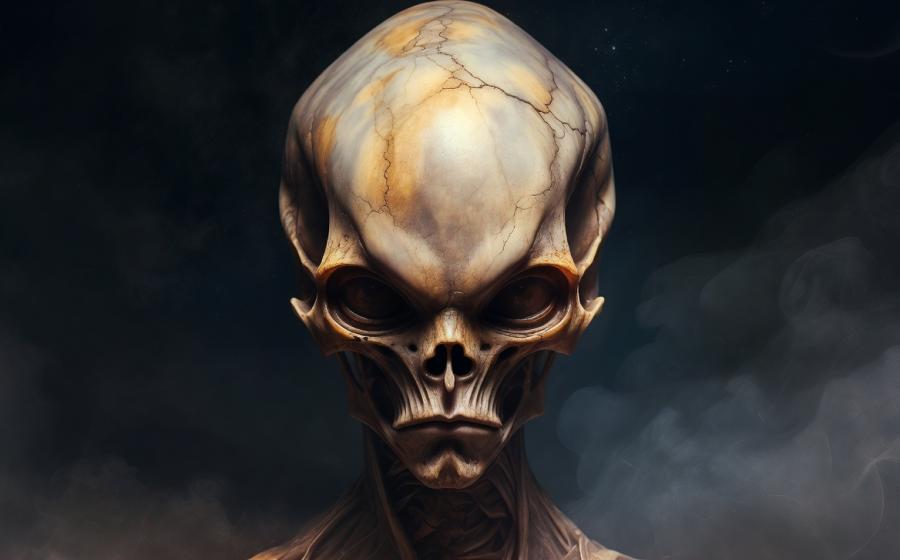
In the early 1930s, a teenage girl of Mexican heritage was exploring a long-abandoned mine tunnel in the Copper Canyon region of Chihuahua, Mexico. Buried beneath the dirt floor in a shallow, unremarkable grave, she discovered two skeletons: one of a normal adult female and another that would eventually ignite a firestorm of controversy within the fields of archaeology, biology, and ufology. This second set of remains belonged to what the world would come to know as the Starchild Skull. For nearly a century, this artifact has served as a battlefield between those who believe in extraterrestrial visitation and the scientific community that seeks a terrestrial, medical explanation. While proponents of the "alien" theory point to the skull’s bizarre physiological
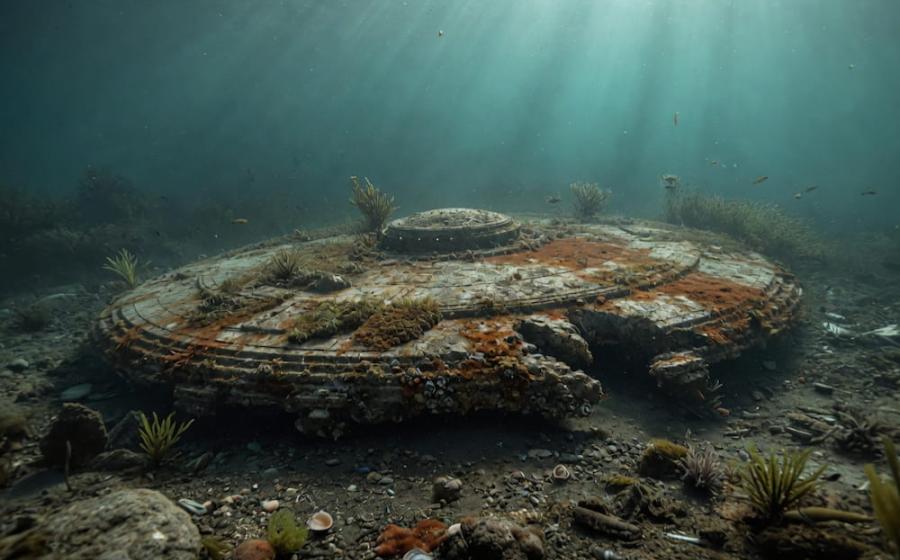
The ocean floor is a realm of eternal darkness, holding secrets that often challenge our understanding of history and science. Among the most hotly debated underwater mysteries of the 21st century is the Baltic Sea Anomaly. First detected by sonar, this bizarre, circular formation resting on the murky seabed sparked massive global interest and immediate speculation. Could it be a sunken extraterrestrial spacecraft, an elaborate natural hoax, or perhaps a relic of a forgotten human civilization? When the first grainy sonar images emerged, the shape was instantly compared to the Millennium Falcon from Star Wars. The internet exploded with theories ranging from crashed UFOs to secret World War II anti-submarine devices. Yet, as modern marine geologists and archaeologists continue to
Rising abruptly from the lush, untamed jungles of southeastern Venezuela, Mount Roraima is a geological behemoth that defies logic. With its perfectly flat plateau and sheer, vertical cliffs plunging thousands of feet into the mists below, it looks less like a natural mountain and more like a colossal, ancient fortress. For decades, alternative researchers and mystery enthusiasts have looked at these impossibly straight geological lines and asked a controversial question: could Mount Roraima be the result of artificial cuts? This massive tepui, surrounded by a harsh and isolated landscape, continues to capture the imagination of explorers and scientists alike. The sheer scale of Mount Roraima is breathtaking, with its summit covering roughly 31 square kilometers (12 square miles) and its
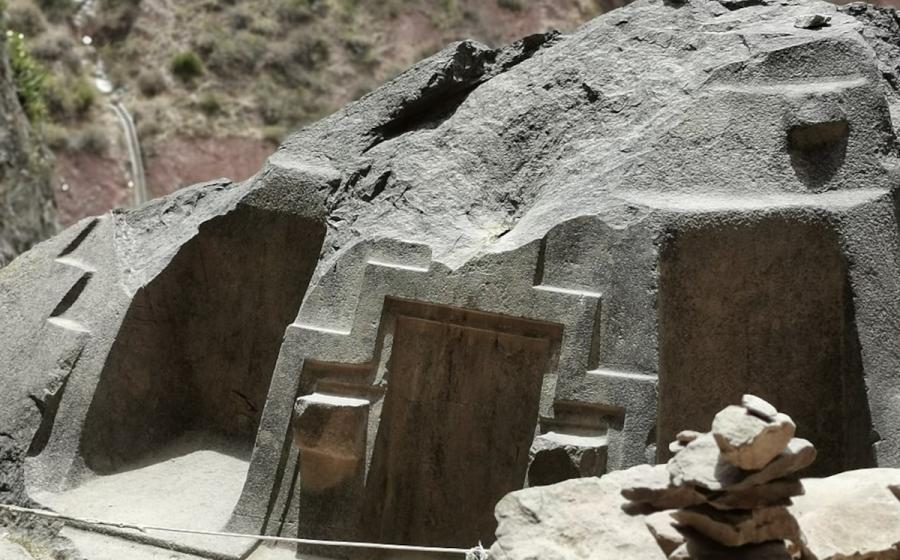
High in the remote Andes Mountains of Peru, far from the well-trodden tourist paths of Machu Picchu, lies one of the most baffling archaeological sites on Earth. Known as the 'Naupa Huaca portal', this mysterious stone sanctuary challenges everything we know about ancient engineering. Carved with impossible precision into solid rock, the site features a distinct V-shaped cave entrance and a mesmerizing, flawlessly cut altar that seems entirely out of place. What makes the Naupa Huaca portal so compelling is not just its exquisite craftsmanship, but the astonishing similarities it shares with other ancient ruins separated by thousands of miles and massive oceans. From the echoing halls of the Great Pyramid of Giza to the high-tech stonework of Puma Punku
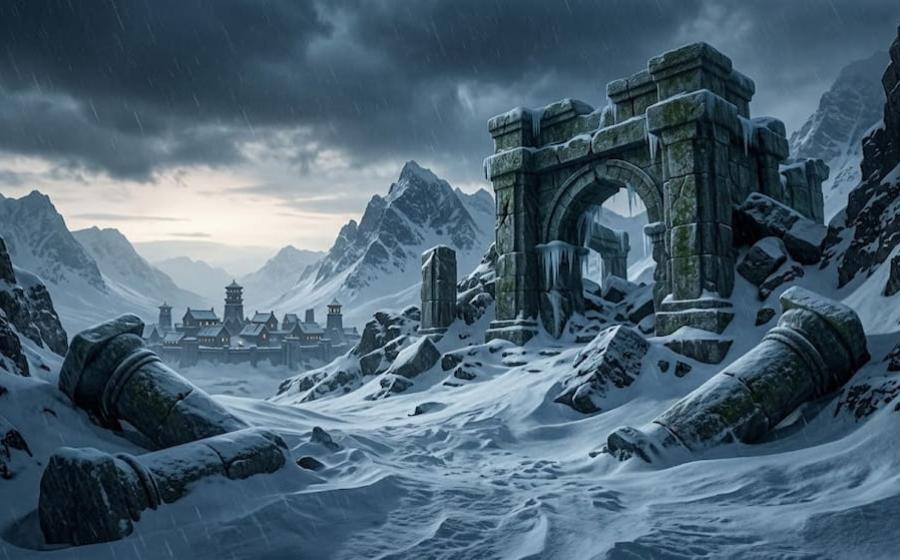
For centuries, explorers, historians, and mythologists have been captivated by the legend of a paradise hidden at the top of the world. According to ancient Greek texts, this was a land of eternal spring, inhabited by a race of giants who lived for a thousand years without disease or war. They called it Hyperborea, a realm existing "beyond the North Wind." But is it possible that this legendary utopia was more than just a myth? Modern researchers and alternative historians are increasingly asking a controversial question: Could an advanced Arctic civilization have flourished near the North Pole before the last Ice Age? As the polar ice caps continue to shift and reveal secrets buried for millennia, compelling anomalies are emerging
Long before the first European ships anchored along the rugged coastlines of North America, the continent was already a vast tapestry of ancient empires, forgotten cities, and mysterious tribes. Among the rich oral traditions passed down by the indigenous populations, few stories are as deeply captivating or profoundly baffling as the legend of the mysterious moon-eyed people. According to the Cherokee Nation, when they first migrated into the lush, rolling hills of the Southern Appalachians, the land was not empty. Instead, they encountered a bizarre and entirely distinct race of humans who had already claimed the foggy mountains and deep river valleys as their own. This strange, pre-existing civilization was fundamentally different from any other indigenous group known to the
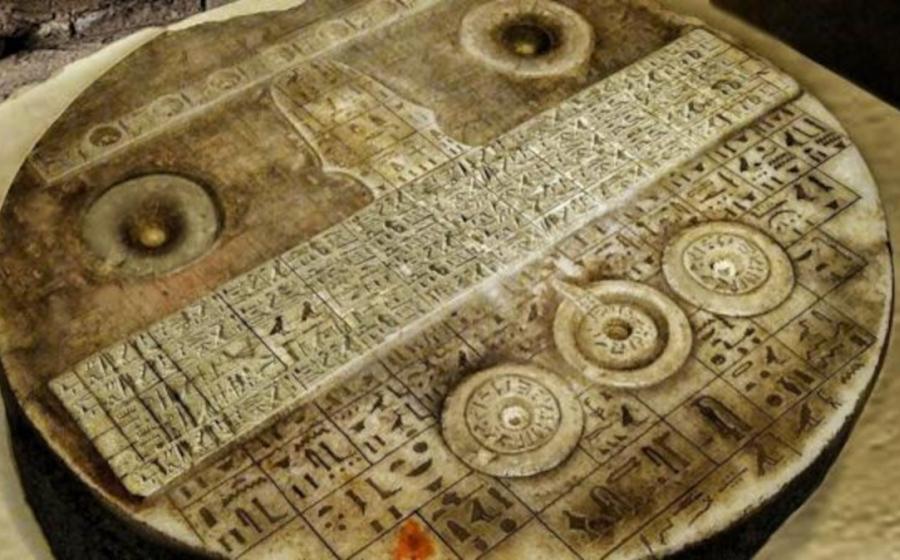
On an almost daily basis, the ancient world continues to surrender artifacts that challenge our understanding of history. But some seem to have a real ‘wow’ factor. Among the massive pyramids and golden sarcophagi, archaeologists occasionally unearth objects so baffling that they defy conventional explanation. One such extraordinary artifact is an intriguing Egyptian tablet that has sparked intense debate among researchers and alternative historians alike. By mainstream archaeologists’ assessment, this intricately carved slab of stone is designated the ‘offering table for Defdji’ and is simply a rather elaborate offering table. However, to others it bears an uncanny resemblance to an aircraft control panel, complete with what appear to be buttons, dials, and gauges. This striking similarity has propelled the carved
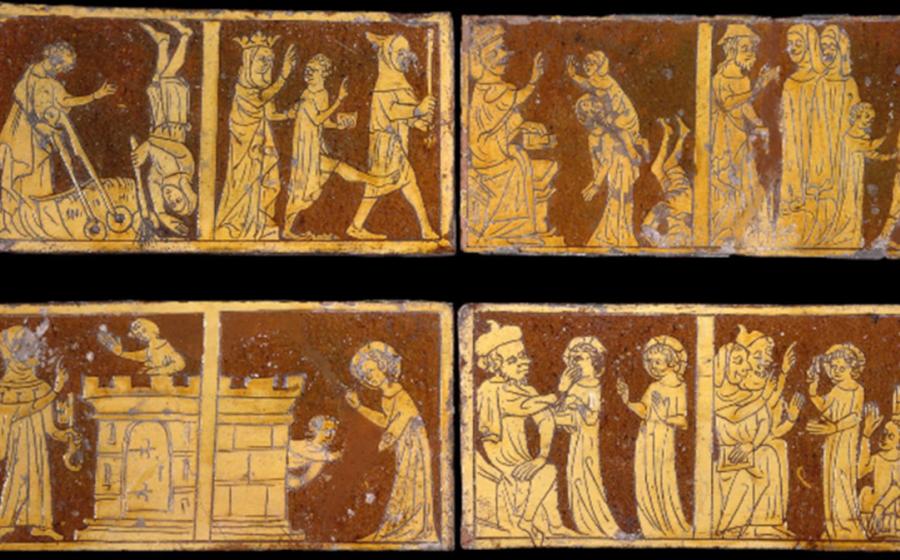
For nearly two millennia, the global consciousness has been shaped by a specific, carefully curated image of Jesus Christ. We know him as the "Prince of Peace," the man of ultimate sorrows who preached forgiveness and turned the other cheek. Yet, there is a gaping hole in this narrative, a silence that lasts nearly eighteen years. While the canonical Gospels of the New Testament jump from his birth to his ministry at age thirty, early Christian history was once filled with stories of what happened in between. These "missing years" were not always empty. In the second and third centuries, a collection of texts known as the "Infancy Gospels" circulated widely throughout the Roman Empire. The most famous, and perhaps
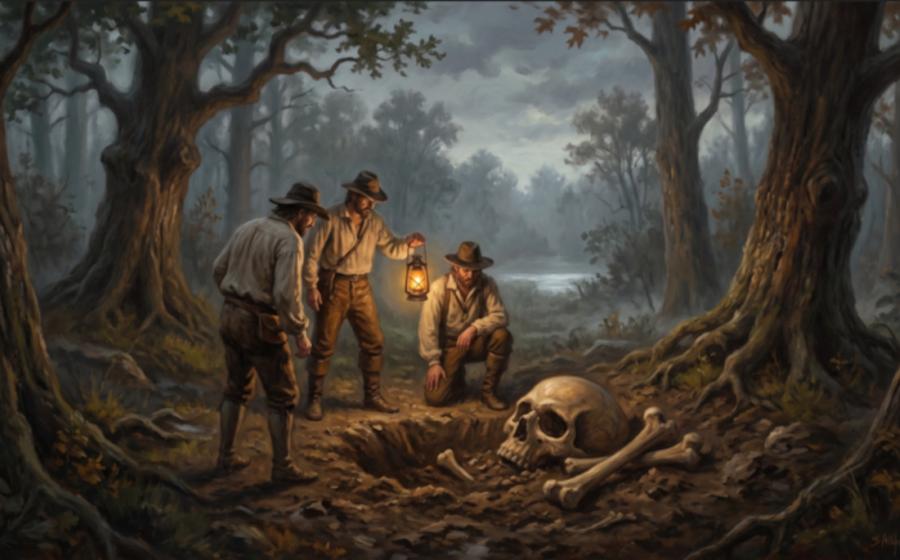
When early American pioneers pushed westward into the untamed wilderness of Ohio, they expected to face harsh winters, dense forests, and untrodden landscapes. What they did not anticipate was stumbling upon the remnants of a forgotten, towering race buried beneath the soil. Or so the modern legend goes. The discovery of the Conneaut Giants in the early 19th century remains one of the most contentious archaeological mysteries in North America. These supposedly massive skeletons, unearthed from sprawling ancient burial grounds, challenged everything the settlers knew about the continent's history. Then seemingly vanished. Mark Hubbe, an anthropology professor at Ohio State University, said there is no evidence of giant skeletons in Ohio. He said he is confident the repeated claims are