
The Inca made long pilgrimages across rugged Andes mountain trails in preparation for the empire’s sacred ritual, Capacocha. They endured weeks of climbing, carrying offerings, and spiritual paraphernalia. They took with them sacrificial offerings that included the children and young women who would be sacrificed. The Inca believed the children would achieve divinity, becoming messengers who moved between the worlds of ancestors, humans, and mountain gods. The messengers would appeal to the gods for fertile fields, good weather, and a strong, expanding Inca state.
New Study Examines Capacocha Pilgrimages and Ritual Sacrifice
A recent scientific study, Pilgrimage to Sacrifice: Mechanisms, Causes, and Time of Death of the Western Andean Capacocha of the Southern Tawantinsuyu, presents a detailed investigation into two Capacocha cases from the western slope of the Andes. Researchers examined the discoveries of Cerro Esmeralda, located in the coastal Atacama Desert of northern Chile, and Cerro El Plomo, in the high mountains of central Chile. The study combines archaeological evidence, forensic analysis, radiology, and environmental data. Using advanced scanning technology and chemical analysis, the scientists were able to determine the cause of death and how the bodies were preserved in a mummified state at the top of high-altitude mountains.
- Capacocha: Ritualized Child Sacrifice in the Inca Empire
- First Known Deliberate Mummification Found in Inca Child Sacrifice
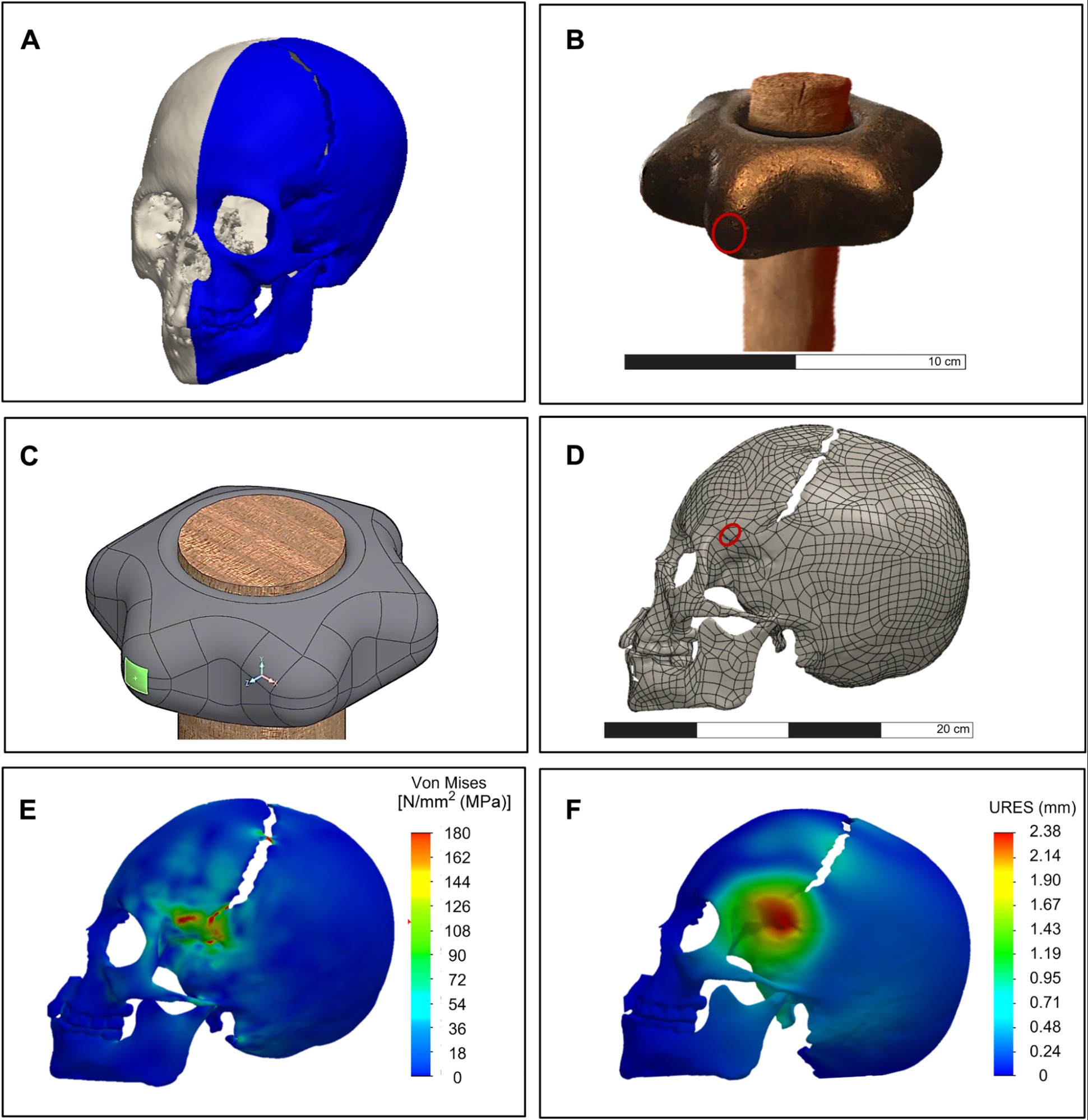
Finite element analysis of the Ñusta del Plomo child's skull showing a CT-derived cranial model, a reconstructed Inca star-shaped mace, and computer simulations of stress and deformation. The results indicate that a blow from the mace could produce fracture patterns consistent with the injuries observed in the archaeological remains. (AAAS/Science Advances)
The Boy of Cerro El Plomo
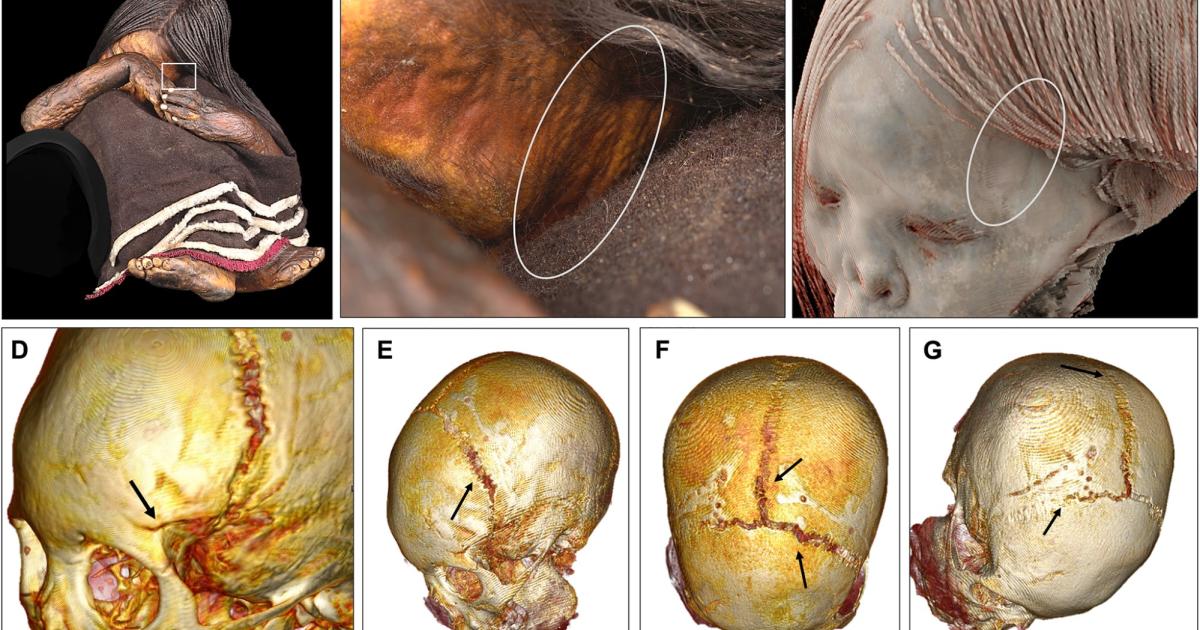
The first case is known as the Boy of Cerro El Plomo, discovered in 1954 at an altitude of 5400 meters. Previous analysis attributed his death to hypothermia that occurred during an Inca ceremony. According to the study, computed tomography (CT) scanning and forensic investigation found evidence of a cranial trauma that happened during a Capacocha sacrifice.
The leaders of the study, Verónica Silva Pinto, a doctoral researcher in the Department of Prehistory, Archaeology and Ancient History at the University of Valencia, and Domingo C. Salazar-García, a senior lecturer in the same department, believe their research reinterprets past analyses of Capacocha sacrificial victims:
"This study enabled us to re-examine exceptionally important heritage contexts, applying new research questions, new technologies, and ethical conservation criteria. In the case of the Boy of Cerro El Plomo, the evidence prompted us to reassess an interpretation that had been accepted for decades and to propose a different explanation for the circumstances surrounding his death."
- Child Sacrifice Atop Llullaillaco Volcano Linked to Inca Imperial Expansion
- Not So Peaceful Death of an Inca Child Revealed
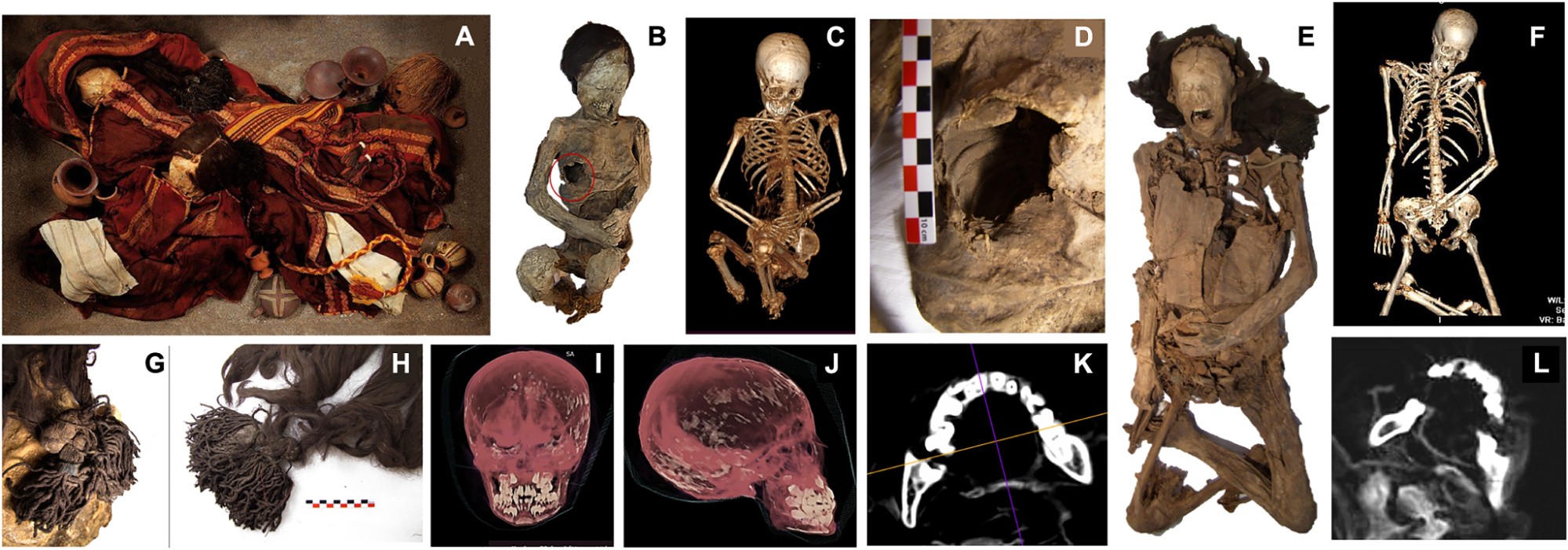
The Cerro Esmeralda Inca child mummies (CES-A and CES-B) were documented through museum photography, CT scanning, and three-dimensional skeletal reconstructions. The images show preserved hairstyles, skeletal development, soft tissues, and internal anatomical structures used to investigate the children's lives and deaths during the Inca Capacocha ritual. (AAAS /Science Advances)
The Girls of Cerro Esmeralda
The study also reviews the case of Cerro Esmeralda (a site located in the Atacama Desert of northern Chile) in which two females supposedly died by strangulation. A 9-year-old female individual, Cerro Esmeralda-A, and an 18-year-old female individual, Cerro Esmeralda-B, were discovered in 1976 after their tomb was partially destroyed with dynamite. Their mummified bodies have alterations from uncontrolled recovery and autopsies.
The results from the study’s reassessment do not support strangulation as a cause of death. Rather, the researchers observed that the marks on the girls’ necks are consistent with compression caused by textiles or clothing. The CT scans showed intact hyoid bones without fractures or misplacements. The study writers maintain that an exact cause of death cannot be determined conclusively, stating previous autopsies and the loss of anatomical structures following their discovery render any analysis purely conjectural.
- Ritually Sacrificed Inca Kids Fed “Soothing” Coca and Caapi Cocktails
- Teenage Mummy the Inca Ice Maiden ‘Brought Back to Life’
Technological Analysis Helps Researchers Gain an Enhanced Understanding of Inca Religious Rituals
According to Domingo C. Salazar-García, one of the study's key contributions is its use of isotopic analysis:
"Stable isotopes provide exceptionally detailed information about people's lives in the past, particularly regarding diet, mobility, and changes that occurred during the final months of life".
The study’s authors emphasize that understanding the Capacocha pilgrimage was a central part of their investigation: “Pilgrimage connected sacred landscapes and administrative centers through ritual journeys and processions that inscribed political and religious authority across space. This rite carried exceptional symbolic and political importance, linking distant regions to the imperial core through embodied acts of devotion and allegiance.”
Top Image: External photographs and CT-based three-dimensional reconstructions of theCerro El Plomo child mummy reveal cranial fractures consistent with a fatal head injury sustained shortly before death during the Inca Capacocha ritual. Source: AAAS/Science Advances
By Ramsey Hardin
References
Altuntas, Leman. 2026. “500-Year-Old Inca Child Did Not Die of Hypothermia—CT Scans Reveal a Fatal Blow to the Head.” Arkeonenews. https://arkeonews.net/500-year-old-inca-child-did-not-die-of-hypothermia-ct-scans-reveal-a-fatal-blow-to-the-head/.
Silva-Pinto, Verónica, Marcela Sepúlveda, Eugenia M. Gayo, Pablo Mendez-Quiros, Mario Castro, Lumila P. Menéndez, Gonzalo M. Rojas-Costa et al. "Pilgrimage to Sacrifice: Mechanisms, Causes, and Time of Death of the Western Andean Capacocha of the Southern Tawantinsuyu." Science Advances (2026). Accessed July 16, 2026. https://www.science.org/doi/10.1126/sciadv.adz9055
Universitat de València. 2026. “The Inca boy of Cerro El Plomo did not die of hypothermia but as a result of a ritual sacrifice.” July 15, 2026. https://www.uv.es/uvweb/uv-news/en/news/inca-boy-cerro-el-plomo-did-not-die-hypothermia-result-a-ritual-sacrifice-1285973304159/Novetat.html?id=1286497758455&plantilla=UV_Noticies/Page/TPGDetaillNewsAMP.