
The objects reached the Father Stanisław Staszic Museum in Hrubieszów, in eastern Poland, in a rather peculiar way. They were left for staff to collect at a designated spot, by people who have never given their names. The regional news site Lublin112 reports, in Polish, that the museum knows neither the finder nor even the person who recovered the objects intending to hand them over anonymously, paraphrased here in English.
What came out of that handover was the iron equipment of a rider and the small belongings that went with it. National Geographic Polska lists an iron sword that survives in three parts, with two fittings from its scabbard. There are two heads, one from a spear and one from a javelin, both bent and broken in antiquity, and an iron shield boss with a spike, together with the grip that once held the shield. The same report adds a fragment of an iron knife, a belt buckle, two spurs, pieces of a bone comb and a bronze brooch known as a fibula, used to fasten a cloak.
According to Notes from Poland, which reported the museum's Facebook announcement in English, a local metal detectorist acted as intermediary in arranging the transfer. The outlet adds that "The museum says that the nature of the objects indicates that their owner held a high social position." Lublin112 reports that every piece shows traces of intense heat from the funeral pyre, where the dead person was burned with these belongings. But who was this rider, and where exactly did the grave lie?
A Warrior Burned With Their Weapons
The finds come from a cremation grave, the rite that dominated burial among the communities of this region at the time. Writing on weapon graves of the Przeworsk culture, archaeologist Katarzyna Czarnecka of the State Archaeological Museum in Warsaw notes that "Cremation graves, with or without urns (pit graves), prevail in Przeworsk culture cemeteries." National Geographic Polska says the personal belongings of the dead were placed on the pyre alongside them.
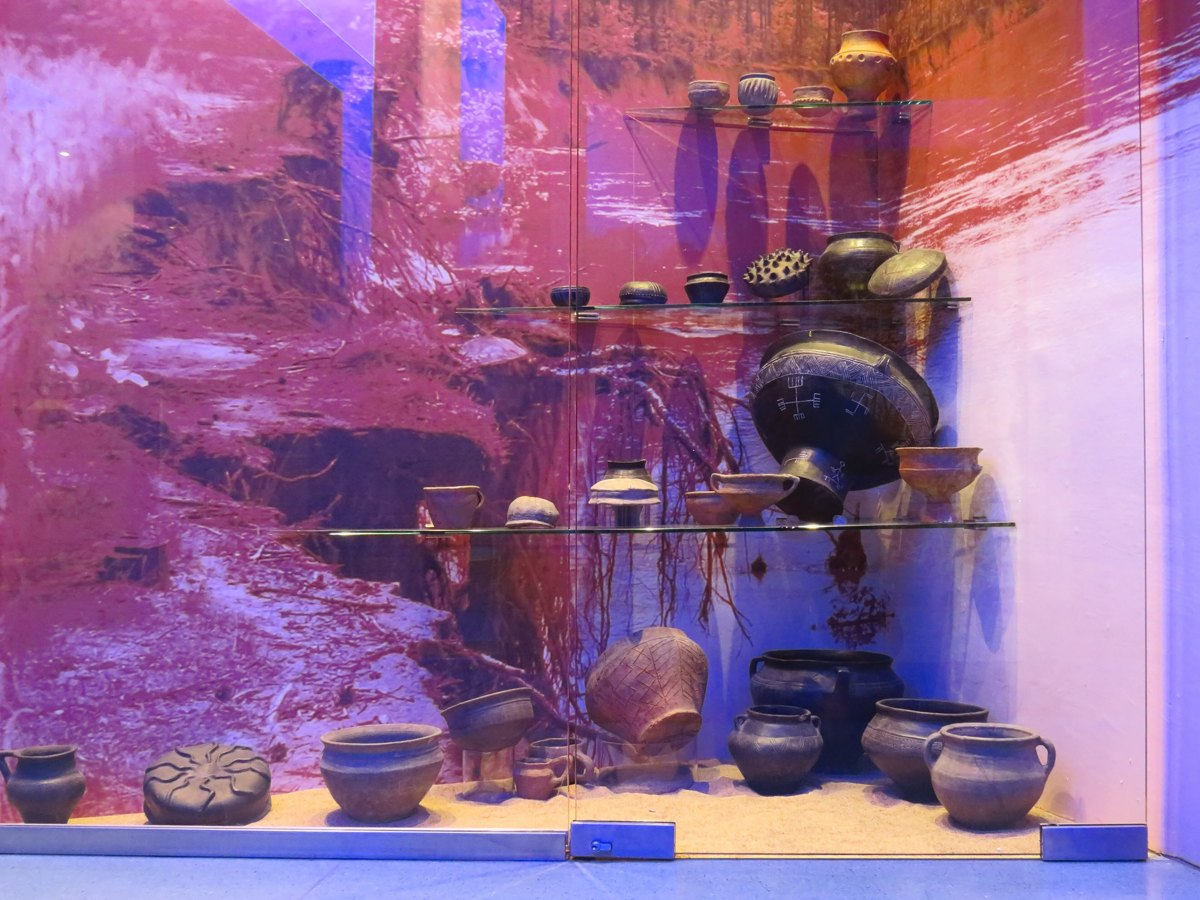
Pottery of the Przeworsk culture, described by the photographer as dating to the 1st to 4th centuries AD, in a display at the Museum of Archaeology and Ethnography in Łódź. These are comparison objects and are not part of the Hrubieszów find. (Image: Photo by Аимаина хикари, 2018, via Wikimedia Commons, CC0, resized)
The sword in three pieces is the detail that ties this burial most clearly to those customs. Czarnecka writes that "Most objects were destroyed before being deposited in graves," and that "Swords and spearheads were usually bent (once or twice), sometimes even broken. Shield bosses were flattened and disfigured." She adds that some of this damage must have been done after the burning on the pyre, since "it was easier to destroy iron that was dehardened by fire."
The reasons behind the custom are harder to pin down, and Czarnecka offers more than one possible answer. At the simplest level, she suggests, breaking a sword may have been meant "to prevent the dead from using it against the living." The more common view treats it as a kind of ritual killing of the weapon, "so as to enable them to accompany their owners to the netherworld." The same bent and broken iron turns up in other ancient Polish weapons found in Iron Age graves.
What the Spurs and the Sword Suggest
The two spurs are what turn this warrior into a rider in the eyes of the researchers. HeritageDaily notes that the pair indicates the person associated with the burial was "equipped for mounted travel or combat." Czarnecka observes that "Spurs, usually in pairs, were often found in rich graves together with weapons."
The sword matters at least as much as the spurs when it comes to reading rank. According to National Geographic Polska, burials with swords are rare and mark out members of the social and military elite of the time. Czarnecka reminds readers that "In warrior societies, weapons were a status symbol." She adds that among the Germanic cultures beyond the Roman frontier, the Przeworsk culture has "the highest percentage of graves containing full sets of weaponry and other grave goods." That pattern is visible in these graves of Vandal warriors discovered in Poland and in the weapons of Germanic tribes from the Roman era found in Poland.
The museum is careful about exactly who this rider was. Lublin112 reports that staff read the sword and the riding gear as signs of a high-ranking mounted warrior. However, the museum adds that it cannot yet be settled whether the grave belonged to a man or a woman, and National Geographic Polska describes the burial as that of a mounted warrior, male or female, both paraphrased from the Polish. Because nobody recorded the grave, HeritageDaily points out that information about "the arrangement of the burial, the relationship between individual objects and any surviving cremated human remains" may now be beyond recovery, so the question stays open for now.
Why Vandals Lived in What Is Now Poland
The people who buried this warrior belonged to a world that lay well beyond the Roman frontier. Notes from Poland describes the Vandals as an ancient Germanic people "believed to have reached the territories of present-day Poland around the 3rd or 2nd century BC." They lived in the region for several centuries and "are generally associated by researchers with the Przeworsk culture," the outlet adds. National Geographic Polska says that in the 2nd century AD the area of today's Hrubieszów district lay under the strong cultural influence of Vandal tribes.
Their later fame came far from these fields. Writing for National Geographic, Erin Blakemore says the Vandals clashed with Rome in the Marcomannic Wars along the Danube in the 2nd century AD. Pushed into the empire by the Huns from the 370s, they crossed the Rhine in AD 406 and captured Carthage, in what is now Tunisia, in AD 439. In 455 their king Gaiseric "declared the Vandals' treaty with Rome invalid and marched on Rome," she writes, although "They raided the city's wealth, but left the buildings intact and went home."
None of that later history can be read straight into one cremation grave near Hrubieszów. HeritageDaily stresses that the surviving objects "cannot establish the ethnic identity of the person whose cremation burial they may have accompanied." The Vandal label rests on an archaeological culture, and the attribution, it adds, "depends largely on the typology and chronology of the artefacts." Even the date is broad, because Lublin112 relays the museum's estimate of nearly 2,000 years ago, while National Geographic Polska places the warrior in the 2nd century AD.
A Grave Without a Record
The real damage was done years before the anonymous handover. According to HeritageDaily, the objects were found in a farm field several years ago and "remained outside professional archaeological care until their recent transfer." As far as Ancient Origins can establish, neither the precise location nor the circumstances of the discovery have been disclosed. National Geographic Polska reminds readers that searching for antiquities with a metal detector without a permit is illegal in Poland. For archaeologists, it adds, the context of a find matters as much as the object itself.
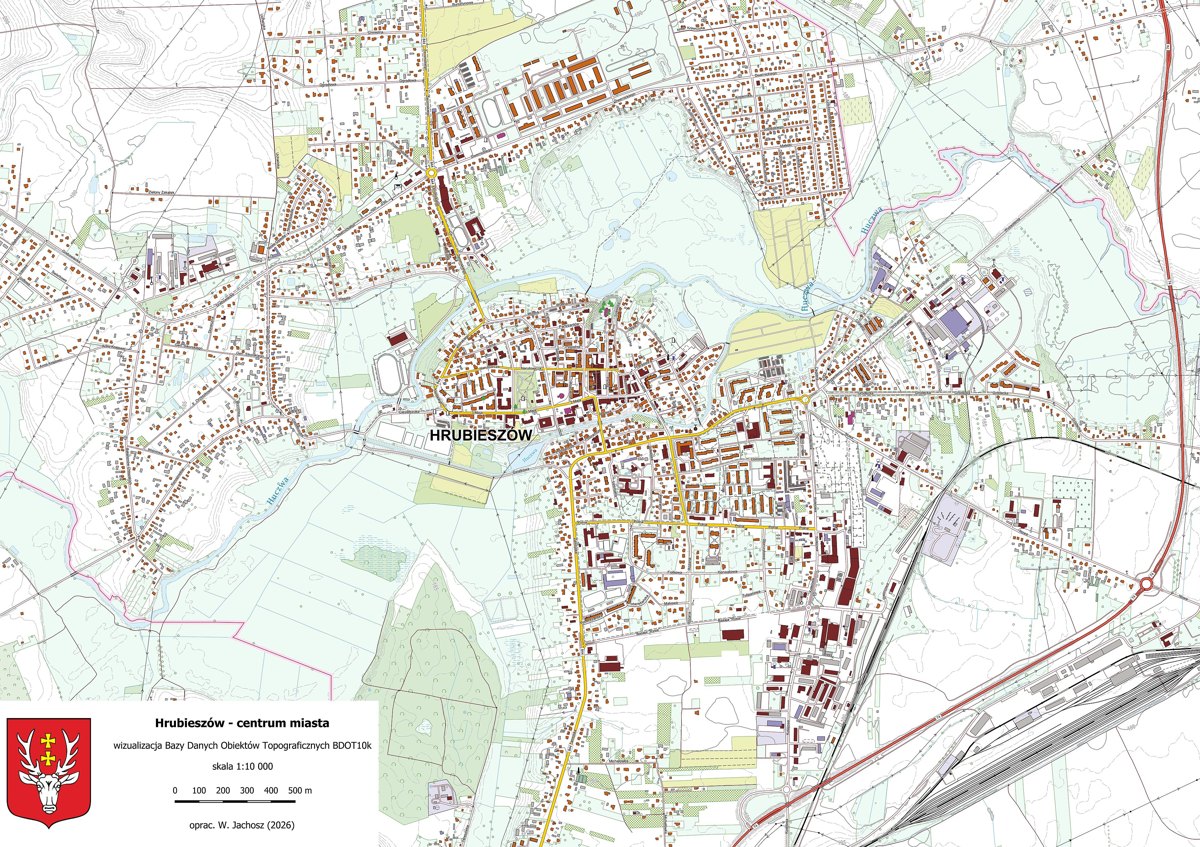
A town map of central Hrubieszów, home of the museum, generated from Polish BDOT10k topographic data. It is a map of the town and does not show the findspot, which has not been made public. (Image: Map by W.Jachosz, 2026, via Wikimedia Commons, CC0, resized)
However, keeping the objects together still counts for something. HeritageDaily says it lets specialists study what appears to be a "single funerary assemblage" instead of a scatter of stray finds. Grave goods have found their way back to museums before, as when grave robbers returned Przeworsk culture burial goods in Ukraine.
For now the iron itself is fragile, and Notes from Poland reports that the items are in poor condition, with "the iron components of the weapons particularly vulnerable after centuries in the ground." According to Lublin112, museum staff said in Polish that the whole group has already gone for conservation, which will take at least several months. Only after that, National Geographic Polska says, can the objects go on display.
Back to the Field
The museum now wants to find the grave itself, and the place to start is the municipality of Werbkowice, where National Geographic Polska says the cemetery lies. Notes from Poland quotes the museum's plan: "We intend to verify the exact location through archaeological excavations, most likely next summer." Because the statement came out in early November 2026, that would mean the summer of 2027, if the plan holds.
But the story may not end with one grave. "Based on the information we have gathered, there are strong indications that there may be more similar burials in the area that have been disturbed by agricultural work," the museum added. National Geographic Polska reports that archaeologists suspect deep ploughing may have damaged more Vandal graves at the site.
The region has been generous lately, and in August, Notes from Poland reports, the same museum announced that a 2nd century metal boss from a warrior's shield had turned up at a scrap metal yard near Hrubieszów. If next summer's trenches find the right field, the plough soil near Werbkowice may yet give back the context that this rider's sword and spurs arrived without. Until then, the identity of this rider, and the exact place where they were buried, still remains a mystery.
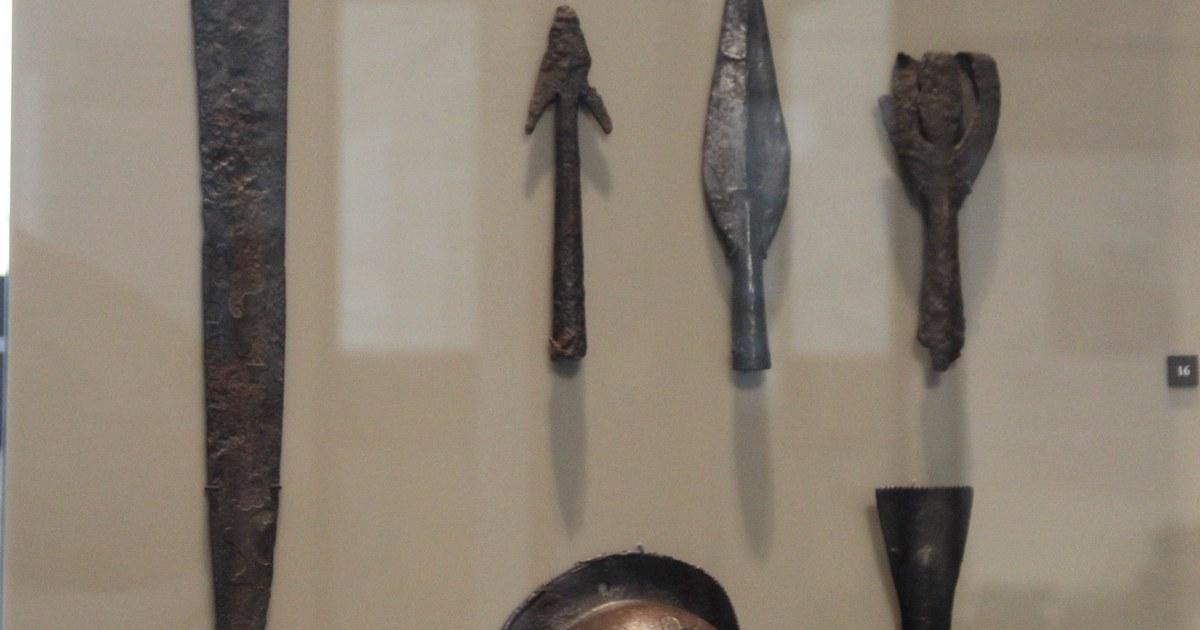
Germanic iron weapons, including a sword blade, spearheads and part of a shield boss, on display in the Roman Europe galleries of the Neues Museum, Berlin. These are comparison objects and are not the Hrubieszów finds. Photo by Gary Lee Todd, 2016, via Wikimedia Commons, CC0 (https://creativecommons.org/publicdomain/zero/1.0/), cropped and resized
By Aris Manus
Sources
- Czarnecka, K. Warriors in this world and the afterlife: Przeworsk culture graves containing weapons. In Weapons and military equipment in a funerary context, pp. 163 to 175. ARMES.
- Blakemore, E. August 26, 2019. The Vandals sacked Rome, but do they deserve their reputation? National Geographic.
- Milligan, M. November 4, 2026. Archaeologists unearth ancient funerary assemblage with weaponry. HeritageDaily.
- Ptak, A. November 6, 2026. 2,000-year-old Vandal artefacts anonymously handed to Polish museum. Notes from Poland.
- Zdziebłowski, S. November 2, 2026. Unikatowe wyposażenie wandalskiego wojownika z II w. n.e. trafiło do muzeum w Hrubieszowie. National Geographic Polska.
- Lublin112. November 2, 2026. Niezwykłe odkrycie pod Hrubieszowem. Odnaleziono uzbrojenie wandalskiego wojownika sprzed niemal 2 tysięcy lat. Lublin112.