Niels Bjerre Jorgensen

Niels Bjerre
Jørgensen

Niels Bjerre Jorgensen, born 1954, educated architect, worked for many years at the Steno Museum in Aarhus, Denmark (science and medical museum), with a broad range of tasks: exhibition planning, web updating, graphic and promotional tasks, workshop, planetarium operating and exhibition attendant.

Member for

7 years 2 months

View Recent Blogs

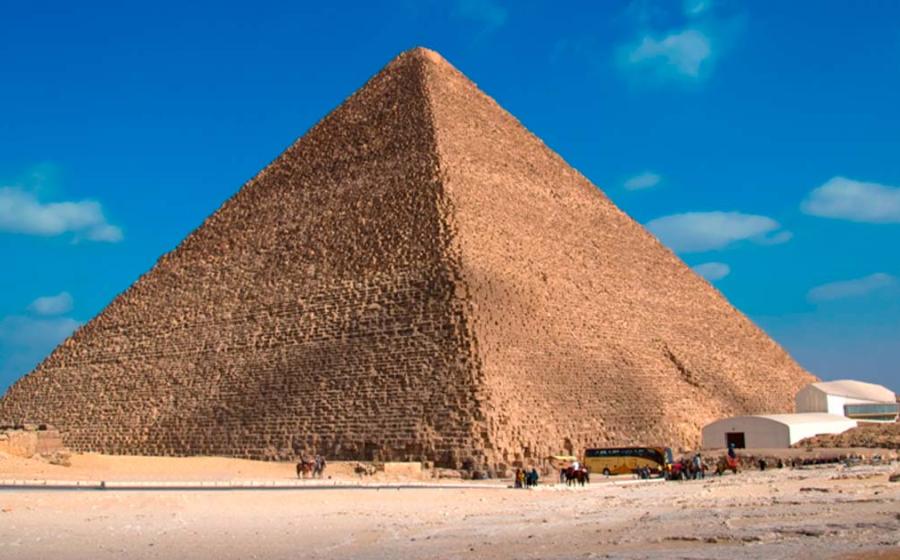
Visitors descending into the depths beneath the Great Pyramid encounter what appears to be an abandoned, roughly-hewn cavern, dismissed by scholars as an unfinished burial chamber that ancient builders left behind. But what if this crude appearance was intentional? What if the so-called "subterranean chamber" holds the key to understanding the entire pyramid's purpose? New geometric analysis reveals that this neglected space, 30 meters below the desert surface, contains sophisticated mathematical proportions that connect the physical world to the divine - a stone testament to the earth god Geb and the first rung on King Khufu's ladder to the heavens. The ancient Egyptians, it seems, were far more deliberate in their designs than modern archaeology has given them credit for
Following up on my recent article on the ante-chamber in the Khufu pyramid, published on Ancient Origins public site, in which I argued it was a device designed to open and close more than once, this article refurnishes the Queen’s chamber, with a theory that could answer several key questions. All its unexplainable features: the ‘missing layer of tiles’ on the floor, the puzzling niche in the east wall, and the mysterious ‘ventilation canals’ turn into purposeful details. All you need is to add some water! The Subterranean Chamber The Subterranean chamber measures roughly 8 by 16 meters (26.25 by 52.50 ft.), longest in the east-west direction. In the eastern half a square hole, turned 45 degrees, is dug deep
King Sneferu (Snofru, Seneferu) was the father of Khufu and is famous for being responsible for two pyramids, plus finishing his predecessor’s at Meidum. His two pyramids at Dashur lie within sight of each other and are remarkable for their low slanting angle at about 43° – only the upper half of the Bent pyramid has this angle, though; the lower part’s angle has 54°. The reason for changing the angle midway is to address the beginning deformation in the lower part, aiming to minimize the load on its chambers. This article offers another eye-catching possibility… The Great Pyramid: New Theory On God Symbolism And The Hidden Chambers The Great Boat of Khufu: The ‘Black Box’ to the Construction of
At the beginning of March, Egypt’s Ministry of Tourism & Antiquities (MOTA) announced a newly discovered chamber above the main (North) entrance to the Pyramid of Khufu, also known as the Great Pyramid of Giza, outside Cairo. This 9 meter by 2 meter chamber sits directly above the North entrance, and why it was included there currently remains unknown. Could it be part of a long since dismantled locking system? Another cavity exists between the Grand Gallery and the King’s Chamber, and far more is known about this space, which has a 3 stone blocking mechanism. But it is still somewhat enigmatic. Here, with an analysis of what is known of the construction of the blocking mechanism of this Antechamber
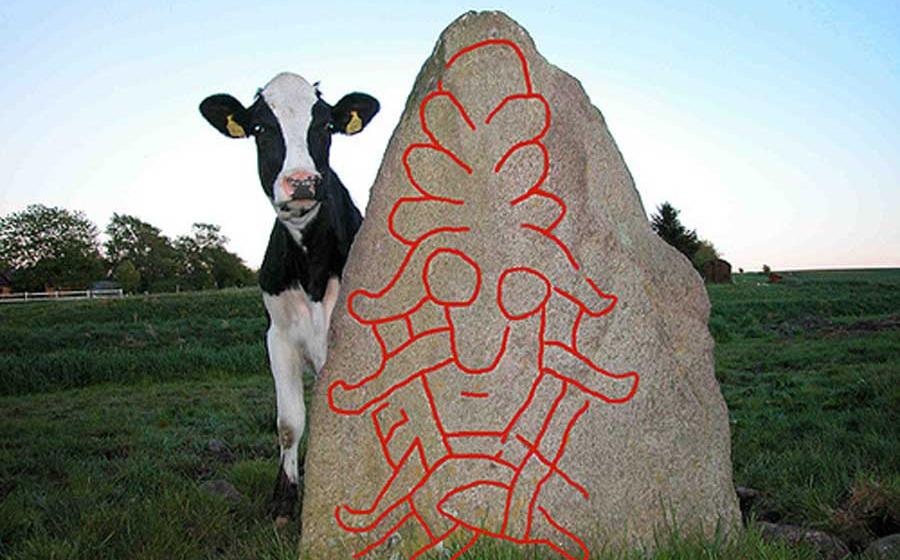
Does a Viking Age Mask Stone picture the real Hamlet? Surely not, the immediate reply might be. It is well-known that Shakespeare modeled his Hamlet story over older versions of the story about Amleth, first written in Latin circa 1200 AD by Danish chronicle writer Saxo Grammaticus. While Shakespeare’s Hamlet was a fictional renaissance character and the scene was set at Elsinore castle, Amleth was an actual person whom Saxo had been told about. Amleth lived on the Danish Jutland Peninsula, but according to Saxo before the Viking Age. Saxo Grammaticus (Saxo), as imagined by Louis Moe, who illustrated the 1898 Danish translation. ( Public Domain ) The Evidence Of A Viking Age Hamlet Saxo’s story is placed in time
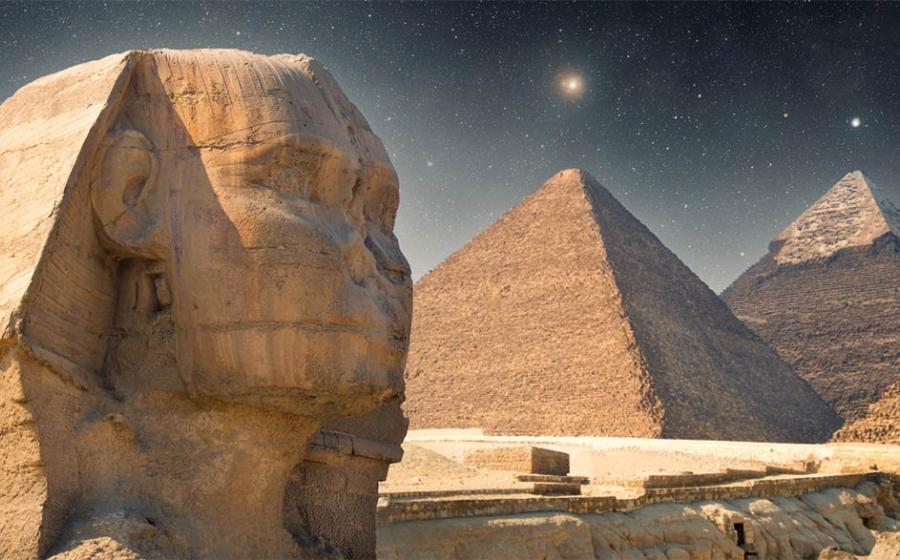
The Giza Sphinx faces east, while the pyramids’ sides are aligned precisely in the cardinal directions. There is little doubt that the Sun or stars must have been used to align the Giza pyramids, but was there an actual use for the directions in which they were built? And what might we deduce from their specific alignment? This article argues that the directions these structures are aligned in may reveal that there are more hidden chambers inside the pyramids. What’s more, both the starry sky and Nile flood phenomenon may furthermore explain the Sphinx figure and its location. [[{"type":"media","view_mode":"media_large","fid":"81845","attributes":{"alt":"Egyptian Ministry of Antiquities photo showing the sun set along Khafre’s pyramid at equinox. (Ministry of Antiquities)","class":"media-image","height":"353","style":"width: 610px; height: 353px;","typeof":"foaf:Image","width":"610"}}]] Egyptian Ministry
Usually we notice architecture when it is a visible expression of beautiful forms. But architecture can be symbolic too. The Danish 16th century manor house called Gammel Estrup reveals a symbolism that is often overlooked today. Based on the sciences of that time, alchemy and the dawning of astronomy, the building is a northern Renaissance gem. [[{"type":"media","view_mode":"media_large","fid":"72543","attributes":{"alt":"","class":"media-image","height":"407","typeof":"foaf:Image","width":"610"}}]] Gammel Estrup ( Yves Wohlers /Adobe Stock) Geometry can be fascinating and has even been regarded as sacred. Already at the entrance to the castle it is clear that geometry was important here. The Golden Spiral determines the placement of both the gate and the windows above the gate from the symmetrical axis of the gate tower. You may have seen more complicated
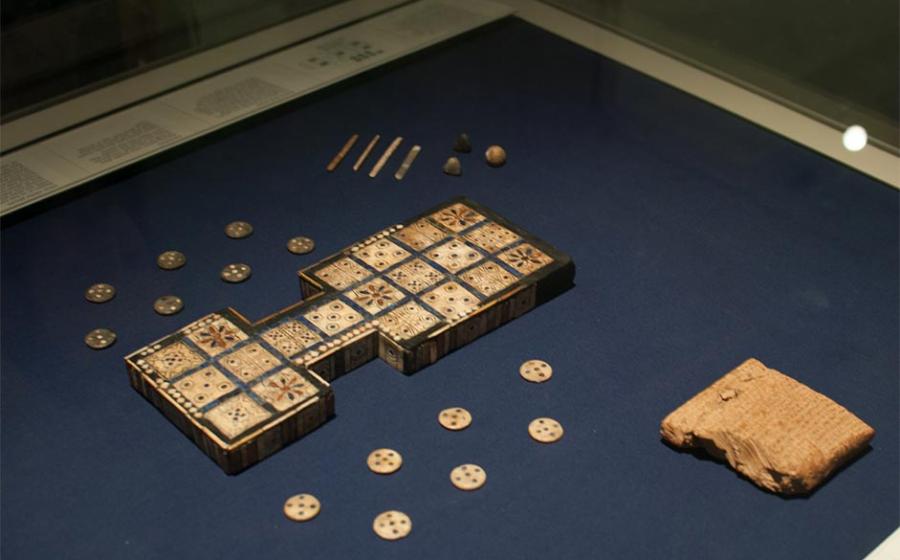
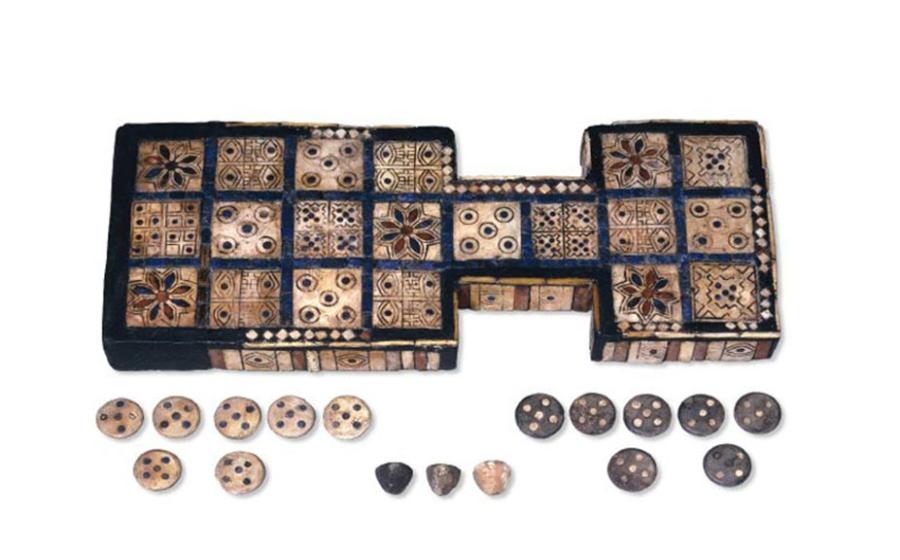
In the first part of this article, we attempted to unravel the mystery symbolism on the oldest board game in the world - the Royal Game of Ur. The Heliopolitan creation myth was used to explain how the head part of the board, in one way, could denote Heaven in which the first gods Atum-Re, Shu and Tefnut had roles. The central axis of the board was likened with the spine of Osiris, the djed pillar. Read Part 1 of this article here. Osiris’ sister and consort Isis can help to explain the patterns in the sides of the lower part of the board: the body or torso part. In the macro cosmic view this part is the world below
The world’s first known board game was found in Mesopotamia (c. 2600 BC). Despite this, Egyptian beliefs help us best to understand the Royal Game of Ur’s board design, rules and all. Especially the myth of Osiris and Isis. A later version of the Royal Game of Ur board. The black enhancing outline added by author. Thebes, Egypt. c. 1635–1458 BC. ( The Metropolitan Museum of Art, New York, Rogers Fund (1916) / Provided by the author) Foreign Origin of the Game of Ur Board? Board games similar to the Game of Ur were played through antiquity and have been found in several countries. The board’s top was elongated in the years that passed, so the central axis contained twelve