Dr Marion Dolan

Marion
Dolan
Dr Marion Dolan is retired from the University of Pittsburgh where she was an adjunct professor in the history of art and architecture and lectured for the Osher Lifelong Learning program at Carnegie-Mellon University for many years. She published a book on astronomical art, Astronomical Knowledge Transmission Through Illustrated Aratea Manuscripts. This book on astronomical manuscripts investigates the transmission of ancient knowledge carried in a Greek poem on astronomy written in the third century BC. It tracks the astronomical content and artworks as they changed through the Middle Ages and the Renaissance and how that information was received and taught. She has also written two historical novels, one on the life of Emperor Frederick II and one on the British Raj in India. Her most recent publication is Decoding Astronomy in art and Architecture (Springer Praxis Books), October 2021.Dr. Dolan received her BS, MFA and PhD from the University of Pittsburgh, majoring in medieval manuscripts, minoring in medieval architecture and history of astronomy. Now an independent scholar, she continues her research on the transmission of astronomical knowledge and teaches art history at the NSU Museum of Art, Fort Lauderdale, where she also serves as a docent. Archeoastronomy has been a lifelong area of study; she has taught the subject many times, including aboard a ship during a cruise around the world as faculty member for Semester at Sea based at the University of Virginia.

Member for

7 years 8 months

View Recent Blogs

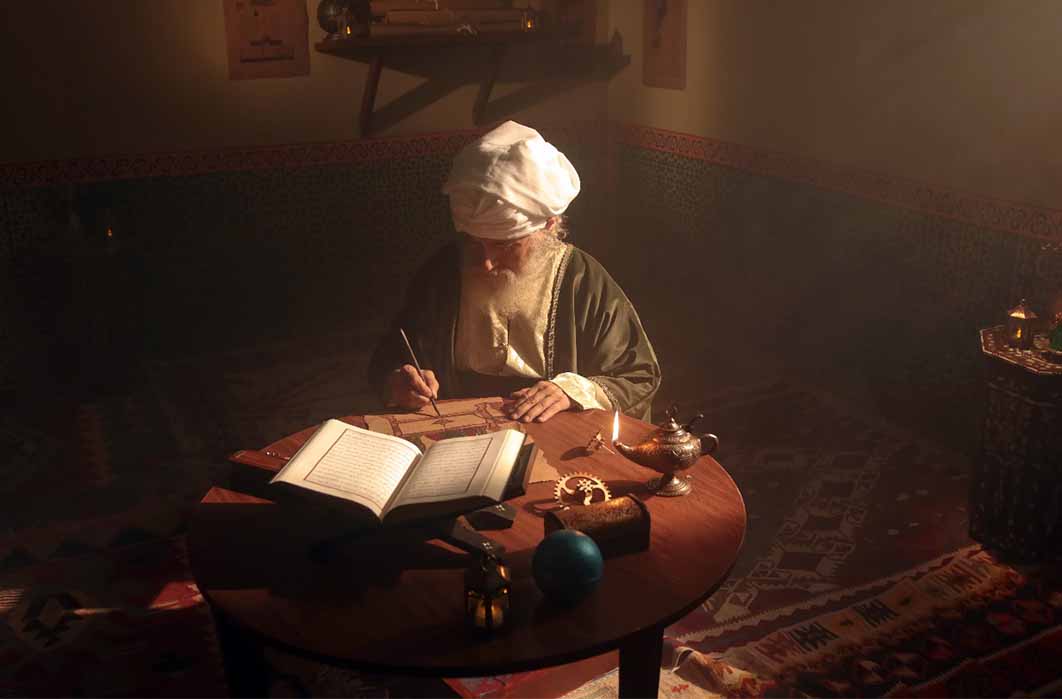
Astronomical understanding, accurate calendars and knowledge of exact geographic latitudes and longitudes were essential for all Islamic cities and towns. This body of astronomical knowledge was not accumulated for abstract scientific advancement but mainly for religious obligations. Three of the Five Pillars of Islam require astronomically precise information: to determine accurate hours for the call to prayer, the time of sunrise and sunset for fasting during Ramadan, and for tracking the phases of the moon that marked the start of a new lunar month. The exact directions were necessary especially for the Hajj, the journey to Mecca for every able Muslim. The extended journeys through desert sands by long-stretching caravans that transported precious cloth, carpets and exotic spices also required
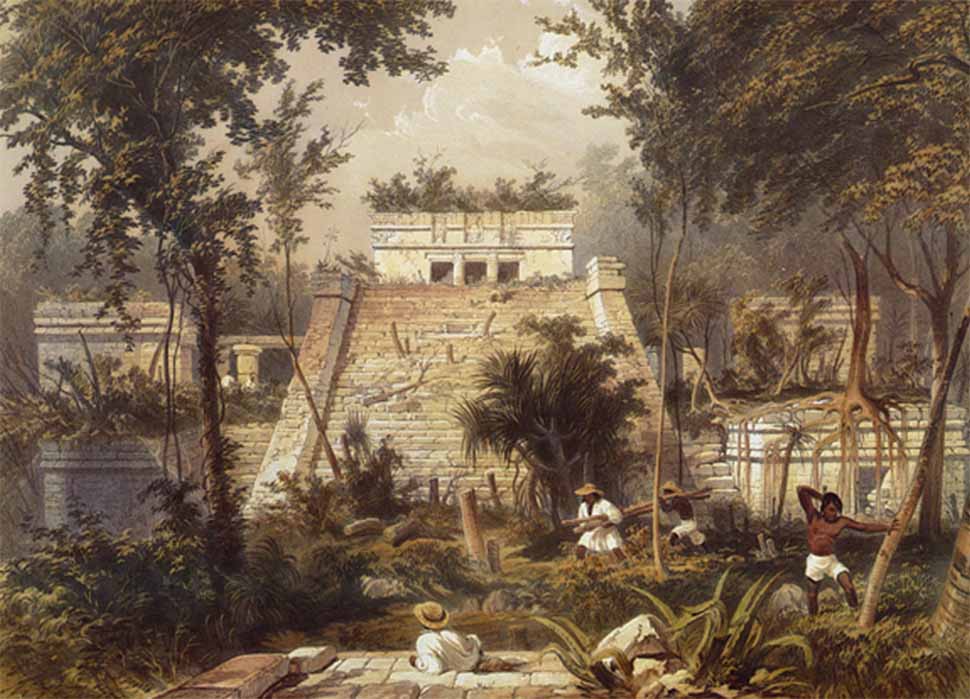
The astounding journeys of John Lloyd Stephens and Frederick Catherwood to Central America in 1839 to 1842 introduced the ancient, unrecognized Maya civilization to the rest of the world. Their life-threatening adventures saw them fighting their way through hundreds of miles of thick jungle vegetation, suffering from the sweltering heat, suffocating humidity, and soul-soaking rains. They were obstructed by the civil war of General Santa Anna and blocked by threatening politicians exercising their illusionary power. Despite the enormous struggles, they managed to locate and explore numerous ruined cities that flourished during the Classic Period of Maya history, from the third to the 10th centuries. They were caught in the midst of a violent revolution, their endurance tested by bats, snakes
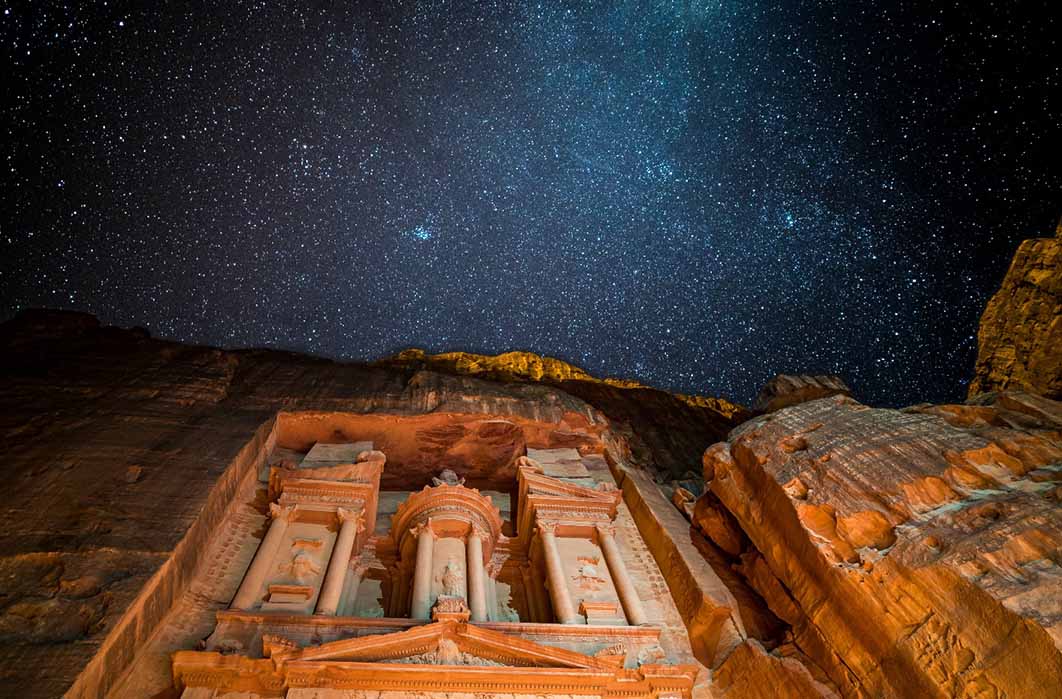
Adoration of the Sun and alignment of monuments to its annual path through the skies was universal in the ancient world. Evidence of that devotion has been uncovered in sacred architecture across hundreds of years and thousands of miles. The Sun is the crucial source of life and light; early cultures honored the Sun through their manifestations of divinities who represented the Sun, such as Ra, Atum, Apollo, Kinich Ahau, Huitzilopochtli, and Inti to name just a few. In the ancient, long-hidden city of Petra, their Sun god was called Dushara. The settlements around Petra thrived for almost a thousand years. For many centuries the city prospered as a lively caravan hub situated between the Red Sea and the Dead
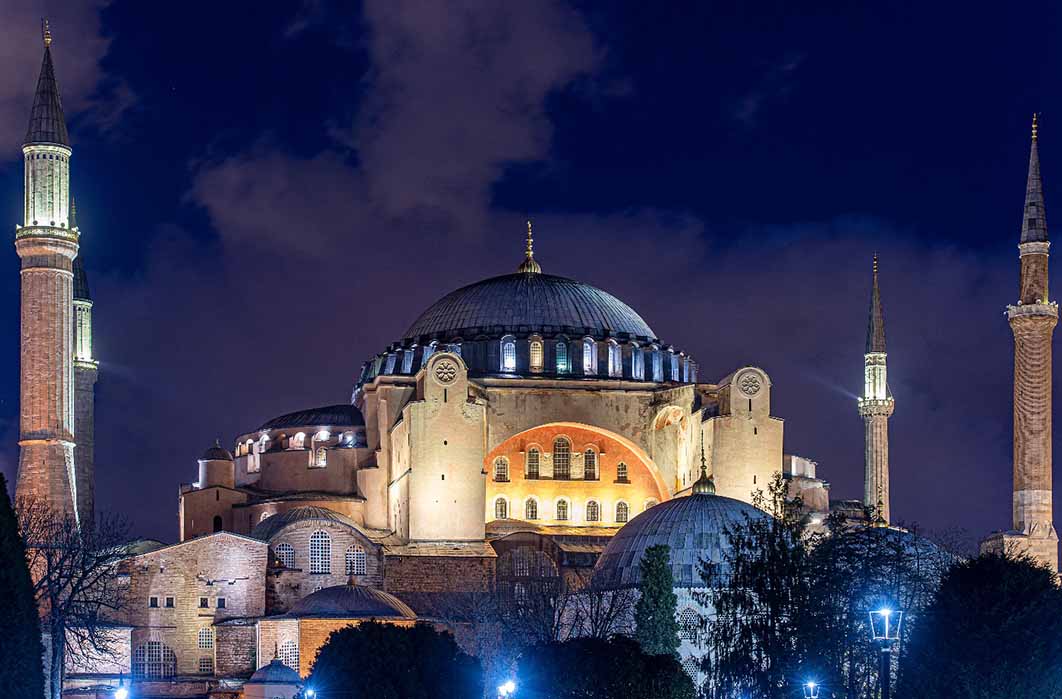
Towering over Istanbul atop one of its highest hills, Hagia Sophia has stood for over 1,500 years as an architectural wonder, one of the largest and most remarkable Christian churches ever built. Its numerous incarnations have continued from the sixth to the 21 centuries. Hagia Sophia, meaning ‘holy wisdom’, was commissioned by Emperor Justinian (482-565 AD) as the Imperial Byzantine cathedral for the capital city of the Roman Empire, the spiritual center of the Eastern Orthodox Church. Hagia Sophia is the third Christian cathedral on the site; all built within 200 years. The first Christian cathedral on the site was a basilica-style church commissioned by Roman Emperor Constantine I and was inaugurated in 360 AD. This initial church was partially
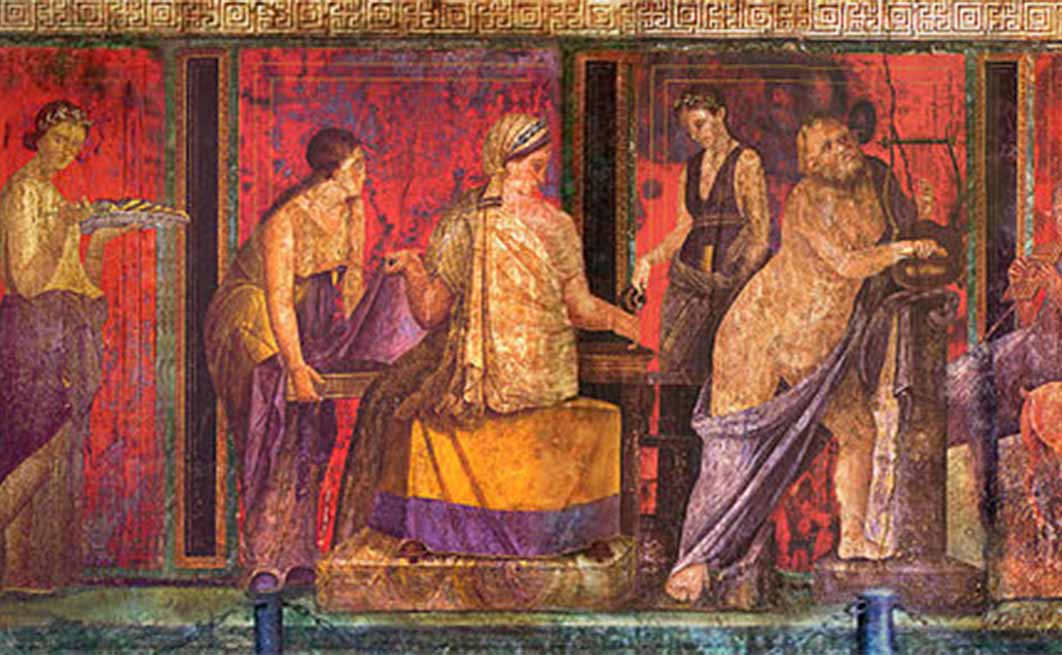
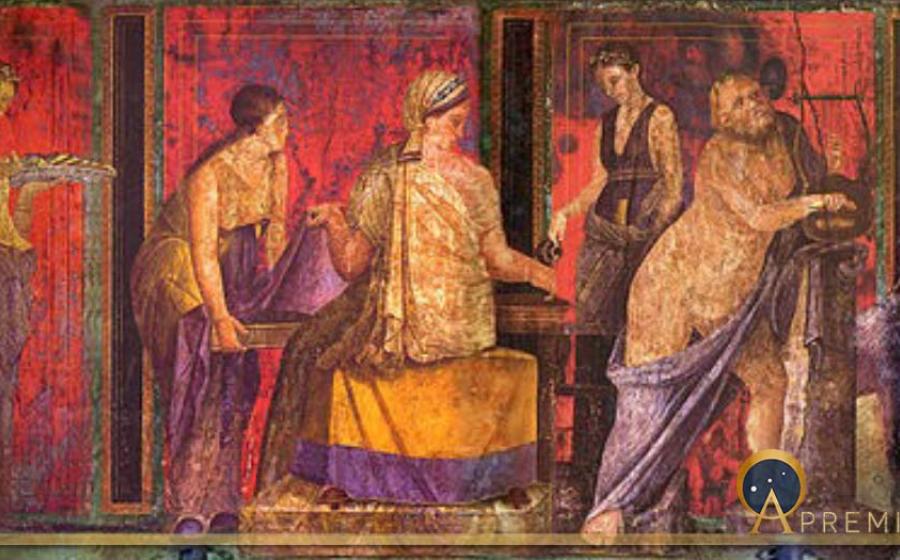
The Villa of Mysteries was one of the most luxurious villas unearthed during the 1909-1911 excavations of the ancient Roman city of Pompeii, which was buried in volcanic ash with the eruption of Mount Vesuvius in 79 AD. Miraculously this Roman villa, when uncovered, reappeared almost exactly as it stood more than 2,000 years earlier; even its artwork has survived in surprising condition. The mystery within this ancient villa relates to a particular room where the walls are completely covered with vivid murals of numerous women performing enigmatic interactions. The scenes on the friezes depict images of beautiful women, drunken men, fauns, maenads, winged figures and the ritual flagellation of a young woman. Scholars have determined that these pictorial scenes