Chris Morgan

Profile picture for user Chris Morgan
Mogg
Morgan

Mogg Morgan is a respected independent scholar, former Wellcome student, and holder of an advanced degree in Oriental Studies from University of Oxford.

He is the author of several books on Egypt, specializing in folk religion, ritual calendars and the “archaeological memory” encoded in the religions of post pharaonic Egypt.  He is also an Indologist, interested in the philosophy and technology of India, especially Ayurvedic medicine, and folk magic traditions. His latest book is:  Isis: Goddess of Egypt & India. (978-1-906958-71-8)

More information is contained on his mandrake page  http://mandrake.uk.net/isis-goddess/

Also his occasional research blog on http://mandoxegypt.wordpress.com

You can follow him on twitter as @ombos

And on Facebook & Academia.edu as “Mogg Morgan”
Member for

10 years 6 months

View Recent Blogs

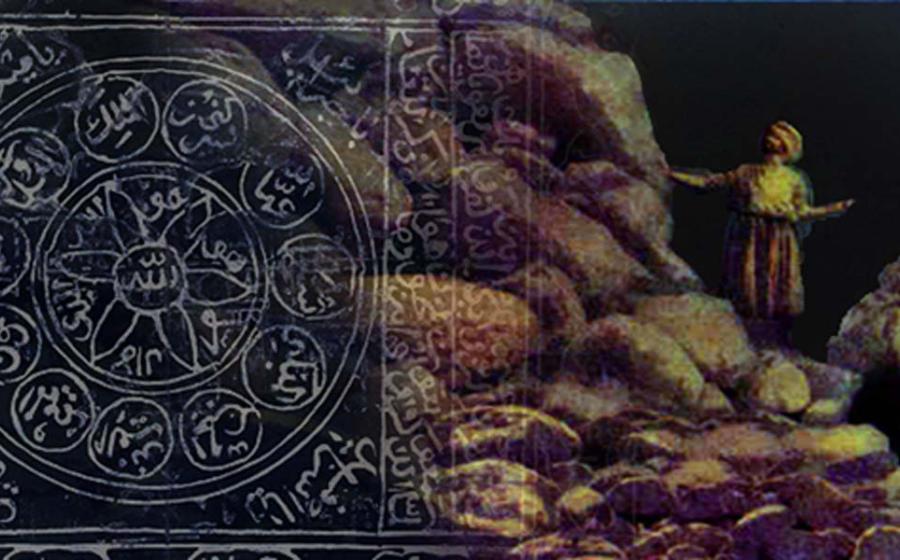
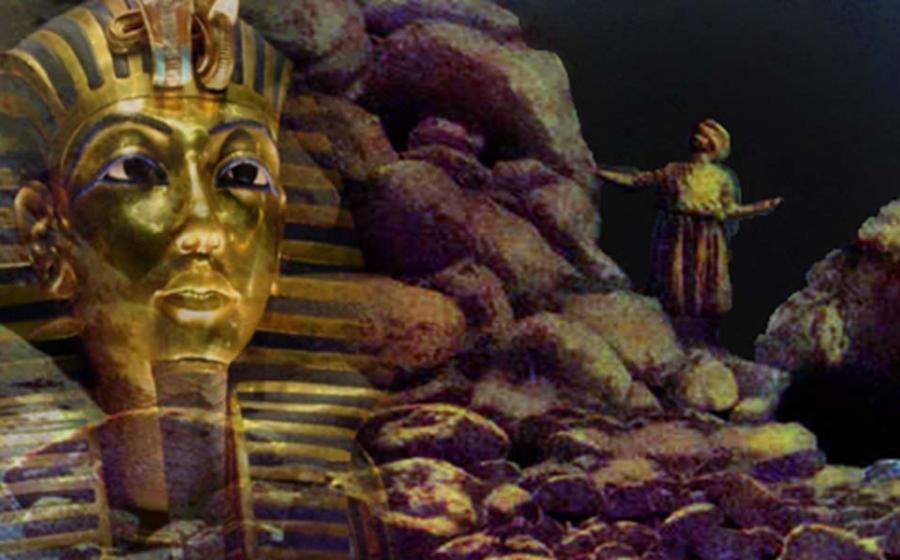
In economics one hears talk of “the curse of oil” – and one might say wherever there is buried treasure there will be a curse, hyper-real or real. The most famous of all curses is of course that supposedly attached to the mummy of Tutankhamen; although in truth what the newspapers and novelists wrote about this in 1922 had very little to do with any actual curse. I and others have written elsewhere of how the supposed curse of Tutankhamen was “engineered by the mass media in order to suppress opposition to archaeology, a subject of increasingly lucrative press reportage. It initiated the mummy’s transformation from ambivalent figures into the more overtly evil entities they were to become in cinema.”
Temples have always fascinated people. Although their structure, design and meaning, are sometimes taken for granted, they seem to be magical religion made manifest. It seems to be one of mankind’s earliest instincts, this construction of a special building, or enclosure for divine encounter. Right back in the mists of time, some of the cave paintings in Lascaux show a glyph that could well be a ritual structure of some kind, it is not an animal, human or otherwise, perhaps it is some enclosure for livestock. There is a theory that it is a four-square ritual space, a sacred building that myth suggests is one of the very first actions mankind’s ancestors undertook after emerging from the oceanic waters of
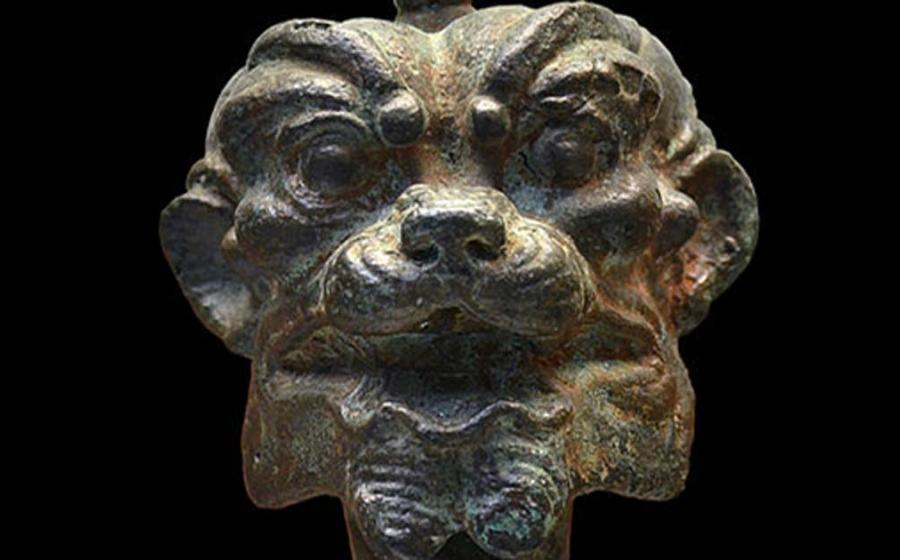
Most of us are familiar with the images of the deities, kings and queens of Egypt; but for every one of the famous scenes reproduced from those times, smaller, more obscure supernatural figures are far more numerous. Many of these entities fall into a category of supernatural beings known as demons or daemons. They also have an ongoing existence after the pharaonic culture, the end of Paganism, the rise of Christianity, the coming of Islam, and even into our own modern era. There is a clear continuity for these entities through time. When it comes to the old Egypt, the study of these supernatural entities is still in its infancy. Swansea University hosts a Demon Things database, established in 2016

The Egyptians, like many cultures, had no generic word for ‘demon’. Although some words, such as Akhw, get very close.  Etymologically, the Greek derived term ‘daemon’ or ‘demon’ means divider or alloter, and from Homer’s time onwards, it referred to an operator of unexpected and intrusive events in a person’s life.

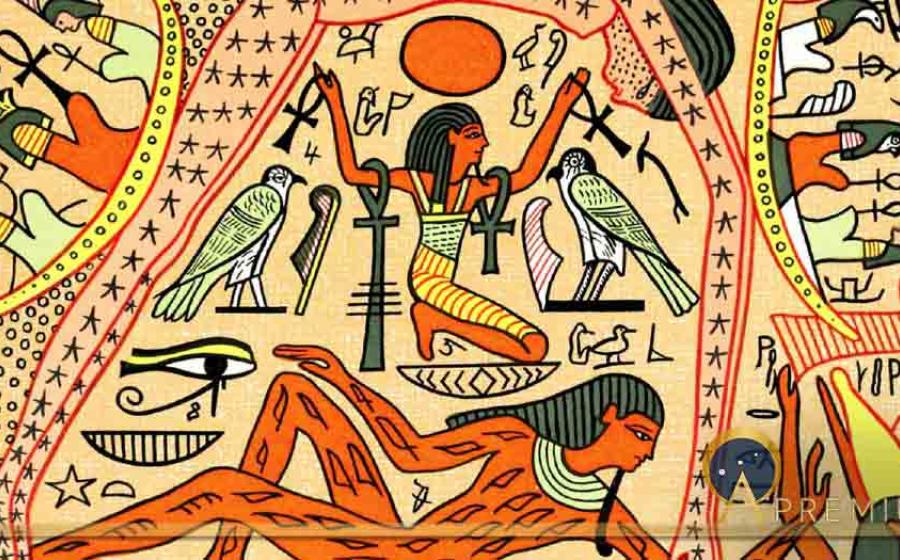
The Egyptians, like many cultures, had no generic word for ‘demon’. Although some words, such as Akhw, get very close. Etymologically, the Greek derived term ‘daemon’ or ‘demon’ means divider or alloter, and from Homer’s time onwards, it referred to an operator of unexpected and intrusive events in a person’s life. Unlike Olympian gods, a daemon was an impersonal thing, unpredictable, anonymous and often frightful in manifestation, thus connected with fate. [[{"type":"media","view_mode":"media_large","fid":"82623","attributes":{"alt":"Egyptian scene with demons (Image: Courtesy Chris Morgan)","class":"media-image","height":"407","style":"width: 610px; height: 407px;","typeof":"foaf:Image","width":"610"}}]] Egyptian scene with demons (Image: Courtesy Chris Morgan) Plato, perhaps influenced by Egyptian and Hindu thought, added a new concept of the ‘guardian daemon’ that accompanied a person in life, and postmortem, acted as one’s judge or advocate
As in many other areas of endeavor, the Egyptians had a very good reputation for their medical skills - diplomatic letters often made requests for remedies, including the seemingly miraculous, when even the Egyptians saw the joke as in the surviving reply of Ramses the Great to the Hittite king Hattusili who had requested a doctor with a drug to help his 50-something sister become pregnant. Fertility treatments were an Egyptian thing, but in this case, Ramses suggests a miracle worker might be more appropriate. [[{"type":"media","view_mode":"media_original","fid":"80578","attributes":{"alt":"Ancient Egyptian surgical tools (CC BY-SA 3.0)","class":"media-image","height":"700","style":"width: 450px; height: 297px;","typeof":"foaf:Image","width":"1059"}}]] Ancient Egyptian surgical tools ( CC BY-SA 3.0 ) Egyptians formulated the first disease theory in history, predating traditional Chinese medicine and Ayurveda by at
From the beginning of time, those among us we now call artists have tried to capture in two dimensions what they saw of the real, three-dimensional world in which they lived. Almost from the very beginning, space, the immaterial stuff that envelops us, became the object of their fascination; how could they represent it? The creativity of the early Homo sapiens, allowed them, for the first time, to paint animals on irregular walls, using, for example, a depression to represent the prominent belly of a bison. The overlapping images of animals on a cavern wall allowed them to reproduce the top down vision, which a hunter might have seen from the top of a promontory, as they watched the plain
No English translation exists of The Buried Pearl, although it is a rather strange fact that in 1901, the French archaeological mission in Cairo made a regular French edition. Strange, because its introduction explains that it was published in order to discourage tomb robbery, a widespread problem in Egypt, as indeed it still is! Neither was this a new problem; ancient Egyptian papyri survive which tell of the 20th dynasty (circa 1187 to 1064 BC) and its great tomb robberies. It wasn’t new, even then. [Read Part I: Curse of the Buried Pearl: Tomb Curses, Spirits and the Hunt for Ancient Treasures] The 1901 publication of The Buried Pearl inevitably encouraged others to have a go. The intention really was