beth

Profile picture for user beth

E.C. Rammel

E.C. Rammel is the author of Two Is Better Than One and The Oyster and the Pearl. She holds her accreditation in English and Intercultural Studies and has worked as an instructor in numerous U.S. institutions. She is currently a freelance writer and researcher who has had articles published in papers such as The Flame.

Member for

13 years 7 months

View Recent Blogs

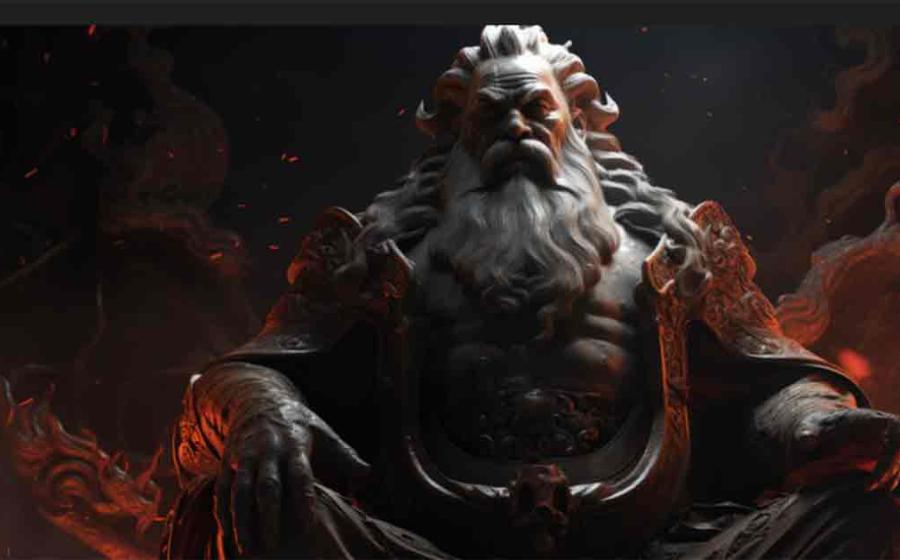
Pangu is a prominent figure in Chinese creation mythology. To this day, the Zhuang people sing a traditional song about Pangu creating the heavens and Earth. The origin of the Pangu myth has been much debated. Many believe it originated with Xu Zheng, a Chinese author from the 3rd century AD, as he was the first writer known to record it; some propose that it originated in the mythologies of the Miao or Yao people of southern China, while others see a parallel to ancient Hindu mythology of creation. Is the Universe Only 6,000 years old? Young Earth Creationists Say Yes! 10 of the Wildest Creation Myths in History The Birth and Creation of Pangu: Unraveling the Mythical Genesis of
The recent film Sound of Freedom is a fictionalized account of the true story of Tim Ballard, a former US Department of Homeland Security agent who founded the nonprofit organization Operation Underground Railroad (O.U.R.). O.U.R. works with law enforcement to rescue children from sex trafficking and sexual exploitation. The film has been praised for its realistic portrayal of the horrors of child sex trafficking. It has also been credited with raising awareness of the modern child slavery problem and the work of O.U.R. Child slavery is almost certainly the most loathsome area of a loathsome business. It is indeed hard to believe that it is possible for such atrocities to occur in the modern world. But occur they do, and
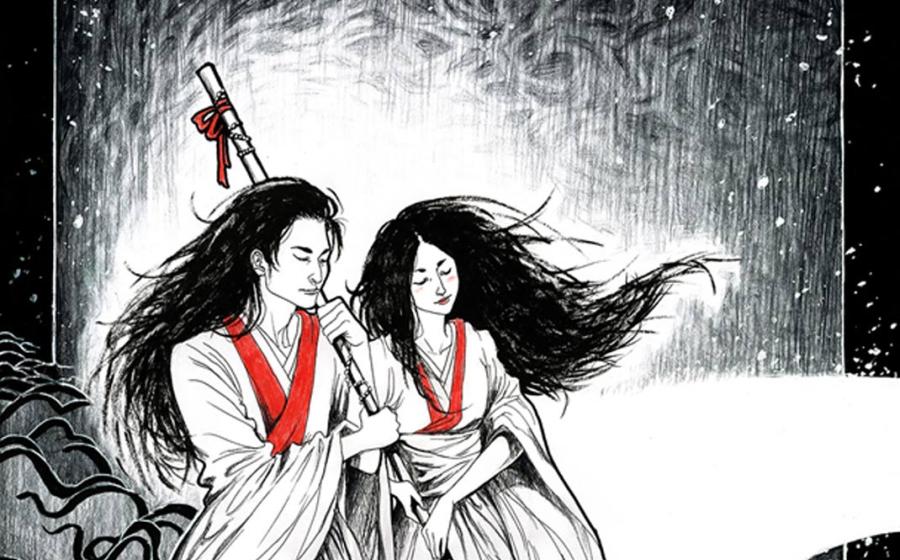
Japanese mythology is collectively chronicled in the Kojiki, the oldest historical record written in Japan in 712 AD, and in the Nihon Shoki written in 720. As was common practice before the age of script, these tales were passed on through oral traditions—the Teiki and Kuji, among others—for generations before they were ever recorded. The Kojiki and Nihon Shoki comprise the creation mythology of the Japanese and the Shinto religion, describing the formation of the heavens and the earth, the islands of Japan, the gods, and the creation of mankind. It Begins in a Lifeless, Silent Universe… The Kojiki commences with the Kamiyo, or Age of the Gods , an age which begins with a lifeless, silent universe. Sounds began
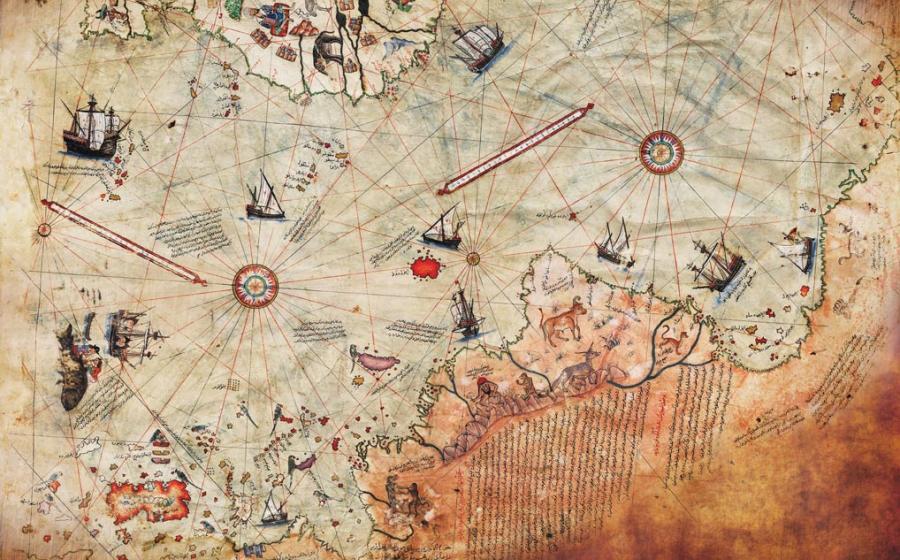
On October 9, 1929, a German theologian named Gustav Adolf Deissmann was cataloguing items in the Topkapi Palace library in Istanbul when he happened across a curious parchment located among some disregarded material. On the gazelle skin parchment was a map, now referred to as the Piri Reis map. The map was drawn and signed by Turkish cartographer Hagji Ahmed Muhiddin Piri, aka Piri Reis, and is dated to 1513 AD. Reis was an admiral in the Turkish navy, an experienced sailor, and a cartographer, who claimed to have used 20 source maps and charts to construct the map, including 8 Ptolemaic maps, 4 Portuguese maps, an Arabic map, and a map by Christopher Columbus. Since its discovery, the Piri
The modern Western world is familiar with the concept of wishing wells, or bodies of water in which currency, most commonly in the form of coin, is tossed with the intention of making a wish. Some towns even host a fountain in the town square or epicenter in which passersby drop coins in hopes that their desires will be fulfilled. While this practice is common knowledge, the origin of the tradition is not. In fact, when and where this practice began is somewhat unclear. As with many traditions that predate recorded history, pinning down one particular event or origin related to the wishing well is difficult. Many ancient practices spanned more than one culture, varying according to the practicing people
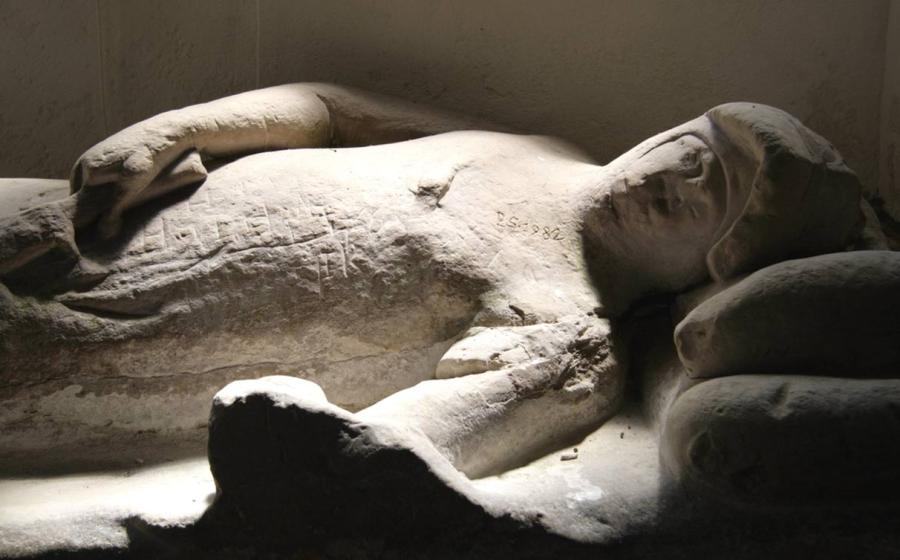
In the simple, tiny church of St. Mary, Aldworth there lie the nine stone statues of what have become known as the “Aldworth Giants,” a name bestowed upon them because all are over 7 feet tall and are said to be life-sized representations of the de la Beche family members. After Duke William of Normandy crossed the English Channel and took London, his supporters followed in search of lands and wealth. The de la Beche family was among them. They received numerous properties and built two castles, one of which was in Aldworth. Though the castle no longer stands, the church houses the last of the family’s descendants. [[{"type":"media","view_mode":"media_large","fid":"9021","attributes":{"alt":"St Mary Church in Aldworth","class":"media-image","height":"408","style":"width: 610px; height: 408px;","typeof":"foaf:Image","width":"610"}}]] St Mary Church in

The concept of the Christian Trinity is puzzling, to say the least, but what about the Jewish/Christian god’s admittance to the existence of other gods? Here are the Old Testament instances where this god identifies, or admits, the existence of other gods. Most of the verses relate to the law as it was handed down to and recorded in the Torah by the Jewish patriarch Moses. “For on this same night I will go through Egypt…executing judgment on all the gods of Egypt—I, the Lord!” Exodus 12:12 “You shall not have other gods besides me. You shall not carve idols for yourselves in the shape of anything in the sky above or on the earth below or in the waters
The Hebrew/Christian concept of monotheism has invaded the far corners of the earth, and many people have heard its doctrine; however, it continues to cause confusion and controversy, just as it did in the days following the life of Jesus Christ. People all over the world are familiar with the concept of the Hebrew/Christian god. This monotheistic, or singular, God as both the Jews and Christians describe him, is referenced in the plural many times in their own holy books. How does this coincide with the beliefs they are promoting? Let us begin at the beginning, or with Genesis rather, which is the first book of the Christian Bible and the Jewish Torah. “And God said, let us make man
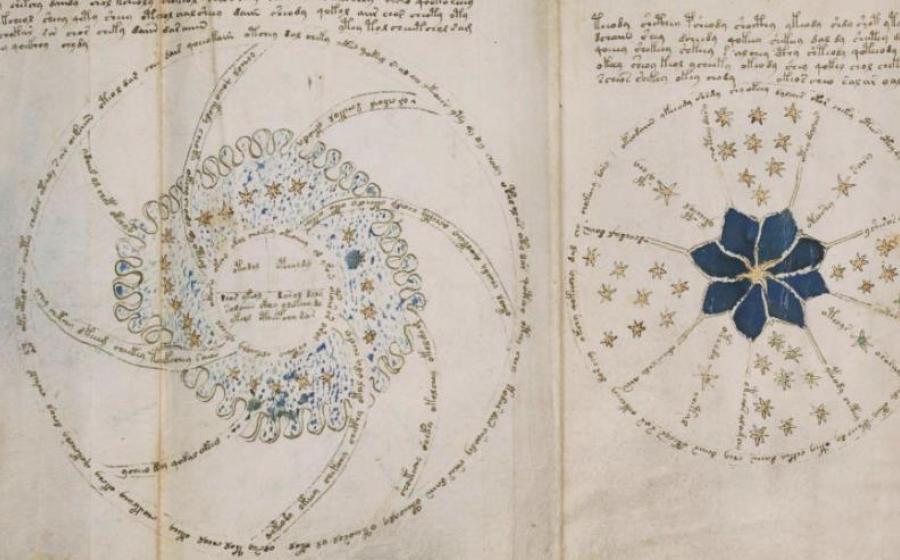
In 1912, a Polish-American book dealer named Wilfrid M. Voynich went to Rome on an acquisitions trip. There he happened upon a trunk that contained a rare manuscript now known as the Voynich manuscript. Since its appearance, this document—which is now under lock and key at the Beinecke Rare Book and Manuscript library at Yale—has been studied extensively and has stumped even the most successful cryptographers and code breakers. You must be asking yourself why the intrigue? The answer is simple: the book is almost entirely illegible. [[{"type":"media","view_mode":"media_original","fid":"521","attributes":{"alt":"The Voynich Manuscript","class":"media-image","height":"471","style":"width: 300px; height: 389px; margin-left: 10px; margin-right: 10px; float: left;","typeof":"foaf:Image","width":"363"}}]]Very little is known about this book, though it has recently begun to volunteer some of its secrets. What is known about