Alessandra Filiaci

Alessandra
Filiaci

Alessandra Filiaci was born in Rome in 1964. At a very young age she discovered the works of W.W. Atkinson and R. Guénon, texts on mysticism and oriental philosophy, Greek mythology, study of symbols, Tarot, astrology, the I Ching. The innate thirst for knowledge and the humanistic culture have provided the basis of her personal Inner Path, drawing sap from the study of historical-religious and esoteric themes and the teachings of various Spiritual Masters.

Writer, poetess, Reiki Master, she is the author of the books:

Reiki - Il cuore e la mente. Esperienze e scoperte in un diario di viaggio (Terre Sommerse edizioni, Roma 2020);

Oltre il tempo e lo spazio. Raccolta di poesie (Terre Sommerse edizioni, Roma 2018);

I Tarocchi della Nuova Era. Percorso spirituale, divinazione, applicazioni ludiche (Terre Sommerse edizioni, Roma 2017);

I Tarocchi. Il Sentiero degli uomini e degli dei (Bastogi Editrice Italiana, Foggia 1999).

She is the creator of Tarosofia, a system of study and creative use of the Tarot. She is a member of the Theosophical Society.


Member for

6 years 8 months

View Recent Blogs

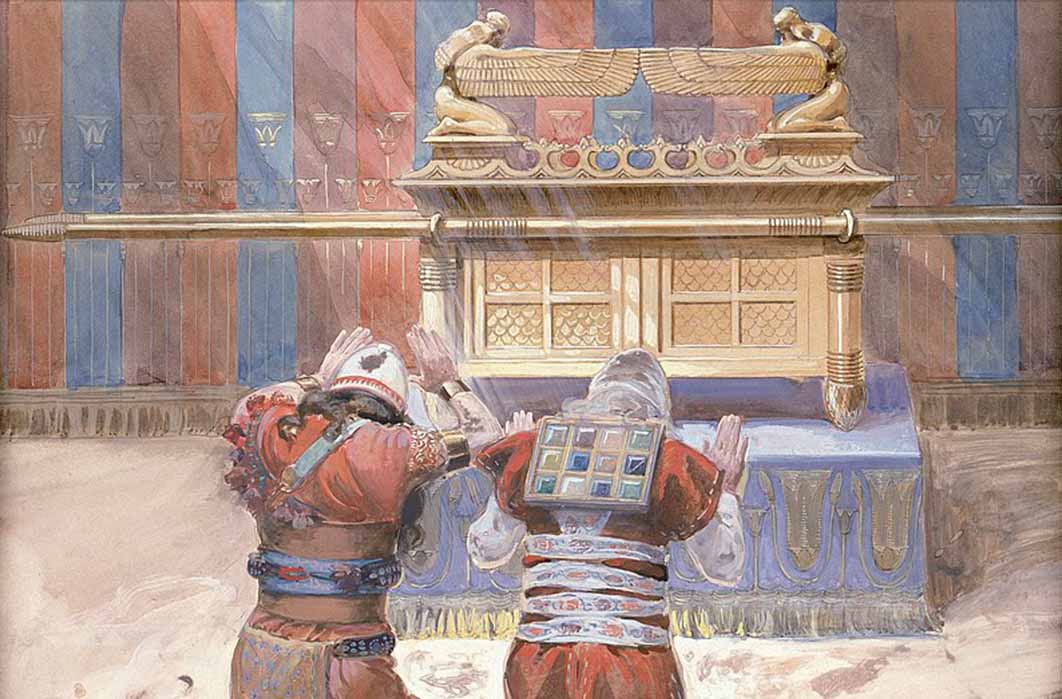
The story of the settlement of the Israelite tribes in the Promised Land has long been the subject of controversy among scholars. Moreover, the narrative of the Book of Judges has been regarded as more realistic than that of the Book of Joshua, which has been described as idealized and simplified, since it continues the epic of the exit of the chosen people from Egypt, with frequent miraculous interventions of Yahweh on their behalf, and the events are polarized around the figure of Joshua, presented as a new Moses. In all likelihood, the occupation of the land of Canaan was the result of a long-lasting process, which took place in various ways and in various stages. The Israelite tribes settled
Napoleon Bonaparte’s 18th-century Campaign in Egypt represented a pivotal moment in the quest for knowledge about the history of the ancient Egypt, by then a forgotten civilization that flourished along the banks of the Nile. It was Napoleon Bonaparte's intention that the expedition should not only have brought prestige to France from a military point of view, but also from a cultural and scientific point of view. The great and ambitious strategist was also a cultured man, and mindful of Alexander the Great's exploits, he had commandeered a large group of intellectuals, technicians and artists to Egypt, with the aim of collecting anthropological, botanical, faunal, historical and archaeological data and to map the Egyptian monuments and territory. There were many
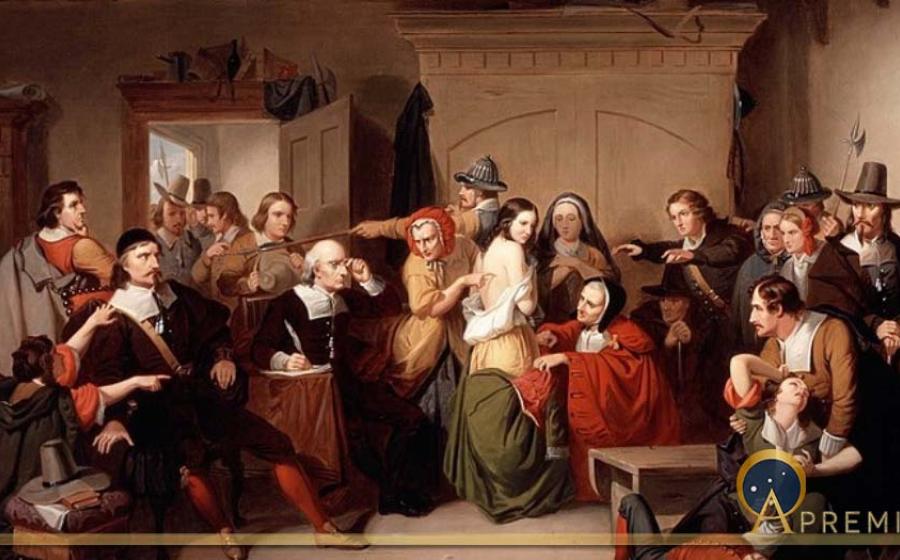
Foemina Instrumentum Diaboli can be translated as ‘Women are instruments of the devil’, which sums up the essence of Renaissance witch hunts in Europe. The word ‘witch’ evokes the figure of an elderly woman, dressed in rags, with a cone-shaped black hat on her head, hooked nails, disheveled hair and a large mole on a long pointed nose; a horrible woman to look at, who lives in a hovel, mixes foul-smelling potions in her cauldron and who, whilst grinning, caresses toads, cats and black dogs. One might smile condescendingly at this stereotype, and thus ignore the terrible history of witches. However, in many cultures the belief in the occultic powers of witches is still rife and women accused of performing
Medieval European churches, constructed by men for the glory of the Creator, are adorned to varying degrees, with sacred and profane images. No figure nor detail in these stone encyclopedia is accidental and there are many subjects represented, but a precious source of inspiration for sculptors were the Bestiaries - didactic-moral works particularly in vogue in the West in the 12th and 13th centuries. In the Bestiaries, heirs of the popular works of naturalistic knowledge of antiquity with their related repertoire of images, the physical and fantastic characteristics of existing or imaginary animals are interpreted along a symbolic and allegorical key, accompanied by Biblical references and moralizing explanations. [[{"type":"media","view_mode":"media_original","fid":"100978","attributes":{"alt":"","class":"media-image","height":"699","typeof":"foaf:Image","width":"460"}}]] Adam names the beasts. Aberdeen Bestiary (12th century) ( Public Domain
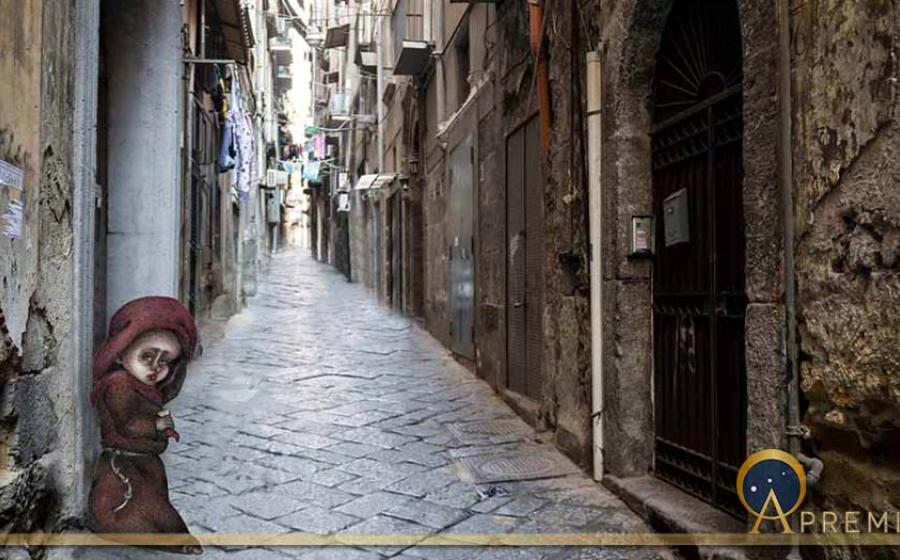
Every country in the world has its own rich folklore, every city and village has its own legends about fantastic creatures and supernatural beings told by grandparents to parents to children, enriched with ever new twists, embroidering a tapestry of tales that fascinate and preoccupy the minds and hearts of enchanted listeners. These entities exist in that middle world where space and time cannot be measured according to human conventions, in a limbo kept alive by the continuity of the particular narrative. The fables told about these imaginary characters from another world are intertwined with history and they blend into the daily lives of ordinary people. [[{"type":"media","view_mode":"media_large","fid":"96138","attributes":{"alt":"","class":"media-image","height":"437","typeof":"foaf:Image","width":"610"}}]] Map of Naples by Georg Braun; Frans Hogenberg (1572) Universitätsbibliothek Heidelberg ( Public